REPUBLICANS ARE SUPPORTIVE WHILE DEMOCRATS BLAST TRUMP FOR IRAN ‘WAR CRIMES’ THREAT

Several Members Of Congress Question President’s Fitness For Office After His Expletive-Laden Easter Sunday Message.

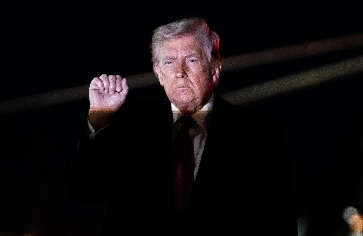
Several Democrats have condemned Donald Trump after the United States president renewed his threat to destroy Iran’s civilian infrastructure in a profanity-laden message.

Democratic legislators questioned the Republican’s mental stability after an Easter Sunday message in which he threatened to bomb Iran’s power plants and bridges, which legal experts said would amount to war crimes.

Congresswoman Yassamin Ansari, who is of Iranian descent, called for invoking the 25th Amendment to remove Trump from the presidency, suggesting he is unfit to serve.

The President of the United States is a deranged lunatic, and a national security threat to our country and the rest of the world,” Ansari wrote in a social media post.

For more than two weeks, Trump has been threatening to “obliterate” Iran’s civilian infrastructure if Tehran does not open the Strait of Hormuz.

But Sunday’s social media post – which coincided with the Easter holiday, included an expletive and invoked the name of Allah – was especially jarring to many of Trump’s critics at home and around the world.

Tuesday will be Power Plant Day, and Bridge Day, all wrapped up in one, in Iran. There will be nothing like it!!!” Trump wrote.

Open the F****n’ Strait, you crazy bastards, or you’ll be living in Hell – JUST WATCH! Praise be to Allah.”

Hakeem Jeffries, the top Democrat in the House of Representatives, called the message “disgusting and unhinged”.

Something is really wrong with this guy,” Jeffries wrote on X.

TRUMP’S THREATS AGAINST THE IRANIAN PEOPLE ARE MONSTROUS

It Is Not An Exaggeration To Say That The American President Has Threatened Genocidal Violence Against The People Of Iran.

The president marked Easter with more deranged threats against the country and people of Iran.

The American president gave Iran until 8pm eastern time on Tuesday to reopen the crucial shipping lane after earlier threatening to unleash “hell” in an expletive-laden social media post.

Tuesday will be Power Plant Day, and Bridge Day, all wrapped up in one, in Iran,” Trump wrote on Truth Social on Sunday. “There will be nothing like it!!! Open the Fuckin’ Strait, you crazy bastards, or you’ll be living in Hell – JUST WATCH! Praise be to Allah.”

The president is making explicit threats to commit massive war crimes against the civilian population. He means to inflict collective punishment on tens of millions of people because their government will not yield to his unhinged demands. He is treating the Iranian people as hostages, and he is threatening to shoot the hostages if he doesn’t get what he wants. The message the president has sent amounts to telling the Iranian people, “Trump, or I burn the country.”

It is not an exaggeration to say that the president is threatening genocidal violence against the people of Iran. Trump has referred to Iranians as “animals” in a chilling echo of Israeli officials’ statements at the start of the genocidal war in Gaza. He said this morning that a “whole civilization will die tonight, never to be brought back” if Iran does not capitulate. This is eliminationist language directed at a country of more than ninety million people. These are the words of a madman, and coming from the head of a nuclear weapons state they are terrifying.

It should be clear by now that this is a war on the Iranian people, and it was never going to be anything else. The aggressors want to wreck Iran and leave it in ruins. That should have been obvious from the start after what the Israeli government did to Gaza and is currently doing to Lebanon with Washington’s full support, but now it is undeniable.

Trump’s Iran policy has always been defined by collective punishment. His “maximum pressure” sanctions have impoverished the Iranian people and strangled their economy for the last eight years. Attacks on civilian infrastructure in his criminal war threaten the entire population with even greater deprivation and hardship. As ever, the destruction is the point. The president is not really trying to achieve anything. He simply wishes to punish and harm those that will not submit to him.

YOU SHOULD KNOW THE OPEN SECRET AT THE HEART OF THE WAR WITH IRAN

Israel’s Nuclear Weapons Program Was Secretly Developed With Financial And Diplomatic Support From The West. Its Nuclear Arsenal Remains A Leading Driver Of Conflict Across The Region.

The current American-Israeli war is the second war in less than a year declared by Israel and the USA, allegedly on the grounds of dismantling Iran’s nuclear capabilities.

While there is no documented evidence that Iran has a nuclear weapon or is close to developing one, there is another state in the Middle East whose nuclear arsenal exists as an open secret. That state is, of course, Israel, and its nuclear arsenal, although not officially recognized or confirmed, stands as one of the leading drivers of unrest throughout the region.

Israel’s history with nuclear weapons unfolded between secrecy, public tacit knowledge, and support, both materially and diplomatically, from the West, creating a playbook of strategic ambiguity around it still in place today.

At some point in the 1950s – it is impossible to pinpoint an exact date – David Ben Gurion, Israel’s first prime minister, launched the country’s nuclear project.

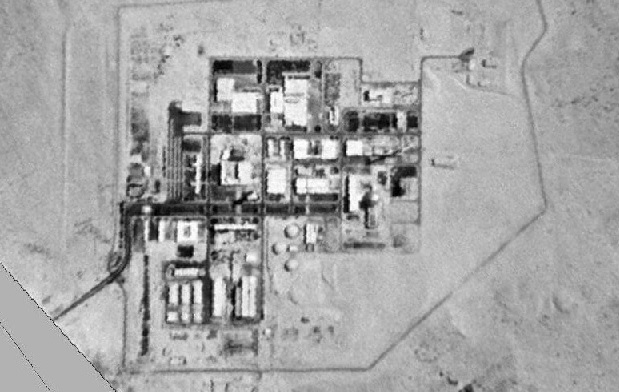
In the Negev desert, 152 kilometers from Tel Aviv and 90 kilometers from Jerusalem, out of indiscreet sight, the Shimon Peres Negev Nuclear Research Center, commonly referred to simply as “Dimona” complex, was built. Seventy years later, the facility is considered the most important pillar of Israel’s nuclear program, while officially it is a 26-megawatt thermal reactor.

To Israel’s aid in this mission came France who, according to historians, was seeking an alliance against Gamal Abdel Nasser, Egypt’s then-president.

Except for the French partner, everyone was kept in the dark about Dimona, including the American regime. In December 1960 Ben Gurion reported to the Israeli Knesset that the Dimona reactor was “a research reactor” which would serve “industry, agriculture, health and science”.

Washington did repeatedly question the nature of Israel’s actions in Dimona, and American officials even inspected the site on eight occasions between 1961 and 1969.

What they found was Israel’s articulated and well-designed propaganda stage: some sections of the nuclear plant were concealed, others were carefully disguised, hiding their real purpose.

But in the meantime, it is believed – impossible to claim certainty – that Israel finished building its underground separation plant by 1965, that it was producing weapons-grade plutonium by 1966 and assembling a nuclear weapon before the 1967 six-days war. It is also believed that in September 1979 Israel and apartheid era-South Africa conducted a joint nuclear test, known as the “Vela incident” from the American VELA 6911 satellite that detected a common sign of nuclear blast: an unexplained double flash of light.

Beliefs turned into facts in 1986. Mordechai Vanunu, a former Israeli nuclear technician, had been an employee at Dimona for eight years when he disclosed to the Sunday Times details and photographs of the nuclear research center. From this evidence, it was discovered that Israel ranked as the world’s sixth nuclear power and possessed as many as 200 atomic warheads. For his act of whistle-blowing, Mordechai Vanunu was imprisoned for 18 years, 11 of which he spent in solitary confinement. He was released in 2004, but he is still banned from travelling or speaking to foreign journalists.

There was, however, someone who was not caught by surprise: the American and UK governments, and, of course, France. In 1969, the then American president, Richard Nixon, and Israeli prime minister, Golda Meir, reached a “nuclear understanding“: questions would not be asked if Israel maintained silence and vagueness around its capabilities and avoided testing its nuclear weapons. Explained in Henry Kissinger’s, then national security adviser, own words: “While we might ideally like to halt actual Israeli possession, what we really want at a minimum may be just to keep Israeli possession from becoming an established international fact.”

It took an extra twenty years for the rest of the world to know the extent of Israel’s nuclear programs, and another extra twenty, until 2006, for the documents exposing the agreement between Nixon and Meir to be declassified. Still, in 2009, when asked whether any countries in the Middle East possessed nuclear weapons, Barack Obama, who was serving his first term as president of America, said he would not speculate.

Similarly, in 2005, a BBC investigation revealed that Britain had secretly supplied 20 tons of heavy water to Israel almost half a century before. Heavy water is so called because it goes through a laborious electrolysis process, which results in the water containing extra neutrons. At the time of the sale, this type of water was fundamental to the nuclear reactor Israel was building with French help.

One of the world’s “worst-kept secrets”, as it has been called by some scholars, that for Israel results in the ability to maintain its military standing in the Middle East and simultaneously avoid scrutiny. On the other side, for the West, silence on the matter is harder to explain. Gary Samore, President Obama’s top advisor on nuclear nonproliferation from 2009 to 2013, presented one reason behind the secrecy: “For the Israelis to acknowledge and declare it, that would be seen as provocative. It could spur some of the Arab states and Iran to produce weapons. So we like calculated ambiguity.”

There has been an attempt by the UN General Assembly to call on Israel to allow international oversight of its nuclear facilities in December 2014. The resolution was adopted, 161 to 5, on the premise that Israel is the only Middle Eastern country and one of the three countries in the world that have never signed the Treaty on the Non-Proliferation of Nuclear Weapons, together with India and Pakistan. Most importantly, of the world’s nine nuclear powers – America, Russia, China, France, the UK, Pakistan, and North Korea – Israel is the only one that does not officially admit having nuclear weapons. UN resolutions are non-binding, so it kept being business as usual for Israel.

To this day, there are estimates of Israel’s nuclear capacity: 90 warheads; 750–1110 kg plutonium stockpile, approximately – potentially enough for 187-277 nuclear weapons; 6 Dolphin-I and Dolphin II-class submarines believed capable of launching nuclear-armed cruise missiles; and Jericho III intermediate-range ballistic missiles with a potential range of 4,800 – 6,500 km.

Globally, these numbers would make Israel the second-smallest nuclear power after North Korea, but just as seventy years ago when Israel began building nuclear weapons, it remains impossible to know anything for a fact.

As events unfolded through the decades, the Israeli government maintained its stance of neither confirming nor denying its nuclear efforts, with some key rhetorical strategies that stayed the same. In the ’60s, Israel pledged “not to be the first country to introduce nuclear weapons into the Middle East”, an often-repeated line, also by Israeli Prime Minister Benjamin Netanyahu in 2011. Again in the ‘60 the expression “the Samson Option” was coined, a principle by which Israel would resort to nuclear retaliation in defence from an existential threat. In fact, although they never admitted the existence of a nuclear program, Israeli leaders have affirmed that nuclear weapons could be used if necessary.

That was the case of the 1973 war, when Egypt and Syria mounted a surprise attack. Anver Cohen, Israeli-American historian, professors and author, among others, of Israel and the Bomb, and other researchers have claimed that on that occasion Israel considered the nuclear option. More recently and less covertly, in 2016, Netanyahu claimed: “our submarine fleet acts as a deterrent to our enemies. They need to know that Israel can attack, with great might, anyone who tries to harm it”. And in November 2023, Haaretz reported that Israeli Heritage Minister Amichai Eliyahu said in a radio interview that dropping a nuclear bomb on the Gaza Strip was “an option”.

This long history and well-established narrative of secrecy and the avoidance of international inspection have succeeded to the extent that they remain in place today. Nonetheless, it is precisely because of Israel’s ambiguity that the Center for Arms Control and Non-Proliferation reads on its website that “the lack of clarity surrounding an Israeli nuclear weapons program is a key obstacle to establishing a weapons of mass destruction free zone in the Middle East”.

One of the many, often contradicting, motivations given by Trump to justify its joint attack with Israel on Iran was the danger represented by Iran’s weapons of mass destruction, for the sake of the region’s and the world’s safety. In his first statement on the war on February 28 he warned: “Just imagine how emboldened this regime would be if they ever had, and actually were armed with nuclear weapons as a means to deliver their message”. No imagination is needed. We have seen through the 70 years of Israel’s nuclear program what this threat looks like. And if the goal is to secure a nuclear-free region, then it is long overdue that we start talking about Israel’s nuclear arsenal.

Free speech is under attack—especially when the current American-Israeli war is the second war in less than a year declared by Israel and the USA, allegedly on the grounds of dismantling Iran’s nuclear capabilities.

While there is no documented evidence that Iran has a nuclear weapon or is close to developing one, there is another state in the Middle East whose nuclear arsenal exists as an open secret. That state is, of course, Israel, and its nuclear arsenal, although not officially recognized or confirmed, stands as one of the leading drivers of unrest throughout the region.

One of the many, often contradicting, motivations given by Trump to justify its joint attack with Israel on Iran was the danger represented by Iran’s weapons of mass destruction, for the sake of the region’s and the world’s safety. In his first statement on the war on February 28th he warned: “Just imagine how emboldened this regime would be if they ever had, and actually were armed with nuclear weapons as a means to deliver their message”. No imagination is needed. We have seen through the 70 years of Israel’s nuclear program what this threat looks like. And if the goal is to secure a nuclear-free region, then it is long overdue that we start talking about Israel’s nuclear arsenal.

Free speech is under attack—especially when it comes to Palestine.

TRUMP KEEPS EXPANDING HIS SECRET WARS ON THE WORLD

An Analysis Reveals That The “Peace” President Has Embroiled America In More Than 20 Military Interventions, Armed Conflicts, And Wars.

President Donald Trump talks endlessly of “peace.” He ran for office promising to keep the United States out of conflicts, claims to be a “peacemaker,” has campaigned for a Nobel Peace Prize, and founded a so-called Board of Peace. “Under Trump we will have no more wars,” he said on the campaign trail in 2024. Yet Trump has immersed America in constant conflict, outpacing even other presidential warmongers like Richard Nixon, George W. Bush, and Barack Obama.

The White House and Pentagon won’t tell the American people where America is at war, and Trump has never gone to Congress for war authorization. But an analysis reveals that Trump has embroiled America in more than 20 military interventions, armed conflicts, and wars during his five-plus years in the White House. Due to a lack of government transparency, obscure security cooperation, and carveouts baked into the American Code — like the 127e authority enacted in the wake of the September 11 attacks, and the covert action statute that enables the CIA to conduct secret wars — the actual number could be markedly higher.

During his two terms in office, Trump has overseen armed interventions and military operations — including drone strikes, ground raids, proxy wars, 127e programs, and full-scale conflicts — in Afghanistan, Central African Republic, Cameroon, Ecuador, Egypt, Iran, Iraq, Kenya, Lebanon, Libya, Mali, Niger, Nigeria, North Korea, Pakistan, the Philippines, Somalia, Syria, Tunisia, Venezuela, Yemen, and an unspecified country in the Indo-Pacific region, as well as attacks on civilians in boats in the Caribbean Sea and Pacific Ocean. More than 6,500 American Special Operations forces’ “operators and enablers” are currently deployed in more than 80 countries around the world. And during its second term, the Trump administration has also bullied Panama and threatened Canada, Colombia, Cuba, Greenland (perhaps also Iceland), and Mexico.

Under the American Constitution, it’s Congress that has the authority to declare war, not the president, pointed out Katherine Yon Ebright, counsel in the Brennan Center’s Liberty and National Security Program.

Congress has not authorized conflicts in this wide array of contexts, and indeed many lawmakers — to say nothing of members of the public — would be surprised to learn that hostilities have taken place in many of these countries,” Ebright said. “Congressional authorization isn’t just a box-checking exercise: It’s a means of ensuring that the solemn decision to go to war is made democratically and accountably, with a clear purpose and goal that the American people can support.”

Despite the fact that America has not declared war since 1941, its military has fought near-constant wars from Korea to Vietnam from the 1950s through the 1970s to Afghanistan and Iraq in the 21st century, as the executive branch has come to dominate the government and Congress has abdicated its constitutional duty to declare war.

For years, the Pentagon has even attempted to define war out of existence, claiming that it does not treat 127e and similar authorities as authorizations for the use of military force. In practice, however, Special Operations forces have used these authorities to create and control proxy forces and sometimes engage in combat alongside them. Recent presidents have also consistently claimed broad rights to act in self-defense, not only of American forces but also for partner forces.

The Trump administration has even claimed the full-scale conflict in Iran is something other than what it is. Earlier this month, Undersecretary of Defense for Policy Elbridge Colby refused to call it a war. “I think we’re in a military action at this point,” he told lawmakers.

Trump routinely refers to the conflict with Iran as a war, but he has also cast it as an “excursion.” Trump has also erroneously claimed that if he doesn’t call the conflict with Iran a “war,” it circumvents Congress’s constitutional authority.

We have a thing called a war, or as they would rather say, a military operation. It’s for legal reasons,” he said on Friday. “I don’t need any approvals. As a war you’re supposed to get approval from Congress. Something like that.”

Earlier This month, Special Operations Command chief Adm. Frank M. Bradley told the House Armed Services Committee’s Subcommittee on Intelligence and Special Operations that secret-war capabilities were key for the United States.

This environment places a premium on forces capable of operating persistently inside contested spaces, below the threshold of armed conflict,” he said. “Small footprints are necessary to enable denial strategies, strengthen allied resilience, and contribute to deterrence without triggering escalation, and to counter illicit and malign activity without large-scale military presence.”

Bradley claimed America’s enemies “blur the lines between competition and conflict,” but this is precisely what America has done for decades, including numerous secret wars during both Trump terms. The United States has waged unconstitutional and clandestine conflicts through a variety of mechanisms. The covert action statute, for example, provides the authority for secret, unattributed, and primarily CIA-led operations that can involve the use of force. It has been used during the forever wars, including under Trump, to conduct drone strikes outside areas of active hostilities. It was apparently employed in the first American strike on Venezuela in late 2025 — a prelude to a war, days later, that led to the kidnapping of that country’s president, Nicolás Maduro, by American Special Operations forces.

The 2001 Authorization for Use of Military Force, which was enacted in the wake of the 9/11 attacks and has been stretched by successive administrations to cover a broad assortment of terrorist groups — most of which did not exist on September 11 — has been used to justify counterterrorism operations, including ground combat, airstrikes, and support of partner militaries, in at least 22 countries, according to a 2021 report by Brown University’s Costs of War Project.

Under Trump, even this signature post-9/11 workaround for war has been eschewed for something more clandestine. Top Pentagon leadership wanted to keep so-called “advise, assist and accompany” or “AAA” missions — which can be indistinguishable from combat — under wraps during Trump’s first term. This led then-Defense Secretary James Mattis to order American operations in Africa to be kept “off the front page,” a former senior American official told the International Crisis Group.

But the bid to keep Trump’s other African wars secret imploded during a May 2017 AAA mission when Navy SEAL Kyle Milliken was killed and two other Americans were wounded in a raid on an al-Shabab camp in Somalia. The Pentagon initially claimed that Somali forces were out ahead of Milliken — American troops are supposed to remain at the last position of cover and concealment where they remain out of sight and protected — but that fiction fell apart, and the truth emerged that he was, in fact, alongside them.

This was followed by an October 2017 debacle in Tongo Tongo, Niger, where ISIS fighters ambushed American troops, killing four American soldiers and wounding two others. The American regime initially claimed troops were providing “advice and assistance” to local counterparts. In truth, until bad weather prevented it, the ambushed team was slated to support another group of American and Nigerien commandos attempting to kill or capture an ISIS leader as part of Obsidian Nomad II, another 127e program.

But the bid to keep Trump’s other African wars secret imploded during a May 2017 AAA mission when Navy SEAL Kyle Milliken was killed and two other Americans were wounded in a raid on an al-Shabab camp in Somalia. The Pentagon initially claimed that Somali forces were out ahead of Milliken — American troops are supposed to remain at the last position of cover and concealment where they remain out of sight and protected — but that fiction fell apart, and the truth emerged that he was, in fact, alongside them.

This was followed by an October 2017 debacle in Tongo Tongo, Niger, where ISIS fighters ambushed American troops, killing four American soldiers and wounding two others. The American regime initially claimed troops were providing “advice and assistance” to local counterparts. In truth, until bad weather prevented it, the ambushed team was slated to support another group of American and Nigerien commandos attempting to kill or capture an ISIS leader as part of Obsidian Nomad II, another 127e program.

During Trump’s first term, American Special Operations forces conducted at least 23 separate 127e programs across the world. Previous reporting has documented many 127e efforts in Africa and the Middle East, including a partnership with a notoriously abusive unit of the Cameroonian military, also during Trump’s first term, that continued long after its members were connected to mass atrocities. In addition to Cameroon, Niger, and Somalia, the American regime has conducted 127e programs in Afghanistan, Egypt, Iraq, Lebanon, Mali, Syria, Tunisia, Yemen, and an undisclosed country in the Indo-Pacific region.

During the global war on terror, the Department of Defense built out its capacity, and secured legal authorities, to operate ‘by, with, and through’ foreign militaries and paramilitaries,” Ebright said, noting that these authorities had been designed for countering al-Qaeda but had led to led to combat against groups that had not been debated and approved by Congress. “These smaller-scale, unauthorized hostilities through or alongside foreign partners may seem quaint compared to the Iran War and other recent public and persistent hostilities, but for years they deepened the perception that the president may use force whenever and wherever he pleases, even without specific congressional authorization.”

During the global war on terror, the Department of Defense built out its capacity, and secured legal authorities, to operate ‘by, with, and through’ foreign militaries and paramilitaries,” Ebright said, noting that these authorities had been designed for countering al-Qaeda but had led to led to combat against groups that had not been debated and approved by Congress. “These smaller-scale, unauthorized hostilities through or alongside foreign partners may seem quaint compared to the Iran War and other recent public and persistent hostilities, but for years they deepened the perception that the president may use force whenever and wherever he pleases, even without specific congressional authorization.”

America’s punishing war on Iran has ground on for over a month without a clear definition of victory, a plan for the aftermath, or coherent strategy behind bellicose rhetoric and shifting claims, most recently that the American regime is fighting a regime change war and will possibly seize Iran’s oil.

We’ve had regime change if you look already because the one regime was decimated, destroyed, they’re all dead,” Trump said on Sunday, referring to top ranking officials killed in the war including the late Supreme Leader Ayatollah Ali Khamenei. “The next regime is mostly dead.”

CAN THERE BE AN EMPIRE WITHOUT LIBERTY?

Since The Beginning Of The War, President Donald Trump Has Touted Dismantlement Of The Iranian Government As The American Endgame.

Even as American officials negotiate with their Iranian counterparts to end the fighting and restore stability to world energy markets, Trump says he still wants to see a “very serious form of a regime change” in the ultimate peace deal.

This imperial hubris is unworthy of the president of a federal republic and would cause the Founding Fathers to cringe.

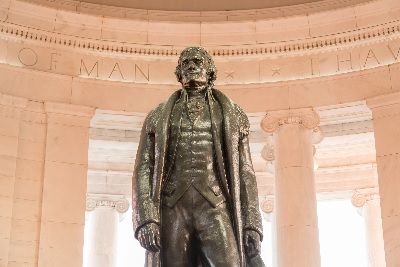
While Thomas Jefferson and his contemporaries were often excited about continental prospects for the thirteen former British colonies, the “empire of liberty” as Jefferson called the American experiment was based on free and equal states and not a unitary nation-state with ambitions of directing the governments of the world.

The Founders, of course, were aware of the novelty of their experiment and that its success could provide hope for millions. In the Philadelphia Convention, James Madison asserted that “it was more than probable we are now digesting a plan which in its operation would decide for ever the fate of Republican Government.” Benjamin Franklin observed that if republican government failed in the United States, “mankind may hereafter from this unfortunate instance, despair of establishing Governments by Human wisdom and leave it to chance, war and conquest.” In his first inaugural address, George Washington declared his belief that “preservation of the sacred fire of liberty, and the destiny of the Republican model of Government, are justly considered as deeply, perhaps as finally staked, on the experiment entrusted to the hands of the American people.”

The influence the Founders sought over other nations was influence by example. They believed that political societies across the globe would seek to emulate American principles of limited government, federalism, and the rule of law. They did not expect that the chief executive, without input from the legislative branch, would bomb foreign countries and demand that new regimes be erected.

Each day the United States looks less like an “empire of liberty” and more like a plain old empire in the mode of the Romans, Ottomans, and Mongols.

Depending on how one counts, the United States maintains upwards of 750 military bases overseas. Scholars estimate that these bases “constitute 95 percent of all the military bases any country in the world maintains on any other country’s territory.” Granted, some of these instillations are tiny with few personnel. Nonetheless, the 95% figure is shocking.

Over one hundred years ago, the stalwart anti-imperialist and Yale sociologist William Graham Sumner warned that American interventionism abroad would put our system of government at risk. Just as the United States was about to go to war against Spain, Sumner cautioned that by taking away Spanish possessions on the ground that Spain was failing in her colonial mission in Cuba, the United States would “shrivel up into the same vanity and self-conceit of which Spain now presents an example.” If the United States truly believed in liberty, then Sumner suggested that it should tend to its own affairs and leave other peoples “to live out their own lives in their own way.” What would be in store for the United States if it succumbed to the temptations of interventionism? According to Sumner, “war, debt, taxation, diplomacy, a grand governmental system, pomp, glory, a big army and navy, lavish expenditures, political jobbery—in a word, imperialism.”

Listening to President Trump’s bluster as he asks Congress for $200 billion to continue his war of regime change in Iran, it is hard to disagree with Sumner that we have traded our peaceful federal republic for an avaricious empire. Congress must deny this request. The United States should serve as an empire of liberty, in Jefferson’s words, and leave the vanity of imperialism for despotic powers.

THE MEDIA WAR FROM TRUMP

The American Government Is Waging An Illegal, Congressionally Unauthorized War On Iran. Thirteen American Soldiers Are Formally Confirmed Dead So Far. Over $11 Billion Of America’s Money Has Been Spent In Three Weeks.

While the primary concern of senior administration officials is that television stations are using the wrong headlines.

On March 13, Pete Hegseth—the former Fox News host who renamed the Defense Department and whose theology holds that God is personally invested in American airpower over Tehran—stood in front of the Pentagon press corps and delivered a media workshop. A headline reading “Mideast War Intensifies” was not acceptable, he explained. He had a better suggestion: “Iran Increasingly Desperate.” A “patriotic press” would understand the difference. The next day, FCC Chairman Brendan Carr — an author of Project 2025, appointed by Donald Trump specifically for this work — posted a warning to broadcasters that those running “hoaxes and news distortions” should “correct course before their license renewals come up.” Trump endorsed it on Truth Social, calling the networks “Corrupt and Highly Unpatriotic.” The Foundation for Individual Rights and Expression called Carr’s warning exactly what it was: “authoritarian.”

None of this is surprising. And that is precisely the problem—not the Trump administration specifically, but the degree to which the infrastructure for state control of information is being normalized, codified, and institutionalized across governments that could not agree on the time of day. Trump’s press war is the visible part. What lies beneath it is a Western-wide architecture of information control that will outlast this administration and every one that follows it.

The harder instrument at the White House’s disposal is NSPM-7, the National Security Presidential Memorandum Trump signed on September 25, 2025, titled “Countering Domestic Terrorism and Organized Political Violence.” It tasked FBI Joint Terrorism Task Forces with investigating and disrupting organizations engaged in what the administration classifies as political violence and intimidation. It directed the Treasury Department and IRS to trace and freeze financial networks supporting those organizations. On its face: counterterrorism. In its text: a different matter.

NSPM-7 specifically identifies ideological positions—”anti-Americanism, anti-capitalism, and anti-Christianity,” “extremism on migration, race, and gender,” opposition to what it calls “traditional American views on family, religion, and morality”—as having animated the political violence it seeks to counter. Attorneys at Arnold & Porter noted that the memorandum deploys post-9/11 counterterrorism tools—tools with no federal crime of “domestic terrorism” attached to them—against a category of organizations defined substantially by their beliefs. The Brennan Center found the memo’s reach extended to “labor organizers, socialists, many libertarians, those who criticize Christianity, pro-immigration groups” and essentially anyone the administration considers insufficiently American. The ACLU called it an effort “to investigate and intimidate his critics.” Congressman Ro Khanna (D-CA) called it “one of his most dangerous power grabs yet.” The NYCLU was more precise: NSPM-7 could make “First Amendment protected speech the basis for beginning law enforcement investigations.”

Carr targets the newsrooms. NSPM-7 targets the civil society—the donors, the nonprofits, the advocacy organizations—that sustains independent journalism and challenges official narratives. They are not separate instruments. They are a pincer.

Here is what American commentary on Trump’s media wars consistently omits: the formal institutional development of information control as a military and security doctrine has been underway in Western institutions for years, and it has nothing to do with Trump.

NATO’s Allied Command Transformation—the alliance’s concept development body, headquartered in Norfolk, Virginia—has been building what it formally designates the Cognitive Warfare Exploratory Concept since 2020. The concept originated in an ACT-commissioned study by François du Cluzel, a former French military officer, which proposed that the human brain constitutes NATO’s “sixth domain of operations”—alongside land, sea, air, space, and cyber. The study’s framing was explicit: “[T]he brain will be the battlefield of the 21st century.” NATO ACT’s published definition of cognitive warfare is “an unconventional form of warfare that uses cyber tools to alter enemy cognitive processes, exploit mental biases or reflexive thinking, provoke thought distortions, influence decision-making and hinder actions.” Its stated aim, in the alliance’s own words, includes “proactively shaping the information environment.”

NATO’s cognitive warfare program is framed as defensive—protecting member-state populations from adversary manipulation, primarily Russia and China. That framing is not dishonest; Russian information operations are real and have caused genuine damage to democratic processes. But a parliamentary question raised in the European Parliament in 2022 identified the structural problem that the doctrine does not resolve: the tools for protecting a population from cognitive manipulation are identical to the tools for conducting it. A military concept built around “shaping the information environment” and exploiting cognitive biases does not come with a switch that limits its use to foreign adversaries. Academic analysis published in Frontiers confirmed that the final cognitive warfare doctrine was expected to be integrated into official NATO doctrine by late 2024. The alliance of thirty-two governments is now formally in the business of cognitive operations, with a doctrine that will be available to every administration that follows, in every member state, indefinitely.

This is a significant development. It has received almost no public attention commensurate with its implications.

On May 20, 2025, the European Union did something that would have been treated as a scandal in any previous decade of European politics. The EU Council adopted Council Decision CFSP 2025/966, the seventeenth package of sanctions against Russia’s “destabilising activities.” Among the twenty-one individuals added to the list—subject to asset freezes, funding prohibitions, and potential travel bans—were two German citizens: Thomas Röper, who runs the blog Anti-Spiegel, and Alina Lipp, who operates the YouTube channel Neues aus Russland. Both are bloggers and journalists. Both hold German citizenship. Both were sanctioned by an unelected Council body, under a proposal signed by High Representative Kaja Kallas, without judicial review, for content the EU determined was aligned with Russian state interests.

This is worth sitting with. The European Union, which regularly issues statements about press freedom in Hungary and Turkey, quietly sanctioned two of its own citizens for journalism—without a trial, without a judge, without any of the procedural protections that European legal traditions supposedly guarantee. The legal framework that enabled this—the parent Decision 2024/2643—allows listing of anyone “responsible for, supporting, or involved in” actions that “undermine or threaten democracy, the rule of law, stability or security in the Union.” The definition is broad by design. Legal scholars including Nico Krisch have noted that absent transparent evidentiary standards, the criteria can reach virtually any dissident voice that institutional authorities decide is harmful.

Jim Bovard noted earlier this year that the German government’s approach to speech is “freedom of speech except for ideas that politicians and government contractors and nonprofit activists don’t like.” CFSP 2025/966 is what that approach looks like when it is formalised into EU foreign policy law and equipped with financial weapons.

The EU’s broader framework for managing information is built around what the European External Action Service calls Foreign Information Manipulation and Interference (FIMI). Academic researchers publishing in Media and Communication in 2025 documented how the EEAS deliberately chose “FIMI” over “disinformation” precisely because the FIMI concept is “versatile enough to be applied to any narrative perceived as harmful.” The shift from content-based to behaviour-based classification matters. FIMI is defined not by the falseness of what is said but by its “manipulative” character, a determination left to the classifying authority. When the European External Action Service is the classifying authority, the European External Action Service decides what counts as manipulation.

The EU also granted itself, under CFSP 2025/963—adopted the same day as 2025/966—the power to suspend broadcasting licences of Russian media outlets. The symmetry with Brendan Carr’s FCC threats is not accidental. It is the same logic applied by different hands.

Trump and the EU’s foreign policy apparatus dislike each other intensely. This article is not arguing they are coordinating. What it is arguing is more troubling: they are converging on the same conclusion independently, because that conclusion serves the interests of every government that reaches it.

The conclusion is the information environment is a security domain. Narratives that challenge government policy or undermine institutional legitimacy are, by that logic, security threats. Institutions with authority to manage security threats may therefore claim authority over information. The mechanisms vary—FCC licensing leverage, NSPM-7 terrorism designations, EU sanctions, NATO cognitive warfare doctrine—but the claim is uniform. The state should determine what constitutes acceptable public discourse, and it should have tools to act against those who fall outside that boundary.

This is not a new instinct. Every government in history has had it. What is new is the sophistication and durability of the infrastructure now being built to act on it. The chilling effect of a licensing threat. The advertiser pressure that follows a presidential denunciation. The asset freeze that makes independent journalism economically impossible without a single criminal charge. The algorithmic suppression that platforms apply when content is flagged under a FIMI framework. No editor needs to be arrested. No newsroom needs to be raided. The journalist learns that continued operation is contingent on behaviour the state finds acceptable, and adjusts accordingly.

Reporters Without Borders ranked the United States 57th globally on press freedom in 2025 its lowest position in the index’s history — classifying the environment for American journalism as “problematic.” That was before Brendan Carr told broadcasters they would lose their licenses for covering an undeclared war in terms the administration disliked. The 2026 numbers will be lower.

The apparatus being assembled right now—across administrations that agree on nothing else—will be inherited by every government that follows. States do not voluntarily relinquish instruments of information control once those instruments are built and normalised. They do not return the power to define manipulation to the people who might use it against them. The question is not whether this machinery can be dismantled. The question is whether anyone in a position to resist it has the honesty to call it what it is: censorship infrastructure, flying the flag of security.

THE AMERICAN AND ISRAELI REGIMES ARE MAKING GAZA-STYLE WAR THE NEW NORMAL

In Iran And Lebanon, The American And Israeli Militaries Are Bombing Residential Blocks, Destroying Civilian Infrastructure, Murdering Children, And Assassinating Health Workers.

If it sounds familiar, it’s because this is the Gaza playbook.

One of the most appalling aspects of the Gaza genocide — besides its near-unprecedented slaughter of children and other innocents and its near-obliteration from existence of an entire society, unpparalleled in the modern era — is that officials in both the United States and Israel were overtly hoping to make it the new, horrifying standard for modern war. As we’re seeing right now in Iran and Lebanon, they’re not wasting any time applying that standard elsewhere.

Last year, as Gaza lay in ruins with more than 10 percent of its population killed or injured, the New Yorker ran a chilling story related to the Gaza genocide. The magazine reported that a variety of American military lawyers and legal experts viewed Israel’s spree of murder and destruction in Gaza as not just a completely acceptable way to prosecute a war but as “a dress rehearsal” for a future conflict with an American adversary like China: namely, one free of restraint, adherence to international law, and squeamishness about killing civilians.

What Israel did with full American backing in Gaza, in other words, should be the new normal for war, at least when “our side” does it.

The report sat uncomfortably alongside a pattern of American and Israeli officials incessantly invoking the Allies’ carpet bombing campaigns during World War II to justify the genocide they carried out. For almost the entire period after the war, those bombing campaigns were universally understood to be war crimes and a moral horror — including by Curtis LeMay himself, the psychotic general who led the firebombing of Japan and later itched for nuclear war with the Soviet Union — and one that the civilized world immediately outlawed after that war, when it created the system of international law that today clings on by its fingernails.

It was so appalling that even Richard Nixon felt the need to pretend to the press in 1972 that the Dresden firebombing had gone too far and that he would never do such a thing to Vietnam, even though he would be totally justified if he did. (He did do it, for the record). Yet for the past three years, American and Israeli hawks have no longer even bothered to pretend.

What is now playing out in Iran and Lebanon is this doctrine in action.

IRAN AS GAZA

While estimates vary, there is a rough consensus that the United States and Israel dropped somewhere around a thousand munitions a day on Iran in the early days of the war, a similar rate to the first few days of Israel’s unprecedented bombing of Gaza. In fact, if Israel’s own estimate of having dropped 15,000 bombs on Iran over the first twenty-six days is accurate, then the daily average of 577 bombs Israel dropped on Iran outstripped the first month of its bombing of Gaza in 2023, where it reportedly dropped just under five hundred bombs a day.

According to Airwars, the independent watchdog group that tracks civilian bombings, if we use the slightly different measure of the number of targets struck, the first hundred hours of the American-Israeli war on Iran was twice as ferocious as the same period in Gaza three years ago. Israel hit around half as many targets in Gaza as it and the American military struck in Iran in the first four days of this current war (four thousand).

Bear in mind that Gaza, particularly its earliest days and weeks, had been the most intense bombing campaign of this century, outstripping Iraq, Afghanistan, Libya, Syria, the war against ISIS, and Russia’s war on Ukraine — and even many wars of the last century.

The American-Israeli method of war in Iran shares a number of characteristics that, at the time, were considered unprecedented and unique to the Gaza war. As a result, the American-Israeli method of war in Iran shares a number of characteristics that, at the time, were considered unprecedented and unique to the Gaza war.

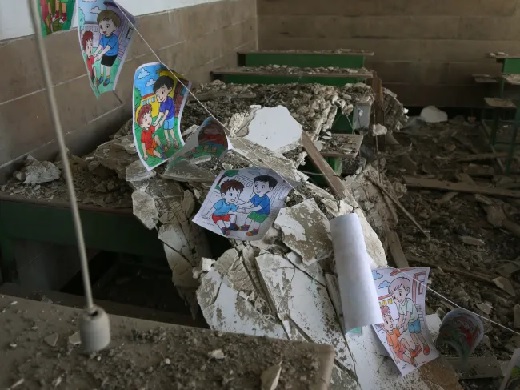
The war began with a massacre of children, in what has now been confirmed to have been a targeted American bombing of a school that killed more than a hundred young girls. We now know it also began with the bombing of a sports hall and a different elementary school that killed twenty-one people, including two children, using a new short-range missile whose first-ever use in combat was this war. The American and Israeli militaries have since then dropped heavy bombs on entire residential buildings and destroyed whole residential blocks despite the obvious danger to civilians, burying ordinary Iranians under the rubble.

According to the Iranian Red Crescent Society, basically the local Iranian equivalent of the Red Cross, Israel has damaged or destroyed a total of more than 90,000 residential units around Iran, more than three hundred health and medical facilities, more than seven hundred universities and schools, and a range of other civilian structures. That includes pharmacies, scores of police stations and other security sites, and the infrastructure used to pay officers, as well as a desalination plant that helps provide drinking water and centuries-old heritage sites. It has also targeted Iranian nuclear facilities with bombings at least three times since the start of the war, risking a terrible accident. Both Israel and Donald Trump have since threatened to destroy Iran’s other energy infrastructure.

Israel has bombed oil facilities in Tehran in what amounted to a chemical attack, causing clouds of toxic fumes to linger over the city and choke its air for days and black acid rain to pour onto those below. It has now also targeted infrastructure crucial to Iran’s food supply and a cancer drug facility, as well as its steel production, critical to both the country’s economy and its ability to rebuild after the war.

There is strong evidence that at least part of the reason for the indiscriminate and lawless carnage is the reliance on artificial intelligence for targeting, while Secretary of War Pete Hegseth announced the American military, running low on precision munitions, would start using massive five-hundred-, one-thousand-, and two-thousand-pound bombs that do more indiscriminate damage.

This should all sound familiar. Bombing with no regard for danger to civilians, the use of AI and massive bombs in densely populated places, the seemingly casual slaughter of children, the use of chemical warfare and hunger as weapons of war, attacks on civilian infrastructure crucial to the basic functioning of society, including energy production, health care facilities, and heritage sites — these were all the hallmarks of Israel’s war on Gaza.

It’s not just the methods of the Gaza war that are being replicated — on the American side, it’s also the rhetoric. Hegseth has dispensed with the kind of lip service that American officials used to pay to ethical warfare and concern about civilians and is instead increasingly uttering dark, Israeli-style warnings about collective murder of all Iranians, threatening that “death and destruction from the sky all day long” would be visited on the country and warning that “the only ones that need to be worried right now are Iranians that think they’re gonna live.” Just a week ago, he literally prayed for God to “break the teeth of the ungodly” and bring “overwhelming violence of action against those who deserve no mercy” in this war.

LEBANON AS GAZA

It would be bad enough if this was limited to Iran. But we’re seeing the same thing in the war Israel is concurrently waging in Lebanon.

There the Israeli military has illegally been giving Lebanese civilians forced evacuation orders in the face of likely death in indiscriminate bombing, leading to the displacement of more than one million people, or an unfathomable 20 percent of Lebanon’s population. It plans to indefinitely occupy a large swath of Lebanon’s territory as a “buffer zone,” for which it is leveling all the now-emptied homes and buildings left by their former residents — though not before Israeli soldiers gleefully loot the homes first.

In the process, Israel has been seemingly deliberately targeting Lebanese health care workers and journalists, killing dozens the former and five of the latter so far, including nine paramedics it killed across Southern Lebanon this past weekend in a series of strikes on health care sites. There is also evidence it has used white phosphorus over residential areas.

What we are witnessing right now in the Middle East is the Gazafication of warfare.

All of these were previously beyond-the-pale crimes that became appallingly regular features of Israel’s razing of Gaza. And they come alongside other Gaza parallels we just went through with Iran that have been repeated in Lebanon, including attacks on health care facilities, residential buildings, and other civilian infrastructure like power plants, water and sanitation sites, and the agricultural land it relies on to produce food.

Israeli officials have actually been explicit about this, pointing to their actions in Gaza to explain their war plans in Lebanon and even invoking Israel’s genocidal destruction of the territory as a threat. Maybe most chilling, one of the most vile statistics of the Israeli forces’ conduct in Gaza — that they had killed a classroom’s worth of children every day, according to the head of the United Nations Children’s Fund (UNICEF) — is almost the exact same statistic the deputy chief of UNICEF just used to describe what Israel is doing in Lebanon right now.

WE ARE ALL GAZA NOW

What we are witnessing right now in the Middle East is the Gazafication of warfare. It is clear that Israel and Washington are determined to make some of the most repellant Israeli behavior in Gaza, the actions we thought of as unique, world-historical exhibits of human sadism, the new normal for all of their wars going forward.

This is abominable on a basic human level. The point of international law is that everyone tacitly agrees on certain ground rules, as a way of ensuring certain behavior in warfare is off limits no matter who is involved. But once you start making exceptions for yourself, your adversaries can do it too, and the result is far from pretty — as we are seeing with Iran’s own retaliatory strikes on civilian infrastructure and the sudden cries from neocons and Israeli officials that by imitating them, Iran is carrying out war crimes.

Adherence to international law is not a light switch you can turn on and off at your convenience. By doing their best to shred the concept, Israel and Trump officials are not just engaging in heinous crimes. They’re creating a more brutish world where their own people are at higher risk of the very wrong they’re busy committing now: a world in which future American adversaries, for instance, will have less compunction about attacking Americans’ food supply or the infrastructure that keeps them warm in winter, or destroying or disabling the health care facilities they rely on when they’re sick, all because of an unpopular war started by leaders that most Americans don’t even like.

The Gazafication of war by Trump and Israel is a big gamble. And it is our lives, and the lives of our children, our families, and other loved ones, that they are putting up as collateral.

WHAT CIVILIAN TARGETS HAVE AMERICA AND ISRAEL HIT IN IRAN OTHER THAN SCHOOLS, WATER AND INDUSTRY?

The American Regime And Israel Have Increasingly Been Hitting Civilian Sites In Iran As Efforts To End The Weeks-Long War Are Under Way.

Since launching their military offensive on Iran on February 28th, the United States and Israel have carried out thousands of strikes across the Middle East nation of about 90 million people, targeting military as well as civilian infrastructure, including hospitals, schools and residential buildings.

Iran says more than 2,000 people have been killed in American-Israeli strikes on roughly 90,000 civilian sites, including the attack on a school in the city of Minab on the first day of the war, which has spread to Lebanon, where Israel has been accused of extending its “Gaza playbook”. Israeli forces have killed more than 72,000 Palestinians in the Gaza Strip, including hundreds of medics and aid workers, during their genocidal war.

Iran has also carried out retaliatory strikes on military, industrial, civilian and energy facilities in Israel, killing at least 19 people and wounding thousands. Tehran has also carried out attacks on Gulf nations that host the American bases, where at least 25 people have been killed. At least 13 American soldiers have also been killed in Iranian attacks.

Israeli and American strikes have expanded to include civilian facilities such as power and water desalination plants, drawing an Iranian response. On Sunday, Iran also targeted a desalination plant in Kuwait, raising concerns in the Gulf nations, which overwhelmingly depend on desalinated water.

Here are some of the key civilian targets the American regime, Israel and Iran have hit so far:

SCHOOL IN IRAN

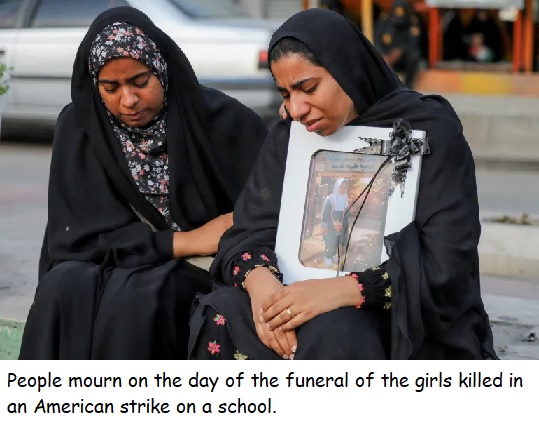
The war on Iran began on February 28th with a strike on an elementary girls’ school, Shajareh Tayyebeh (The Good Tree), in the city of Minab in southern Iran. At least 170 people, most of them girls aged between seven and 12 years, were killed when the missiles struck the school.

President Donald Trump denied that America had attacked the school.

However, several independent investigations by media organizations, including Al Jazeera, and rights groups, including Amnesty International, have said the attack was likely deliberate and that an American made Tomahawk missile was likely used in the attack.

In retaliation, on March 1st, Iran struck Israel, killing at least nine people in the Israeli town of Beit Shemesh.

UNIVERSITIES IN IRAN

On March 28th, the Iran University of Science and Technology was hit by what Iranian media said were targeted Israeli-American strikes. It remains unclear what the damage and casualties from the strike look like.

A day later, a university in Iran’s central city of Isfahan said it was hit by American-Israeli air strikes for the second time since the war erupted, leaving four university staff members wounded.

After these strikes, according to Iranian state media, the Islamic Revolutionary Guard Corps (IRGC) said it would attack universities tied to America and Israel across the Middle East in retaliation.

On Sunday, in a post on X, the American Embassy in Baghdad warned that Iran and its proxies “may intend to target US universities in Baghdad, Sulaymaniyah, and Dohuk, as well as other universities perceived as connected to the United States” and advised American citizens to leave Iraq immediately.

ENERGY FACILITIES

In retaliation for the American and Israel’s strikes, Iran has blocked the Strait of Hormuz, which has led to a disruption in global oil and gas supplies, and many countries have begun tapping into their strategic oil reserves to avoid an economic crisis.

While the world’s focus has been on this strait, and negotiations on how to reopen it are ongoing, attacks on energy infrastructure in Iran and across the Gulf region are also continuing, further upending global energy supply.

IRAN

On March 8th, Israel hit Iran’s oil facilities for the first time since the war started, killing at least four people. The Aghdasieh oil warehouse in northeast Tehran, Tehran oil refinery in the south, Shahran oil depot in the west of Tehran, and an oil depot in Karaj city were the key facilities targeted. Witnesses said oil from the Shahran depot also leaked into the streets. Reporting from Tehran, Tohid Asadi also described seeing black raindrops on his windows early the next day.

Israel said it had struck “a number of fuel storage facilities in Tehran” that were used “to operate military infrastructure” in the March 8th attack. It provided no proof for its claims. Israel adopted similar tactics in Gaza, targeting schools and hospitals after accusing the facilities of being used by Hamas fighters. Most of their accusations later turned out to be false.

On March 18th, Israel struck Iran’s critical South Pars gasfield. South Pars is part of the world’s largest natural gasfield, which spans 9,700sq km (3,745sq miles), and is shared by Iran and Qatar.

Trump has said neither America nor Qatar had any involvement in or prior knowledge of Israel’s initial strike on the South Pars field.

Iran retaliated by launching missiles and drones at targets across the Middle East, including energy infrastructure in nearby Arab Gulf states.

QATAR

On March 2nd, Iranian drones struck an energy facility in Ras Laffan belonging to QatarEnergy, the world’s largest liquefied natural gas (LNG) producer.

QatarEnergy immediately announced that it had halted LNG production following the attacks. Qatar’s LNG exports represent 20 percent of the global market.

Iranian officials have, however, publicly denied targeting QatarEnergy.

On March 19th, Iranian missiles again struck an LNG facility in Ras Laffan Industrial City in northern Qatar, hours after Israel had struck the South Pars gasfield. Doha reported that the attack caused “extensive damage”.

The attack wiped out about 17 percent of Qatar’s LNG export capacity, causing an estimated $20bn in lost annual revenue, QatarEnergy CEO Saad Sherida al-Kaabi said.

SAUDI ARABIA

On March 2nd, Saudi Arabia shut down operations at the Ras Tanura plant, its biggest domestic oil refinery operated by Saudi Aramco, after a fire broke out at the facility that officials said was caused by debris from the interception of two drones.

Iranian officials have publicly denied targeting Saudi Aramco.

UNITED ARAB EMIRATES

On March 2nd , a fire broke out at Mussafah fuel terminal in southwest Abu Dhabi after it was struck by a drone.

A day later, falling debris from a drone interception caused a fire at the Fujairah oil terminal along the eastern coast of the UAE. No injuries were reported.

On March 17th, oil loading at the port of Fujairah was halted partly after an Iranian drone attack caused a fire at the export terminal, while operations at the Shah gasfield remained suspended after an earlier attack, officials said. Fujairah, which lies just outside the strait and is typically the outlet for more than 1 million barrels per day of the state company’s Murban crude, is still operating but at reduced capacity, according ‌to Kpler, a data and analytics firm.

OMAN

On March 3rd, multiple Iranian drones struck fuel tanks and a tanker at the port of Duqm, with at least one direct hit on a fuel storage tank, causing an explosion. On the same day, a drone strike was recorded at Salalah port, which handles fuel and industrial minerals.

KUWAIT

On March 20th, Iranian drones struck Kuwait’s largest oil refinery, Mina al-Ahmadi, for the second time. In the second attack, fires broke out across multiple units at the refinery, which processes about 730,000 bpd of oil.

Kuwait’s national oil company said several units had been shut down, though there were no casualties.

ISRAEL

The owner of Israel’s Oil Refineries Limited said Iranian missiles struck its Haifa complex on March 19th, and essential infrastructure was damaged. Energy Minister Eli Cohen said the Iranian strike had caused damage to a power grid.

WATER RESOURCES – DESALINATION PLANTS

IRAN

On March 7th, Iranian Foreign Minister Abbas Araghchi said a desalination plant on Qeshm Island in southern Iran was attacked by the American regime.

Water supply in 30 villages has been impacted. Attacking Iran’s infrastructure is a dangerous move with grave consequences. The US set this precedent, not Iran,” he said on X after the attack.

Iran has since targeted desalination plants in the Gulf region.

BAHRAIN

On March 8th , Manama said an Iranian drone attack caused material damage to a water desalination plant.

Water is scarce across the Gulf region, and groundwater, together with desalinated water, accounts for about 90 percent of the region’s water resources, according to a 2020 report by the Gulf Research Center.

The attack exposed the vulnerability of the Gulf countries, which depend on desalination plants for the majority of their water supply.

KUWAIT

On March 30th, an Iranian attack on a water desalination plant killed one Indian worker and damaged a building at the site, according to Kuwaiti authorities.

A service building at a power and water desalination plant was attacked as part of the Iranian aggression against the State of Kuwait, resulting in the death of an Indian worker and significant material damage to the building,” Kuwait’s Ministry of Electricity and Water & Renewable Energy said in a statement on Monday.

Iran has yet to comment on the incident.

About 90 percent of Kuwait’s drinking water comes from desalination plants.

POWER AND INDUSTRIES

POWER PLANTS IN IRAN

On March 27th, American and Israeli strikes hit the Bushehr Nuclear Power Plant, the Atomic Energy Organization of Iran said, adding that it was the third attack on the facility since the war began. The plant is Iran’s only operational nuclear power facility and plays a vital role in its civilian energy program.

POWER PLANTS IN ISRAEL

On March 19, debris from intercepted missiles fell on a power generation station in the northern city of Haifa and caused electricity outages in several areas, according to Israeli media reports. Iranian media reported that Tehran struck the power plant in retaliation for the attack on the South Pars gasfield.

STEEL PLANTS IN IRAN

On March 27th , the Israeli air force said it struck two Iranian steel plants linked to the IRGC. It provided no proof linking the plants to the IRGC.

Iran’s Fars news agency reported that the Israeli strikes hit Khuzestan Steel near Ahvaz and Mobarakeh Steel in Isfahan. A day later, according to Iranian media, the Khuzestan Steel Company had to halt production after its steelmaking units were struck.

In a post on X on March 27th, Iran’s Foreign Minister Abbas Araghchi declared that Tehran would exact a “HEAVY price”.

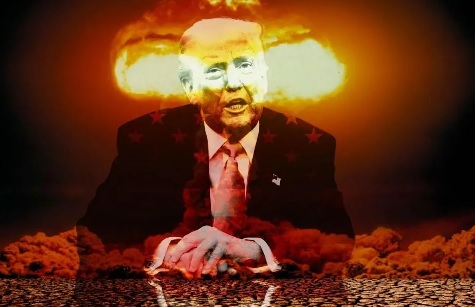
THE WAR ON IRAN IS NOT JUST – ACCORDING TO THE VATICAN’S SECRETARY OF STATE

Cardinal Pietro Parolin, The Vatican Secretary Of State, Said On Thursday That The American-Israeli War On Iran Does Not Meet The Catholic Church’s Criteria For A Just War.

No, it does not seem to meet the conditions,” he told reporters on the sidelines of an academic conference at the Vatican Apostolic Library.

When asked by EWTN News about the decision of the United States to attack Iran, Parolin referred to recent remarks by Cardinal Robert McElroy, archbishop of Washington, D.C.

In an interview with his archdiocesan newspaper, The Catholic Standard, McElroy said the intervention in Iran failed to meet several conditions required by the Church’s teaching on just war, including that the benefits of this war will not “outweigh the harm which will be done.”

He explained this point very well,” Parolin said, referring to McElroy’s statement.

Parolin’s comments follow those of Pope Leo XIV in a statement given to journalists on Tuesday at Castel Gandolfo, the papal villa south of Rome, when he renewed his call for an unconditional ceasefire, saying that “death and pain caused by these wars is a scandal for the entire human family.”

Parolin was also asked about a letter he sent on behalf of the pope on Wednesday to the bishops of France, in which Leo encouraged them to be more inclusive of communities attached to the Traditional Latin Mass, which the pope said had become a divisive issue in the Church.

The debate over the Traditional Latin Mass has taken on fresh urgency in France in part because of the Society of St. Pius X, founded by French Archbishop Marcel Lefebvre and known for celebrating only the traditional liturgy. The SSPX said in February that it plans to consecrate bishops on July 1st without a pontifical mandate, a step canon law says carries automatic excommunication for both the consecrating bishop and the one ordained.

The liturgy must not become a source of conflict and division among us,” Parolin said, without pointing to any specific solutions. “It will be necessary to find the formula that can meet legitimate needs. But I believe that, well, this can happen without turning the liturgy into a battlefield.”

TRUMP’S WAR WITH IRAN IS IMMORAL AND THAT MATTERS

When Trump Ordered The First Wave Of Strikes In This Ongoing War With Iran Last Month, He Did So While His Administration Was Engaged In Active Negotiations With The Iranian Government.

That echoed the situation last June when Israel launched a bombing campaign days after Trump scheduled new talks with Iran—a move Trump later claimed was a deliberate deception to help make the Israeli strikes more effective.

This time around, in that first wave of strikes on February 28, American cruise missiles targeted and destroyed a building that ended up being a girls’ school—killing more than 168 young children who had just started their day of classes.

In the weeks since, the specific toll of the war on the Iranian people has been obscured by a thick fog of war and a nationwide internet blackout. But the initial reports and anecdotes that have managed to slip through suggest that the civilian death toll from the intense bombing campaigns on and around dense residential areas has been extensive.

Then, last Saturday night, Trump announced that if Iran did not “fully open” the Strait of Hormuz within 48 hours, the American regime would begin targeting and destroying Iran’s power grid and energy infrastructure. Trump did announce Monday morning before markets opened that he’d extend his deadline until after markets close this weekend, which suggests it may have been a bluff.

But still, the fact that Trump is officially threatening this at all is a big deal. Because destroying Iran’s power grid would not just turn the lights off for a few days, it would irrevocably destroy Iran’s ability to sustain the current population that lives there. Food production, sanitation services, water purification, healthcare services, and more would be greatly diminished, if not stopped entirely. And the result would be mass civilian death—even more so if Iran carried out the retaliation they promised and hit similar infrastructure in nearby American allied countries.

As all of this has unfolded in the last three weeks—the surprise attack during negotiations, the violent deaths of Iranian civilians as a result of American and Israeli bombs, and the credible threats of escalations that would significantly intensify civilian deaths—anyone who has voiced any concern about the ethics of any of this has been either dismissed by the administration and its supporters as a naïve utopian pacifist or demonized as a serious internal impediment to an operation that will finally bring about the kind of lasting regional peace that virtually everyone claims to desire.

But ethics matter, especially in war. War is no trivial subject. It’s violence on the widest scale. At their best, wars can throw off the worst tyrannies and liberate the oppressed. But they can also bring about the worst atrocities.

That’s why it is so important to have a firm and precise understanding of when violence is justified. History shows that, without this, it is far too easy for our healthy human responses to real atrocities and tyrannies to be funneled into support for further crimes that only trap us in an escalating series of indiscriminate revenge cycles that create a more violent, tyrannical, and lawless world. Truly just wars are only possible when grounded in a precise understanding of what is and is not just.

And the best single articulation of that in the context of war is Murray Rothbard’s 1963 essay “War, Peace, and the State.” In it, Rothbard clarifies that the difference between war and all other questions of crime and punishment is simply a matter of scale. Basic moral truths do not magically change or disappear if more people are involved in either committing or responding to a crime.

In any context, everyone is justified in resisting or repelling any invasion of their person or property, extracting restitution or exacting punishment in response to an invasion, or helping someone else do the same. It doesn’t matter what governments say, that is a basic, universal right. However, as Rothbard lays out, one of the most important concepts that often gets lost or forgotten in the fog of war is that violence may only be used to resist or punish the aggressor. Any violence committed against an uninvolved third party in response to a crime is itself a new crime that can be justly repelled or punished.

Just about all of us seem to have a firm understanding of this nuanced but important ethical truth when we, our families, our communities, or our nations are on the receiving end of an unjustified violent attack. It’s when we are mobilized, or at least taxed, to help attack someone else that we’re propagandized into forgetting or disregarding it.

Virtually all Americans understand that the 9/11 attacks were wrong because, even if the Washington-enabled bombings of Middle Eastern civilians or propping up of brutal dictators in the region that convinced the men on those planes to do what they did were unjust, the civilians in those towers and on those planes were not responsible for it.

In recent weeks, the man who appears to have been so upset about this new war on Iran that he shot and killed people enjoying a night out in Austin, Texas, was wrong because, even if this war is unjustified, the people at that bar that night were not responsible for it.

And the man who drove an explosives-filled car into a Michigan synagogue last Thursday was wrong because, even though his brothers and young niece and nephew were killed in Israeli airstrikes two weeks before, the kids in that synagogue’s on-site school were not responsible for it.

But, by that same basic ethical standard—that is, again, uncontroversial when it’s applied to ourselves—the bombing of that girls’ school that killed all those children was a crime. Not the kind of bureaucratic “government crime” that, at most, results in a drawn-out internal investigation and some dry report about how similar mistakes could probably be avoided, but a real (at best) mass-manslaughter that the individuals responsible need to be held accountable for.

And, on that note, Trump’s plan to destroy the infrastructure that millions of Iranian civilians rely on to survive—because he’s frustrated their government has so far outmaneuvered him in the Straits of Hormuz—would be such an unbelievably egregious crime that every American should be absolutely outraged that the politician who ostensibly “represents us on the world stage” even dared to mutter it out loud.

I’ve already dealt, in recent weeks, with plenty of the talking points trotted out by proponents of this war to convince us—and themselves—that actions that are so clearly immoral are in fact warranted.

But, in short, this war was not launched preemptively to take out an “imminent” threat of Iran starting a nuclear war with Israel. It was an aggressive attack launched during negotiations as part of a broader joint American-Israeli effort to protect and expand Israel’s hegemony in the Middle East.

And then there’s the idea that, while war is always a messy business, collateral damage like this is a risk that is necessary to face in order to liberate the region, and really all future generations from the unique threat posed by the Iranian regime.

That is propaganda, not just pushed by the groups who agitated for this specific war but also sewn by the massive war machine in DC that’s spent decades inflating threats to justify its continued existence.

There’s nothing new about this dynamic. It’s a story the American population has been told dozens of times before. The German “Hun” were a unique obstacle to European peace that needed to be taken out. Then the Nazis and Japanese were the great threat standing between the world and peace. Then the USSR was. Then communists in Korea. And then communists in Vietnam.

Then it was Saddam Hussein. If he could just be removed from power, the Middle East would finally enjoy a level of peace and stability not seen in thousands of years. Then he was, and it turned out that Qaddafi and Assad were the real final obstacles. And now, after all that, it’s Iran.

In every one of these cases, war advocates acted like it was a certainty that, if the American people could just roll up their sleeves, contribute a bit more of their paycheck through taxes or inflation, and temporarily set aside any inconvenient moral considerations just long enough for the American war machine to do what was necessary to knock the current villain off the geopolitical chessboard, we would finally see a genuine lasting peace take hold. And it has never been the case. This time is no different.

But even if this were a different situation and this really was a just war that could not be avoided, it would still be imperative to demand that those running the war effort go to every possible length, not just to prevent the deaths of uninvolved civilians but, more importantly, to hold those who do kill civilians accountable.

Otherwise we risk becoming entirely defined by politicians who are gleeful about doing something as dishonorable as pretending to negotiate to set the stage for an unnecessary surprise attack, by a federal bureaucracy that protects the individuals responsible for actual crimes from accountability, and by citizens who shrug off or even embrace a policy that—if fully carried out—would constitute a moral atrocity on the level of some of the worst regimes of the twentieth century.

Said another way, we should not let our government turn us into the kind of unfeeling, evil-excusing, morally-deformed society that Americans have always, rightfully, despised.

Design a site like this with WordPress.com
Get started