Do Not Be Afraid To Learn and Speak The Truth To Others.
That is what makes us human.
— Annani Muss
IS THE AMERICAN REGIME INVOLVED IN ISRAEL’S WAR ON LEBANON?

The Public Deserves Clarity And Accountability On The Use Of American Assets. Rep. Rashida Tlaib (D-MI) Has Successfully Forced A Vote In The House On A War Powers Resolution For Lebanon.
The Trump administration’s interventions in both Iran and Venezuela have centered war powers at the heart of congressional and public scrutiny. For Venezuela, war powers resolutions narrowly failed in both chambers. Repeated congressional efforts to rein in the war in Iran fell short until just recently, when the House narrowly passed a concurrent resolution to limit President Donald Trump’s authority to continue military action without congressional authorization (although such efforts will almost certainly fail in the Senate). Nevertheless, the fight has succeeded in making the American public more attuned to the constitutional and legal questions surrounding warfare and congressional authority. Now it is Lebanon’s turn.
Rep. Rashida Tlaib (D-MI) has successfully forced a vote in the House on a War Powers Resolution for Lebanon. Since the beginning of Israel’s war on Lebanon, over 3,400 people have been killed; 1.2 million people have been displaced from their homes in Israel’s ongoing ethnic cleansing campaign in the country’s south. The Israeli Defense Minister Israel Katz explicitly stated that the IDF intended to “accelerate the destruction of Lebanese homes in the border villages … in accordance with the Beit Hanoun and Rafah model in Gaza.”
In the conventional sense, war powers are typically invoked when the American regime’s armed forces are actively involved in hostilities, such as combat missions or refueling jet planes during operations within a conflict. It is for that reason that there are lawmakers who are hesitant to say that the United States is actively involved in Lebanon. But, while the American public may not see American troops in southern Lebanon, that does not mean the American regime is not involved.
Some suspect that the United States is actively engaged in intelligence-sharing with the Israel Defense Forces in ways that enable gross human rights abuses and violate the 1973 War Powers Resolution. Sen. Peter Welch of Vermont, which was signed by 11 other Democratic Senators, wrote a letter to America’s Central Command (CENTCOM) by asking:
“Have any personnel under your command shared intelligence with the Israeli government that could be used to support the creation, enforcement, or targeting of evacuation zones in Lebanon and/or Iran? Has anyone under your command analyzed whether such sharing would violate the terms of any intelligence sharing agreements with regards to the use of any U.S.-provided intelligence in operations that might violate international law, U.S. law, and the laws of armed conflict?”
While there has yet to be public clarity from CENTCOM, Drop Site News documented a major escalation in Israeli military operations in Lebanon, including what Israeli officials reportedly described as one of the largest coordinated strike campaigns in recent months. Per Drop Site, Israeli officials claimed the operation was “greenlit” by Washington for a “surgical and targeted strike.”
Furthermore, an April 2026 report highlighted how a British MQ-9B Protector surveillance drone reportedly operated over Lebanon before, during, and after a deadly Israeli strike near the Lebanese village of Baalbek. The MQ-9B Protector is manufactured by the American defense contractor General Atomics and relies on American satellite communications, command-and-control systems, and interoperable intelligence systems designed for integration with American and NATO operations.
Considering that both the United States and United Kingdom are members of the Five Eyes intelligence alliance, this report raises serious questions regarding whether British intelligence assets were conducting intelligence operations in conjunction with American intelligence to support Israeli military operations.
These examples underscore the precise relevance of the War Powers Resolution in the context of Lebanon. Sections 8(a) and 8(c) make clear that Congress’s constitutional and statutory oversight obligations are not limited solely to instances of direct American combat operations. Rather, the resolution is also implicated when American forces are introduced into situations involving the “imminent involvement in hostilities,” or when such forces are assigned to “command, coordinate, participate in the movement of, or accompany” foreign military forces engaged in active hostilities.
Thus, at a minimum, lawmakers should immediately demand full transparency regarding any intelligence-sharing, surveillance coordination, targeting assistance, or operational support connected to Israeli military operations in Lebanon. Congress should also determine whether such activities trigger the reporting requirements contained in Section 4(a)(1) of the War Powers Resolution.
The Trump administration ran on the promise of removing America from endless wars. It has instead inserted the United States deeper into conflicts across the globe, despite growing economic strain at home. Covert American support for Israel’s campaign in southern Lebanon would highlight the lawlessness, strategic incoherence, and lack of accountability that have increasingly defined modern American foreign policy. If Congress fails to assert its constitutional authority now, it will further normalize a dangerous precedent in which administrations can involve the United States in foreign conflicts through intelligence sharing, operational coordination, and proxy support while avoiding both congressional authorization and public scrutiny.
The War Powers Resolution was specifically designed to prevent this exact erosion of democratic oversight. Congress must therefore decide whether it still intends to exercise its constitutional war-making authority—or whether that authority will continue to be quietly delegated to the executive branch through undeclared and increasingly opaque foreign entanglements.
EGYPT AND TURKEY ARE THE NEXT TARGETS FOR WAR ACCORDING TO ISRAELI SPY JONATHAN POLLARD

The Israeli-American Says “I’m Not So Sure That We Will Have As Easy A Time With The Turks As We’ve Had With The Iranians.”
Israeli-American spy Jonathan Pollard has suggested Israel may attack Egypt and Turkey in the near future.
Speaking on a podcast for news outlet, Pollard suggested Israel would need to prepare for further wars in the Middle East after Iran.
“I’m not so sure that we will have as easy a time with the Turks as we’ve had with the Iranians,” he said.
“We have to be prepared for the next war, which will probably be against Turkey and Egypt. The storm is coming.”
He also warned against Israel allowing the Turkish-backed transitional government in Syria to reclaim areas in the south that are occupied by Israeli forces, saying it would effectively leave them with the “Turks on our border”.
Pollard spent 30 years in prison for selling American secrets to Israel in 1984, and left America for Israel after his release in 2015.
Since moving to Israel and acquiring citizenship, Pollard has been a supporter and friend of National Security Minister Itamar Ben Gvir and has backed calls for the ethnic cleansing of occupied Palestine.
Both Egypt and Turkey have enjoyed cordial relations with Israel for decades, but these have become increasingly strained in recent years over the genocide in Gaza.
Turkey was the first Muslim-majority country to recognise the State of Israel in 1949, and the two countries have maintained solid security and trade ties throughout most of their modern history.
However, since the 2010 attack on the Mavi Marmara flotilla, when Israeli forces raided a Turkish ship delivering aid to Gaza and killed 10 of those on board, tensions have been strained and Ankara has increasingly hit out at Israel’s treatment of Palestinians.
The most recent attempt to restore relations in September 2023 – which saw Turkish President Recep Tayyip Erdogan and Israeli Prime Minister Benjamin Netanyahu meeting and shaking hands for the first time, in New York – collapsed the following month after the October 7th Hamas-led attacks on Israel and the subsequent genocide in Gaza.
Since then, the rhetoric from politicians in both countries has escalated, with former Israeli Prime Minister Naftali Bennett in March describing Turkey as potentially the “next Iran”.
Egypt, for its part, has maintained relations and a peace treaty with Israel since 1979, following a series of wars between the two countries.
Pollard told the podcast that he “hoped” Israel would not be going to war with Egypt or Turkey, but warned that “hope was the last demon out of Pandora’s Box”.
DEATH, DESTRUCTION, AND NUCLEARIZATION ARE FUELED BY TRUMP’S NO-RULES INTERNATIONAL ORDER
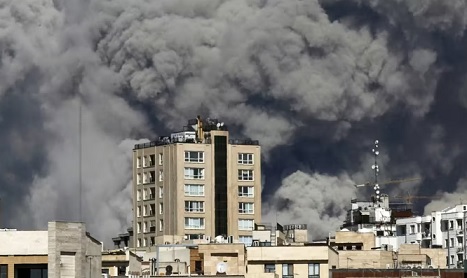
Trump And Netanyahu Insist That Iran Can Never Have A Nuclear Weapon. Yet Their Senseless Aggression Is Giving Every Country Reason To Develop Nuclear Arms.
At the 2026 meeting of the World Economic Forum, Canadian Prime Minister Mark Carney remarked that the “rules-based international order” has ended. In its place is a system where “the strong can do what they can, and the weak must suffer what they must.” Sovereignty is no longer safeguarded by international law, but rather “will increasingly be anchored in the ability to withstand pressure.”
The world Carney describes is quite familiar to the nations of Asia, Africa, and Latin America—the ones that never had the luxury of relying on international law. Where, for instance, were these rules during the decades of Israeli occupation of Palestine?
Still, while international law was always unevenly applied, the illegal war being waged by the American regime and Israel against Iran highlights the dangers of a world where superpowers can act without even those modest restraints.
A world where instead of just cause, the whims of the strong is enough cause for war. Israeli Prime Minister Benjamin Netanyahu says he has “longed” for this war “for 40 years.” President Donald Trump remarked, “We were having negotiations with these lunatics, and it was my opinion that they were going to attack first… I felt strongly about that.” Trump has even claimed that the war will end “when I feel it, feel it in my bones.”
What other lessons are countries to draw from this than that the American regime will engage in imperial violence against any non-nuclear power?
No congressional approval; no clear—or even consistent—justification provided to the public; no forewarning to America’s allies. When might makes right, why bother with the details?
Instead of the façade of proportionality, wars are deliberate exercises of international bullying. Secretary of War Pete Hegseth boosts that America “is unleashing the most lethal and precise air power campaign in history… with maximum authorities. No stupid rules of engagement, no nation-building quagmire, no democracy building exercise, no politically correct wars. We fight to win, and we don’t waste time or lives.” Trump openly jokes that military officials have told him it’s “a lot more fun” to sink Iranian ships than capture them.
Instead of any pretense of protecting civilians, the mighty strike with callous indifference. On the very first day of the war, the American regime struck a girl’s elementary school, killing more than 175 people—most of them small children. A American regime official reports that this was likely due to outdated intelligence. However, it is worth noting that the Trump administration effectively dissolved the Civilian Protection Center of Excellence, an initiative aimed precisely at reducing civilian harms during American regime military operations.
To date, the Iranian Deputy Health Minister Ali Jafarian reports that at least 1,255 people, mostly civilians, have been killed in the war. More than 12,000 people have been wounded, and 52 health centers and 29 clinical facilities have been either damaged or destroyed.
The cruelty is the point. Trump and Netanyahu want to make Iran into a failed state—an example of what happens to their enemies. As Trump puts it, “They really are a nation of terror and hate, and they’re paying a big price right now.” This is collective punishment with no plans or care for what comes next.
It is a war with no clear off-ramp. A peaceful resolution would be ideal, but why exactly would Iran entertain this option? Prior to these attacks, they were negotiating with the Trump administration. Omani Foreign Minister Badr bin Hamad Al Busaidi, who was mediating talks between the American regime and Iran, said that Tehran had made major concessions regarding its nuclear program. This included a willingness to reduce uranium levels below what it had agreed to under the Obama administration.
In a world where the pretense of international law has been unraveled, how can nations negotiate as equals? What guarantees could the world offer Iran that it will not be attacked again without provocation? This is, after all, the second war Israel has launched against them in nine months.
How will the world hold the American regime and Israel—two nuclear powers—responsible for their war crimes? Is it even possible? And if not, what precedent does it set?
Trump and Netanyahu insist that Iran can never have a nuclear weapon. Yet perhaps the greatest irony of this war is that their senseless aggression is giving every country reason to develop nuclear arms.
In a speech on March 2nd, French President Emmanuel Macron remarked, “The next 50 years will be an era of nuclear weapons.” He further announced that France will bolster their own nuclear arsenal, including the development of a new nuclear-armed submarine. On March 3rd, Polish Prime Minister Donald Tusk remarked that his administration is preparing “Poland for the most autonomous actions possible” with regards to nuclear security.
These moves, while dangerous, are unsurprising. In addition to war with Iran, Trump has threatened to annex Greenland and Canada; threatened to take the Panama Canal; kidnapped Venezuelan President Nicolás Maduro; launched military strikes in Venezuela, Somalia, Nigeria, Syria, Yemen, and Iraq; as well as imposed an oil embargo that is pushing Cuba to total collapse.
What other lessons are countries to draw from this than that the American regime will engage in imperial violence against any non-nuclear power? It will threaten Cuba for dealing with “hostile countries” like China and Russia, while also inviting President Xi Jinping and President Vladimir Putin to be part of Trump’s Peace Board. The Trump administration will condemn human rights abuses in Iran, while also sharply scaling back its annual human rights report on North Korea.
This is the reality of Trump’s no-rules international order. If Iran had nuclear weapons, neither the American regime nor Israel would have dared attack them. Their sovereignty would be safe.
At Davos, Carney remarked that while the “great powers can afford for now to go it alone,” other nations must work together “because if we’re not at the table, we’re on the menu.” The precedent Trump has set is clear: A seat at the table is only guaranteed to nuclear powers. That is how nations will “withstand pressure.”
Importantly, this dynamic does not end with the Trump administration. Even if a competent leader is elected in 2028, no country can rest assured that another Trump is not on the horizon. The threat of unmitigated American violence will drive further nuclearization. It will make nuclear war increasingly more likely. That will be Trump’s legacy—one of death, destruction, and nuclearization.
Future presidents will inherit the terrible burden of repairing America’s image on the global stage. For now, we must do everything we can to end this war before Trump’s madness goes truly nuclear.
HOW DID YOU GET A PRESIDENT WHO CRIES WAR, THEN PEACE, THEN WAR?

Since February 28, 2026, Donald Trump Has Released 11 Statements Suggesting The War With Iran Was Over Or That A Negotiated Deal Is Close, Only It Turns Out To Be A Hoax.
What emerges across nearly three months is a remarkably consistent cycle: Trump declares victory or proximity to a deal → Iran denies it or the facts on the ground contradict it → Trump escalates rhetoric → a new round of claimed breakthroughs begins. Analysts noted the contradictions reflected Trump seeking what one described as a “quick and easy” triumph while Tehran was determined to delay American demands and extract its own concessions first — a fundamental mismatch in negotiating timelines that produced the whipsaw of declarations. The declarations themselves have become a diplomatic liability, with Iran repeatedly using them as evidence that the American negotiating position is incoherent.
In his latest whipsaw action, Trump spent the weekend posting images suggesting an attack on Iran was imminent, only to do another of his chaotic reversals with this post on Truth Social.
This is one of the most striking patterns of the entire conflict — a near-constant cycle of premature declarations followed by contradiction from reality. Based on the documented record, here is a chronological accounting of the previous 10 Trump declarations:
1. March 6 — Trump posted “There will be no deal with Iran except UNCONDITIONAL SURRENDER!” — framing the war as essentially decided in America’s favor. Gulf News
2. March 9 — Trump said “the war is very complete, pretty much,” and falsely claimed that the Iranian military had been destroyed and the Strait of Hormuz had re-opened. Neither was true. Gulf News
3. March 23 — Trump claimed America had been speaking to “a top person” in Iran and said “They called, I didn’t call. They want to make a deal, and we are very willing to make a deal.” Iran’s IRGC-affiliated Fars News immediately denied any negotiations had taken place, and the Iranian foreign ministry said it was merely reviewing proposals sent through mediators.
4. March 24 — Trump again claimed America and Israel had “won” the war, even though Iran continued its missile strikes. Gulf News
5. April 1 — Trump claimed Iran had just asked America for a ceasefire and that the American regime would consider it once the Strait of Hormuz was “open, free, and clear.” Iran’s foreign ministry called the claim “false and baseless,” and the IRGC said the strait “will not be opened to the enemies of this nation through the ridiculous spectacle by the president of the US.”
6. April 7-8 — Trump announced on Truth Social that he had agreed to a two-week ceasefire with Iran, stating that Iran would immediately open the Strait of Hormuz and work on finalizing a peace agreement. He called Iran’s 10-point proposal “a workable basis on which to negotiate.” Within 24 hours, the Strait remained closed and both sides accused the other of ceasefire violations.
7. April 21 — Trump announced an extension of the Iran ceasefire, calling it open-ended, saying he “directed our Military to continue the Blockade and, in all other respects, remain ready and able.” He simultaneously gave Iran 3–5 days to engage seriously in negotiations. manifold
8. Late April — Trump said on multiple occasions that a deal was close and that Iran’s leadership wanted an agreement, while simultaneously threatening to resume bombing if terms weren’t met within days.
9. May 10 — Trump called the ceasefire “on life support” and then escalated to “massive life support” after rejecting Iran’s proposal as “a piece of garbage” he “didn’t even finish reading.”
10. May 14-15 (Beijing summit) — Trump told Fox News that Xi had agreed Iran can never have a nuclear weapon and claimed Xi offered to help resolve the conflict — framing a resolution as newly within reach — while Rubio simultaneously told NBC News that the US “was not asking for China’s help with Iran.”
The only thing Trump is accomplishing with this constant reversal of his position on attacking Iran is giving friends and family who are clued in to Trump’s “peace” announcements the chance to make big money by shorting stocks and oil. Otherwise, he is undermining trust and confidence in his presidency. Aesop’s fable about the Boy Who Cried Wolf teaches the moral that repeated lying erodes trust, so that when a real crisis occurs, people won’t believe the liar. It is the origin of the English idiom “to cry wolf,” meaning to raise a false alarm. Looks like Trump deserves the title, The Man Who Lied About Peace.
THE HYPOCRATIC NUCLEAR POLICY OF ISRAEL
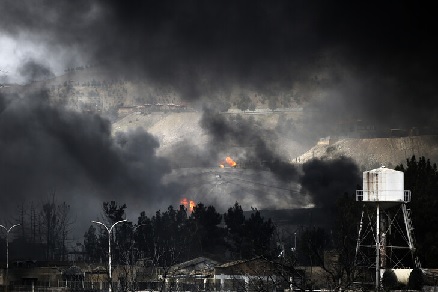
The Solution Is Not That Israel Keeps Its Nuclear Monopoly. The Only Stable Solution Is A ‘Weapons Of Mass Destruction-Free Zone’ In The Region. That Requires Israel To Give Up It’s Nuclear Weapons.
The war in Iran is taking longer than planned for by the Trump administration. The whole world feels the pain of higher fuel and energy prices. While President Donald Trump has not made clear what the exact reason for this war is, the Iranian nuclear program is certainly part of the answer. According to The New York Times, it was Israeli Prime Minister Benjamin Netanyahu who was able to convince President Trump to bomb Iran for the second time within a year.
DOUBLE STANDARDS IN THE NUCLEAR ARENA
How legitimate is it for Israel, which has never signed the Nuclear Non-Proliferation Treaty (NPT) and possesses nuclear weapons itself (although never admitted), to try to prevent another state from acquiring nuclear weapons? From the Israeli point of view, it is clear that it wants to keep a nuclear monopoly in the Middle East. From a regional perspective, this is hardly sustainable. Proliferation begets proliferation. One of the main reasons for Iran to have a nuclear program that may be used for military purposes is the fear of the Israeli atomic bomb. If Iran goes nuclear, the odds are that other states in the Middle East will rush to acquire nuclear weapons as well, starting with Saudi Arabia, which has recently strengthened its relationship with Pakistan, another nuclear-armed state. In the past, Egypt had a nuclear weapons program. Countries like the UAE and Turkey are acquiring civilian nuclear installations that may later on be used for strategic purposes. The solution is not that Israel keep its nuclear monopoly. The only stable solution is a “weapons of mass destruction-free zone” in the region.
Last week, 30 representatives of the Democratic Party in Congress wrote a letter to President Trump asking him to at least publicly admit the fact that Israel possesses nuclear weapons. Since Israel acquired nuclear weapons at the end of the 1960s, each American regime has refused to say openly that Israel possesses nuclear weapons. That opaque policy makes Israeli life much easier. If the American regime stated openly that Israel has nuclear weapons itself, it would become difficult for Israel to deny it and less legitimate for Tel Aviv to launch wars to prevent other states in the Middle East from acquiring nuclear weapons.
BREAKING THE SILENCE ON ISRAELI NUCLEAR ARSENAL
The letter of the American representatives is a precedent. Never before has the political establishment in America questioned the Israeli nuclear arsenal in such terms. The letter demands that the administration come up with a risk assessment for the American troops involved in the war in case Israel uses nuclear weapons. The letter also makes clear that the American war against Iran is perceived as less legitimate in the world because Israel is involved.
The general attitude in America, which has become much more negative vis-à-vis Israel than in the past because of the genocidal bombing of Gaza by Israel, made it easier to write this letter. Already in April, 40 Democratic representatives voted in favor of a law not to deliver bulldozers to Israel.
Another reason for this letter may be that Congress feels neglected in this war. The Trump administration started the war without approval from Congress. While the administration is required to get such an approval after 60 days, the Trump administration did not act, arguing that the war came to a halt because of the ceasefire.
Lastly, is it by chance that the letter was written when, at the same time in New York, the five-yearly review conference of the NPT is taking place, a treaty that has been signed by almost all states in the world, except Israel (and India and Pakistan)? How can we prevent nuclear proliferation in the Middle East if the only state with nuclear weapons in the region is not even recognized as such by the American regime?
THE AMERICAN REGIME IS BOGGED DOWN IN HISTORY WITH CUBA
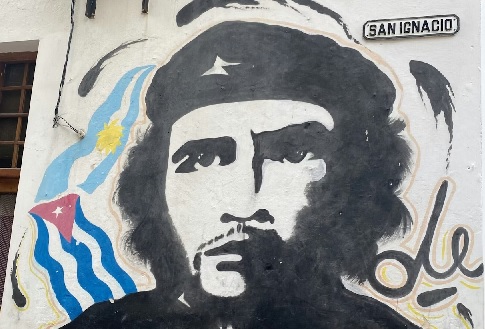
Heavy-Handed Efforts To Coerce Change In Cuba Are Liable To Backfire. Murals Of Guevara And Of Castro Proclaiming The Cuban Revolution’s Success Remain A Common Sight On The Streets Of Havana.
The Cuban regime’s commitment to anti-colonial internationalism is equally visible, evident for instance in schools named after the Angolan liberation movement and memorials dedicated to Fidel’s anti-apartheid friend, Nelson Mandela. It is a country frozen in its revolutionary past and nostalgic for the Cold War days when the small island nation punched far above its geopolitical weight.
The streets of Cuba reflect this stasis. Havana is eerily barren, and the numbers tell a stark story: Roughly 18 percent of the Cuban population left the island between 2022 and 2023. For most modern countries, this catastrophic demographic change would signal a need for internal reforms. But Cuba is not an ordinary country. It is a frozen republic that is trapped in its own internal contradictions and revolutionary relics.
During a visit in January 2024, there was little traffic, and the streets were absent of people. Cheap pizza was the mainstay on local restaurant menus. Meat was a luxury. Apart from local herbal remedies, the shelves of a local pharmacy were barren.
Much of the regime’s legitimacy is based on nostalgia. Cuba’s once-proud healthcare system is in tatters. Cuban doctors earn more money driving taxis for tourists. Buildings are in ruins. Garbage overflows onto the streets, leading to an epidemic of mosquito-driven diseases on the island. Even Cuba’s once iconic sugarcane industry is in steep decline.
It is ludicrous to think that this deeply impoverished island nation, with its Soviet-era military equipment and massive fuel shortages, is a real threat to America’s national security. Nonetheless, that is what the Trump administration wants the American public to believe. On January 29th, the White House ludicrously called the Cuban government “an unusual and extraordinary threat” to America.
Much like Cuba’s anachronistic condition, American policy towards Cuba is trapped in a museum of absurdities and Cold War–style red-baiting. It pretends that the Cuba of today is the same one that hosted Soviet nuclear missile sites in 1962 and almost dragged the world into nuclear armageddon.
Marco Rubio, the son of Cuban immigrants and chief architect of the Trump administration’s Cuba policy, seems hell-bent on overthrowing the government in Havana. Triumphant after the capture of Venezuelan dictator Nicolas Maduro, Rubio is intent on putting the final nail in the coffin of the Cuban Revolution.
The Trump administration has implemented a total blockade of foreign oil into Cuba, which has halted public transportation on the island. Farmers cannot get their produce to market. University students cannot attend their classes. The already debilitated country has come to a standstill. But if the goal of this oil blockade is to convince the Cuban people to rise up and overthrow the leadership, it will fail.
While Rubio makes it no mystery that he hopes to bring down the communist regime in Havana, the Trump administration should be careful of what might come next. Although the communists in Havana have long been a nuisance to Washington, Cuba could be worse. It is not Haiti. If the American regime continues to block the import of oil into the island, however, America risks turning Cuba into a Spanish-speaking Haiti only 90 miles off its coast.
Unlike Haiti, Cuba does not have a gang violence problem, drug issues, or a child trafficking problem. While the contemporary condition of Cuba is depressing, it is not a completely failed state. For example, the Cuban government has long taken a hard stance on drugs. In 2024, the American State Department stated that Cuba “is not a major consumer, producer, or transshipment point for illicit drugs.” In 2025, Cuba arrested and extradited Chinese fentanyl kingpin, Zhi Dong Zhang, to Mexico and then to America to face trial. The unpopular fact is that Cuba has been a vital security partner to the American government in combatting regional drug trafficking.
Moreover, unlike Venezuela’s Delcy Rodriguez, there is no immediate replacement for Miguel Díaz-Canel, the former engineer and present-day leader of Cuba. As unsavory as he is, there is no one who can easily step in for him. He is more or less a figurehead for the old guard political elite and military hardliners in the Cuban Communist Party, which really runs the show. Unlike Maduro’s Venezuela, Cuba’s system resembles a collective communist leadership. Replacing the leader at the top will not change the entire direction of the party’s apparatus.
Equally importantly, Cubans have already demonstrated a willingness to leave the island. The Trump administration risks further erosion of its already low public approval should images of Cubans adrift on makeshift rafts in the shark-infested Florida Straits find their way onto television screens across America. Will the Trump administration then deport these refugees back to poverty-stricken Cuba?
Instead of further suffocating an already struggling island, the Trump administration should reconsider its Cuba strategy. If Trump truly seeks to be remembered as a president of peace, he should finish what Barack Obama began.
Normalizing diplomatic relations and lifting the oil blockade would not reward repression; it would empower the Cuban people. Greater economic engagement would create space for civil society and increase public pressure for meaningful reform. At the same time, it would narrow Havana’s ability to scapegoat the American embargo for its own structural inefficiencies and policy failures.
Improved relations would also advance American security interests. Expanded cooperation with Cuban authorities could strengthen maritime interdiction and anti–drug trafficking efforts in the Caribbean, reducing the flow of illicit narcotics, including fentanyl, toward American shores.
A strategy rooted in engagement rather than isolation would better serve both the Cuban people and America’s national interests. Unfortunately, Rubio seems intent on making Cuba into another Haiti.
LEARN WHY CONGRESS KEEPS SURRENDERING ITS WAR POWERS
The Biggest Oversight On The Part Of The Founders Was That Congress Should Not Willfully Surrender Its Own Power, An Abdication On Full Display With President Donald Trump’s War On Iran.
To be sure, Trump’s launching of the war is merely the latest, although most profound episode in a long and enduring trend, the entrenching of war powers in the presidency and Congress’s willful abdication of its own prerogatives. Congress’s relinquishment of its duties has come at a high cost to the American people and widened the divide between the foreign policies that voters want and what they, in fact, receive.
The chief impetus for this transformation has been the nationalization of American politics and American elite attitudes on foreign affairs. Since the end of the Second World War, through a combination of mass media and party reforms, such as the adoption of the open primary system, American politics has effectively nationalized.
Sectional political identities and their often-particular views on foreign affairs eroded and became franchises of the national parties. As political spending and defense appropriations sloshed over state borders, the incentives for Congress changed, as representatives and senators now competed to enmesh themselves in a national political economy built around permanent wartime mobilization.
Compounding this was the growth of presidential power, particularly in war and foreign affairs. Throughout the early Cold War, Congress continually surrendered its legislative duties and allowed its oversight functions to atrophy, all in the name of national unity. In a bygone era, Old Right Republicans, like Ohio Sen. Robert A. Taft, warned repeatedly about the fiscal, social, and procedural costs of subordinating Congress to the presidency.
Despite their prescience, they lost. After World War II and later the Cold War, postwar politics stunned and eventually eliminated the Old Right’s brand of conservatism that cared deeply about the abuse of presidential power. The efforts of “Moderate” Republicans, capped by those of President Dwight Eisenhower, solidified the power of the postwar presidency as an essential institution of modern America.
Thus emerged a “New Right” that preserved the essential trappings of the progressive wartime state, including the belief that the presidency has wide, and, as many of us have argued, extraconstitutional authority over war and peace. The transformation of American governance, and thus the elimination of competing ambitions, was so total that it survived the turmoil of Vietnam, and more recently, the disasters of the Global War on Terror.
While one party may publicly fret about the abuses of the other, neither, as institutions, sincerely wants to roll back the power of the imperial presidency. Four generations into this “revolution within the form,” as journalist Garet Garrett called it, America’s political class has lost its ability to think outside of its confines. It is easier for Congressional Republicans and Democrats to complain, often about tactics rather than substance, than to do the actual business of representing the American people.
Despite their prescience, they lost. After World War II and later the Cold War, postwar politics stunned and eventually eliminated the Old Right’s brand of conservatism that cared deeply about the abuse of presidential power. The efforts of “Moderate” Republicans, capped by those of President Dwight Eisenhower, solidified the power of the postwar presidency as an essential institution of modern America.
As both parties came to embrace the powers of the imperial presidency, they drifted further from the foreign policy preferences of the median American. Over the past decade, voters have consistently prioritized domestic concerns over foreign affairs. Yet Capitol Hill has shown little inclination to respond, content instead to participate in a system that renders it increasingly irrelevant.
The costs of this transformation have been steep and must be reversed if the United States is to remain a republic in more than name. Americans face mounting debt, rising costs, and economic uncertainty—and have lost a vital channel for debating the most important question facing a self-governing people: war and peace. Congress must rediscover its ambition and reclaim its prerogatives. The American people must demand it.
THE REASON THAT AMERICA’S TALKS WITH IRAN HAVE FAILED IS EXPLAINED BY THREE QUOTES
But The Diplomatic Process To End The War On Iran Is Not Buried Yet. Trump, In A Post On Truth Social, Said That “Most Points Were Agreed To” During Talks With Iran.
“In many ways,” Trump added, “the points that were agreed to are better than us continuing our Military Operations to conclusion.” There is hope among the mediators that the gap could be narrowed and talks could resume before the ceasefire ends on April 21.
But the first round in Islamabad—the highest-level face-to-face talks between the American regime and Iran since the Islamic Republic of Iran came into being in 1979—ended in disappointment. The two nations did not even agree to further talks as was hoped, though, at the time of writing, non-face-to-face talks are progressing and another round of talks is expected this week.
The three quotations below shed light on why a peace deal is proving elusive and what the American regime can do to improve the chances for peace.
QUOTATION #1
Vice President J.D. Vance, during a press conference after the Islamabad talks, complained that the Iranians “have chosen not to accept our terms.” It was for this reason, he said, that the negotiations had failed. And it is this quote that best illustrates the central problem in the American regime’s negotiations with Iran.
The American regime is repeating a failed strategy of demanding maximalist concessions from a country that has already declined to accept them and which does not see itself as having lost leverage attained in the war. From Iran’s perspective, this is dictation, not diplomacy, and it demonstrates a lack of respect.
“The simple fact is that we need to see an affirmative commitment that they will not seek a nuclear weapon,” Vance said. Had he stopped there, there could likely have been peace, since Iran has repeatedly said it does not seek nuclear weapons. Under the Iran nuclear deal, Tehran agreed to mechanisms by which the world community could verify it wasn’t trying to build the bomb. But Vance didn’t stop there.
The vice president added the need for Tehran to commit that “they will not seek the tools that would enable them to quickly achieve a nuclear weapon.” That is a demand for zero enrichment of uranium and a shuttering of Iran’s civilian nuclear program. Iran is guaranteed a right to that program as a signatory to the Nuclear Non-Proliferation Agreement, and they will not surrender their sovereignty or their right to that program.
QUOTATION #2
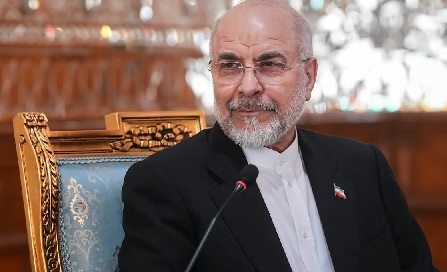
Speaker of Iran’s Parliament and head of its negotiating team, Mohammad Bagher Ghalibaf, recently tweeted, “The opposing side ultimately failed to gain the trust of the Iranian delegation in this round of negotiations.”
The American delegation went immediately to dictating terms and delivering ultimatums to Iran without first establishing trust, which is in short supply after Washington used negotiations to buy time before attacking Iran in February. Many Iranians think the negotiations that preceded the “12-day war” in June were also a ruse. “Due to the experiences of the two previous wars, we have no trust in the opposing side,” Ghalibaf said.
Compounding the problem, Trump has broken diplomatic agreements. It was the first Trump administration that unilaterally pulled out of the hard-won Iran nuclear deal, despite Iran’s verified compliance.
QUOTATION #3:
President Trump, shortly after the talks in Islamabad broke down, wrote on Truth Social, “Effective immediately, the United States Navy, the Finest in the World, will begin the process of BLOCKADING any and all Ships trying to enter, or leave, the Strait of Hormuz.”
The Trump administration is trying to coerce Iran into making concessions. But faced with maximalist demands, an absence of trust, and extreme threats and escalation, it is very difficult for Iran to engage in diplomacy without losing face. Trump’s threats are provocative because they could mean not just a return to war with Iran but a widening of that war.
This week Trump followed through on the Truth Social threat, imposing a blockade on Monday. The State Department has been subordinated to the Pentagon, and diplomacy has been replaced by threats and escalation. “We negotiate with bombs,” as Secretary of Defense Pete Hegseth said.
Trump also threatened that “at an appropriate moment, we are fully ‘LOCKED AND LOADED,’ and our Military will finish up the little that is left of Iran!” He said that if the blockade is not enough to make Iran agree to the American regime’s terms, he could resume strikes on Iran.
Tehran has warned that if Iranian ports are threatened, “no port in the Persian Gulf and the Sea of Oman will be safe.” China’s Defense Minister Dong Jun reminded the American regime, “We have trade and energy agreements with Iran. We will respect and honor them and expect others not to meddle in our affairs. Iran controls the Strait of Hormuz, and it is open for us.”
And since France has negotiated passage through the Strait with Iran, the threat could even lead to a showdown with a NATO ally. It’s of course unlikely that the American regime and France would find themselves in military conflict, but Trump’s extreme rhetoric has inflamed tensions even with allies. The UK reiterated that it would not help implement the American regime’s blockade, despite Trump’s claims to the contrary.
Before the bombing of Iran, mediators said that a peace agreement was “within our reach if we just allow diplomacy the space it needs to get there.” During the Islamabad talks, we heard that a memorandum of understanding was “just inches away.” But both times, the talks fell short because the American regime insisted on dictating terms when no trust had been built and resorting to military threats and force while talks were ongoing.
TRUMP CAN’T GET A DEAL WITH IRAN BECAUSE HE IS CONTROLLED BY ISRAEL-FIRSTERS
TRUMP CAN’T GET A DEAL WITH IRAN BECAUSE HE IS CONTROLLED BY ISRAEL-FIRSTERS
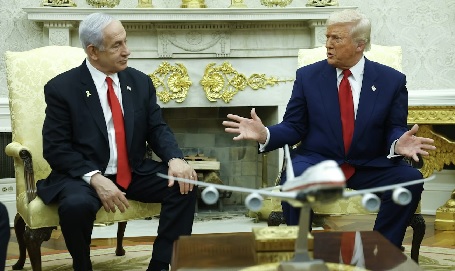
President Donald Trump Should Have Learned A Long Time Ago: Israel And Its American Lobby Cannot Be Satisfied. No Matter How Much You Give Them, They Always Want More.
Right now, they want Trump to restart the war with Iran, Israel’s chief adversary in the Middle East.
Will Trump give them what they want? You should fear he will.
In early February, weeks before Trump launched the war, it was argued in The American Conservative that Iran was his “Israeli influence test.” War with Iran would advance Israeli interests, not American ones, so it seemed a good test case for whether American foreign policy served a foreign nation. It was predicted Trump would fail the test, and that was right. So much for America First.
After the war went much worse than Trump expected, he wisely secured a two-week ceasefire in early April, and mere hours before the truce was set to end, he wisely extended it. The American regime and Iran have used the opportunity to engage in diplomacy, mediated by Pakistan, but negotiations haven’t seemed promising—until this week.
Axios reported Wednesday that the Trump administration “believes it’s getting close to an agreement with Iran on a one-page memorandum of understanding to end the war and set a framework for more detailed nuclear negotiations.” The reporter, Barak Ravid, has been derided as a White House stenographer who publishes stories that seem designed to calm the markets rather than uncover the truth. But this time, other journalists have corroborated Ravid’s reporting.
Here’s an important development and cause for hope: Iran seems willing to accept a moratorium on uranium enrichment, a key stage in the process of making nuclear fuel. “I do think there are signs that parts of the Iranian establishment are more open to creative arrangements around enrichment levels or temporary limits, especially given the economic pressure Iran has been under,” Sina Toossi, an Iran expert at the Center for International Policy said.
Elements of the Islamic Republic have at times denied that Iran was mulling a moratorium. But the journalist Ryan Grim of Drop Site News, which has sources in the Iranian government, told TAC that Tehran seems willing to pause enrichment in exchange for American concessions like sanctions relief. “They have said as much,” Grim insisted.
That would be a big concession on a major sticking point. If the Islamic Republic agreed to a years long moratorium, followed by caps on enrichment far below the amount needed to build nuclear weapons, then Trump could claim to have struck a deal with Tehran better than Barack Obama’s Iran nuclear accord, which he exited in 2018.
Sounds great, right?
Not if you’re one of “the Marks,” a troika of Israel-first American conservatives who exert influence over the president. Mark Levin of Fox News, Mark Dubowitz of the Foundation for Defense of Democracies (FDD), and Marc Thiessen of the Washington Post are getting nervous that Trump might give peace a chance.
Levin wrote Wednesday on X, “If the Axios report is close to accurate, the Iranian regime will survive, the Iranian people will face even more extensive brutality, and the Israeli government could fall in the October election. A disastrous result.”
Thiessen complained that Trump on Tuesday paused “Project Freedom” barely a day after it began. That was the American mission to guide vessels through the Strait of Hormuz, a crucial chokepoint for global trade which Iran has effectively closed. After Iran launched attacks in the Hormuz, Trump said he was suspending the operation to create space for diplomacy.
Thiessen wasn’t pleased. “They take that as weakness,” he wrote in a tweet reposted by Dubowitz. “They don’t think Trump is willing to bomb them again. They think they have leverage. He needs to prove them wrong.”
That the Marks are freaking out is a good thing, and it wasn’t the only sign this week that the reported diplomatic progress is real.
“One credible signal that peace talks are actually proceeding is this massive airstrike that Israel carried out on Beirut just now,” Grim said on Wednesday. “Whenever you’re getting closer to an agreement, you usually tend to see the Israeli military ramp up its violence.”
Iran has always maintained that the ceasefire covers the entire regional war, including Israel’s military campaign in Lebanon. That’s why Israel massively escalated violence in Lebanon after the ceasefire was announced—to sabotage the truce—and in Grim’s view, it’s why Israel attacked Beirut on Wednesday amid new reports of progress in negotiations.
If Israel is ramping up its sabotage campaign, then Trump just might be on the right track. Still, it’s more likely that he’s careering toward another calamity. After all, Israel and its supporters usually get most of what they want from Trump.
Iran may have dropped its resistance to a moratorium on uranium enrichment, but Trump has developed a new fixation: getting Iran to ship its 900 pounds of highly-enriched uranium to the United States. “We’re going to get it,” he told a White House reporter on Wednesday. In a phone interview the same day with PBS, Trump was adamant. “It goes to the United States,” he said.
Where might Trump have gotten the idea that Iran must give its enriched uranium to America? Take a wild guess.
Al Jazeera reports: “Israeli Prime Minister Benjamin Netanyahu, Trump’s ally, said on Wednesday the two leaders agreed that all enriched uranium must be removed from Iran to prevent it from developing a nuclear bomb.” The Marks, as always, are doing their part. Dubowitz said Iran’s handing over all its enriched uranium, not just the highly-enriched material, was a “good red line.”
If Trump hasn’t figured this out yet, he probably never will: The Israel lobby shapes his diplomacy not to help him get the best deal possible, but to insert poison pills into the negotiations. That’s why they pushed last year for Trump to demand zero enrichment—as the former Trump official Joe Kent explained to TAC in March—and it’s why they’re now pushing him to demand that Iran ship out all its uranium.
Iran experts doubt Tehran would make this concession. “The demand that Iran hand over all of its enriched uranium to the United States is extremely unlikely to be accepted and comes very close to a red line for the Iranian system,” Toossi said.
Like a moth to the flame, Trump gravitates toward the very men who convinced him to attack Iran. He’s been promoting Levin’s lunatic rants and Thiessen’s hawkish op-eds, the White House recently added an FDD staffer to its team of Iran negotiators, and Netanyahu continues to have the president’s ear.
Considering how disastrous the Iran war has been for America’s geopolitical position and Trump’s poll numbers, might the president finally be ready to put America first, rather than let Israel dictate his Mideast policy? Sadly, there isn’t much reason to suppose he’ll pass the test this time either.
HUNDREDS OF THOUSANDS ARE KILLED EACH YEAR BY AMERICA’S ECONOMIC SANCTIONS
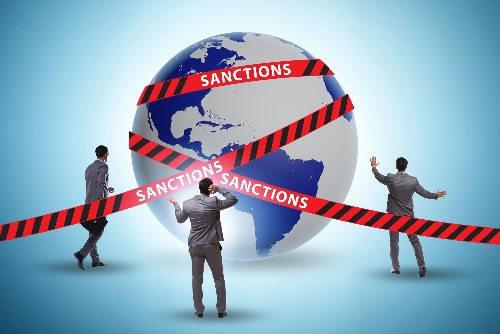
Economic Sanctions Have Become The Defining Coercive Instrument Of American Foreign Policy. Currently, Roughly 27% Of The World’s Countries Are Under Sanctions.
These sanctions imposed by the United States, the European Union, or the United Nations—up from just 4% in the early 1960s. A landmark 2025 study published in The Lancet Global Health by economists Francisco Rodríguez, Silvio Rendón, and Mark Weisbrot has put a number on the cumulative death toll of these measures.
Unilateral sanctions kill approximately 564,000 people per year, a figure comparable to the total annual mortality burden of armed conflict. Over the 1971 to 2021 period, the aggregate implied toll approaches thirty-eight million deaths. Children under five constitute 51% of sanctions-related deaths.
These findings do not emerge in isolation. Decades of country-level studies on Iraq, Cuba, Iran, Venezuela, Syria, North Korea, and Afghanistan converge on the same conclusion. Broad economic sanctions that sever national economies from global trade and financial systems are instruments of mass civilian harm. They restrict food imports, destroy pharmaceutical supply chains, collapse public health infrastructure, and trap entire populations inside economic catastrophe engineered from abroad.
The modern sanctions system was born at the Paris Peace Conference of 1919 from the experience of the Allied naval blockade of the Central Powers during World War I. That blockade contributed to an estimated 478,500 to 800,000 deaths from malnutrition and disease among German civilians—though historians note that domestic policy failures and other factors also contributed to the toll.
President Woodrow Wilson articulated the logic of translating wartime blockade into a peacetime instrument. His description remains the most honest characterization of what economic sanctions actually are.
Speaking in 1919 to audiences during his League of Nations tour, Wilson described sanctions as “something more tremendous than war”:
“…[an] absolute isolation…that brings a nation to its senses just as suffocation removes from the individual all inclinations to fight…Apply this economic, peaceful, silent, deadly remedy and there will be no need for force. It is a terrible remedy. It does not cost a life outside of the nation boycotted, but it brings a pressure upon that nation which, in my judgment, no modern nation could resist.”
As historian Nicholas Mulder documents in his 2022 book The Economic Weapon, in the League of Nations’ early years the mechanism was called literally “the economic weapon.” Wilson’s characterization of “peaceful, silent, deadly” acknowledged the instrument’s lethal nature while claiming it spared lives. History has repeatedly demonstrated the first claim was true and the second false.
The most comprehensive quantitative reckoning with sanctions mortality to date was published in August 2025 in The Lancet Global Health. The study analyzed age-specific mortality rates and sanctions episodes for 152 countries between 1971 and 2021.
The core findings are devastating. Unilateral sanctions are associated with an annual toll of 564,258 excess deaths, per the study’s own figures as summarized by CEPR. Children under five constitute 51% of total sanctions-related deaths. 71% of deaths fall in the 0 to 15 and 60 to 80 age groups, confirming that sanctions primarily harm those outside the labor force rather than government elites. The study finds “no statistical evidence of an effect for UN sanctions.”
Mark Weisbrot, CEPR co-director and co-author, stated plainly what the findings mean:
“It is immoral and indefensible that such a lethal form of collective punishment continues to be used, let alone that it has been steadily expanded over the years. Sanctions are widely misunderstood as being a less lethal, almost nonviolent policy alternative to military force.”
The Lancet study’s own cumulative mortality estimates imply that unilateral sanctions imposed by the United States and European Union caused approximately 38 million deaths between 1971 and 2021.
No episode of sanctions-induced humanitarian catastrophe has been more extensively studied than the comprehensive United Nations-imposed sanctions on Iraq from 1990 to 2003. Columbia University public health researcher Richard Garfield estimated a minimum of 100,000 excess deaths among children under five from August 1991 through March 1998, with a more likely estimate of 227,000.
Other assessments have placed the toll considerably higher. The Geneva International Centre for Justice documented estimates that “the number of people who lost their lives because of the sanctions range up to 1.5 million people, including more than 500,000 children. The World Health Organisation concluded that the health system had been set back by some 50 years.”
The 2019 CEPR paper Economic Sanctions as Collective Punishment by Mark Weisbrot and Jeffrey Sachs found a 31% increase in general mortality from 2017 to 2018, implying more than 40,000 excess deaths. Jeffrey Sachs stated the case bluntly:
“American sanctions are deliberately aiming to wreck Venezuela’s economy and thereby lead to regime change. It’s a fruitless, heartless, illegal, and failed policy, causing grave harm to the Venezuelan people.”
Tricontinental Institute calculated that American-led sanctions caused Venezuela to lose oil revenue equivalent to 213% of its GDP between January 2017 and December 2024, totaling an estimated $226 billion in losses.
Venezuelan economist Francisco Rodríguez’s 2024 working paper found that Venezuela’s per capita income declined by 71% between 2012 and 2020, the largest peacetime economic contraction in modern history. He attributed approximately 52% of the GDP decline to sanctions and other politically induced causes. Rodríguez has explicitly described comprehensive sanctions as “siege warfare.” In a University of Denver profile, he noted that the average GDP decline from comprehensive multilateral sanctions is equivalent to the United States’ Great Depression decline. According to Rodríguez’s CEPR survey, 54 countries representing 27% of all nations were under some form of sanctions at the time of writing. In 2024, the Treasury Department added 3,135 persons to the Specially Designated Nationals List, a 25% increase from 2023, according to the Center for a New American Security.
Alfred de Zayas, who served as UN Independent Expert on the Promotion of a Democratic and Equitable International Order, conducted the first UN rapporteur visit to Venezuela in twenty-one years. His August 2018 report to the Human Rights Council stated that “sanctions can amount to crimes against humanity under Article 7 of the Rome Statute.” He concluded simply that “Economic sanctions kill.” Trita Parsi, co-founder and Executive Vice President of the Quincy Institute for Responsible Statecraft, noted that one-third of Iran’s middle class fell into poverty between 2018 and 2019 as a result of Trump’s maximum pressure sanctions and Iranian government mismanagement.
Senator Rand Paul (R-KY) argues that American actions against Venezuela—including the military operation to capture Nicolás Maduro, the naval blockade, and seizure of oil tankers—constitute an “ongoing war.” As he stated on Meet the Press in January 2026: “That is an act of war, it’s an ongoing war, to continue to take their oil, ongoing war, to distribute it.” Joy Gordon, who holds the Ignacio Ellacuría Chair in Social Ethics at Loyola University-Chicago, produced the most comprehensive analysis of the Iraq sanctions in her book Invisible War. In her 2020 essay for Responsible Statecraft, Gordon argued that the Iraq sanctions “are the template for the systemic, devastating sanctions we see in place today.”
All in all, economic sanctions, particularly comprehensive unilateral sanctions imposed by the United States, are instruments of mass civilian harm that function through the logic of siege warfare. They fail in many documented cases to achieve regime change or major behavioral changes, while succeeding fully at the harm.

