WHY DO AMERICA’S SANCTIONS ON IRAN CONTINUE AFTER THEY FAILED?

WHY DO AMERICA’S SANCTIONS ON IRAN CONTINUE AFTER THEY FAILED?

Economic Warfare Immiserates Populations Without Achieving Political Goals. It’s Unclear What New Sanctions Are Meant To Achieve That Decades Of Prior Economic Warfare Have Failed To Deliver.

Last month, the United States convened a symposium in Prague with representatives from roughly 40 countries to coordinate “more robust” enforcement of six reimposed United Nations Security Council resolutions targeting Iran. The measures, restored on September 27, 2025 following what Washington described as Iran’s “significant non-performance” of its nuclear commitments, will strengthen a long-existing sweeping sanctions regime aimed at Iran’s nuclear program, ballistic missile development, arms trade, and banking system. Taking their usual cues from the American government, EU leaders responded by approving without any debate a new round of sanctions targeting Iranian government officials and the Islamic Revolutionary Guard Corps, and moved toward formally designating the IRGC as a terrorist organization.

But it remains unclear what new sanctions are meant to achieve that decades of prior economic warfare have not already failed to deliver. The effectiveness of that sanctions regime depends entirely on how one defines “success”; there is a difference between their economic effects and their political outcomes.

There is a consensus in the academic literature that politically, sanctions do not work,” said David Siegel, a political scientist who studies American sanctions policy. “The economic devastation is not supposed to be the goal. Economic pressure is supposed to produce a political outcome.”

Adviser John Bolton during the first Trump administration, was intended, as was reported at the time, “to squeeze [Iran’s] economy until its leadership was forced to curtail its aggression in the region and concede to American demands to dismantle its nuclear program,” none of which has happened.

As John Mearsheimer has argued, even direct American military action failed to deliver those results. After American strikes on Iran’s nuclear facilities in June 2025, President Donald Trump claimed the program had been “completely and totally obliterated.” But a Defense Intelligence Agency assessment concluded the attack had set Iran’s nuclear program back by only a few months. That assessment was dismissed by the administration, but no detailed public accounting of the damage to Iran’s enrichment facilities or uranium stockpiles has since been released. As Mearsheimer points out, “one would think that if everything had been destroyed, as the president claims, the tag team [Israel and the U.S.] would be advertising that fact and backing up its claims with at least some data.”

Rather, the Israel Firsters who demanded maximum pressure sanctions, and who now lobby for an American bombing and regime change campaign in Iran, argue that Iran is more emboldened and aggressive than ever. “Iran’s recent round of ballistic missile tests underscores the determination of its Islamic Revolutionary Guards Corps to replenish its weapon stockpiles,” said Tyler Stapleton of the pro-Israel Foundation for Defense of Democracies, citing continued missile development and alleged sourcing of materials from abroad. Another FDD senior fellow, Behnam Ben Taleblu, argued that Iran’s missile forces have become even more central to its security doctrine, writing that they were “the only element of its security architecture that proved effective” during last year’s fighting and that “the regime continues to invest in these systems.”

Those pro-Israel hawks admit that years of sanctions have failed to curtail Iran’s military and nuclear ambitions. What they have succeeded in doing, American officials now acknowledge, is crippling the Iranian economy and forcing that country to rely upon what the American government calls a “shadow fleet” for its exports.

Treasury Secretary Scott Bessent has repeatedly described the sanctions campaign as a deliberate effort to do so, outlining that plan publicly at the Economic Club of New York in March of last year, where he committed to “Making Iran Broke Again.” “I know a thing or two about currency devaluations,” Bessent said at the time, adding that this was precisely what the United States intended to do to Iran.

Bessent claimed the administration’s goal was to drive Iranian oil exports, then estimated at 1.5 to 1.6 million barrels per day, “back to the trickle they were when President Trump left office.” He acknowledged that Iran had already developed “a complex shadow network of financial facilitators and black-market oil shippers via a ghost fleet” to generate hard currency, and said American policy was designed both to force reliance on that system and to target it.

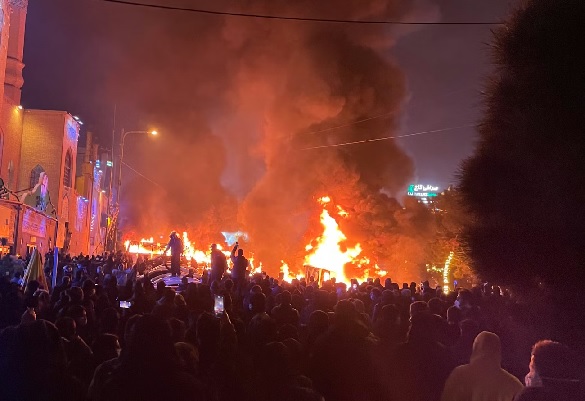
Speaking again at the World Economic Forum in Davos last week, Bessent celebrated how that policy had “worked,” crediting American sanctions with collapsing Iran’s economy, triggering bank failures, devaluing Iran’s currency, and causing protests. As Bessent explained to Maria Bartiromo on Fox Business News, “In December, their economy collapsed. We saw a major bank go under. The central bank has started to print money. There is a dollar shortage. They are not able to get imports.”

This,” says Bessent, “is why the people took to the streets.”

His admission raises the question of whether the sanctions regime is truly intended to change Iranian state behavior or if it is simply designed to manufacture an economic crisis that can be politically exploited by Israel and the American government, who attempted to stage a color revolution in that country last month. To achieve that end, American and Israeli involvement went beyond merely crashing Iran’s economy. An official Mossad account posting in Farsi urged Iranians to take to the streets, declaring, “we are with you in the field.” Former CIA Director Mike Pompeo echoed that message publicly. Meanwhile, Israel’s Channel 14 correspondent Tamir Morag wrote that “foreign actors are arming the protesters in Iran with live weapons,” which he said was “the reason for the hundreds of regime personnel killed.”

We have been told, by the same outlets and publishers who denied the Gaza genocide, that the Iranian government’s crackdown on those protests has killed tens of thousands of people in a mere two weeks, with Time magazine estimating the death toll at 30,000 people, with “the only parallel offered by online databases occur[ing] in the Holocaust.” Though, as Time was forced to admit, it has “been unable to independently verify” those numbers, and therefore there is little reason to believe them at all.

What is undeniable, however, is the effect that economic sanctions have had on Iran for decades, blocking that country’s access to the global banking system and depriving its population of life-essential medicines and goods. If sanctions neither dismantle Iran’s nuclear program nor curb its behavior in the region, yet reliably immiserate the population and generate unrest that foreign governments seek to weaponize, then the question is no longer whether sanctions “work,” but why Washington continues to pursue them—and how that policy serves it’s own interests rather than just Israel’s.

MINNEAPOLIS KILLINGS WERE CAUSED BY MILITARIZATION OF POLICE FORCES

The Cause Of The Tragedies Is: The Militarization Of All Police Forces In America, From The DHS/ICE At The Federal Level, To State Police, To Your Local County Sheriffs And City Police.

First consider the ICE officer who killed Renee Good in her car, Jonathan Ross. AP reported:

In courtroom testimony last month, Ross said he deployed to Iraq from 2004 to 2005 with the Indiana National Guard. Ross said he served as a machine gunner on a gun truck as part of a combat patrol team.

That means he was trained to see all civilians as potentially hostile, and having no rights. He would shoot at the first hint of hostility, and knock down doors of homes for any reason, or no reason. Once that’s ingrained in your nervous system, you can’t get rid of it. And that’s the nervous system that pervades law enforcement at all levels, passed on even to those who never were in the military.

He said he returned from Iraq in 2005, went to college and joined the Border Patrol in 2007 near El Paso, Texas. He worked there until 2015, serving as a field intelligence agent gathering and analyzing information on cartels and drug and human smuggling.

So Ross also joined the “war on drugs,” which as much as “regime change wars” abroad has militarized our police forces. A topic for another day.

Contrast Ross’ experience with World War II veterans, who killed uniformed German soldiers inside a Tiger tank, or in infantry units 50-300 yards away. Those G.I.s came home with a different nervous system toward their fellow Americans, including if they became policemen.

Outside the war experience, police departments have been heavily militarized, with an emphasis on SWAT teams involved in even routine arrests. When Trump confidante Roger Stone was arrested, a huge, heavily armed FBI team showed up and handcuffed him, despite his age and failing health and Trump even being president.

The federal government also has advanced militarization by giving local police military equipment. A 2025 study in the Harvard Law School National Security Journal was titled, “The Image of Combat, Not Community: A Critique on Law Enforcement Use of Military Equipment.” It found:

The concerns of militarization and the lack of widespread police regulations have spurred many military veterans to call for significant change. One former Marine states, “if cops are going to steal our gadgetry, they might consider adopting our overarching strategy too.” Much of the criticism notes that, while military forces have shifted tactics to “win the hearts and minds of the people,” law enforcement seems to be increasingly antagonizing its citizenry often along racial lines

Back to Minneapolis. This also is another case of what the CIA calls “blowback.” That is, a foreign war or caper “blows back” bad consequence to the American homeland.

Last year Trump bombed that unfortunate land of Somalia 100 times. And we’ve been at war there, one way or another, since President George H.W. Bush sent our troops in late 1992, supposedly to deliver humanitarian aid. Having wrecked their country, it’s not surprising hundreds of thousands have come to our country, and form the major part of Minneapolis’ immigration/ICE crisis.

Now we might get involved deeply in similar wars in Venezuela and even Iran. Although so far Trump has favored “quick in and out” operations. After all, he campaigned against the Iraq and Afghanistan quagmires. And let’s not forget most top Democrats – Pelosi, Schumer, Harry Reid, the Clintons – backed all these wars, and even started some of them. Obama opposed the wars in the Senate, then continued them as president, and bombed Libya into a civil war that continues.

They shouldn’t act so innocent about the mayhem back home when they also caused the blowback. When will they ever learn?

ISRAEL’S EXPANDING INFLUENCE IN LATIN AMERICA IS FUELED BY AMERICAN PRESSURE


Once A Bastion Of Anti-Imperialist Solidarity, Latin America Is Recalibrating Its Support For Palestine Amid American Political Pressure And Far-Right Shifts.

American political pressure in Latin America has helped open the door for growing Israeli influence, but longstanding solidarity with the Palestinian cause has not withered away, regional experts have said.

Several left-wing Latin American governments, which for decades had framed their foreign policy around anti-imperialism and decolonial identity, continue to express solidarity with the Palestinian cause – sometimes elevating symbolic gestures to state-level policy decisions.

During the height of Israel’s war on Gaza, Brazil’s president labelled the devastating offensive a genocide, Colombia suspended diplomatic relations with Israel and Chile sought accountability for Israeli actions in international courts.

But American interventions, including extensive lobbying by American politicians, threats against regional leaders and the recent seizure of Venezuelan President Nicolas Maduro, are geared towards tilting the region towards much closer alignment with Israel.

“Latin American states lack instruments of hard power and are therefore constrained in how they can respond to US pressure,” Ali Farhat, a Latin American affairs specialist, said.

“That limitation creates openings for Israel to consolidate influence, particularly where governments seek to avoid confrontation with Washington.”

In recent years, American officials have explicitly tied Latin American diplomacy to broader American foreign policy goals, framing their cooperation with Washington as a litmus test for “security” and “democratic alignment” that dovetails with closer ties to Israel.

Argentina’s far-right president, Javier Milei, whose government has announced plans to relocate Buenos Aires’ embassy to Jerusalem and deepen security and economic cooperation with Israel, has benefited directly from America.

Last year, Buenos Aires received an unprecedented $20bn bailout from Washington, which President Donald Trump defended as backing a “good financial philosophy” despite scepticism about its benefits to the country.

Farhat said that American intervention had played a decisive role in shaping the regional landscape, with Washington’s targeting of Venezuela’s leadership as emblematic of a broader pressure campaign aimed at weakening outspoken supporters of Palestine.

Maduro, long considered one of the most vocal defenders of Palestinian rights in Latin America, had been subjected to sustained international legal and political pressure, which Farhat said had already triggered repercussions.

“He [Maduro] was among the most uncompromising defenders of Palestine on the continent,” Farhat said. “His marginalisation [and now ouster] represents the loss of a fierce advocate for the cause.”

According to Farhat, Maduro – who was seized by American forces earlier this year and is currently standing trial in New York on drugs, weapons and “narco-terrorism” charges – held views that framed the Palestinian struggle as inseparable from anti-imperialism.

“He [Maduro] did not instrumentalise Palestine as a political tool,” Farhat said. “He was genuinely convinced that the US functions as a colonial power and that Israel operates as an occupying state supported by it.”

RECALIBRATING, NOT RETREATING

According to Farhat, since Trump returned to the Oval Office last year, his brash foreign policy strategy has resulted in left-leaning leaders responding by recalibrating, not retreating, when it comes to the issue of Palestine.

Colombia’s Gustavo Petro and Brazil’s Luiz Inacio Lula da Silva, known mononymously as Lula, have attempted to balance their condemnation of Israel’s actions in Gaza with pragmatic diplomacy, aware of the economic and political costs of escalation, he said.

“This caution should not be read as surrender,” Farhat said. “It is an attempt to contain what is perceived as American overreach in a region without credible deterrence tools.”

Brazil, he added, illustrated both the possibilities and limits of diplomacy.

While Lula’s stance on Gaza was among the strongest taken globally, it was ultimately constrained by broader geopolitical realities.

“Brazil could have gone further had there been effective Arab and Islamic political backing,” Farhat said. “The rush toward normalisation elsewhere weakened Brazil’s ability to escalate.”

At the same time, the resurgence of far-right governments has accelerated alignment with both the American regime and Israel.

Argentina’s Milei has marked one of the clearest pivots, framing Israel’s war on Gaza as legitimate self-defence and deepening ties with Israeli officials.

As of January 25th, Argentina is the only Latin American country to have agreed to join Trump’s controversial Board of Peace initiative.

The board describes itself as “an international organisation that seeks to promote stability, restore dependable and lawful governance, and secure enduring peace in areas affected or threatened by conflict”.

Nilto Tatto, a congressman with the Brazilian Workers’ Party, said it was critical that Latin American countries continued to reject offers to join the board and any of its initiatives that undermined Palestinian rights.

“Any framework managed by Washington would not serve peace so much as reproduce hegemony under an international guise,” Tatto said.

“Brazil, evidently, cannot take part in a process whose outcome is already predetermined, namely, one that focuses on the reconstruction of the Gaza Strip only to then keep the territory under US control.”

Julia Perie, a former member of the Argentine parliament, said Argentina’s position towards Israel reflected a broader ideological realignment rather than a targeted attack on Palestinians.

“Argentina’s position is part of a geopolitical vision that prioritises alignment with the United States,” said Perie, who is also president of the Victoria Foundation’s International Relations Observatory.

“It’s not so much a direct punishment of the Palestinian cause as it is a convergence of agendas within a western-aligned axis,”

While far-right governance has limited state-level advocacy for Palestine, Perie said that such moments are cyclical rather than definitive.

“Support for Palestine in Latin America has always fluctuated,” she said. “This is another phase in a longer historical transformation, not the end of solidarity.”

GLOBAL SOUTH STRUGGLE

In countries facing heightened political pressure, observers said support for Palestine was increasingly expressed through legal channels, multilateral institutions and popular movements rather than overt diplomatic confrontation.

Ramon Medero, president of Venezuela’s La Danta TV, described the current phase as one of adaptation rather than retreat.

“It is difficult to argue that the Palestinian cause has suffered a decisive blow,” Medero said.

“What we are seeing is a repackaging of escalation through legal and multilateral avenues to reduce the costs of sanctions and backlash.”

For Medero, solidarity with Palestine was now firmly embedded within a broader Global South struggle against colonial domination.

“The Palestinian cause has become a structural symbol of liberation, sovereignty and self-determination,” he said. “What is shifting is agency – away from governments and toward popular consciousness.”

He added that far-right advances may intensify grassroots mobilisation.

“The scale of the atrocities in Gaza and the documentation of genocide have awakened popular conscience worldwide,” Medero said.

“Where the far right prevails, these struggles gain even greater meaning.

“The enemies of Palestine and of our America [Latin America] are the same – and the struggles are converging.”

ISRAELI ARTILLERY FIRE AND AIRSTRIKES HIT MULTIPLE AREAS IN GAZA DESPITE CEASEFIRE

These Demolition Operations In Multiple Areas Across The Gaza Strip On Wednesday Were Among Daily Violations Of A Ceasefire Deal In Effect Since Oct. 10, 2025.

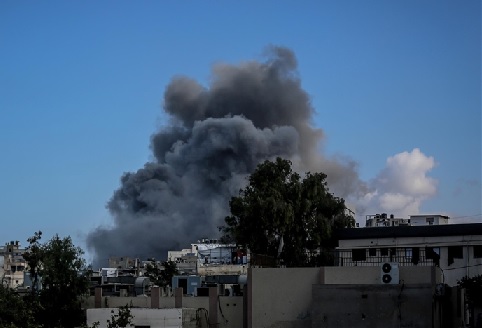
In the northern town of Jabalia, at least two powerful explosions were heard after Israeli forces targeted sites with demolition operations inside areas the army still occupies, according to local sources and eyewitnesses.

Israeli artillery also shelled eastern neighborhoods of Gaza City, while military vehicles stationed east of the city opened machine-gun fire toward the area, the sources said.

In central Gaza, Israeli fighter jets targeted three empty homes in areas still under Israeli military control east of Deir al-Balah.

In a separate incident, eyewitnesses said Israeli airstrikes hit areas under Israeli occupation east of Khan Younis in southern Gaza, coinciding with artillery shelling and gunfire from military vehicles and helicopter fire in the same areas.

No casualties were immediately reported.

Since the ceasefire took effect, repeated Israeli violations have killed 486 Palestinians and wounded 1,341 others.

The ceasefire ended the genocidal war launched by Israel on Oct. 8, 2023, that lasted two years and killed more than 71,000 people, wounded 171,000 others and caused widespread destruction to about 90% of Gaza’s civilian infrastructure, with reconstruction costs estimated by the United Nations at around $70 billion.

TWO CHILDREN COLLECTING FIREWOOD IN GAZA WERE KILLED BY AN ISRAELI DRONE STRIKE

The Attack Hit Civilians Gathering Firewood Near Kamal Adwan Hospital In Northern Gaza, Sources Say.

Two children have been killed in an Israeli attack in northern Gaza in the latest violation of its ceasefire deal with Hamas in the Palestinian enclave.

Medical sources in Gaza on Saturday said the children belonging to the same family were killed when an Israeli drone struck civilians gathering firewood near Kamal Adwan Hospital in northern Gaza.

Severe fuel shortages have forced many Palestinians to search for fuel wherever they can amid low temperatures that drop as low as 10 degrees Celsius (50 degrees Fahrenheit) at night these days.

Palestinians living in makeshift tents have little protection from strong winds and rain, as most shelters are made of thin canvas and plastic sheets.

Israel continues to block or limit the number of vital aid entering the territory, such as tents, mobile homes or materials to fix tents, in violation of the ceasefire it agreed with Hamas in October, as well as its obligations under international law as the occupying power in the Strip.

Israel has violated hundreds of times on a near-daily basis the United States-brokered ceasefire, which took effect on October 10th.

At least 481 Palestinians have been killed and 1,206 others wounded in Israeli attacks since October 11th, according to the Palestinian Health Ministry in Gaza.

Israeli attacks killed 71,654 people and wounded 171,391 others in Gaza since October 7th, 2023, the ministry says.

In a related development on Saturday, the Palestinian Health Ministry in Gaza said the number of child deaths caused by cold weather since the start of the current winter season has risen to 10 with the death of another child.

The child, Ali Abu Zour, aged three months, died due to severe cold at Al-Aqsa Martyrs Hospital,” without specifying the date of death. The ministry added that the death “raises the number of child fatalities caused by cold weather since the beginning of the winter season to 10”.

Meanwhile, American envoys Steve Witkoff and Jared Kushner were in Israel on Saturday to meet Israeli Prime Minister Benjamin Netanyahu, mainly to discuss Gaza, two people briefed on the matter told the Reuters news agency.

The American regime on Thursday announced plans for a “New Gaza” rebuilt from scratch, to include residential towers, data centres and seaside resorts.

The project forms part of President Donald Trump’s push to advance the Gaza ceasefire that has been shaken by repeated violations.

WILL THE SECOND TRUMP ADMINISTRATION BE DEFINED BY VENEZUELA?

Presidents Are Drawn To Foreign Policy Because Courts And Congress Won’t Constrain Them As They Do On Domestic Policy. There’s Little Clarity And Much Risk In The Near Future In Venezuela.

Presidential historians love ambitious foreign policies, and rank war presidents higher than peace presidents. So it’s understandable that presidents often look to make their legacies through foreign policy.

In the postwar era, though, for every Reagan, there is an LBJ, a Bush, or a Carter. The lure of foreign policy is that it promises national greatness; the peril is that the foreigners get a vote, and things may be sketchier than people tell you. To use a Trumpian metaphor, what can seem like a clear shot to the fairway can wind up in thick rough.

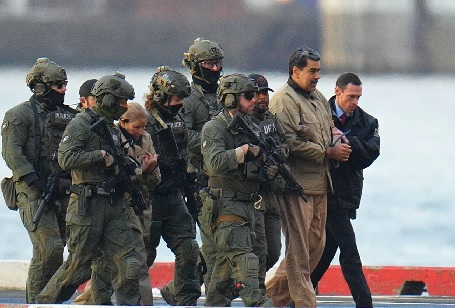
In Venezuela, the president who prides himself on being unpredictable has surprised again. In a well-executed night raid that took place under a full moon, a Delta Force team with FBI agents embedded captured the Venezuelan president Nicolas Maduro and brought him to the United States for trial on gun and drug charges. What the Trump administration seems not to have realized when the president took this decision is that they now own Venezuela.

To be sure, their rhetoric since the raid has ranged widely. President Donald Trump initially promised that the United States would “run the country as long as we can until a safe, proper, and judicious transition” can take place that would ensure “peace, liberty, and justice” for Venezuelans. Secretary of State Marco Rubio was somewhat less grand—if less lucid—on Sunday, shrugging that, “What we are running is the direction that this is going to move moving forward, and that is we have leverage.” Thanks for that, Marco.

The Trump administration has a choice to make. Do they want Venezuela to take a central—perhaps the central—place in the story of Trump’s second term? If so, there are real dangers. First, even relatively smooth transitions to democracy aren’t smooth. Opposition leader Maria Corina Machado described the essence of the Venezuelan state as a “criminal structure” in October, noting that:

in order to break it down, you need to cut the inflows of criminal money that comes from drug trafficking, from gold smuggling, for human trafficking, or the black market of oil… Venezuela has been destroyed in every possible way—you see it in our economy, in our security, in our national sovereignty, in, you know, in the public services, basic services that people require.”

The administration is left in a quandary. Does removing one person from atop the corrupt Venezuelan government fix anything? They appear to hope that Maduro’s vice president, Delcy Rodriguez, will act as a pliant satrap while they hang the Damoclean sword of a “second wave” of strikes over her head. But there is still the possibility that she chooses not to play ball, even if she would like to; she may well feel as though the security apparatus—which appears to be penetrated but largely intact—would not allow it.

What then? Presumably Trump could launch his second wave, depose Rodriguez, and work to install the alleged winner of the last election, Edmundo Gonzalez. But in that case, the problem of the security apparatus would remain, even more so than with Rodriguez, because the Machado program is a dagger aimed at the heart of this corrupt bureaucracy.

Does the administration really want to be sorting through questions about all of this for the remainder of Trump’s second term?

For their part, the American people appear uncharacteristically wary at the outset of the project. A Reuters/Ipsos poll found that a third of the country supports the policy, a third opposes it, and a third isn’t sure. But an overwhelming number—72 percent—worry that the United States will “become too involved” in Venezuela. Outside of the South, the policy is already strikingly unpopular.

Trump is the master of blustering his way out of trouble, but removing a foreign leader and promising to “run” that country could be tough to wriggle out of, even for him. The administration has three years left in office. What portion of that time do they want to spend putting Venezuela policy first?

THE DEATH OF A MAN IN ICE CUSTODY IN TEXAS WAS MURDER A MEDICAL EXAMINER BELIEVES

A Fellow Detainee Says He Witnessed Geraldo Lunas Campos Being Choked To Death By Guards At An Ice Detention Center In Texas On January 3rd.

When American Immigration and Customs Enforcement announced the Jan. 3rd death of detainee Geraldo Lunas Campos at a Texas detention camp, the agency said “staff observed him in distress,” and it gave no cause of death.

An employee of El Paso County’s Office of the Medical Examiner told Lunas Campos’s daughter this week that, subject to results of a toxicology report, the office is likely to classify the death as a homicide, according to a recording of the conversation.

In the recording, which the daughter shared, the employee said a doctor there “is listing the preliminary cause of death as asphyxia due to neck and chest compression,” which means Lunas Campos did not get enough oxygen because of pressure on his neck and chest. Pending the results of a toxicology report, the staffer said on the recording, “our doctor is believing that we’re going to be listing the manner of death as homicide.”

A 55-year-old Cuban immigrant, Lunas Campos died following a struggle with detention staff, according to an eyewitness account and an internal ICE document.

A representative from the medical examiner declined to comment on the recording or share any findings about the man’s death, saying that information can only be shared with family members. A spokeswoman for the Department of Homeland Security declined to comment for this report.

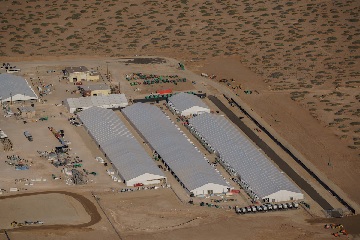
A homicide ruling would almost certainly draw attention to Camp East Montana, a colossal makeshift tent encampment on the Mexican border where migrants have reported substandard conditions and physical abuse, and ICE’s own inspectors have cited dozens of violations of federal detention standards.

Lunas Campos’s death also comes amid nationwide upheaval over the fatal shooting of an American citizen by an ICE officer in Minneapolis last week, an event that for many has raised questions about the training and oversight of the ICE officers helping to carry out the Trump administration’s immigration crackdown.

Court records show Lunas Campos has been convicted of several crimes, including for aggravated assault with a weapon and, in 2003, first-degree sexual abuse involving a child under 11 years old. ICE arrested Lunas Campos in a “planned enforcement operation” in July, saying in a news release that his criminal record spans from at least 1997 through 2015 and that “his luck has finally run out.”

Lunas Campos had been placed in a segregated housing unit after becoming “disruptive” while waiting in line for medication at the Camp East Montana facility in El Paso, ICE said in a statement last week. Later the same day, staff observed Lunas Campos “in distress” and contacted emergency medical personnel, who were unable to save his life and pronounced him dead, according to the statement.

ICE’s statement did not contain any detail about the cause of death. An internal ICE log documented a series of events about Lunas Campos’s case, noting his death, an attempt to contact his family, the notification of the Cuban Consulate and the transportation of his body by the medical examiner. The last event logged, six days after his death, references an “immediate” use-of-force incident but provides no date of that incident or any details.

In an interview, Santos Jesus Flores, a man who says he was detained in the segregation unit the day Lunas Campos died, said he saw at least five guards struggling with Lunas Campos after he refused to enter the segregation unit, complaining that he didn’t have his medications. Flores said he saw guards choking Lunas Campos and heard Lunas Campos repeatedly saying, “No puedo respirar” — Spanish for “I can’t breathe.” Medical staff tried to resuscitate him for an hour, after which they took his body away, Flores said.

He said, ‘I cannot breathe, I cannot breathe.’ After that, we don’t hear his voice anymore and that’s it,” said Flores, who had contacted a family member of Lunas Campos, who in turn put him in touch with a reporter.

Deaths in ICE detention centers have occurred with increasing frequency in recent months, as President Donald Trump’s immigration crackdown floods these facilities with record numbers of detainees. At least 30 people died in detention last year — the highest in two decades — and Lunas Campos is one of four who died in the first nine days of 2026 alone, according to ICE, which posts information about all detainee deaths on its website.

FUNDING TO PROPAGANDIZE AMERICANS HAS BEEN BOOSTED BY ISRAEL

Israeli Officials See An Existential Threat In Waning American Support For Their Country. Israel’s Cabinet Approved A Budget That Sharply Increases Financing For Propaganda Operations Abroad.

Israel’s cabinet last month approved and sent to the Knesset a 2026 state budget that sharply increases both military spending and financing for propaganda operations abroad. According to reporting by the Jerusalem Post, the latter funding will be directed toward a variety of projects including foreign media campaigns, digital messaging operations, and efforts to counter and censor criticism of Israel’s American-backed genocide in Gaza.

The proposed budget, quadruple last year’s allocation, also encourages coordination between government ministries and outside contractors, or “civil society organizations,” to disseminate Israeli propaganda abroad. It comes as Israel reportedly moves to renew and expand its memorandum of understanding (MOU) with the United States, extending it for up to 20 years rather than the traditional ten and likely securing at least $4 billion annually from American taxpayers. Even as Israel’s assault on Gaza slows in pace, its government continues to require uninterrupted American financing, weapons transfers, and diplomatic cover to sustain its occupation, prop up its American-taxpayer-dependent domestic defense industry, and prepare for future regional conflicts, including an openly telegraphed war with Iran.

Israel has hemorrhaged American public support after months of live-streamed mass killing in Gaza and growing international exposure of Israel’s treatment of Christians and Muslims in its occupied territories. Yet because Israel remains structurally dependent on American political backing and taxpayer funds for its survival, the collapse of American public support represents an existential problem, one that Israeli leaders hope to solve through a boosted propaganda budget.

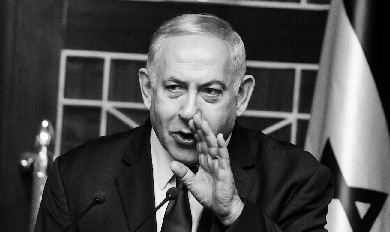
What we have to do,” Israeli Prime Minister Benjamin Netanyahu told a group of American-based social media influencers-for-hire just six weeks before new MOU discussions were revealed, “is secure that part of the base of our support in the United States,” which he said “is being challenged systematically.” To “fight back,” Netanyahu argued, Israel must win the information war on TikTok and Elon Musk–owned X. He praised TikTok’s acquisition by pro-Israel billionaire Larry Ellison as “the most important purchase that is going on,” one he said he “hope[s] will go through because it can be consequential.” “We have to talk to Elon… he’s a friend.”

The expanded funding would further formalize an Israeli propaganda and censorship apparatus that already operates inside the United States and continues to expand through private contracts with foreign agents even as Israel’s budget is pending final approval by the Knesset.

Recent Foreign Agents Registration Act filings first reported by Nick Cleveland-Stout of the Quincy Institute and journalist Jack Poulson show that Clock Tower X LLC—a digital media firm run by former Trump campaign manager Brad Parscale—increased its contracts with the Israeli government from roughly $6 million to $9 million. A filing dated December 26, 2025, lists Israel’s Foreign Ministry as the client, with the contract intermediated by the German branch of HAVAS Media. Those filings describe efforts to influence Americans across digital platforms, including attempts to shape outputs from artificial intelligence like ChatGPT by seeding it with content designed to produce pro-Israel responses, including about Gaza.

Ongoing initiatives also include Israeli government–sponsored trips for propaganda training, part of what Israeli officials describe as “public diplomacy efforts.” These programs recruit American thought leaders from the American constituencies most important for Israel’s long-term survival as a state: Christian Zionists, whose ideology is increasingly viewed as illegitimate and politically bankrupt by Christians around the world, and American college students, whose growing identification with Palestinians living under Israeli occupation has long been considered to be an “existential threat” by Israeli policymakers.

Last month, Israel’s Ministry of Foreign Affairs brought to Jerusalem “over 1,000 pastors” for coordinated hasbara training, an influence operation convention promoted by prominent American Zionist evangelists such as America’s Ambassador to Israel Mike Huckabee and Rev. Johnnie Moore, who headed the so-called “Gaza Humanitarian Foundation.” Speaking to the attendees, Huckabee urged pastors to “go to their pulpits” and “push back” against what he described as a dangerous trend within evangelicalism of questioning the state of Israel’s role in Christian theology. Friends of Zion founder Dr. Mike Evans, a partner in the program, celebrated the historic nature of the initiative and outlined a goal to reach one million pastors and “100 million people worldwide.”

As CBN reported:

This gathering is a prelude to a massive campaign planned for next year. Evans said, “We’re launching in 2026 a global program to reach one million pastors and one million churches globally, to teach them a biblical worldview so they’ll realize God’s not canceling any promises to the Jewish people. And He’s not canceling for the Christians, either.”

Israeli government funded “Hasbara Fellowship” program—traveled to Israel for coordinated propaganda training, according to Israeli media, with i24NEWS describing the delegation as visiting “not just to tour but to prepare for the fight back at home.” In an interview with Israeli television, Elijah Wiesel—the grandson of famed Holocaust survivor Elie Wiesel—warned of rising campus opposition to Israel, labeling those free speech activities “antisemitism,” while citing being called a “Judeo-Nazi” by another Jewish student at Yale. “My worst experiences with antisemitism have been from other Jews,” Wiesel said, acknowledging that many of the campus protestors punished and censored by universities for so-called “antisemitism” are actually just Jews who do not have loyalty or affection for a foreign government.

The Israeli government and its lobby in the United States have made clear that their latest propaganda efforts are oriented toward manipulating long-term perception of Israeli behavior. In an appearance at the MirYam Institute’s Israel Security Briefing, former CIA director Mike Pompeo was applauded for arguing that “we need to make sure” history books “don’t write about the victims of Gaza.”

It is unclear at the moment which exact programs the proposed hasbara budget seeks to finance in 2026. In previous years, “public diplomacy” funds have been used to finance NGOs like ISGAP and CyberWell which work to censor Americans on social media and lobby to discipline college campuses on behalf of Israel. Readers can safely assume we will see more of both.

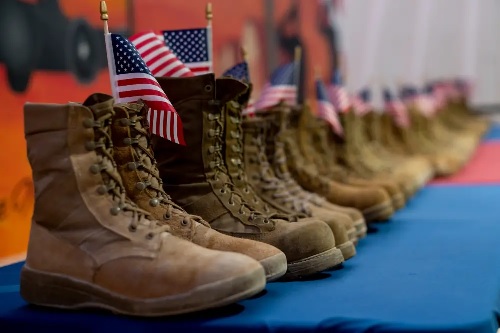
THE PENTAGON ISN’T OFFERING ANY ANSWERS AS TO WHY THE AMERICAN MILITARY’S ANNUAL SUICIDE REPORT IS MISSING

It Is Also Delayed In Releasing Its Quarterly Suicide Data For 2025, With The Third-Quarter Figures Still Unpublished, Months Later Than Usual.

The annual suicide report, which the Department of Defense typically publishes each fall, provides suicide statistics from the previous calendar year that inform Congress, researchers, and senior leaders across the services on efforts to combat military suicide, a persistent problem.

The defense department is also delayed in releasing its quarterly suicide data for 2025, with the third-quarter figures still unpublished, months later than usual.

The Pentagon was asked in mid-December about the anticipated release date of the annual report.

“The Department has nothing to announce at this time,” a department spokesperson replied in an email. “We will follow up if anything changes.” When asked again this week why the report is delayed and when it might be published, the Pentagon did not respond.

A separate email query was sent to the Defense Suicide Prevention Office, which releases the report. The office did not respond.

It is unclear whether the delay is tied to the government shutdown.

Though the data is beneficial, the months long delay is unlikely to significantly affect research or prevention efforts, said Ron Kessler, a principal investigator on a long-term Army suicide study and a professor of healthcare policy at Harvard Medical School. He said researchers depend more frequently on detailed data that reveals patterns and circumstances around deaths.

The bigger issue is tied to accountability, public transparency, and oversight, he said.

“Publishing is letting the outside world know what’s going on,” Kessler said. “And that’s useful for holding organizations accountable.”

The Department of Defense and Department of Veterans Affairs have each tried to improve suicide prevention efforts, Kessler said, highlighting a project he’s involved in that’s testing whether artificial intelligence can effectively identify people at risk of suicide. The annual reports reveal the level of progress and show where further work is needed.

“It’s important for the data to be out there,” Kessler added, “not to ever be to a point where we say what’s not being shown anymore. It’s good for the public to be able to say, ‘Is the military doing a good job? What’s going on?'”

Suicide deaths among service members rose during the COVID-19 pandemic, and the most recent publicly available data — from calendar year 2023 — showed a small increase over the year prior. According to the Defense Suicide Prevention Office, military suicide deaths have increased gradually since 2011.

The 2023 report showed that young enlisted men accounted for the largest share of suicide deaths in the American military. That mirrors broader national trends. American men are nearly four times more likely to die by suicide than women, according to the American Foundation for Suicide Prevention.

Firearms were involved in roughly half of all American suicide deaths in 2023, and previous military reports have repeatedly identified access to firearms as a risk factor, particularly for younger enlisted personnel.

Some military leaders recently emphasized suicide prevention needs during the holiday season. In November, Army Secretary Dan Driscoll directed supervisors across the Army to conduct daily check-ins with their subordinates through mid-January.

Though the initiative was initially lauded, some supervisors and troops online have described the mandatory directive as unintentionally burdensome.

The broader Pentagon reporting delays coincide with certain organizational changes inside the Army. A September Army memo highlighted plans to disband its directorate responsible for overseeing soldier quality-of-life issues, known as a G-9, citing “administrative convenience.” The responsibilities of that office have since been folded into the service’s human resources directorate.

Army spokeswoman Heather J. Hagan confirmed the change on Thursday, adding that the service remains committed to troop and family quality of life.

It is unclear how the change may affect oversight of soldier well-being or how suicide prevention priorities are being evaluated, as the Pentagon’s annual suicide data remains unpublished.

You should wonder why that is – and think about it.

AMID TRUMP’S TAKEOVER THREATS THOUSANDS JOIN ‘HANDS OFF GREENLAND’ PROTESTS

Copenhagen Rally Organizer Says The ‘World Must Wake Up’ As Donald Trump Threatens To Seize Self-Governing Danish Island.

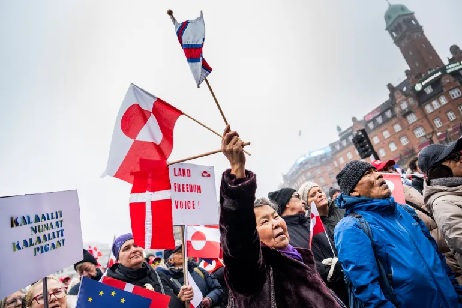
Thousands of protesters have taken to the streets of Denmark to show support for Greenland and reject United States President Donald Trump’s repeated threats to take control of the self-governing Danish territory.

Waving the flags of Denmark and Greenland, the protesters formed a sea of red and white outside Copenhagen city hall on Saturday, chanting “Kalaallit Nunaat” – the Arctic island’s name in Greenlandic.

Rallies were also organized throughout the day in the Danish cities of Aarhus, Aalborg and Odense, as well as in Greenland’s capital, Nuuk.

I am very grateful for the huge support we as Greenlanders receive … We are also sending a message to the world that you all must wake up,” said Julie Rademacher, chair of Uagut, an organization for Greenlanders in Denmark.

Greenland and the Greenlanders have involuntarily become the front in the fight for democracy and human rights,” she added.

The demonstrations come as Trump said 10 percent tariffs would be imposed on several European allies opposing American control of Greenland from February 1, hitting Denmark, ‌Finland, France, Germany, Norway, Sweden, the Netherlands and the United Kingdom.

The Amerian president, who says the move is critical for his country’s interests, added that those tariffs ‌would rise to ‌25 percent on June 1 and would continue until an agreement is reached ‌for the American regime to purchase Greenland.

While Greenland and Denmark have rejected the idea of the island being “owned” by the American regime, efforts to get the American administration to change its stance have so far appeared to fail.

The foreign ministers of Denmark and Greenland left a meeting with American Secretary of State Marco Rubio in Washington, DC, this week, saying that they “didn’t manage to change the American position”.

It’s clear that the president has this wish of conquering over Greenland,” Danish Foreign Minister Lars Lokke Rasmussen told reporters.

According to the latest poll published in January of last year, 85 percent of Greenlanders oppose the territory joining America, while only 6 percent were in favour.

Reporting from Nuuk, the Greenlandic capital, Al Jazeera’s Rory Challands said Saturday’s rally was expected to be a large one.

This is … the capital city, but [home to] only about 19-20,000 people. Everyone we spoke to yesterday said that they were going to be coming out and marching today,” Challands said.

This essentially is Danes and Greenlanders coming together. Everyone here believes that at some point, there should be some form of independence [for Greenland],” he added.

But for the moment, Denmark and Greenland are saying that their best way out of this crisis is to remain united.”

Some American lawmakers – including members of Trump’s own Republican Party – also have raised opposition to the president’s push to take control of Greenland, saying it threatens global stability and the American regime’s commitment to NATO.

A bipartisan group of Congress members travelled to Denmark on Friday, led by Democratic Senator Chris Coons, who said there was no security threat to Greenland to justify the Trump administration’s stance.

Greenland is a part of Denmark. Denmark is our NATO ally. That should be the end of this discussion, in my view,” Coons told reporters in Copenhagen.

Trump has repeatedly accused Denmark of failing to do enough to secure Greenland’s territorial waters in the Arctic.

European NATO members are deploying troops in Greenland for a military exercise designed to show that they will “defend [their] sovereignty”, French armed forces minister Alice Rufo said this week.

Britain, Finland, France, Germany, the Netherlands, Norway and Sweden have announced they are sending small numbers of military personnel to prepare for future exercises in the Arctic.

Design a site like this with WordPress.com
Get started