ISRAELI ARTILLERY FIRE AND AIRSTRIKES HIT MULTIPLE AREAS IN GAZA DESPITE CEASEFIRE

These Demolition Operations In Multiple Areas Across The Gaza Strip On Wednesday Were Among Daily Violations Of A Ceasefire Deal In Effect Since Oct. 10, 2025.

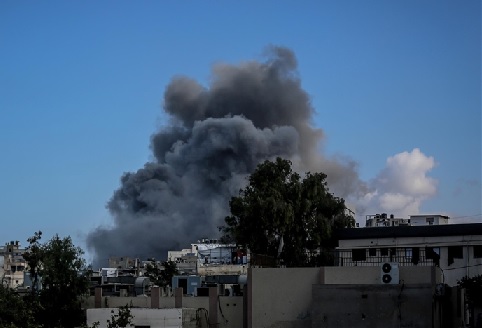
In the northern town of Jabalia, at least two powerful explosions were heard after Israeli forces targeted sites with demolition operations inside areas the army still occupies, according to local sources and eyewitnesses.

Israeli artillery also shelled eastern neighborhoods of Gaza City, while military vehicles stationed east of the city opened machine-gun fire toward the area, the sources said.

In central Gaza, Israeli fighter jets targeted three empty homes in areas still under Israeli military control east of Deir al-Balah.

In a separate incident, eyewitnesses said Israeli airstrikes hit areas under Israeli occupation east of Khan Younis in southern Gaza, coinciding with artillery shelling and gunfire from military vehicles and helicopter fire in the same areas.

No casualties were immediately reported.

Since the ceasefire took effect, repeated Israeli violations have killed 486 Palestinians and wounded 1,341 others.

The ceasefire ended the genocidal war launched by Israel on Oct. 8, 2023, that lasted two years and killed more than 71,000 people, wounded 171,000 others and caused widespread destruction to about 90% of Gaza’s civilian infrastructure, with reconstruction costs estimated by the United Nations at around $70 billion.

TWO CHILDREN COLLECTING FIREWOOD IN GAZA WERE KILLED BY AN ISRAELI DRONE STRIKE

The Attack Hit Civilians Gathering Firewood Near Kamal Adwan Hospital In Northern Gaza, Sources Say.

Two children have been killed in an Israeli attack in northern Gaza in the latest violation of its ceasefire deal with Hamas in the Palestinian enclave.

Medical sources in Gaza on Saturday said the children belonging to the same family were killed when an Israeli drone struck civilians gathering firewood near Kamal Adwan Hospital in northern Gaza.

Severe fuel shortages have forced many Palestinians to search for fuel wherever they can amid low temperatures that drop as low as 10 degrees Celsius (50 degrees Fahrenheit) at night these days.

Palestinians living in makeshift tents have little protection from strong winds and rain, as most shelters are made of thin canvas and plastic sheets.

Israel continues to block or limit the number of vital aid entering the territory, such as tents, mobile homes or materials to fix tents, in violation of the ceasefire it agreed with Hamas in October, as well as its obligations under international law as the occupying power in the Strip.

Israel has violated hundreds of times on a near-daily basis the United States-brokered ceasefire, which took effect on October 10th.

At least 481 Palestinians have been killed and 1,206 others wounded in Israeli attacks since October 11th, according to the Palestinian Health Ministry in Gaza.

Israeli attacks killed 71,654 people and wounded 171,391 others in Gaza since October 7th, 2023, the ministry says.

In a related development on Saturday, the Palestinian Health Ministry in Gaza said the number of child deaths caused by cold weather since the start of the current winter season has risen to 10 with the death of another child.

The child, Ali Abu Zour, aged three months, died due to severe cold at Al-Aqsa Martyrs Hospital,” without specifying the date of death. The ministry added that the death “raises the number of child fatalities caused by cold weather since the beginning of the winter season to 10”.

Meanwhile, American envoys Steve Witkoff and Jared Kushner were in Israel on Saturday to meet Israeli Prime Minister Benjamin Netanyahu, mainly to discuss Gaza, two people briefed on the matter told the Reuters news agency.

The American regime on Thursday announced plans for a “New Gaza” rebuilt from scratch, to include residential towers, data centres and seaside resorts.

The project forms part of President Donald Trump’s push to advance the Gaza ceasefire that has been shaken by repeated violations.

WILL THE SECOND TRUMP ADMINISTRATION BE DEFINED BY VENEZUELA?

Presidents Are Drawn To Foreign Policy Because Courts And Congress Won’t Constrain Them As They Do On Domestic Policy. There’s Little Clarity And Much Risk In The Near Future In Venezuela.

Presidential historians love ambitious foreign policies, and rank war presidents higher than peace presidents. So it’s understandable that presidents often look to make their legacies through foreign policy.

In the postwar era, though, for every Reagan, there is an LBJ, a Bush, or a Carter. The lure of foreign policy is that it promises national greatness; the peril is that the foreigners get a vote, and things may be sketchier than people tell you. To use a Trumpian metaphor, what can seem like a clear shot to the fairway can wind up in thick rough.

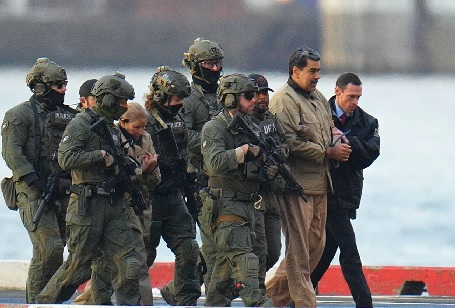
In Venezuela, the president who prides himself on being unpredictable has surprised again. In a well-executed night raid that took place under a full moon, a Delta Force team with FBI agents embedded captured the Venezuelan president Nicolas Maduro and brought him to the United States for trial on gun and drug charges. What the Trump administration seems not to have realized when the president took this decision is that they now own Venezuela.

To be sure, their rhetoric since the raid has ranged widely. President Donald Trump initially promised that the United States would “run the country as long as we can until a safe, proper, and judicious transition” can take place that would ensure “peace, liberty, and justice” for Venezuelans. Secretary of State Marco Rubio was somewhat less grand—if less lucid—on Sunday, shrugging that, “What we are running is the direction that this is going to move moving forward, and that is we have leverage.” Thanks for that, Marco.

The Trump administration has a choice to make. Do they want Venezuela to take a central—perhaps the central—place in the story of Trump’s second term? If so, there are real dangers. First, even relatively smooth transitions to democracy aren’t smooth. Opposition leader Maria Corina Machado described the essence of the Venezuelan state as a “criminal structure” in October, noting that:

in order to break it down, you need to cut the inflows of criminal money that comes from drug trafficking, from gold smuggling, for human trafficking, or the black market of oil… Venezuela has been destroyed in every possible way—you see it in our economy, in our security, in our national sovereignty, in, you know, in the public services, basic services that people require.”

The administration is left in a quandary. Does removing one person from atop the corrupt Venezuelan government fix anything? They appear to hope that Maduro’s vice president, Delcy Rodriguez, will act as a pliant satrap while they hang the Damoclean sword of a “second wave” of strikes over her head. But there is still the possibility that she chooses not to play ball, even if she would like to; she may well feel as though the security apparatus—which appears to be penetrated but largely intact—would not allow it.

What then? Presumably Trump could launch his second wave, depose Rodriguez, and work to install the alleged winner of the last election, Edmundo Gonzalez. But in that case, the problem of the security apparatus would remain, even more so than with Rodriguez, because the Machado program is a dagger aimed at the heart of this corrupt bureaucracy.

Does the administration really want to be sorting through questions about all of this for the remainder of Trump’s second term?

For their part, the American people appear uncharacteristically wary at the outset of the project. A Reuters/Ipsos poll found that a third of the country supports the policy, a third opposes it, and a third isn’t sure. But an overwhelming number—72 percent—worry that the United States will “become too involved” in Venezuela. Outside of the South, the policy is already strikingly unpopular.

Trump is the master of blustering his way out of trouble, but removing a foreign leader and promising to “run” that country could be tough to wriggle out of, even for him. The administration has three years left in office. What portion of that time do they want to spend putting Venezuela policy first?

THE DEATH OF A MAN IN ICE CUSTODY IN TEXAS WAS MURDER A MEDICAL EXAMINER BELIEVES

A Fellow Detainee Says He Witnessed Geraldo Lunas Campos Being Choked To Death By Guards At An Ice Detention Center In Texas On January 3rd.

When American Immigration and Customs Enforcement announced the Jan. 3rd death of detainee Geraldo Lunas Campos at a Texas detention camp, the agency said “staff observed him in distress,” and it gave no cause of death.

An employee of El Paso County’s Office of the Medical Examiner told Lunas Campos’s daughter this week that, subject to results of a toxicology report, the office is likely to classify the death as a homicide, according to a recording of the conversation.

In the recording, which the daughter shared, the employee said a doctor there “is listing the preliminary cause of death as asphyxia due to neck and chest compression,” which means Lunas Campos did not get enough oxygen because of pressure on his neck and chest. Pending the results of a toxicology report, the staffer said on the recording, “our doctor is believing that we’re going to be listing the manner of death as homicide.”

A 55-year-old Cuban immigrant, Lunas Campos died following a struggle with detention staff, according to an eyewitness account and an internal ICE document.

A representative from the medical examiner declined to comment on the recording or share any findings about the man’s death, saying that information can only be shared with family members. A spokeswoman for the Department of Homeland Security declined to comment for this report.

A homicide ruling would almost certainly draw attention to Camp East Montana, a colossal makeshift tent encampment on the Mexican border where migrants have reported substandard conditions and physical abuse, and ICE’s own inspectors have cited dozens of violations of federal detention standards.

Lunas Campos’s death also comes amid nationwide upheaval over the fatal shooting of an American citizen by an ICE officer in Minneapolis last week, an event that for many has raised questions about the training and oversight of the ICE officers helping to carry out the Trump administration’s immigration crackdown.

Court records show Lunas Campos has been convicted of several crimes, including for aggravated assault with a weapon and, in 2003, first-degree sexual abuse involving a child under 11 years old. ICE arrested Lunas Campos in a “planned enforcement operation” in July, saying in a news release that his criminal record spans from at least 1997 through 2015 and that “his luck has finally run out.”

Lunas Campos had been placed in a segregated housing unit after becoming “disruptive” while waiting in line for medication at the Camp East Montana facility in El Paso, ICE said in a statement last week. Later the same day, staff observed Lunas Campos “in distress” and contacted emergency medical personnel, who were unable to save his life and pronounced him dead, according to the statement.

ICE’s statement did not contain any detail about the cause of death. An internal ICE log documented a series of events about Lunas Campos’s case, noting his death, an attempt to contact his family, the notification of the Cuban Consulate and the transportation of his body by the medical examiner. The last event logged, six days after his death, references an “immediate” use-of-force incident but provides no date of that incident or any details.

In an interview, Santos Jesus Flores, a man who says he was detained in the segregation unit the day Lunas Campos died, said he saw at least five guards struggling with Lunas Campos after he refused to enter the segregation unit, complaining that he didn’t have his medications. Flores said he saw guards choking Lunas Campos and heard Lunas Campos repeatedly saying, “No puedo respirar” — Spanish for “I can’t breathe.” Medical staff tried to resuscitate him for an hour, after which they took his body away, Flores said.

He said, ‘I cannot breathe, I cannot breathe.’ After that, we don’t hear his voice anymore and that’s it,” said Flores, who had contacted a family member of Lunas Campos, who in turn put him in touch with a reporter.

Deaths in ICE detention centers have occurred with increasing frequency in recent months, as President Donald Trump’s immigration crackdown floods these facilities with record numbers of detainees. At least 30 people died in detention last year — the highest in two decades — and Lunas Campos is one of four who died in the first nine days of 2026 alone, according to ICE, which posts information about all detainee deaths on its website.

FUNDING TO PROPAGANDIZE AMERICANS HAS BEEN BOOSTED BY ISRAEL

Israeli Officials See An Existential Threat In Waning American Support For Their Country. Israel’s Cabinet Approved A Budget That Sharply Increases Financing For Propaganda Operations Abroad.

Israel’s cabinet last month approved and sent to the Knesset a 2026 state budget that sharply increases both military spending and financing for propaganda operations abroad. According to reporting by the Jerusalem Post, the latter funding will be directed toward a variety of projects including foreign media campaigns, digital messaging operations, and efforts to counter and censor criticism of Israel’s American-backed genocide in Gaza.

The proposed budget, quadruple last year’s allocation, also encourages coordination between government ministries and outside contractors, or “civil society organizations,” to disseminate Israeli propaganda abroad. It comes as Israel reportedly moves to renew and expand its memorandum of understanding (MOU) with the United States, extending it for up to 20 years rather than the traditional ten and likely securing at least $4 billion annually from American taxpayers. Even as Israel’s assault on Gaza slows in pace, its government continues to require uninterrupted American financing, weapons transfers, and diplomatic cover to sustain its occupation, prop up its American-taxpayer-dependent domestic defense industry, and prepare for future regional conflicts, including an openly telegraphed war with Iran.

Israel has hemorrhaged American public support after months of live-streamed mass killing in Gaza and growing international exposure of Israel’s treatment of Christians and Muslims in its occupied territories. Yet because Israel remains structurally dependent on American political backing and taxpayer funds for its survival, the collapse of American public support represents an existential problem, one that Israeli leaders hope to solve through a boosted propaganda budget.

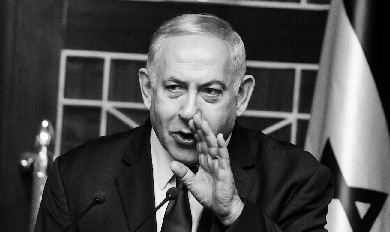
What we have to do,” Israeli Prime Minister Benjamin Netanyahu told a group of American-based social media influencers-for-hire just six weeks before new MOU discussions were revealed, “is secure that part of the base of our support in the United States,” which he said “is being challenged systematically.” To “fight back,” Netanyahu argued, Israel must win the information war on TikTok and Elon Musk–owned X. He praised TikTok’s acquisition by pro-Israel billionaire Larry Ellison as “the most important purchase that is going on,” one he said he “hope[s] will go through because it can be consequential.” “We have to talk to Elon… he’s a friend.”

The expanded funding would further formalize an Israeli propaganda and censorship apparatus that already operates inside the United States and continues to expand through private contracts with foreign agents even as Israel’s budget is pending final approval by the Knesset.

Recent Foreign Agents Registration Act filings first reported by Nick Cleveland-Stout of the Quincy Institute and journalist Jack Poulson show that Clock Tower X LLC—a digital media firm run by former Trump campaign manager Brad Parscale—increased its contracts with the Israeli government from roughly $6 million to $9 million. A filing dated December 26, 2025, lists Israel’s Foreign Ministry as the client, with the contract intermediated by the German branch of HAVAS Media. Those filings describe efforts to influence Americans across digital platforms, including attempts to shape outputs from artificial intelligence like ChatGPT by seeding it with content designed to produce pro-Israel responses, including about Gaza.

Ongoing initiatives also include Israeli government–sponsored trips for propaganda training, part of what Israeli officials describe as “public diplomacy efforts.” These programs recruit American thought leaders from the American constituencies most important for Israel’s long-term survival as a state: Christian Zionists, whose ideology is increasingly viewed as illegitimate and politically bankrupt by Christians around the world, and American college students, whose growing identification with Palestinians living under Israeli occupation has long been considered to be an “existential threat” by Israeli policymakers.

Last month, Israel’s Ministry of Foreign Affairs brought to Jerusalem “over 1,000 pastors” for coordinated hasbara training, an influence operation convention promoted by prominent American Zionist evangelists such as America’s Ambassador to Israel Mike Huckabee and Rev. Johnnie Moore, who headed the so-called “Gaza Humanitarian Foundation.” Speaking to the attendees, Huckabee urged pastors to “go to their pulpits” and “push back” against what he described as a dangerous trend within evangelicalism of questioning the state of Israel’s role in Christian theology. Friends of Zion founder Dr. Mike Evans, a partner in the program, celebrated the historic nature of the initiative and outlined a goal to reach one million pastors and “100 million people worldwide.”

As CBN reported:

This gathering is a prelude to a massive campaign planned for next year. Evans said, “We’re launching in 2026 a global program to reach one million pastors and one million churches globally, to teach them a biblical worldview so they’ll realize God’s not canceling any promises to the Jewish people. And He’s not canceling for the Christians, either.”

Israeli government funded “Hasbara Fellowship” program—traveled to Israel for coordinated propaganda training, according to Israeli media, with i24NEWS describing the delegation as visiting “not just to tour but to prepare for the fight back at home.” In an interview with Israeli television, Elijah Wiesel—the grandson of famed Holocaust survivor Elie Wiesel—warned of rising campus opposition to Israel, labeling those free speech activities “antisemitism,” while citing being called a “Judeo-Nazi” by another Jewish student at Yale. “My worst experiences with antisemitism have been from other Jews,” Wiesel said, acknowledging that many of the campus protestors punished and censored by universities for so-called “antisemitism” are actually just Jews who do not have loyalty or affection for a foreign government.

The Israeli government and its lobby in the United States have made clear that their latest propaganda efforts are oriented toward manipulating long-term perception of Israeli behavior. In an appearance at the MirYam Institute’s Israel Security Briefing, former CIA director Mike Pompeo was applauded for arguing that “we need to make sure” history books “don’t write about the victims of Gaza.”

It is unclear at the moment which exact programs the proposed hasbara budget seeks to finance in 2026. In previous years, “public diplomacy” funds have been used to finance NGOs like ISGAP and CyberWell which work to censor Americans on social media and lobby to discipline college campuses on behalf of Israel. Readers can safely assume we will see more of both.

THE PENTAGON ISN’T OFFERING ANY ANSWERS AS TO WHY THE AMERICAN MILITARY’S ANNUAL SUICIDE REPORT IS MISSING

It Is Also Delayed In Releasing Its Quarterly Suicide Data For 2025, With The Third-Quarter Figures Still Unpublished, Months Later Than Usual.

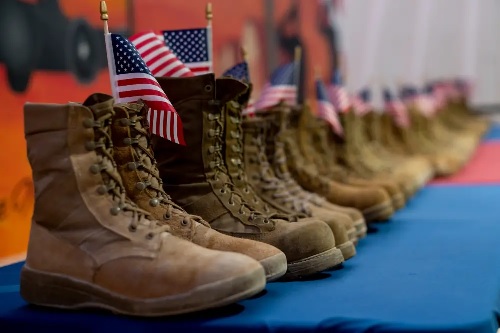
The annual suicide report, which the Department of Defense typically publishes each fall, provides suicide statistics from the previous calendar year that inform Congress, researchers, and senior leaders across the services on efforts to combat military suicide, a persistent problem.

The defense department is also delayed in releasing its quarterly suicide data for 2025, with the third-quarter figures still unpublished, months later than usual.

The Pentagon was asked in mid-December about the anticipated release date of the annual report.

“The Department has nothing to announce at this time,” a department spokesperson replied in an email. “We will follow up if anything changes.” When asked again this week why the report is delayed and when it might be published, the Pentagon did not respond.

A separate email query was sent to the Defense Suicide Prevention Office, which releases the report. The office did not respond.

It is unclear whether the delay is tied to the government shutdown.

Though the data is beneficial, the months long delay is unlikely to significantly affect research or prevention efforts, said Ron Kessler, a principal investigator on a long-term Army suicide study and a professor of healthcare policy at Harvard Medical School. He said researchers depend more frequently on detailed data that reveals patterns and circumstances around deaths.

The bigger issue is tied to accountability, public transparency, and oversight, he said.

“Publishing is letting the outside world know what’s going on,” Kessler said. “And that’s useful for holding organizations accountable.”

The Department of Defense and Department of Veterans Affairs have each tried to improve suicide prevention efforts, Kessler said, highlighting a project he’s involved in that’s testing whether artificial intelligence can effectively identify people at risk of suicide. The annual reports reveal the level of progress and show where further work is needed.

“It’s important for the data to be out there,” Kessler added, “not to ever be to a point where we say what’s not being shown anymore. It’s good for the public to be able to say, ‘Is the military doing a good job? What’s going on?'”

Suicide deaths among service members rose during the COVID-19 pandemic, and the most recent publicly available data — from calendar year 2023 — showed a small increase over the year prior. According to the Defense Suicide Prevention Office, military suicide deaths have increased gradually since 2011.

The 2023 report showed that young enlisted men accounted for the largest share of suicide deaths in the American military. That mirrors broader national trends. American men are nearly four times more likely to die by suicide than women, according to the American Foundation for Suicide Prevention.

Firearms were involved in roughly half of all American suicide deaths in 2023, and previous military reports have repeatedly identified access to firearms as a risk factor, particularly for younger enlisted personnel.

Some military leaders recently emphasized suicide prevention needs during the holiday season. In November, Army Secretary Dan Driscoll directed supervisors across the Army to conduct daily check-ins with their subordinates through mid-January.

Though the initiative was initially lauded, some supervisors and troops online have described the mandatory directive as unintentionally burdensome.

The broader Pentagon reporting delays coincide with certain organizational changes inside the Army. A September Army memo highlighted plans to disband its directorate responsible for overseeing soldier quality-of-life issues, known as a G-9, citing “administrative convenience.” The responsibilities of that office have since been folded into the service’s human resources directorate.

Army spokeswoman Heather J. Hagan confirmed the change on Thursday, adding that the service remains committed to troop and family quality of life.

It is unclear how the change may affect oversight of soldier well-being or how suicide prevention priorities are being evaluated, as the Pentagon’s annual suicide data remains unpublished.

You should wonder why that is – and think about it.

AMID TRUMP’S TAKEOVER THREATS THOUSANDS JOIN ‘HANDS OFF GREENLAND’ PROTESTS

Copenhagen Rally Organizer Says The ‘World Must Wake Up’ As Donald Trump Threatens To Seize Self-Governing Danish Island.

Thousands of protesters have taken to the streets of Denmark to show support for Greenland and reject United States President Donald Trump’s repeated threats to take control of the self-governing Danish territory.

Waving the flags of Denmark and Greenland, the protesters formed a sea of red and white outside Copenhagen city hall on Saturday, chanting “Kalaallit Nunaat” – the Arctic island’s name in Greenlandic.

Rallies were also organized throughout the day in the Danish cities of Aarhus, Aalborg and Odense, as well as in Greenland’s capital, Nuuk.

I am very grateful for the huge support we as Greenlanders receive … We are also sending a message to the world that you all must wake up,” said Julie Rademacher, chair of Uagut, an organization for Greenlanders in Denmark.

Greenland and the Greenlanders have involuntarily become the front in the fight for democracy and human rights,” she added.

The demonstrations come as Trump said 10 percent tariffs would be imposed on several European allies opposing American control of Greenland from February 1, hitting Denmark, ‌Finland, France, Germany, Norway, Sweden, the Netherlands and the United Kingdom.

The Amerian president, who says the move is critical for his country’s interests, added that those tariffs ‌would rise to ‌25 percent on June 1 and would continue until an agreement is reached ‌for the American regime to purchase Greenland.

While Greenland and Denmark have rejected the idea of the island being “owned” by the American regime, efforts to get the American administration to change its stance have so far appeared to fail.

The foreign ministers of Denmark and Greenland left a meeting with American Secretary of State Marco Rubio in Washington, DC, this week, saying that they “didn’t manage to change the American position”.

It’s clear that the president has this wish of conquering over Greenland,” Danish Foreign Minister Lars Lokke Rasmussen told reporters.

According to the latest poll published in January of last year, 85 percent of Greenlanders oppose the territory joining America, while only 6 percent were in favour.

Reporting from Nuuk, the Greenlandic capital, Al Jazeera’s Rory Challands said Saturday’s rally was expected to be a large one.

This is … the capital city, but [home to] only about 19-20,000 people. Everyone we spoke to yesterday said that they were going to be coming out and marching today,” Challands said.

This essentially is Danes and Greenlanders coming together. Everyone here believes that at some point, there should be some form of independence [for Greenland],” he added.

But for the moment, Denmark and Greenland are saying that their best way out of this crisis is to remain united.”

Some American lawmakers – including members of Trump’s own Republican Party – also have raised opposition to the president’s push to take control of Greenland, saying it threatens global stability and the American regime’s commitment to NATO.

A bipartisan group of Congress members travelled to Denmark on Friday, led by Democratic Senator Chris Coons, who said there was no security threat to Greenland to justify the Trump administration’s stance.

Greenland is a part of Denmark. Denmark is our NATO ally. That should be the end of this discussion, in my view,” Coons told reporters in Copenhagen.

Trump has repeatedly accused Denmark of failing to do enough to secure Greenland’s territorial waters in the Arctic.

European NATO members are deploying troops in Greenland for a military exercise designed to show that they will “defend [their] sovereignty”, French armed forces minister Alice Rufo said this week.

Britain, Finland, France, Germany, the Netherlands, Norway and Sweden have announced they are sending small numbers of military personnel to prepare for future exercises in the Arctic.

TRUMP 2.0 IS DANGEROUSLY UNRESTRAINED ON FOREIGN POLICY

Even As He Underwrites And Wages Multiple Wars And Proposes A Gargantuan $500 Billion Increase In Military Outlays President Donald Trump Apparently Believes Himself To Be A Man Of Peace.

He has become a classic example of historian Lord Acton’s dictum in action: “Power tends to corrupt and absolute power corrupts absolutely.”

As Trump completes the first year of his second term, he is demonstrating that his first term was merely a playful preview. This time he has gotten serious, with new wars and threats of war multiplying, sometimes on an almost daily basis. He believes that there are no meaningful limits—legal, institutional, constitutional, or even moral, other than his own musings—on loosing the dogs of war with the most powerful military on earth. This makes him potentially the most dangerous American president yet.

During his first term Trump backed Saudi Arabia and the United Arab Emirates against Yemen, underwriting personal tyranny and mass killing. This term he struck Yemen’s Ansar Allah militant group directly, despite the lack of any meaningful American interests at stake. During his first term he supported Israel against all comers, most importantly backing its brutal occupation of the perpetually helpless Palestinians, whom Israel treats rather as ancient Sparta treated its helots. This term he armed and reinforced Israel in its continuing wars in Gaza and Lebanon, despite catastrophic civilian losses, as well as its illegal and unprovoked attack on Iran. Trump in his first term merely assassinated one Iranian military leader and abandoned diplomacy regarding Iran’s nuclear program; Trump II used diplomacy as a ruse to facilitate Israel’s illegal and unprovoked attack on Iran before joining in the bombing later. Now he is threatening to intervene, somehow, in that nation’s internal strife.

During his first term Trump mulled using force against Venezuela, but backed down in the face of broad regional opposition. Trump II arbitrarily terminated special envoy Richard Grenell’s diplomatic initiative and launched illegal and unprovoked attacks on Venezuela, while also threatening other Latin American governments that he dislikes, including Colombia, Panama, and even Mexico. Peering obliviously into the hideously complex imbroglio of Africa’s most populous nation, Nigeria, the president issued violent Truth Social threats, followed by launching a handful of missiles in the name of protecting Christians. Testing the limits of the dictum that targets of his opprobrium should take him seriously, not literally, Trump is aggressively threatening to swallow Greenland, despite the current lack of threats and his previous neglect of America’s military role on the island.

Perhaps worse, the onetime scourge of American subsidies for whiny wealthy allies has abandoned all talk of withdrawing American forces from Europe, South Korea, and Japan. Once allies promised to spend more on their militaries, even when it was difficult to distinguish reality amid their abundant smoke and mirrors, Trump lost interest in having them take over responsibility for their own security. Hence Washington remains entangled in the Russia–Ukraine war, a tragedy that grows ever more dangerous for America as European nations continue to escalate their proxy war against Moscow.

Then there is the Middle East. Even more so than his predecessors, Trump has denied nothing to Israel’s Prime Minister Benjamin Netanyahu, even demanding that the nominally democratic state pardon the latter over alleged crimes. Worse, Trump appears determined to make America the guarantor of absolute monarchy in the region, declaring a security commitment—with neither treaty nor congressional assent—for Qatar. He has pressed to do the same for the even more corrupt and brutal Saudi Arabia, if only it would recognize Jerusalem.

In his first term Trump was always more Jacksonian unilateralist than Ron-Paulian noninterventionist, but he earned support from restrainers with his dramatic criticism of the Iraq war, a welcome if convenient reversal from his attitude at the time. However, Trump II has reinvented himself as a neoconservative warrior with barely the pretense of morality or principle. The president evidently wants to be in control: Like his perpetually addled and confused predecessor, he declared that he runs the world. Toward that end he has proved even more willing to wage economic as well as kinetic war. Like the mythical Zeus tosses thunderbolts, Trump issues sanctions and tariffs against almost whoever or whatever engages his ever-evanescent attention span.

The downsides of the president’s approach are significant. The first is to risk involvement in complicated and dangerous imbroglios of little relevance to American security and beyond American solution. So far, the president’s predictable inattention to detail and waning interest in whatever had captured his interest yesterday has protected America from disaster. For instance, the administration gave up against Yemen’s Houthis, abandoning its expensive but fruitless naval mission. The White House no longer is talking about launching a religious crusade in Nigeria. If Iran’s protests wane, he may abandon that issue as well. The American regime is likely to avoid conflict with Russia if the latter continues to win its war, albeit in a terribly slow and costly manner, while evading a clash involving NATO, which would be a wild and likely a losing gamble.

The second problem is the bankruptcy of the American people. The Pentagon budget is the price of America’s foreign policy. America needs very little to defend itself and its domination of the Western Hemisphere. Most American personnel and weapons are devoted to defending the gaggle of nominal allies around the world that have leeched off of the American regime for years, and often decades. Surely it is time for South Korea to defend itself from the North, the Europeans to guard against Russia, and the coalition of Israel and Gulf monarchies to protect themselves from Iran. Even China can be constrained by Japan, which could make aggression too expensive to contemplate. As for Taiwan, are the American people prepared to fight a nuclear war thousands of miles from home that would look uncomfortably like the Cuban Missile Crisis in reverse?

If the president nevertheless wants to run the world, he needs a lot more force. Hence his proposal for a $1.5 trillion military budget. The president’s fiscal priorities, to hike military outlays, protect entitlement spending, and cut taxes, have America on a catastrophic course. In 2025 the American regime spent $7 trillion, borrowing $2 trillion of the funds and devoting more than $1 trillion to simply pay interest on the resulting debt. With Uncle Sam planning to continue down this path, budget deficits, debt totals, and interest payments will continue to rise until the entire federal financial structure risks collapse.

Finally, the president’s approach is ultimately unproductive, even unrealistic. While cynicism about “rules-based order” is appropriate—the American regime and its allies carefully wrote the rules and freely violate them to their benefit—there still is some value in both hypocrisy and insincerity. Pretending to be committed to something beyond pure self-interest, acting like there are constraints even on the pursuit of legitimate and valuable interests, is important. Claiming that Washington can do whatever it wants irrespective of principle, morality, or consequence is already unsettling allied states and encouraging less friendly ones.

Even more perversely, the administration is wasting economic resources, military credibility, and political capital to achieve what could be gained diplomatically. For instance, though Trump’s Venezuela machinations have been defended by some conservative realists, even Trump admitted that a peaceful solution was available there. So too with Greenland and Panama, even absent talk of war and military strikes. The president’s trolling of former Canadian Prime Minister Justin Trudeau yielded a recalcitrant government in Ottawa and an angry population. Trump’s blustering reinforced Australia’s previous leftward shift in last year’s election. His refusal to even acknowledge the humanity of tens of thousands of dead Palestinian civilians, let alone to take their lives into account in American policy, will continue to fuel instability in the Middle East. Most bizarre may have been the president’s willingness to offend rising powers—Brazil and India, for instance—essentially scoring own goals in today’s geopolitical great game.

Trump still has time to put America first in practice as well as rhetoric. To start, he should maintain focus on America “near abroad” but rediscover diplomacy and economic engagement in advancing American interests. Most importantly, he should more rigorously assess more distant diminishing priorities. The world will always be unstable and messy, but most international crises need not be Washington’s responsibility. Uncle Sam should step back. The president’s job is to run the American government, not the world, as he claimed, and to do so to protect America, its people, territory, liberties, and prosperity. That should be his legacy.

THE FOUNDING FATHERS DISAGREE WITH TRUMPS CLAIM THAT HE SETS HIS OWN LIMITS

Morally, A Leader Claiming To Be Constrained Only By His Personal Sense Of Right And Wrong Should Alarm Anyone Who Values The Rule Of Law.

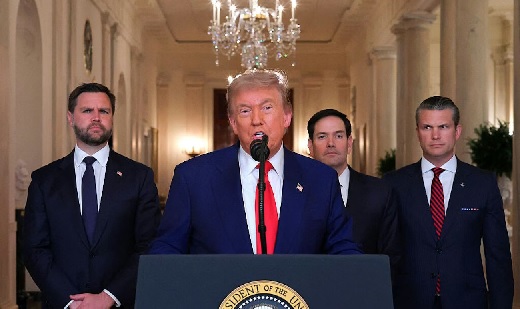
During a January 2026 interview with The New York Times, President Donald Trump was asked whether anything could limit his ability to use the vast military and economic power of the United States as he saw fit. His answer was breathtakingly candid. Trump replied, “Yeah, there is one thing. My own morality. My own mind. It’s the only thing that can stop me.” He added that he doesn’t “need international law” and claimed that he isn’t “looking to hurt people.” These comments came amid reports of American military raids in Venezuela and open discussions in the White House about “a range of options” to force the sale of Greenland.

Morally, a leader claiming to be constrained only by his personal sense of right and wrong should alarm anyone who values the rule of law. But a far more concrete problem exists: the perspective reflects a misunderstanding—or willful rejection—of the constitutional design of the American republic. The American Constitution was deliberately constructed to prevent the very scenario Trump describes, that of a single individual unilaterally dragging the nation into conflict. To prove this, one need look no further than the writings of the Framers and the text of the Constitution itself.

Article I, Section 8 of the Constitution vests Congress with the power “to declare War, grant Letters of Marque and Reprisal, and make Rules concerning Captures on Land and Water.” Congress also holds the purse; no appropriation of money to support an army may be for more than two years. Article II, Section 2 designates the president “Commander in Chief of the Army and Navy,” but only when those forces are “called into the actual Service of the United States.” As Alexander Hamilton explained in Federalist No. 69, the president’s commander-in–chief role amounts to “nothing more than the supreme command and direction of the military and naval forces.” Unlike the British monarch, he does not have the power to declare war or raise and regulate armies; those powers “appertain to the legislature.”

The delegates at the Constitutional Convention debated these powers explicitly. The Committee of Detail originally gave Congress the power “to make war.” On August 17, 1787, James Madison and Elbridge Gerry objected that this wording might allow the president to act unilaterally; they moved to substitute the phrase “declare war.” Their amendment passed by an 8–1 vote. Madison later explained that the change reflected a belief that the executive is “the branch of power most interested in war, & most prone to it,” so the Constitution “with studied care, vested the question of war in the Legislature.” Gerry argued that entrusting war to a single office “contradicted the goals of a republic.”

Thomas Jefferson, writing from Paris in September 1789, exulted that the new Constitution had given America “one effectual check to the dog of war, by transferring the power of declaring war from the executive to the legislative body, from those who are to spend, to those who are to pay.” For Jefferson, this change was essential to prevent rulers from dragging nations into wars to serve their own ambitions or to curry favor with special interests. He later wrote to Elbridge Gerry that he “abhor[s] war, and view[s] it as the greatest scourge of mankind,” hoping that the United States would not be drawn into European conflicts.

James Madison went even further. In his Helvidius essays (1793), written during a debate over presidential authority to issue a neutrality proclamation, Madison argued, “In no part of the Constitution is more wisdom to be found than in the clause which confides the question of war or peace to the legislature.” War, he warned, is “the true nurse of executive aggrandizement.” In war, the executive unlocks the public treasure, dispenses offices and honors, and directs a physical force whose laurels will encircle his brow. Because the executive is tempted by ambition, avarice, and the “honorable or venial love of fame,” Madison concluded that “the strongest passions, and most dangerous weaknesses of the human breast” conspire against peace. Consequently, free states have always sought to “disarm this propensity” by denying war-making powers to a single man.

Washington himself, the first person to occupy the office Trump now holds, understood these constraints. In 1793, facing calls to launch an expedition against the Creek Nation, he reminded South Carolina’s governor, “The Constitution vests the power of declaring War with Congress; therefore no offensive expedition of importance can be undertaken until after they shall have deliberated upon the subject, and authorised such a measure.” The father of his country did not consider his own morality a sufficient check—he deferred to Congress before initiating war.

Outside the convention, the ratifying debates reveal a similar consensus. At the Pennsylvania ratifying convention, James Wilson explained that the new Constitution would not “hurry us into war; it is calculated to guard against it. It will not be in the power of a single man, or a single body of men, to involve us in such distress; for the important power of declaring war is vested in the legislature at large.” Because declarations must be made with the concurrence of the American House of Representatives, Wilson concluded that “nothing but our national interest can draw us into a war.”

The logic of the War Powers Clause—placing the decision to go to war in the hands of the people’s representatives—was described by Madison as a structural “bill of rights.” Rejecting concentrated authority was not merely philosophical; the Founders were intimately familiar with abuses by European monarchs. Madison’s warning that the executive is “most interested in war, & most prone to it” came from hard experience. Jefferson’s desire to transfer the war power reflected a belief that those who bear the cost should decide if a war is worth the sacrifice.

Despite the clarity of the Founders’ design, American history after World War II is largely a chronicle of presidents initiating hostilities without formal declarations. Wars from Korea and Vietnam to Kosovo, Afghanistan, Iraq, Libya, and Syria proceeded on presidential say-so. Presidents invoke an inherent commander-in-chief power and Congress largely acquiesces.

The War Powers Resolution of 1973 was supposed to restore balance. It requires presidents to notify Congress when hostilities begin and to terminate combat within sixty to ninety days absent legislative approval, but presidents treat it as advisory. Reports are filed that actions are merely “consistent with” the resolution and withdrawal deadlines are ignored. Ending unauthorized wars would require legislation capable of overcoming a presidential veto.

These developments reflect a dynamic Madison predicted: war increases executive power and politicians are reluctant to oppose it. The result is a slow erosion of the “effectual check” Jefferson celebrated.

Congress not only declares war; it controls military funding. The Constitution limits appropriations for the army to two years. This requirement, meant to force regular debate and prevent standing armies, is now largely a formality. Lawmakers authorize funds for long conflicts with little scrutiny and rarely tie money to specific missions or sunset old authorizations. Fear of being labeled soft on defense discourages them from using their leverage.

Madison’s warnings about war were not abstractions. He wrote that war is the “parent of armies” and the “true nurse of executive aggrandizement,” producing debts, taxes, and concentrated power that undermine republican government. The Founders did not romanticize war: Jefferson called it “the greatest scourge of mankind,” Washington urged Americans to “cultivate peace and harmony,” and even Hamilton noted that the president’s war role is command, not initiation.

The Constitution’s designers distrusted concentrated power. As John Adams warned, free government requires trusting no man with authority to endanger liberty. War-making decisions were therefore placed in Congress to prevent a single individual from unleashing conflict. Trump’s claim that only his morality limits his power inverts this logic. The Constitution does not rely on personal virtue; it constrains presidents through law and legislative deliberation. Madison, Jefferson, and Washington all warned that offensive expeditions require congressional authorization.

To preserve a republic of laws, Congress must reclaim its authority: debate and pass specific authorizations before wars begin, enforce withdrawal deadlines, repeal obsolete AUMFs, and attach sunset clauses to new ones. Deferring to presidential will in matters of war is not patriotic—it is a dereliction of duty. Citizens must also demand adherence to the Constitution; a populace that conflates support for troops with support for intervention will find itself perpetually at war.

The Constitution was crafted to prevent war decisions from resting on presidential morality. Trump’s claim that his mind is the only limit on his power is constitutionally illiterate. The remedy is not a better personality in the Oval Office but a return to the processes Madison, Jefferson, Washington, and their colleagues designed. As Madison reminded Jefferson, if war decisions are left to the executive, “the people are cheated out of the best ingredients in their Government—the safeguards of peace.”
A LAWSUIT CALLING FOR EVACUATION OF PALESTINIAN AMERICANS IN GAZA WAS DISMISSED BY AN AMERICAN JUDGE

The Judge Said She Had Neither The Ability Nor The Resources To Take On Foreign Policy Decisions. She Also Didn’t Have The Guts To Seek Justice.

A federal judge dismissed a lawsuit on Thursday accusing the American government of failing to rescue Palestinian Americans and their family members trapped in Gaza.

Chief judge Virginia Kendall of the District Court in Chicago expressed sympathy with “the impossible positions in which many of the plaintiffs have found themselves”, but said she did not have the ability and tools to evaluate foreign policy decisions made by the government’s executive branch, Reuters reported.

Kendall said she lacked the diplomatic resources to coordinate the evacuation of plaintiffs and/or their families with other nations, or the ability to rescue people from war zones, especially given the lack of American diplomatic presence in Gaza.

Endeavoring to answer these questions – and many more like them – from the comfort of chambers is both undoable and would also invade the political branches’ constitutionally committed tasks of determining when, how, and under what circumstances evacuations from war zones should proceed,” Kendall wrote.

A group of nine Palestinian Americans – who were either trapped in Gaza or had relatives there – filed a lawsuit, with support from the Council on American-Islamic Relations (Cair) and the law office of Maria Kari, against the Biden administration in December 2024, accusing it of abandoning Americans of Palestinian origin during Israel’s two-year war on the enclave, which has been recognised as a genocide by the United Nations, human rights groups and genocide scholars.

The lawsuit called on the government to conduct emergency rescues of Palestinian Americans in Gaza. Over 71,000 Palestinians have been killed in the enclave, with numbers increasing daily due to Israel’s ceasefire violations.

The plaintiffs say they tried for months to use all non-legal means to either escape Gaza themselves or help their immediate family members escape.

The lawsuit said the American government failed to implement standard efforts to evacuate Americans and their families from Gaza, thereby violating their constitutional rights to equal protection by abandoning them in a war zone and not evacuating them as readily as it would other Americans.

The plaintiffs said that their lives had been turned upside down, and the lack of adequate shelter, food shortages, medical care, and turmoil meant that the government had a duty of care to evacuate them.

According to Cair, each of the plaintiffs is eligible for evacuation by the American regime but has been “summarily ignored by the State Department and other Biden administration officials”.

The law requires the US government to protect Americans wherever they may be. With every passing day, the danger of our clients dying from Israeli bombardment or the starvation and disease now rampant in Gaza only goes up,” lead attorney Maria Kari said at the time of filing the lawsuit, it was reported.

However, Kendall also said available evidence shows the American government had developed an evacuation plan, and the nine plaintiffs had either been evacuated or rejected offers that did not cover immediate family members.

The American Department of State did not immediately respond to a request for comment by the time of that publication.

EVACUATION PROCESS

In February of 2024, it was reported on the labyrinthine process that Palestinian Americans trapped in Gaza must go through to be able to secure a American evacuation.

The first step involves relatives of trapped individuals applying to the State Department on their behalf using an online crisis intake form.

If the State Department approves the form, it adds the individuals’ names to a list that gets sent to Egypt and Israel for further review.

Once the review is approved, the list is sent over to Palestinian authorities in Gaza, which publish a daily list of individuals cleared to leave via the Rafah border crossing.

The State Department said at the time that it had successfully helped more than 1,600 Palestinians – “including US citizens, lawful permanent residents (LPRs) and their family members” – leave Gaza and enter Egypt via the Rafah crossing.

However, the process only helped Palestinian Americans and their families escape if they met very specific criteria.

At the time, only American citizens, their spouses, parents and unmarried children under the age of 21 were permitted by Washington to leave Gaza.

Siblings under the age of 21 could also be approved to leave, but only if their American-citizen sibling was also under 21, according to Sammy Nabulsi, a lawyer working on those cases.

It is still unclear how many of those families stuck in Gaza have been evacuated since the lawsuit was filed and a ceasefire was reached.

Design a site like this with WordPress.com
Get started