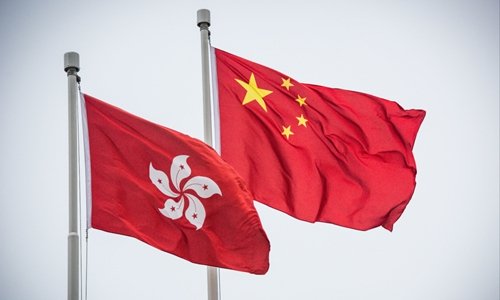
In late November, House and Senate members unanimously passed the so-called Hong Kong Human Rights and Democracy Act (HKHRDA) of 2019.
Trump signed the measure into law, along with a companion bill, restricting exports of US crowd control devices to Hong Kong police.
The measures are all about US war on China by other means, wanting the country weakened, contained and isolated — politically, economically, financially and technologically. They’re unrelated to supporting democracy and human rights.
On Monday, spokeswoman for China’s Foreign Ministry, Hua Chunying, said Beijing will suspend US requests for its warships and aircraft to visit Hong Kong.
It’s imposing sanctions on US organizations funded by Washington and/or by corporate and other donors — ones involved in supporting and otherwise manipulating months of Hong Kong violence, vandalism and chaos, in cahoots with the CIA.
Targeted groups include the National Endowment for Democracy that’s mandated to combat it wherever it exists, the National Democratic Institute for International Affairs, the International Republican Institute, Freedom House, and Human Rights Watch.
According to Sourcewatch, HRW earlier removed prominent international jurist/academic Richard Falk from one of its human rights committees for his vocal criticism of Israeli high crimes. Along with Amnesty International, HRW is hostile to governments on the US target list for regime change — notably Russia, China, Iran, Syria, and Venezuela, among others.
Law Professor Francis Boyle earlier said:
“if you are dealing with a human rights situation in a country that is at odds with the United States or Britain, it gets an awful lot of attention, resources (and) publicity” from these and similar organizations.
When it comes to US, UK, or other Western human rights abuses, “it’s like pulling teeth to get them to do something on the situation — because Washington and its allies aren’t on “the official enemies list.”
According to China’s Global Times, if the US “continues to provoke on Hong Kong, it is expected that (Beijing) will take follow-up actions.”
Under China’s “one country, two systems” policy, its authorities won’t permit the US or other countries to try exerting a sphere of influence over the city.
Measures announced on Monday are a shot across the bow, the first time Beijing imposed sanctions on US organizations, a show of strength against Washington’s dirty hands all over months of manipulated protests in Hong Kong.
The city is Chinese territory. Its authorities won’t tolerate foreign efforts to undermine its sovereignty. According to Beijing’s official People’s Daily broadsheet, hostile US legislation “seriously violated the international law and the basic norm of international relations, and interferes with China’s domestic affairs,” adding: Sanctions imposed show “the country’s firm resolution on the Hong Kong issue.”
Organizations like the ones sanctioned are involved in “grubby business in the name of justice. They offer capital and supplies for rioters, and control the protests behind the scene. Releasing malicious promotional materials, they are fanning confrontation, calling black white, and conducting political infiltration. (T)hey are…notorious for their misdeeds in (US) ‘color revolutions’ across the world.” “(A)ny attempt(s) against the Chinese, including (in) Hong Kong…will be countered resolutely.”
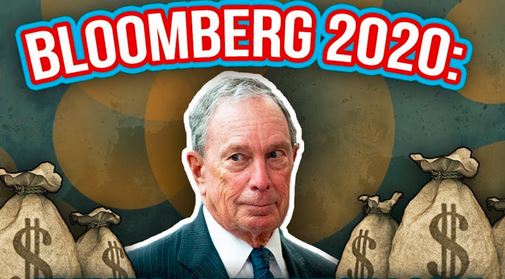
America’s wealthiest billionaires can buy a national election at $100 a vote — and still make money. Anyway, Americans are not really free – but at $100 each they are cheap enough.
Gracie Mansion, the official residence of New York’s mayors since 1942, hosted billionaire Michael Bloomberg for three terms.
The first of these terms began after Bloomberg, then the Republican candidate for mayor, spent an incredible $74 million to get himself elected in 2001. He spent, in effect, $99 for every vote he received.
Four years later, Bloomberg — who made his fortune selling high-tech information systems to Wall Street — had to spend even more to get himself re-elected. His 2005 campaign bill came to $85 million, about $112 per vote.
In 2009, he had the toughest sledding yet. Bloomberg first had to maneuver his way around term limits, then convince a distinctly unenthusiastic electorate to give him a majority. Against a lackluster Democratic Party candidate, Bloomberg won that majority — but just barely, with 51 percent of the vote.
That majority cost Bloomberg $102 million, or $174 a vote.
Now Bloomberg has announced he’s running for president as a Democrat, arguing he has the best chance of unseating President Trump, whom he describes as an “existential threat.” Could he replicate his lavish New York City campaign spending at the national level? Could he possibly afford to shell $174 a vote nationwide — or even just $99 a vote?
Let’s do the math. Donald Trump won the White House with just under 63 million votes. We can safely assume that Bloomberg would need at least that 63 million. At $100 a vote, a victory in November 2020 would run Bloomberg $6.3 billion.
Bloomberg is currently sitting on a personal fortune worth $52 billion. He could easily afford to invest $6.3 billion in a presidential campaign — or even less on a primary.
Indeed, $6.3 billion might even rate as a fairly sensible business investment. Several of the other presidential candidates are calling for various forms of wealth taxes. If the most rigorous of these were enacted, Bloomberg’s grand fortune would shrink substantially — by more than $3 billion next year, according to one estimate.
In other words, by undercutting wealth tax advocates, Bloomberg would save over $6 billion in taxes in just two years — enough to cover the cost of a $6.3 billion presidential campaign, give or take a couple hundred million.
Bloomberg, remember, wouldn’t have to win the White House to stop a wealth tax. He would just need to run a campaign that successfully paints such a tax as a clear and present danger to prosperity, a claim he has already started making.
Bloomberg wouldn’t even need to spend $6.3 billion to get that deed done. Earlier this year, one of Bloomberg’s top advisers opined that $500 million could take his candidate through the first few months of the primary season.
How would that $500 million compare to the campaign war chests of the two primary candidacies Bloomberg fears most? Bernie Sanders raised $25.3 million in 2019’s third quarter for his campaign, Elizabeth Warren $24.6 million. Both candidates are collecting donations — from small donors — at a $100 million annual pace.
Bloomberg could spend 10 times that amount on a presidential campaign and still, given his normal annual income, end the year worth several billion more than when the year started.
Most Americans don’t yet believe that billionaires shouldn’t exist. But most Americans do believe that America’s super rich shouldn’t be able to buy elections or horribly distort their outcomes.
But unfortunately, they can — or at least, you can be sure they’ll try.
Anyway, Americans are not really free – but at $100 each they are cheap enough.
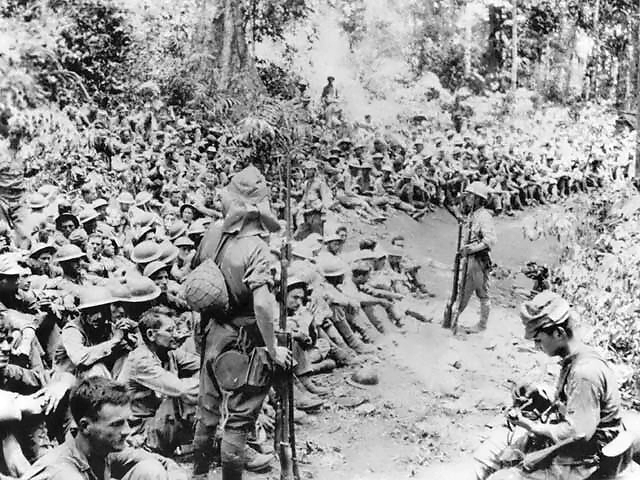
The march of death. Taken during the March of Death from Bataan to Cabana Tuan prison camp. May 1942. (Defense depart., USMC 114538, # 127-GR-111-114538, National Archives).
The turn toward empire and intervention began with the Spanish American War.
On April 9, 1942, 12,000 U.S. troops paid the price of U.S. empire and intervention when they surrendered to Japanese forces at Bataan, Philippines. During the resulting “Bataan death march,” 600 of them died, and then another 1,000 died after they were transported to Japanese POW camps.
The Constitution called into existence a limited-government republic. No Pentagon, no CIA, and no NSA. Just a relatively small military force. No foreign military empire, no foreign colonies, and no U.S. military bases in foreign countries. That system lasted for more than a century.
By the same token, the original foreign policy of the United States was one of nonintervention in the affairs of other nations. No coups, foreign wars of aggression, foreign aid, state-sponsored assassinations, alliances with foreign regimes, or regime-change operations. That system too lasted about a century.
Notwithstanding the horrors of slavery, America’s limited-government structure and its nonimperialist, non-interventionist foreign policy were among the factors that led to the greatest and longest surge in liberty, peace, prosperity, and standards of living in history.
Morales was the glue that held everything together.
In 2005, I sat in a lounge off the Senate chamber in La Paz, Bolivia, waiting for an interview. I was wearing my best coat and tie. With my thinning hair and grey mustache, I could pass for a Bolivian of European descent. In fact, numerous people smiled and said “buenos días,” as if I was a familiar face.
The senators were mostly white men, reflecting the makeup of Bolivia’s political elite at that time. But that changed just a few months later with the election of Evo Morales and his party, Movement Toward Socialism (MAS).
Morales’s government nationalized natural gas and electric companies, defying both the US and the Bolivian oligarchy. So it’s not surprising that those forces now denounce Morales as a dictator and cheer his overthrow.
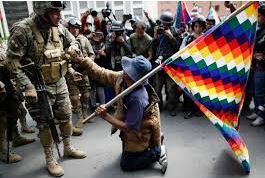
Bolivia held elections on October 20 this year. Opposition leaders, claiming vote fraud, organized mass, anti-government demonstrations. Sectors of the military and police sided with the opposition. Morales, his vice president and other top government leaders resigned under military pressure. Some went into exile in Mexico.
While the Trump Administration and mainstream media characterized the events as a popular uprising, Senator Bernie Sanders, Independent of Vermont, correctly called it a coup.
“It was the military who intervened in that process and asked him to leave,” Sanders said during the Democratic Party debate in Atlanta on November 20. “When the military intervenes, in my view, that’s called a coup.”
Some recent history:
In 2005, I reported from Bolivia on the popular movements opposed to then President Carlos Mesa. The rich elite who ran Bolivia in those days followed US-inspired neoliberal economic policies by privatizing government-owned companies, even those providing drinking water and sewage lines.
The privatized water utility was owned by a French multinational corporation. It raised the sewage hook-up charge to $450, roughly eight times the typical monthly income in El Alto, a working-class city located above La Paz.
The people of El Alto sought Mesa’s resignation through mass protests. “We used force because this is an issue facing us and our children,” street vendor Alejandra Arteaga told me when I was writing for the Dallas Morning News. “When there was a strike or a blockade, we went up to participate.”
In June 2005, a new round of mass demonstrations forced Mesa to resign, and by December, Bolivians elected Morales president. He served three terms.
Poverty alleviation and indigenous rights:
At a time when most Latin American economies were slowing, Bolivia under Morales and MAS reduced poverty by 42 percent and extreme poverty by 60 percent, according to a study by the Center for Economic and Policy Research (CEPR). In 2008, unemployment was cut in half, from 7.7 to 4.4 percent.
MAS made these advances because Bolivia defied conventional US economic prescriptions, according to Guillaume Long, a senior policy analyst at CEPR. “MAS opposed the neoliberal agenda and nationalized resources such as gas,” he told me in a phone interview.
The country’s indigenous groups, including Aymara and Quechua, saw significant gains under the MAS government, according to Bret Gustafson, an anthropology professor and Bolivia expert at the Washington University in St. Louis.
“The government passed anti-racism legislation,” he said in a phone interview. “Indigenous people were included in the highest level of the government and military. Indigenous languages and culture were celebrated under Evo.”
But those gains are in serious danger if the right wing stays in power.
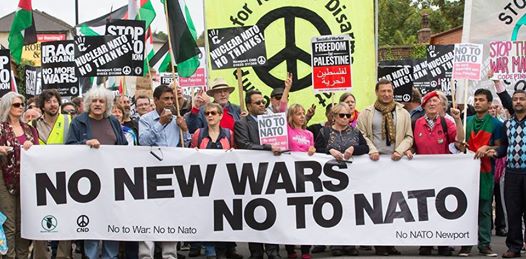
Instead of preventing war, it promotes militarism, exacerbates global tensions and makes war more likely.
The three smartest words that Donald Trump uttered during his presidential campaign are “NATO is obsolete.” His adversary, Hillary Clinton, retorted that NATO was “the strongest military alliance in the history of the world.” Now that Trump has been in power, the White House parrots the same worn line that NATO is “the most successful Alliance in history, guaranteeing the security, prosperity, and freedom of its members.” But Trump was right the first time around: Rather than being a strong alliance with a clear purpose, this 70-year-old organization that is meeting in London on December 4 is a stale military holdover from the Cold War days that should have gracefully retired many years ago.
NATO was originally founded by the United States and 11 other Western nations as an attempt to curb the rise of communism in 1949. Six years later, Communist nations founded the Warsaw Pact and through these two multilateral institutions, the entire globe became a Cold War battleground. When the USSR collapsed in 1991, the Warsaw Pact disbanded but NATO expanded, growing from its original 12 members to 29 member countries. North Macedonia, set to join next year, will bring the number to 30. NATO has also expanded well beyond the North Atlantic, adding a partnership with Colombia in 2017. Donald Trump recently suggested that Brazil could one day become a full member.
NATO’s post-Cold War expansion toward Russia’s borders, despite earlier promises not to move eastward, has led to rising tensions between Western powers and Russia, including multiple close calls between military forces. It has also contributed to a new arms race, including upgrades in nuclear arsenals, and the largest NATO “war games” since the Cold War.
While claiming to “preserve peace,” NATO has a history of bombing civilians and committing war crimes. In 1999, NATO engaged in military operations without UN approval in Yugoslavia. Its illegal airstrikes during the Kosovo War left hundreds of civilians dead. And far from the “North Atlantic,” NATO joined the United States in invading Afghanistan in 2001, where it is still bogged down two decades later. In 2011, NATO forces illegally invaded Libya, creating a failed state that caused masses of people to flee. Rather than take responsibility for these refugees, NATO countries have turned back desperate migrants on the Mediterranean Sea, letting thousands die.
In London, NATO wants to show it is ready to fight new wars. It will showcase its readiness initiative – the ability to deploy 30 battalions by land, 30 air squadrons and 30 naval vessels in just 30 days, and to confront future threats from China and Russia, including with hypersonic missiles and cyberwarfare. But far from being a lean, mean war machine, NATO is actually riddled with divisions and contradictions. Here are some of them:
French President Emmanuel Macron questions the U.S. commitment to fight for Europe, has called NATO “brain dead” and has proposed a European Army under the nuclear umbrella of France.
Turkey has enraged NATO members with its incursion into Syria to attack the Kurds, who have been Western allies in the fight against ISIS. And Turkey has threatened to veto a Baltic defense plan until allies support its controversial incursion into Syria. Turkey has also infuriated NATO members, especially Trump, by purchasing Russia’s S-400 missile system.
Trump wants NATO to push back against China’s growing influence, including the use of Chinese companies for the construction of 5G mobile networks–something many NATO countries are unwilling to do.
Is Russia really NATO’s adversary? France’s Macron has reached out to Russia, inviting Putin to discuss ways in which the European Union can put the Crimean invasion behind it. Donald Trump has publicly attacked Germany over its Nord Stream 2 project to pipe in Russian gas, but a recent German poll saw 66 percent wanting closer ties with Russia.
The UK has bigger problems. Britain has been convulsed over the Brexit conflict and is holding contentious national election on December 12. British Prime Minister Boris Johnson, knowing that Trump is wildly unpopular, is reluctant to be seen as close to him. Also, Johnson’s major contender, Jeremy Corbyn, is a reluctant supporter of NATO. While his Labour Party is committed to NATO, over his career as an anti-war champion, Corbyn has called NATO “a danger to world peace and a danger to world security.” The last time Britain hosted NATO leaders in 2014, Corbyn told an anti-NATO rally that the end of the Cold War “should have been the time for NATO to shut up shop, give up, go home and go away.”
A further complication is Scotland, which is home to a very unpopular Trident nuclear submarine base as part of NATO’s nuclear deterrent. A new Labour government would need the support of the Scottish National Party. But its leader, Nicola Sturgeon, insists that a precondition for her party’s support is a commitment to close the base.
Europeans can’t stand Trump (a recent poll found he is trusted by only 4 percent of Europeans!) and their leaders can’t rely on him. Allied leaders learn of presidential decisions that affect their interests via Twitter. The lack of coordination was clear in October, when Trump ignored NATO allies when he ordered U.S. special forces out of northern Syria, where they had been operating alongside French and British commandos against Islamic State militants.
The US unreliability has led the European Commission to draw up plans for a European “defense union” that will coordinate military spending and procurement. The next step may be to coordinate military actions separate from NATO. The Pentagon has complained about EU countries purchasing military equipment from each other instead of from the United States, and has called this defense union “a dramatic reversal of the last three decades of increased integration of the transatlantic defence sector.”
Do Americans really want to go to war for Estonia? Article 5 of the Treaty states that an attack against one member “shall be considered an attack against them all,” meaning that the treaty obligates the US to go to war on behalf of 28 nations– something most likely opposed by war-weary Americans who want a less aggressive foreign policy that focuses on peace, diplomacy, and economic engagement instead of military force
An additional major bone of contention is who will pay for NATO. The last time NATO leaders met, President Trump derailed the agenda by berating NATO countries for not paying their fair share and at the London meeting, Trump is expected to announce symbolic US cuts to NATO’s operations budget.
An international organization published two false reports and got caught in the act.
An international organization published two false reports and got caught in the act. But as the false reports are in the U.S. interests a U.S. sponsored propaganda organization is send out to muddle the issue. As that effort comes under fire the New York Times jumps in to give the cover-up effort some extra help.
The Organisation for the Prohibition of Chemical Weapons (OPCW) manufactured a pretext for war by suppressing its own scientists’ research:
OPCW emails and documents were leaked and whistleblowers came forward to speak with journalists and international lawyers. Veteran journalist Jonathan Steele, who has spoken with the whistleblowers, wrote an excellent piece on the issues. In the Mail on Sunday columnist Peter Hitchens picked up the issue and moved it forward.
Under U.S. pressure the OPCW management modified or suppressed the findings of its own scientists to make it look as if the Syrian government had been responsible for the alleged chemical incident in April 2018 in Douma.
The public attention to the OPCW’s fakery lead to the questioning of other assertions the OPCW had previously made. With the OPCW under fire someone had come to its help.
To save the propaganda value of the OPCW reports the U.S. financed Bellingcat propaganda organization jumped in to save the OPCW’s bacon. Bellingcat founder “suck my balls” Elliot Higgins claimed that the OPCW reports satisfied the concerns the OPCW scientist had voiced.
That assertion is now further propagated by a New York Times piece which, under the pretense of reporting about open source analysis, boosts Bellingcat and its defense of the OPCW:
The blogger Eliot Higgins made waves early in the decade by covering the war in Syria from a laptop in his apartment in Leicester, England, while caring for his infant daughter. In 2014, he founded Bellingcat, an open-source news outlet that has grown to include roughly a dozen staff members, with an office in The Hague. Mr. Higgins attributed his skill not to any special knowledge of international conflicts or digital data, but to the hours he had spent playing video games, which, he said, gave him the idea that any mystery can be cracked. … Bellingcat journalists have spread the word about their techniques in seminars attended by journalists and law-enforcement officials. Along with grants from groups like the Open Society Foundations, founded by George Soros, the seminars are a significant source of revenue for Bellingcat, a nonprofit organization.
It seems that the New York Times forgot to mention an important monetary source for Bellingcat.
Porticus, Adessium, Pax for Peace and the Postcode Lottery are all Dutch organizations. Then there is the notorious Soros organization the New York Times mentioned. But why did the NYT forgot to tell its readers that Bellingcat is financed by the National Endowment for Democracy which itself is to nearly 100% funded by the U.S. government?
Could that be because the NED, which spends U.S.government money on more than 1.600 U.S. government paid Non-Government Organizations, is a Trojan horse, a cover for the CIA?
Spurred by Watergate – the Church committee of the Senate, the Pike committee of the House, and the Rockefeller Commission, created by the president, were all busy investigating the CIA. Seemingly every other day there was a new headline about the discovery of some awful thing, even criminal conduct, the CIA had been mixed up in for years. … What was done was to shift many of these awful things to a new organization, with a nice sounding name – The National Endowment for Democracy. The idea was that the NED would do somewhat overtly what the CIA had been doing covertly for decades, and thus, hopefully, eliminate the stigma associated with CIA covert activities. … “We should not have to do this kind of work covertly,” said Carl Gershman in 1986, while he was president of the Endowment. “It would be terrible for democratic groups around the world to be seen as subsidized by the C.I.A. We saw that in the 60’s, and that’s why it has been discontinued. We have not had the capability of doing this, and that’s why the endowment was created.
And Allen Weinstein, who helped draft the legislation establishing NED, declared in 1991: “A lot of what we do today was done covertly 25 years ago by the CIA.”
In effect, the CIA has been laundering money through NED.
The fact that the NED is doing the CIA’s work is likely the reason why the NYT puff piece about Bellingcat forgets to mention its payments and also why it jumps to Bellingcat’s and the OPCW’s help:
“Some journalists and activists hostile to what they characterize as Bellingcat’s proWestern narratives have criticized some of its coverage of the war in Syria. At issue is an April 7, 2018, attack on Douma, Syria. Bellingcat reported, based on an analysis of six open-source videos, that it was “highly likely” that Douma civilians had died because of chemical weapons. In March, the Organization for the Prohibition of Chemical Weapons reported that there were “reasonable grounds” to say that chemical weapons had been used in the attack.”
Critics of Bellingcat have pointed to an email from an investigator with the organization, saying that it raised questions about the findings. WikiLeaks published the email on Nov. 23. In a response, Bellingcat defended its reporting, saying the final report on Douma from the Organization for the Prohibition of Chemical Weapons reflected the concerns of the investigator whose email was published by WikiLeaks.
By playing video games Elliot Higgins learned to identify chemical attacks in dubious video sequences published by terrorist affiliates. If true it is an admirable capability. Still his assertion that the OPCW report “reflected the concerns of the investigator” who criticized it is, a as Caitlin Johnstone demonstrates, utterly false:
Bellingcat simply ignores this absolutely central aspect of the email, as well as the whistleblower’s point about the symptoms of victims not matching chlorine gas poisoning.
“In this case the confidence in the identity of chlorine or any choking agent is drawn into question precisely because of the inconsistency with the reported and observed symptoms,” the whistleblower writes in the email. “The inconsistency was not only noted by the [Fact Finding Mission] team but strongly noted by three toxicologists with expertise in exposure to [Chemical Weapons] agents.”
Bellingcat says nothing about these revelations in the email, and says nothing about the fact that the OPCW excluded them from both its Interim Report in July 2018 and its Final Report in March 2019, the latter of which actually asserted the exact opposite saying there was “reasonable grounds that the use of a toxic chemical as a weapon took place. This toxic chemical contained reactive chlorine. The toxic chemical was likely molecular chlorine.”
Bellingcat completely ignores all of these points, …
Bloomberg says he wants to stop Donald Trump but he’s really running to stop Bernie Sanders.
“Bloomberg targeted black people for political gain with whites and he created great suffering in the process.”
In 2002 Michael Bloomberg was sworn in as mayor of New York City. In that same year the men known as the Central Park Five had their sentences vacated. They all served between 6 and 13 years in prison for a rape they did not commit. They sued New York City for the wrongful convictions but the Bloomberg administration refused to pay. They had to wait until he left office in 2014 to receive their $40 million settlement.
Michael Bloomberg recently announced that he will seek the Democratic Party nomination for president in 2020. Unlike late comers such as Deval Patrick he actually has a chance to win the nomination or to play a role in choosing someone else. His weapon is not in any of his policy provisions but in his bank account. Bloomberg has an estimated net worth of $55 billion, a figure which makes him among the richest people on the planet. Like the old joke about the 900 pound gorilla he can do whatever he wants, including prevent a progressive from getting the nomination.
Bloomberg says he is “Running for president to stop Donald Trump and rebuild America.”In reality he is running to stop Bernie Sanders because he knows that given a level playing field Sanders would emerge triumphant. Bloomberg’s strategy is to skip the early states and focus on Super Tuesday in March. This plan is a sign that he is more interested in being a spoiler than in actually being president himself.
“His weapon is not in any of his policy provisions but in his bank account.”
Bloomberg’s impact on New York will be felt for years to come. He described New York as “a luxury product” and he acted accordingly by accelerating the displacement of black people through gentrification. In order to make sure that black New Yorkers got the memo and quickly left town he instituted the notorious stop and frisk police program.
At the height of stop and frisk terrorism nearly 700,000 people, nearly all of them black and Latino, were stopped without probable cause. Men, women and even children were stopped, and sometimes arrested. Arrest records can have a lasting negative impact, especially on the lives of black people. Any interaction with police, no matter how minor the cause, carries a risk of harm or even death.
Most police departments have quotas for parking tickets, but the NYPD had quotas for arrests during the Bloomberg era. Individual cops risked being reprimanded or penalized themselves if they didn’t make arrests as often as possible. This legacy of unleashing the modern day slave patrol is enough reason to make Bloomberg unacceptable as a presidential candidate.
“The NYPD had quotas for arrests during the Bloomberg era.”
Bloomberg never backed down from his position while in office. He even said that white people were stopped too often and black people not enough. He has changed his tune of late and now offers a disingenuous apology for the policy he defended as mayor.
There are many reasons to oppose a Bloomberg presidential campaign. Billionaire rule has damaged New York, the nation and the entire world. The word “oligarch” is an insult when applied to other nations like Russia, but an American oligarch has announced his intention to buy the presidency for himself or someone else and opposition has been quite muted.
Michael Bloomberg was the worst mayor for black New Yorkers. While Rudy Guiliani and his overt appeals to racism drew ire, Bloomberg’s approach of buying off opposition allowed him to get away with doing far worse. Al Sharpton was among those who took Bloomberg’s hush money. The National Action Network was a recipient of Bloomberg’s philanthropy and Rev. Sharpton was silent while every black person in town was a potential target for police abuse.
Donald Trump’s role in inflaming white public opinion in the Central Park case is well known. He paid for newspaper ads calling for the death penalty. Even when his targets were exonerated he stood by his original statement. It is important to remember the role he played in inciting a judicial lynch mob.
But Bloomberg’s equally disgraceful behavior is largely unknown. No one in New York City media then or now wants to anger the rich guy. The fact that financial compensation was withheld received little or no attention. He may have better manners, but he targeted black people for political gain with whites and he created great suffering in the process.
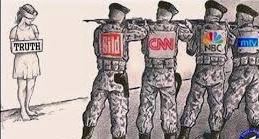
The corporate media always follow orders from the ruling elites. They were instructed to promote Joe Biden as being more electable but his campaign has been a gigantic embarrassment. Other “centrist” Democrats wring their hands because they can’t agree on a candidate while Bloomberg has decided that if he wants this thing done right he had better do it himself.
No one knows if Bloomberg is more electable than Trump. Everyone knows that his wealth gives him a huge advantage and he can decide who will or won’t be the Democratic Party nominee. His presence in the race is decidedly undemocratic and should be denounced.
If Bloomberg is true to form he will have black staffers to provide a friendly public face. He will find respected people to endorse him and explain away his offenses. But his candidacy should be a line in the sand and anyone who supports him should be deemed equally unacceptable.
Black Bloomberg supporters will be outing themselves as traitors and Uncle Toms. It is important to know one’s enemy. That is a silver lining in this cloud.
Did you ever think you lived in a country where the ruler could issue orders to private individuals, as though they were in the army?
Some people think that the United States is safe from dictatorship because the country is a democracy. It’s only in totalitarian countries, they hold, that people are subject to dictatorship.
Nothing could be further from the truth. Such people are confusing how a ruler gets elected with the powers that the ruler has after being elected. A democratically elected ruler can wield and exercise dictatorial powers.
Case in point: President Donald Trump. He is the democratically elected president of the United States. He also wields and exercises dictatorial power over the American people
The system of government that the Framers established with the Constitution provided for three branches of government — executive, legislative, and judicial. The Constitution delegated certain powers to each branch. The legislative branch was charged with enacting laws, including laws that imposed taxes on people. The executive branch was charged with enforcing the laws. The judicial branch was charged with interpreting the laws and, if need be, declaring them unconstitutional.
In a dictatorship, the dictator doesn’t have to concern himself with legislation or judicial interpretation. What he says goes. When he issues a dictate, it automatically becomes set in stone as the law.
Trump’s conduct in his trade war with China confirms how far the United States has gone in the direction of a democratically elected dictatorship.
Notice that Trump initiated his trade war all on his own, by unilaterally raising tariffs on products that are imported from China. He didn’t go to Congress and seek a law that raised tariffs. He just issued the dictate that raised tariffs.
That is classic dictatorship. The ruler issues an order, which automatically becomes law. And keep in mind that a tariff is nothing more than a sales tax on foreign goods. The people who pay that tax are Americans who purchase Chinese goods. Therefore, under the dictatorial system under which modern-day Americans live, the democratically elected dictator wields the authority to levy whatever amounts of taxes he wishes to collect from the American people.
Over the weekend, the American people received another stark example of Trump’s dictatorial conduct. Angry over the fact that China hasn’t bowed to his demands and instead is retaliating with its own tariffs on American products, Trump declared, “Our great American companies are hereby ordered to immediately start looking for an alternative to China including bringing …your companies HOME and making your products in the USA.”
That is an incredible command. Did you ever think live in a country where the ruler could issue orders to private individuals, as though they were in the army? A necessary feature of a free society is that people are required to answer only to duly enacted laws, not to arbitrary and capricious orders and dictates of their ruler. Trump clearly doesn’t get that. He thinks that because he is “commander in chief” of the armed forces, that makes him the commanding officer of the American people.
Congress isn’t innocent in this process, for it is Congress that has enacted laws delegating to the president the authority to issue these types of dictatorial decrees. The Framers, however, never intended for one branch of government to delegate its powers to another branch of government.
Where is the federal judiciary in all this? Isn’t it their job to declare laws that violate the Constitution unconstitutional. That’s the way it used to be. For example, in the 1935 case of A.L.A. Schechter v. United States, the Supreme Court declared the Franklin Roosevelt administration’s fascist National Industrial Recovery Act unconstitutional. The Court’s reason?
The law improperly delegated congressional power to enact laws to the president and, therefore, had to be declared unconstitutional.
So, why hasn’t the U.S. Supreme Court done the same with respect to the laws on which Trump is relying? Two reasons:
First, shortly after President Roosevelt came out with his infamous “court-packing” scheme, which would enable him to pack the Court with cronies who would uphold his socialist and fascist programs, the Court made it clear that it would never again interfere with congressional enactments relating to economic activity. The Court has followed that policy ever since.
Second, the laws on which Trump is relying enable the president to cite “national security,” the most important and meaningless term in the American political lexicon. All that Trump has to do to justify his dictatorial orders, decrees, edicts, and dictates is declare “‘National security is at stake.” At that point the issue is settled. That’s because after the federal government was converted to a national-security state after World War II, the Supreme Court made it crystal clear that it would never second-guess any action of the president, the Pentagon, the CIA, and the NSA that is based on “national security.”
That’s how America has ended up with a democratically elected dictator. But hey, let’s look at the bright side: At least Trump is not as bad as Gen. Augusto Pinochet, the unelected conservative military dictator who the Pentagon and CIA installed into power in Chile back in the 1970s. Like Trump, he too loved issuing decree-laws, without interference from a legislature or judiciary.
Did America’s best connected sexual predator accumulate incriminating videos of powerful men?
Shortly after Jeffrey Epstein’s August death in a Manhattan detention facility, a shadowy figure claiming to have set up encrypted servers for the convicted sex offender told several attorneys and the New York Times he had a vast archive of incriminating evidence against powerful men stored on overseas servers, including several years worth of the financier’s communications and financial records which allegedly showed he had vast amounts of Bitcoin and cash in the Middle East and Bangkok, and hundreds of millions of dollars’ worth of gold, silver and diamonds.
Going by the pseudonym Patrick Kessler, self-described ‘hacker’ said he had “thousands of hours of footage from hidden cameras” from Epstein’s multiple properties, which included former Israeli Prime Minister Ehud Barak, lawyer Alan Dershowitz, and Prince Andrew, along with three billionaires and a prominent CEO, according to the Times.
It has been long speculated that Epstein recorded his high-profile guests as part of an international blackmail operation.
Armed with nothing more than blurry photos of what he claimed were high-profile individuals in compromising situations, Kessler approached lawyers representing several Epstein accusers, John Pottinger and David Boies – the former of whom suggested that billionaire Sheldon Adelson – an ally of Israeli Prime Minister Benjamin Netanyahu – might pay for the alleged footage of Barak.
According to excerpts viewed by The Times, Mr. Pottinger and Kessler discussed a plan to disseminate some of the informant’s materials — starting with the supposed footage of Mr. Barak. The Israeli election was barely a week away, and Mr. Barak was challenging Prime Minister Benjamin Netanyahu. The purported images of Mr. Barak might be able to sway the election — and fetch a high price. -New York Times.
After several weeks, the attorneys invited the New York Times to speak with Kessler in mid-September. Then things got even more unbelievable. Following a mid-September meeting with The Times in the Boies Schiller offices, Kessler went rogue – contacting the paper and accusing Boies and Pottinger of an extortion plot against the subjects of said tapes.
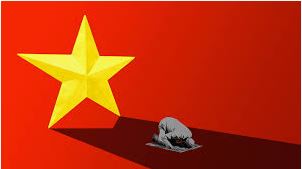
The Uyghurs are everywhere, where their Western, Gulf states and Turkish handlers want them to be.
Please Note:
The Uyghurs have managed to create a very old and deep culture. Most of them are good, law abiding citizens of the PRC. Also the great majority of followers of Sunni Islam are peaceful people. This work is addressing terrible problems related to extremism and terrorism, most of them crafted and then fueled by the West and its allies. The goal is to damage China. The victims live in various countries.
The Uyghurs combat as well as political cells and units are based in Syria and Indonesia, in Turkey and occasionally in Egypt.
When they are told to kill, they murder with unimaginable brutality; decapitating, or cutting to pieces priests, infants, old women.
They are China’s worst nightmare. They are unleashing religious fundamentalism and foreign-sponsored militant nationalism and separatism. They are potentially the greatest obstacle and danger to President’s Xi Jinping’s marvelous BRI (Belt and Road Initiative).
Both the West and Turkey are glorifying them; the most extremist of Uyghurs. They are financing and arming them. They are labeling them as victims. Uyghurs are now a new ‘secret weapon’, to be used against Beijing’s determined march forward, towards socialism with Chinese characteristics.
The West and its allies are doing all they can, to smear China (PRC), to derail its progressive course, and to arrest its increasingly positive and optimistic influence on all the corners of the world. They invent and then support/finance all imaginable and unimaginable adversaries of the Communist Party of China. Religious sects are the favorite ‘weapon’ used against China by both North America and Europe. That is true about the extremists who belong to Tibetan Buddhism, concentrated around an agent and darling of the Western intelligence agencies, the Dalai Lama. Or yet another radical Buddhist/Taoist extremist sect – Falun Gong.
The West does everything in its power to destroy China. It was clearly detectable 30 years ago during the so-called Tiananmen Square Incident (an event supported by the West, and later twisted by Western mass media), as it has been obvious during two recent ‘rebellions’ in Hong Kong, fully sponsored by Western organizations (NGOs) and governments.
The latest chapter of the anti-Chinese attacks, conducted by the West, is perhaps the most dangerous, and the ‘best crafted’ multi-national onslaught against the interests of both China (PRC) and the developing world, particularly the former Soviet republics of Central Asia.

 Hidden History -- In The Making