The Syrian Ministry of Foreign Affairs slammed the regime of Donald Trump for its attempts to interfere in the internal affairs of other countries.
This came after the US State Department issued a statement to interfere in the works of the Syrian Constitution Committees deliberations in Geneva.
A spokesperson for the ministry said to the Syrian official news agency SANA ‘the dialogue is a Syrian-Syrian one and no one has the right to interfere in it or support any party under any pretext.’ The spokesperson outlined that the role of the United Nations represented by its special envoy Geir Pederson is limited to facilitating the committees’ discussions only and does not interfere in the contents. Earlier, the US State Department issued a statement accusing the Syrian delegation to the Geneva talks to discuss amendments to the Syrian constitution of impeding the talks by placing obstacles.
The Syrian delegation asked the Turkish delegation to set the principles on Syria’s sovereignty and territorial integrity before discussing less important details in the constitution, the delegation sent by the Turkish regime of the madman Erdogan rejected to set such a principle. Erdogan Regime Delegation threw a tantrum, refused to even enter the meeting hall, and issued its rejection via media, violating the agreed-upon Code of Conduct, similar to Erdogan-the-Guarantor consistent breach of the de-escalation zones in Syria.
Observers following the talks referred their rejections to the conflict of interest it would cause with their sponsor carrying out an illegal incursion of northern Syria.
The condemnation by the Syrian Ministry of Foreign Affairs was expected, firstly, it’s a blatant attempt by the US to achieve in politics and diplomatic pressure what it failed by sponsoring terrorist groups in Syria and by direct invasion, secondly, it’s the same US regime that its officials have been crying non-stop for the past 3 years over alleged Russian interference in their own ‘democratical’ system claiming that some accounts from Russia bought Facebook ads worth of around US$ 3000(!) which placed Donald Trump as the president of the USA!
It’s the same regime that spent hundreds of billions of dollars directly and through its regional slaves to topple yet another legitimate government in the region and this time in Syria, and replace the elected officials with planted puppets.
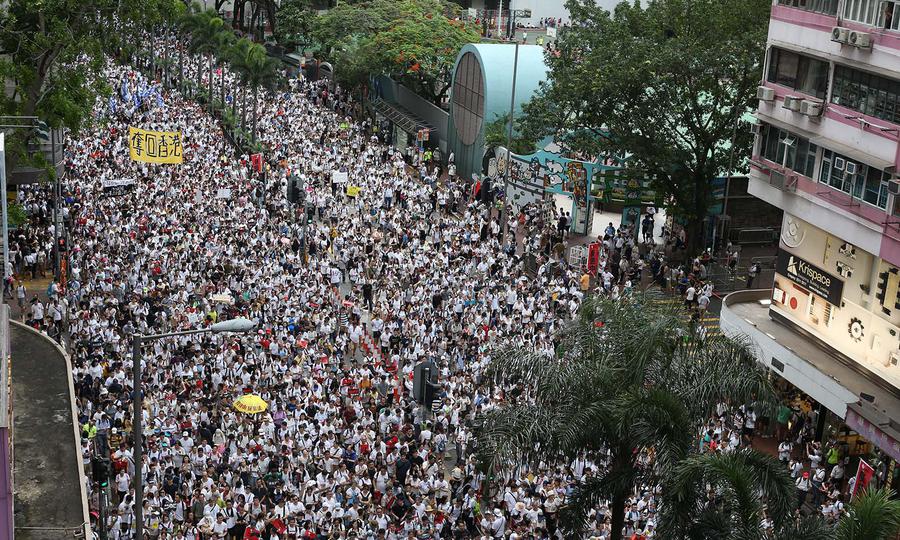
The impunity with which the US engages in aggression Hong Kong is insane. Equally or more insane is western media coverage of what is going on in Hong Kong.
Not one word on how the incredible “pro-democracy” vote of the rather unimportant District Council Elections was achieved. Of the 18 District Councils, 452 of 479 seats (71%) went to “pro-democracy” candidates. Such an extreme anti-Beijing vote could only be obtained by massive western propaganda at the cost of millions of dollars, targeted with algorithms, developed on the principles of the now (apparently) defunct Cambridge Analytica. And this with 70% of eligible voters going to the polls.
None of this practically non-realistic result was analyzed by the west and reported on. In reality, the vast majority of Hong Kongers is sick and tired of the western inspired violence, but are very much proud of being Chinese citizens. They were told by the propagandists that voting for ‘democracy’ candidates was the way to bring peace. And Peace is what everyone wants. After all, integrated into China in 1997, they have enjoyed much more freedom than under British colonialism, where they were not even allowed to vote for their district councils.
The absurdity does not stop here. The US Congress has recently passed legislation that would allow the US monitoring ‘democracy’ and human rights in Hong Kong, the so called “Human Rights and Democracy Act”, with the caveat of imposing sanctions, if Beijing would transgress on the US imposed rules. Can you imagine? Can anyone imagine this overarching arrogance?
The US Congress passing legislation to control another foreign territory? And the west goes along with it. It may happen soon in Europe too that the US dictates what sovereign nations are allowed to do and not to do. It is already happening. The US prohibits Europe to do business with whom they want – i.e. Iran, if not, they are being punished. No comments. It’s just the new normal. In the case of Hong Kong, Beijing has protested, called the US Ambassador twice to discuss the matter – to no avail.
It gets even more ludicrous. Madame Michelle Bachelet, High Commissioner of the UN Human Rights Commission in Geneva, has published in the Saturday issue of the South China Morning Post an article seeking full and “independent and impartial judge-led investigation” into police conduct at protests as part of confidence-building measures. The statement in itself already takes sides, as it does in no way address the foreigninspired violence of protesters, who, for example, are using a university campus to build Molotov-type bombs and other incendiary devices. The Chinese Government immediately rebuked the article accusing Ms. Bachelet of further inflaming ‘radical violence’.
Essentially, the protest leaders want total independence from Beijing and become a US colony. They should look at Puerto Rico, what it means to be a US colony, what Washington has in store for its colonies. Or closer to their own history, they should look at their UK colonial past – and remember their state of oppression, the almost zero rights they had then.
“It is the responsibility of the patriot to protect his country from its government.”—Thomas Paine
While Congress subjects the nation to its impeachment-flavored brand of bread-and-circus politics, our civil liberties continue to die a slow, painful death by a thousand cuts.
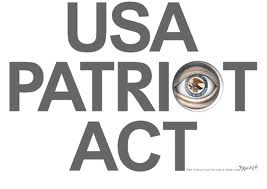
Case in point: while Americans have been fixated on the carefully orchestrated impeachment drama that continues to monopolize headlines, Congress passed and President Trump signed into law legislation extending three key provisions of the USA Patriot Act, which had been set to expire on December 15, 2019.
Once again, to no one’s surprise, the bureaucrats on both sides of the aisle—Democrats and Republicans alike—prioritized political grandstanding over principle and their oath of office to protect and defend the Constitution.
As Congressman Thomas Massie (R-Ky.) predicted:
“Today, while everyone is distracted by the impeachment drama, Congress will vote to extend warrantless data collection provisions of the #PatriotAct, by hiding this language on page 25 of the Continuing Resolution (CR) that temporarily funds the government. To sneak this through, Congress will first vote to suspend the rule which otherwise gives us (and the people) 72 hours to consider a bill. The scam here is that Democrats are alleging abuse of Presidential power, while simultaneously reauthorizing warrantless power to spy on citizens that no President should have… in a bill that continues to fund EVERYTHING the President does… and waiving their own rules to do it. I predict Democrats will vote on a party line to suspend the 72 hour rule. But after the rule is suspended, I suspect many Republicans will join most Democrats to pass the CR with the Patriot Act extension embedded in it.”
Massie was right: Republicans and Democrats have no problem joining forces in order to maintain their joint stranglehold on power.
The legislation passed the Senate with a bipartisan 74-to-20 vote. It squeaked through the House of Representatives with a 231-192 margin. And it was signed by President Trump— who earlier this year floated the idea of making the government’s surveillance powers permanent—with nary a protest from anyone about its impact on the rights of the American people.
Spending bill or not, it didn’t have to shake down this way, even with the threat of yet another government shutdown looming.
Congress could have voted to separate the Patriot Act extension from the funding bill, as suggested by Rep. Justin Amash, but that didn’t fly. Instead as journalist Norman Solomon writes for Salon, “The cave-in was another bow to normalizing the U.S. government’s mass surveillance powers.”
That, right there, is the key to all of this: normalizing the U.S. government’s mass surveillance powers.
In the 18 years since the USA Patriot Act—a massive 342-page wish list of expanded powers for the FBI and CIA—was rammed through Congress in the wake of the so-called 9/11 terror attacks, it has snowballed into the eradication of every vital safeguard against government overreach, corruption and abuse.
The Patriot Act drove a stake through the heart of the Bill of Rights, violating at least six of the ten original amendments—the First, Fourth, Fifth, Sixth, Seventh and Eighth Amendments—and possibly the Thirteenth and Fourteenth Amendments, as well
The Patriot Act also redefined terrorism so broadly that many non-terrorist political activities such as protest marches, demonstrations and civil disobedience are now considered potential terrorist acts, thereby rendering anyone desiring to engage in protected First Amendment expressive activities as suspects of the surveillance state.
The Patriot Act justified broader domestic surveillance, the logic being that if government agents knew more about each American, they could distinguish the terrorists from law-abiding citizens—no doubt a reflexive impulse shared by small-town police and federal agents alike.
This, according to Washington Post reporter Robert O’Harrow, Jr., was a fantasy that “had been brewing in the law enforcement world for a long time.” And 9/11 provided the government with the perfect excuse for conducting far-reaching surveillance and collecting mountains of information on even the most law-abiding citizen.
Federal agents and police officers are now authorized to conduct covert black bag “sneakand-peak” searches of homes and offices while you are away and confiscate your personal property without first notifying you of their intent or their presence.
The law also granted the FBI the right to come to your place of employment, demand your personal records and question your supervisors and fellow employees, all without notifying you; allowed the government access to your medical records, school records and practically every personal record about you; and allowed the government to secretly demand to see records of books or magazines you’ve checked out in any public library and Internet sites you’ve visited (at least 545 libraries received such demands in the first year following passage of the Patriot Act).
In the name of fighting terrorism, government officials are now permitted to monitor religious and political institutions with no suspicion of criminal wrongdoing; prosecute librarians or keepers of any other records if they tell anyone that the government has subpoenaed information related to a terror investigation; monitor conversations between attorneys and clients; search and seize Americans’ papers and effects without showing probable cause; and jail Americans indefinitely without a trial, among other things.
The Police State of America is more than alive and well, it is growing in power by leaps and bounds.
The North Atlantic Treaty Organization is both brain dead and divided as it holds latest annual meeting in London.
Nothing but uncertainty surrounding its future and many questioning whether it can even remain functional in its present form.
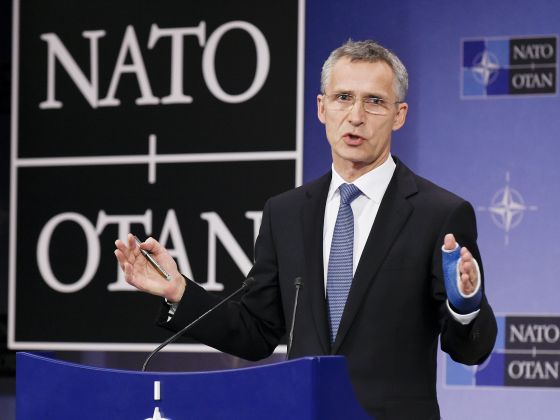
This year’s annual NATO meeting is being held in London from 3-4 December, during which time the bloc’s 29 members will discuss French President Macron’s provocative quip last month that the organization is “brain dead” and attempt to find a united way forward to surmount its current divisions.
The backdrop against which this summit is taking place is one of uncertainty surrounding the organization’s future and many questioning whether it can even remain functional in its present form. The reasons for this existential crisis are many, but can be simplified as Trump’s demand that all member states finally pay the 2% of their GDP on defense that they’d mandated to, Turkey’s “autonomous” actions in Syria, some Central & Eastern European members’ supposed concerns about Russia, and France’s desire to present itself as the visionary of both an EU Army and a reformed NATO. Add to that the heavy American pressure being put upon the bloc’s members to curtail their economic relations with China and it’s clear that NATO is at a crossroads like never before.
What’s sorely lacking is a sense of purpose in the midst of the ongoing global systemic transition between the unipolar and multipolar world orders wherein a multitude of nontraditional threats have presented themselves, ranging from terrorism to environmental catastrophes and suspicions about some foreign investments having ulterior securitycentric motives. Although the US is by and far the most powerful political, military, and economic country in NATO, it’s been unable to control the naturally occurring centrifugal forces that are threatening to tear the organization apart. Simply put, the bloc has expanded so fast in such little time during such a transformational period in International Relations that not even the overbearing pressure put upon its members by the US can suffice to keep everything working efficiently, let alone towards the same common goal after its raison d’etre disappeared in 1991.
There are just too many different interests lumped together in the same organization that it’s impossible for them all to find a common ground at the moment.
Some members like Turkey pursue their own interests in third states like Syria despite their modus operandi of cooperating real closely with the same successor state that NATO was created to contain contradicting the spirit of the bloc (much to the consternation of other members in Central & Eastern Europe which still regard Russia as a so-called “threat”), while others such as Germany are close economic partners with the US’ chief Chinese rival even though this growing relationship certainly makes many in Washington wonder what Berlin’s long-term strategic intentions really are. Some countries like Norway welcome all civilizationally dissimilar migrants that arrive at their borders (especially those from war-torn and economically depressed regions) and could care less whether they assimilate and integrate into society even though there’s an unmistakable correlation between this policy and unconventional security threats, whereas others like Poland won’t let a single one of those individuals set foot within their territory under any circumstances even if it means being sanctioned.
NATO’s London Summit on December 3 and 4, 2019 displays the deep political crisis of the 70-year-old alliance: Only a dinner and a short meeting, no statement to be issued.
Quarrels occurred among the leading military members, accusations, substantial differences on Syria and many other issues, the deepest-ever Transatlantic conflict and the usual issues of burden-sharing.
LEGAL
But the political dimension of NATO’s crisis is only one. There is also a legal crisis. You’ll recognize it if you care to read the NATO Treaty text – something academic and media people don’t generally seem to have done. They would then have noticed that the Alliance of 2019 consistently operates outside – indeed in violation of – its own goals, purposes and values. For instance, the UN Charter which should be NATO’s guideline has been violated on a permanent basis for decades – such as in its out-of-area bombings of Yugoslavia with no UN mandate.
The contempt shown for international law in general and the UN Charter in particular is an integral part of NATO’s existential crisis.
MORAL
There is a moral dimension to NATO’s crisis. Of course, no one talks about it.
It’s the simple fact that no war that individual NATO members states or NATO as NATO have engaged in can be termed anything but predictable fiascos when judged by the alliance’s own stated goals and criteria – just think of Vietnam, Yugoslavia, Afghanistan, Iraq, Libya, Syria… all crystal clear moral catastrophes causing unspeakable suffering, death and destruction to millions upon millions while achieving none of the stated goals that were set to explain and legitimize these wars such as creating democracy, respecting human rights, liberating women or stopping alleged genocides.
By now, the world should have been told enough lies about NATO’s benevolent motives, policies and actions for taxpaying citizens to mobilize resistance to it.
These three crises can all be related to the response of the Western world to the demise of the Soviet Union and the Warsaw Pact 30 years ago – i.e. to the choice to expand NATO and exploiting the weakness of Russia.
INTELLECTUAL
The last and perhaps most-hidden-of-all crisis is NATO’s intellectual crisis.
It’s now an alliance that operates in a kind of echo chamber with little, or no, sense of the realities of the world. It’s there for its own sake. When you listen to its Secretary-General – not only Stoltenberg but Fogh Rasmussen and earlier ones – you sense a level of creativity and intellectualism that reminds you of leaders who also happened to be Secretaries General such as, say, Leonid Breznev.
Irrespective of some little objective analysis of the situation, NATO sings only one tune: There are new threats all the time, we must arm more, we need new and better weapons and we must, therefore, increase military expenditures.
And how is it legitimized?
By uttering mantras. No matter what NATO and its members choose to do, it is simply stated without a trace of argument or documentation that more money will increase four things: Defense, security, stability and peace. And be good for basic Western values such as freedom, democracy and peace.
How come – the small boy watching the Emperor would ask – that no matter what NATO has done the last 70 years, it is still maintaining that it needs more to create that defense, security, stability and peace?
What’s wrong with a system that keeps applying the same medicine decade after decade and gets further and further from achieving the stipulated goal?
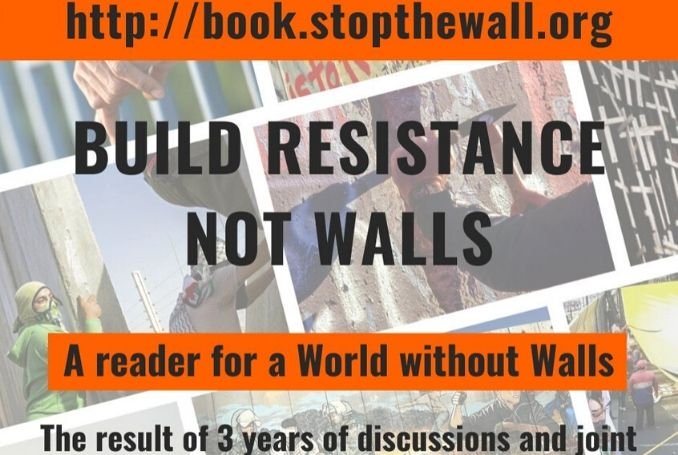
A Book Review: BUILD RESISTANCE NOT WALLS: A READER FOR A WORLD WITHOUT WALLS
A collection of essays concerning the boundaries being established by walls, Build Resistance not Walls centers its arguments on the walls of Palestine.
The so called security fence that runs some 700 km through Palestinian lands of the West Bank, and the Gaza wall of various constructions that is about 60 km long. It goes far beyond these two physical manifestations of walls, taking the reader into global geographies and into global ideologies, strategies, and mindsets using walls to, essentially control global populations. It is in essence about the extension of the global frontiers of empire, an empire based on corporate capitalism that dehumanizes the majority of people and destroys environments, while extracting profits for the elites. The empire is based on Israeli-American desires of hegemonic control.
Various themes
The essays speak for themselves on different topics, but several themes are common to all sections of the work.
The most common element is how Israel plays a dominant role in the physical structures of different walls. Their militarized expertise is advertised as being “field tested”, an acknowledgment of their use of various mechanisms and structures to control and subjugate a population. Several major Israeli companies sell directly or have subsidiaries selling hardware of different kinds – imaging devices, sound detection systems, radar, facial recognition, drones – as well as selling techniques for crowd control in general, at walls or away as desired. It also sells techniques for individual controls (passbooks, intimidation, delays, beatings, interrogation, torture, rape), techniques also used by the former School of the Americas, now WHINSEC (Western Hemisphere Institute for Security Cooperation).
Another general common element is the recognition that walls are used to create separations between “us” and “others” with the latter being basically subhuman, beyond the law and thus can be easily killed, ignored, or mistreated in any manner. The context in which this duality exists comes from the corporate world and its capitalist requirements for exploitable labor, constrained labor, while resources and profits flow out of one country or region into the banks and homes of the privileged elites. It is a “the hegemonic structure of exclusion, exploitation, discrimination, and destruction.”
Walls in this sense strip people of their culture, their land, their means of making a living. This is more and more a global phenomenon with walls of some kind being represented from the favela slums of Rio de Janeiro, through the European neocolonialist walls in Morocco, the physical wall for northern Mexico and its subordinate walls attempting to keep migrants away at Mexico’s contact with the Central American republics.
As another theme, walls are not exclusively physical barriers. Many walls are constructed by different legalities, the various so called free trade agreements being prime barriers, with Mexico being a prime example. With the creation of NAFTA, Mexican farmers were devastated with the import of cheap (subsidized )imported U.S. corn and meat products. Having lost their lands the farmers then became subject to the regimes of exploited labour made possible by the corporate interests embedded in NAFTA. Corporate elites are the main beneficiaries, both for general manufacturing but in particular those industries aligned with weapons, security infrastructure, and extending into personnel requirements (e.g. private for profit prisons).
The theme of “frontiers” is brought up frequently. The developed countries, the U.S. and the European Union in particular, maintain their frontiers largely away from their homelands. Other countries are encouraged-bribed-forced to create barriers of some kind or another to keep recalcitrant and belligerent local indigenous populations under control in order that corporate profits are not interfered with. U.S. frontiers, based largely on Israeli technology, are finding their way throughout the world, aggravating already bad conditions in these countries.
Of the 29 NATO member states, 22 have already ratified the accession protocol of North Macedonia into the anti-Russian alliance.
The ratification process will likely be completed before the end of NATO’s summit taking place in London this week, which will make North Macedonia the newest country in military alliance.
This now appears even more likely since U.S. Secretary of State Mike Pompeo gave his endorsement, saying on Twitter:
“Pleased to announce the United States deposited its ratification of North Macedonia’s NATO Accession Protocol. One step closer to welcoming North Macedonia as NATO’s 30th Ally!”
This will make North Macedonia the fourth country out of the six successor states of Yugoslavia to become a NATO member, following Slovenia, Croatia and Montenegro. With Bosnia effectively a NATO satellite, this leaves Serbia as the bulwark of anti-NATO and pro-Russia sentiment in the region, especially as the other fellow Balkan countries, Greece, Bulgaria and Romania, are also NATO members.
The confusing Macedonia question was a key priority for Russia’s Balkan policy – North Macedonia is an overwhelmingly Orthodox and Slavic country that had the potential to become another pro-Russia state in the Balkans, alongside neighboring Serbia. However, North Macedonia since its independence from Yugoslavia in 1991 pursued a pro-Western policy and joined the NATO program Partnership for Peace as early as 1995 and became a European Union candidate a decade later.
This had not discouraged Russian efforts to push North Macedonia out of the NATO sphere of influence. The governments in Athens and Skopje have competed over the name Macedonia since North Macedonia became independent from Yugoslavia, as Greece’s northern region is also confusingly called Macedonia. Effectively, as North Macedonia was continuously vetoed by Greece from joining NATO and the EU because of the name dispute, Russian efforts to radicalize Macedonian identity was encouraged. The strategy to radicalize Macedonian identity to be more anti-Western and pro-Russian was an effort to avoid a situation like the Prespa Agreement that brought a finalization to the Macedonian name dispute in 2018, opening the way for North Macedonia to join NATO and the EU, without a Greek veto.
The Prespa Agreement, named after a lake that traverses the borders of Greece, North Macedonia and Albania, defined exactly what was meant by “Macedonia” and “Macedonian.” For Greece, according to the agreement, these terms denote an area and people of Greece’s northern region, who continue the legacy of the Ancient Macedonian Hellenic civilization, history and culture, as well as the legacy of Alexander the Great.
In reference to North Macedonia, these terms denote the modern territory of North Macedonia, Slavic language and Slavic people with their own history and culture unrelated to the Ancient Macedonians. The agreement also stipulates the removal of North Macedonian efforts against Greek territory and to align them with UNESCO and Council of Europe’s standards.
The radicalization of an independent Macedonian identity was in the hope that North Macedonians would reject the name change, despite the scholarly and historical consensus that the Ancient Macedonians were Greek. This hoped North Macedonian denunciation of the West was on the basis that resolving the name dispute goes against North Macedonian nationalist doctrine as any name change must support the historical reality that the Ancient Macedonians were Hellenes. This was a bad calculation that encouraged the North Macedonians to concentrate their efforts and resources on historical revisionism on not only Hellenic legacy, but also Bulgarian and Serbian, as historical figures like King Samuel of Bulgaria, Ilyo Voyvoda, Aleksandar Turundzhev, Yane Sandanski, Hristo Batandzhiev and many others are claimed by both North Macedonia and Bulgaria, and the unrecognized and schismatic Macedonian Orthodox Church separated in an ugly divorce from the Serbian Orthodox Church in 1967.
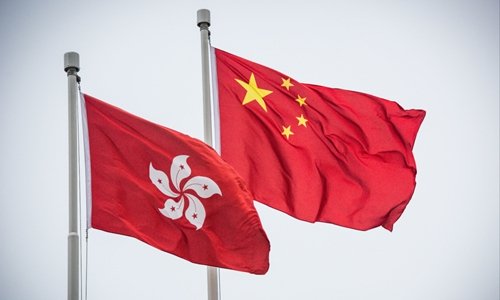
In late November, House and Senate members unanimously passed the so-called Hong Kong Human Rights and Democracy Act (HKHRDA) of 2019.
Trump signed the measure into law, along with a companion bill, restricting exports of US crowd control devices to Hong Kong police.
The measures are all about US war on China by other means, wanting the country weakened, contained and isolated — politically, economically, financially and technologically. They’re unrelated to supporting democracy and human rights.
On Monday, spokeswoman for China’s Foreign Ministry, Hua Chunying, said Beijing will suspend US requests for its warships and aircraft to visit Hong Kong.
It’s imposing sanctions on US organizations funded by Washington and/or by corporate and other donors — ones involved in supporting and otherwise manipulating months of Hong Kong violence, vandalism and chaos, in cahoots with the CIA.
Targeted groups include the National Endowment for Democracy that’s mandated to combat it wherever it exists, the National Democratic Institute for International Affairs, the International Republican Institute, Freedom House, and Human Rights Watch.
According to Sourcewatch, HRW earlier removed prominent international jurist/academic Richard Falk from one of its human rights committees for his vocal criticism of Israeli high crimes. Along with Amnesty International, HRW is hostile to governments on the US target list for regime change — notably Russia, China, Iran, Syria, and Venezuela, among others.
Law Professor Francis Boyle earlier said:
“if you are dealing with a human rights situation in a country that is at odds with the United States or Britain, it gets an awful lot of attention, resources (and) publicity” from these and similar organizations.
When it comes to US, UK, or other Western human rights abuses, “it’s like pulling teeth to get them to do something on the situation — because Washington and its allies aren’t on “the official enemies list.”
According to China’s Global Times, if the US “continues to provoke on Hong Kong, it is expected that (Beijing) will take follow-up actions.”
Under China’s “one country, two systems” policy, its authorities won’t permit the US or other countries to try exerting a sphere of influence over the city.
Measures announced on Monday are a shot across the bow, the first time Beijing imposed sanctions on US organizations, a show of strength against Washington’s dirty hands all over months of manipulated protests in Hong Kong.
The city is Chinese territory. Its authorities won’t tolerate foreign efforts to undermine its sovereignty. According to Beijing’s official People’s Daily broadsheet, hostile US legislation “seriously violated the international law and the basic norm of international relations, and interferes with China’s domestic affairs,” adding: Sanctions imposed show “the country’s firm resolution on the Hong Kong issue.”
Organizations like the ones sanctioned are involved in “grubby business in the name of justice. They offer capital and supplies for rioters, and control the protests behind the scene. Releasing malicious promotional materials, they are fanning confrontation, calling black white, and conducting political infiltration. (T)hey are…notorious for their misdeeds in (US) ‘color revolutions’ across the world.” “(A)ny attempt(s) against the Chinese, including (in) Hong Kong…will be countered resolutely.”
America’s wealthiest billionaires can buy a national election at $100 a vote — and still make money. Anyway, Americans are not really free – but at $100 each they are cheap enough.
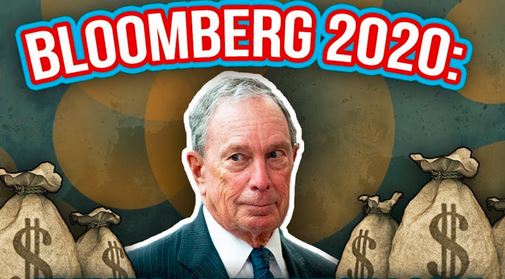
Gracie Mansion, the official residence of New York’s mayors since 1942, hosted billionaire Michael Bloomberg for three terms.
The first of these terms began after Bloomberg, then the Republican candidate for mayor, spent an incredible $74 million to get himself elected in 2001. He spent, in effect, $99 for every vote he received.
Four years later, Bloomberg — who made his fortune selling high-tech information systems to Wall Street — had to spend even more to get himself re-elected. His 2005 campaign bill came to $85 million, about $112 per vote.
In 2009, he had the toughest sledding yet. Bloomberg first had to maneuver his way around term limits, then convince a distinctly unenthusiastic electorate to give him a majority. Against a lackluster Democratic Party candidate, Bloomberg won that majority — but just barely, with 51 percent of the vote.
That majority cost Bloomberg $102 million, or $174 a vote.
Now Bloomberg has announced he’s running for president as a Democrat, arguing he has the best chance of unseating President Trump, whom he describes as an “existential threat.” Could he replicate his lavish New York City campaign spending at the national level? Could he possibly afford to shell $174 a vote nationwide — or even just $99 a vote?
Let’s do the math. Donald Trump won the White House with just under 63 million votes. We can safely assume that Bloomberg would need at least that 63 million. At $100 a vote, a victory in November 2020 would run Bloomberg $6.3 billion.
Bloomberg is currently sitting on a personal fortune worth $52 billion. He could easily afford to invest $6.3 billion in a presidential campaign — or even less on a primary.
Indeed, $6.3 billion might even rate as a fairly sensible business investment. Several of the other presidential candidates are calling for various forms of wealth taxes. If the most rigorous of these were enacted, Bloomberg’s grand fortune would shrink substantially — by more than $3 billion next year, according to one estimate.
In other words, by undercutting wealth tax advocates, Bloomberg would save over $6 billion in taxes in just two years — enough to cover the cost of a $6.3 billion presidential campaign, give or take a couple hundred million.
Bloomberg, remember, wouldn’t have to win the White House to stop a wealth tax. He would just need to run a campaign that successfully paints such a tax as a clear and present danger to prosperity, a claim he has already started making.
Bloomberg wouldn’t even need to spend $6.3 billion to get that deed done. Earlier this year, one of Bloomberg’s top advisers opined that $500 million could take his candidate through the first few months of the primary season.
How would that $500 million compare to the campaign war chests of the two primary candidacies Bloomberg fears most? Bernie Sanders raised $25.3 million in 2019’s third quarter for his campaign, Elizabeth Warren $24.6 million. Both candidates are collecting donations — from small donors — at a $100 million annual pace.
Bloomberg could spend 10 times that amount on a presidential campaign and still, given his normal annual income, end the year worth several billion more than when the year started.
Most Americans don’t yet believe that billionaires shouldn’t exist. But most Americans do believe that America’s super rich shouldn’t be able to buy elections or horribly distort their outcomes.
But unfortunately, they can — or at least, you can be sure they’ll try.
Anyway, Americans are not really free – but at $100 each they are cheap enough.
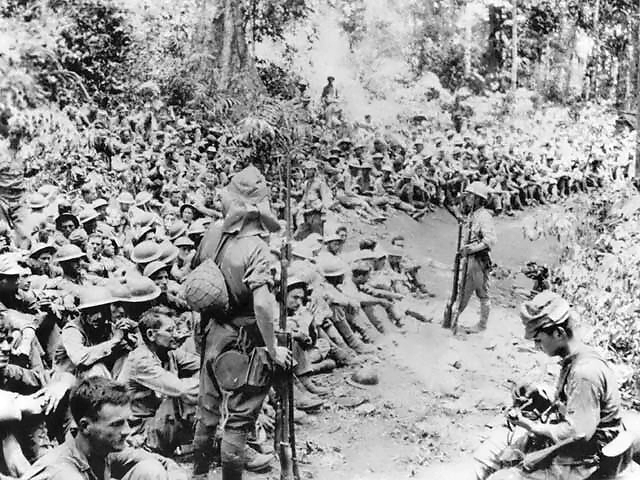
The march of death. Taken during the March of Death from Bataan to Cabana Tuan prison camp. May 1942. (Defense depart., USMC 114538, # 127-GR-111-114538, National Archives).
The turn toward empire and intervention began with the Spanish American War.
On April 9, 1942, 12,000 U.S. troops paid the price of U.S. empire and intervention when they surrendered to Japanese forces at Bataan, Philippines. During the resulting “Bataan death march,” 600 of them died, and then another 1,000 died after they were transported to Japanese POW camps.
The Constitution called into existence a limited-government republic. No Pentagon, no CIA, and no NSA. Just a relatively small military force. No foreign military empire, no foreign colonies, and no U.S. military bases in foreign countries. That system lasted for more than a century.
By the same token, the original foreign policy of the United States was one of nonintervention in the affairs of other nations. No coups, foreign wars of aggression, foreign aid, state-sponsored assassinations, alliances with foreign regimes, or regime-change operations. That system too lasted about a century.
Notwithstanding the horrors of slavery, America’s limited-government structure and its nonimperialist, non-interventionist foreign policy were among the factors that led to the greatest and longest surge in liberty, peace, prosperity, and standards of living in history.

 Hidden History -- In The Making