IT IS THE RESPONSIBILITY OF ISRAEL AND ITS ALLIES TO END THE GENOCIDE, NOT THEIR VICTIMS

The Responsibility For Stopping A Genocide Is On The Party Committing The Genocide. It Is Not On The Victims Of The Genocide To End It By Meeting Certain Conditions.

It’s actually never legitimate to withhold aid from starving civilians. It was never legitimate at any time.

That’s one of the annoying things about having to discuss Israel’s ridiculous claim that Hamas is hoarding hostage corpses in order to achieve some kind of goal, and therefore justifies reducing aid into Gaza as punishment: the conversation skates right over the fact that it has never been legitimate for Israel to withhold humanitarian aid into Gaza. Debating whether Israel is right or wrong to withhold aid under these specific circumstances tacitly assumes that it could ever be right to withhold aid under any circumstances.

Listening to Israel’s justifications for why it needs to inflict monstrous abuses upon the Palestinians has the effect of assuming that there are circumstances under which those monstrous abuses could be acceptable. And there just aren’t.

It has never been legitimate to intentionally deprive civilians of humanitarian aid that they need to survive. You have to give them aid.

It has never been legitimate to shoot noncombatants because you decided they crossed some sort of line into a forbidden zone. It has never been legitimate to shoot noncombatants at all.

It has never been legitimate to commit genocide. Israel just needs to stop the genocide.

The onus for stopping a genocide is on the party committing the genocide. The onus is not on the victims of the genocide to end it by meeting certain conditions. This should not even need to be said.

It’s so obnoxious how everyone’s getting sucked into these debates about whether or not Israel might need to resume the genocide because Hamas refused to disarm or they didn’t get their hostage corpses back or this or that ceasefire demand wasn’t met or blah blah whatever. Israel has never needed to commit genocide. It needs to stop committing genocide.

The world shouldn’t be bending over backwards to ensure that the state which is committing genocide is happy with the terms by which the genocide is ended. The world should be aggressively punishing the state that is committing genocide until it stops. That would be true peace. What we are seeing now is just a bad joke.

And of course this true peace is not emerging because the powerful western states who’ve been backing the genocide this whole time are perfectly fine with it. Their weapons industries get to profit from the genocide. Their empire managers get to enjoy the domination of a critical geostrategic region. They sleep like babies at night, because they do not view the victims of the genocide as human beings.

So we find ourselves doing this ridiculous dance where we go “Okay well maybe the genocide could stop if the victims of the genocide agree to terms X, Y and Z and don’t make too much of a fuss about being killed in smaller numbers every day.”

This is madness. It’s the craziest thing you could possibly imagine. We live in a dystopian madhouse.

THERE HAVE BEEN 129 ISRAELI CEASEFIRE VIOLATIONS AGAINST GAZA SINCE THE “TRUCE” BEGAN

These Violations Have Killed 34 Palestinians And Wounding 122 Others. Of Course, The Mainstream Media (Israel’s Propaganda Ministry) Hasn’t Told You About This.

The (PCHR) said on Saturday it had documented 129 Israeli violations of the ceasefire in Gaza since it came into effect on Monday, including airstrikes and gunfire, which had killed 34 Palestinians and injured 122.

In a statement, the group said Israeli forces on Friday bombed a civilian vehicle carrying members of the Shaban family in Gaza City’s Zaytoun neighbourhood, killing 11 people, including seven children and two women.

It described the attack as a massacre and the deadliest single incident since the ceasefire took effect.

The center said Israel’s actions showed a “blatant disregard for civilian life” and a continued policy of “killing and destruction without the slightest respect for international humanitarian law”.

It added that Israeli forces have the surveillance capability to identify civilian targets, saying there was “no military necessity” for striking the family’s vehicle.

PCHR said Israel was persisting in “its policy of collective punishment and genocide against Palestinians”, and called for an immediate and permanent end to the assault and for Israel to be held accountable under international law.

Hamas also condemned the attack, urging President Donald Trump and ceasefire mediators to pressure Israel to stop its violations.

It said the massacre reflected Israel’s “aggressive intentions” and its disregard for the commitments outlined in the ceasefire deal.

According to the terms of the Trump-brokered truce, the Israeli army continues to control more than half of Gaza’s territory, separated by a so-called “yellow line” marking the areas Palestinians are allowed to move within.

Since the ceasefire began, Israeli forces have fired on Palestinians accused of crossing this line.

Human rights groups warn that ongoing Israeli attacks threaten to collapse the fragile truce, which was meant to pave the way for the first phase of a multi-stage plan for Gaza’s reconstruction and demilitarisation. However, this is one indication that true peace with the Israeli regime is not possible due to it’s sadistic nature.

A REGIME CHANGE IN VENEZUELA WILL NOT HELP AMERICANS IT WILL HELP EXXON

Toppling Maduro’s Government Would Spark Regional Instability And Worsen The Migration Crisis. But Making Money For The Oligarchs Is More Important To The Trump Regime.

This week, reports surfaced that President Donald Trump has authorized the CIA to carry out covert operations—including lethal action—inside Venezuela and across the Caribbean, marking a major escalation in a long-running American campaign against President Nicolás Maduro’s government. Trump confirmed the reports on Wednesday and said the administration, which has attacked alleged drug boats in the Caribbean, is “looking at land” as it plans further strikes.

Venezuela, like Cuba, has been the target of a decades-long campaign of subversion, sabotage, and economic warfare from the American national security state, highlighted by a maximum pressure sanctions regime which intentionally strangled Venezuela’s economy.

The new CIA effort to overthrow the government of Venezuela is therefore merely the latest attempt from the same political alliance between neoconservative foreign policy elites, the security state, and multinational energy corporations who—with allies like Secretary of State Marco Rubio—see the second Trump administration as a vehicle through which they can finally achieve their long-held goal.

Like every other regime change effort of the past 25 years, this one serves no vital American interest. Indeed, regime change efforts in Venezuela have already exacerbated regional instability by fueling the Venezuelan refugee crisis, which by all accounts worsened as a result of the sanctions imposed on that country in 2017. Those sanctions killed thousands of Venezuelans and turned millions more into refugees. A successful regime change war could produce even wider suffering.

Ironically, the repeated attempts of the security state and its neoconservative foreign policy planners have bolstered Venezuela’s government, giving former President Hugo Chávez and current President Nicolás Maduro legitimacy among the Venezuelans who oppose foreign intervention in their country. Like his predecessor, Maduro can easily point to efforts by American foreign policy hawks to destroy Venezuela’s economy and overthrow its government as the driving factor behind current economic woes—and some Venezuelans find that excuse to be credible.

The Bush administration’s first attempt to overthrow Chávez through a 2002 military coup failed spectacularly. Chávez’s survival humiliated the CIA and neocon planners who had banked on a swift victory, discounting the power and appeal of the ideology of the Bolivaran Revolution within Venezuela. They should have known better. It is precisely because of Venezuela’s entrenched left-populism—not “drug trafficking,” or the supposed threat of “Chinese influence”—that the American security state, neoconservatives, and oil executives have sought regime change in the country for more than 23 years.

A series of leaked emails published by Wikileaks involving Stratfor—the private intelligence firm that contracts with the American national security state—reveals the CIA and National Endowment for Democracy’s various subsequent failed efforts to overthrow the government of Venezuela and install puppet leaders loyal to neoconservative interests in American yet unknown or rejected by voters in Venezuela.

In a February 2010 internal email published by WikiLeaks, Stratfor analyst Marko Papic briefed colleague Fred Burton on a Soros-style NGO called CANVAS and its potential to bring down the Venezuelan government. Papic described CANVAS as the successor to Serbia’s Otpor opposition movement and noted it was “still hooked into U.S. funding,” with earlier ties to entities like NED, Freedom House, and the Albert Einstein Institute. He characterized CANVAS as an “export-a-revolution” outfit that had “sowed the seeds for a number of color revolutions.”

With the backing of the American security state, CANVAS and its offshoots launched various regime change efforts against the Venezuelan government, including a 2010 plot to “take advantage,” of a drought and a subsequent electricity crisis caused by low water levels in Venezuela’s dams—a natural disaster which Stratfor analysts predicted could plunge “70 percent of the country,” into darkness. By forging “alliances with the military,” NED/CIA backed groups could “spin [the crisis] against,” the Chávez government and install a pro-American regime in its place. Though, as even the Stratfor analysts acknowledged, “the past three coup attempts” failed because even though “the military thought it had enough support, there was a failure in the public to respond positively (or the public responded in the negative).”

A 2019 bid to anoint the unelected opposition figure Juan Guaidó as Venezuela’s president—endorsed by the Trump administration, Nancy Pelosi, and bipartisan factions of Congress—likewise failed miserably.

Rather than an organic internal movement demanding regime change in Venezuela, the same small clique of American neoconservative elites and oil interests have led each effort to topple the government. The neocon official behind the 2002 failed coup against Chávez—Iran-Contra criminal Elliot Abrams—became Trump’s special envoy to Venezuela in 2019 and set out to organize further regime change efforts. As Sen. Chris Murphy (D-CT)—himself a longtime proponent of Soros-style color revolutions and coups around the world—said to Abrams in 2020, “we tried to construct a kind of coup and it blew up in our face when all the generals who were supposed to break with Maduro decided to stick with him in the end.”

Perhaps the most aggressive proponent of regime change in Venezuela has been ExxonMobil and think tanks funded by the oil company, mainly the Center for Strategic and International Studies, which frequently hosts conferences with Washington’s various handpicked Venezuelan leaders. Such think tanks advocate maximum pressure sanctions and market regime-change war in Venezuela as “democracy promotion.” As Joseph Bouchard and Nick Cleveland-Stout of the Quincy Institute for Responsible Statecraft reported, CSIS is one of 20 DC think tanks funded by Exxon, receiving at least $250,000 annually; the CSIS board of trustees even includes the CEO of Exxon.

CSIS analyst Ryan Berg, who announced last month that he had joined the Trump administration to work with the State Department and Joint Chiefs of Staff on Venezuela, praised the Trump administration’s bombing of accused Venezuelan “narcoterrorists,” which is reminiscent of the NATO strategy which led to the 2011 regime change war in Libya. There is no reason to believe that a regime change war in Venezuela would turn out any better than did the one in that country, where chaos ensued, the slave trade has returned, and millions of refugees have fled, often to Europe. Though if there were a regime change war in Venezuela, the refugees produced from that conflict would likely not flee to Europe—they would come to the United States.

Evidently, Exxon is less concerned with immigration flows and regional stability than with oil profits; its current pick to govern Venezuela, María Corina Machado, has vowed to privatize Venezuela’s oil sector and sell its vast resources to multinational companies abroad. As Max Blumenthal reported in The Grayzone, Machado has been plotting to overthrow the government of Venezuela for over 15 years.

After winning the Nobel Peace Prize last week—thanks in part to an August 2024 letter nominating her signed by Rubio—Machado has embarked on a press tour promoting American military action to overthrow the government of Venezuela. In a bid to flatter Trump and bring about that outcome, Machado declared on Fox News that the American president should have won the prize instead, dedicating the award to him “because his actions have been decisive to having Venezuela on the threshold of freedom,” i.e., to having Maduro removed from power. Machado has applauded the Trump administration’s extrajudicial maritime attacks on civilian vessels suspected of “narcoterrorism,” though they killed her fellow countrymen.

Whether or not a successful regime change will materialize may depend on an internal battle within the Trump administration between hawks led by Rubio and those favoring de-escalation and diplomacy, represented by special envoy Richard Grenell, who favors negotiations and resource-for-security deals with Caracas. With Trump ordering Grenell to halt his diplomatic efforts—despite recent offers from Venezuela to revive talks and even give America oil and rare earth exports—Rubio’s approach has won out in recent weeks.

The key to Rubio and Exxon’s designs lies next door in Guyana. In March, Rubio traveled there to warn Venezuela not to attack Exxon mobile operations, which currently operate in disputed offshore territory. Exxon’s partnership with Guyana began in 2007 and—though profitable for that company—has ignited tensions between Venezuela and Guyana while leaving the latter country with billions of dollars in oil exploration bills due to a provision in a 2016 deal signed with Exxon mobile which sticks Guyana with the bill for all exploration activities.

Exxon’s activities in Guyana reveal not only the oil motivation for regime change in Venezuela but expose as fraudulent many of the propagandistic narratives driving the effort, namely that a military intervention would be about confronting Chinese influence. As Sen. Chris Van Hollen (D-MD) pointed out last month, Exxon’s 2016 partnership in the region is not only with Guyana but with China’s state owned oil firm.

That partnership with Exxon has deepened China’s involvement in Latin America as much as any other Belt and Road initiative. Exxon, though an American company, is a multinational corporation and therefore is less interested in the national security agenda of the Trump administration or the national interests of the United States than in its own profits.

President Trump campaigned on ending American wars and dismantling the neoconservative foreign-policy establishment that produced them. But by authorizing covert operations in Venezuela, his administration has intensified an old regime-change effort—one that previously failed and may now succeed. If it does, it will not be a victory for Venezuelan freedom or American security but for the same elite interests that have corrupted American foreign policy for far too long.

THE MILITARY ESCALATION AGAINST VENEZUELA BY TRUMP MIMICS THE IRAQ WAR STRATEGY

With The Suspension Of Dialogue Between The American Regime And Venezuela And The Sighting Of American B-52 Bombers In Venezuelan Airspace Means War Is Coming.

The lethal American strikes in the Caribbean indicates the American regime seems to be accelerating its drive towards war with Venezuela.

The mood in the Caribbean grows increasingly tense, as the United States intensifies its military threats. Beneath the deceptive shroud of the “war on drugs,” the United States is actively executing a blueprint for military intervention in Venezuela, employing lethal force and projecting power in a manner that legal institutions and regional leaders have condemned as a profound threat to international order. This aggression is not a law enforcement operation; it is the negation of law, a neocolonial revival of the Monroe Doctrine, designed to shatter the sovereignty of Venezuela, seize control of the world’s largest oil reserves, and install a compliant regime.

A LICENSE TO KILL: THE PRECEDENT OF STATE MURDER

A chilling adoption of extrajudicial violence has marked the current escalation. The Trump administration has ordered unilateral military strikes against private vessels near the Venezuelan coast, allegedly to stop drug trafficking. To launch these alarming attacks, the American military has deployed a massive naval force of warships, drones, and special operations forces.

These strikes have resulted in the summary execution of at least 27 people as of recent reports. The most recent lethal strike in the Caribbean resulted in the “elimination” of 6 more people. This is not law enforcement; it is extrajudicial murder and a campaign that now stands as part of a war plan against Venezuela. The administration has characterized the victims, without credible proof, as drug traffickers and “terrorists,” a claim that, even if true, provides no legal authority for the American president to execute whomever it decides.

Legal and human rights organizations have been unequivocal in their condemnation of this profound and dangerous policy, which replaces established law enforcement procedures with premeditated lethal force. The New York City Bar Association (NYCBA), a key voice on international legal ethics, has strongly denounced these actions. The NYCBA stated explicitly that “Because the recent attacks on Venezuelan vessels and their crews were unauthorized by US law and in violation of binding international law, they were illegal summary executions – murders.” They further argued that these actions violate the fundamental international principle that “No one shall be arbitrarily deprived of his life” under the International Covenant on Civil and Political Rights.

The American regime possesses ample legal authority for the Coast Guard to interdict and search vessels suspected of carrying narcotics, followed by prosecution in American courts according to due process requirements. However, in the case of the Venezuelan vessels, the Coast Guard’s Congressionally authorized police function was bypassed; instead, the crews were simply targeted and executed by overwhelming military force. Regional leaders, including Colombian President Gustavo Petro, have condemned the extrajudicial killings, highlighting the profound anxiety across Latin America over a return to unilateral American military action under the cover of anti-narcotics policy.

ESCALATION: B-52S AND THE THREAT OF WAR

Beyond the lethal strikes, the American regime has engaged in significant military posturing that amounts to a direct challenge to Venezuelan sovereignty. The sighting of B-52 bombers in Venezuelan airspace, flying in close range, is a significant escalation. This warmongering has nothing to do with the “war on drugs” and everything to do with regime change to plunder Venezuela’s oil. This reckless push for war is a criminal act of international aggression.

The Trump Administration’s unilateral drone strikes in the Caribbean, combined with the White House’s termination of all negotiations with Venezuela, appear as a precursor for a full-scale regime change operation. This is a critical moment. We must sound the alarm: there is a risk of a new, catastrophic conflict in the region.

The American regime’s own officials continue to escalate the crisis with bellicose rhetoric and actions. Secretary of State Marco Rubio, a key architect of the regime-change policy, has consistently refused to rule out a military option, asserting that the Maduro regime has become a “threat to the region and even to the United States.”

Venezuela’s response has been one of principled defense of its sovereignty. Ambassador to the UN, Samuel Moncada has repeatedly sounded the alarm on the global stage, arguing that the American military deployment in the Caribbean is a massive propaganda operation that seeks “excuses to fabricate a conflict” to seize the country’s oil wealth. Moncada affirmed that, “The United States believes that the Caribbean belongs to it because it has been using the expansionist Monroe Doctrine for over 100 years, which is nothing more than a remnant of colonialism.”

President Nicolás Maduro has called on Washington to resume dialogue, stating, “Our diplomacy isn’t the diplomacy of cannons, of threats, because the world cannot be the world of 100 years ago,” while simultaneously mobilizing national defense exercises to ensure the country is prepared for any direct assault. The NYCBA warned that attacks against Venezuelan vessels and reported threats against the Venezuelan government violate the nation’s obligations under the United Nations Charter, with the risk of escalating to open hostilities.

PARALLELS WITH THE IRAQ WAR: OIL, IDEOLOGY, AND DECEPTION

The current situation is chillingly reminiscent of the lead-up to the 2003 invasion of Iraq. In that case, the Bush administration justified unilateral action on the basis of “weapons of mass destruction,” but this was a pretext. The true objectives were not limited to oil, but also included achieving profound ideological and political goals – overthrowing a government to reshape Middle Eastern politics and assert dominance.

Washington must learn the lessons of this history. The Bush administration promised a quick victory in Iraq. Instead, the invasions and occupation claimed countless Iraqi lives, resulted in tens of thousands of American soldiers killed or wounded, and destabilized the region. The notion that the American regime can carry out military invasions into the heart of Latin America without a massive blowback is outlandish.

In the case of Venezuela, the “war on drugs” and the labeling of the government as a “threat” serve as the new rhetorical pretexts. The American regime’s interest is multifaceted: it involves securing the world’s largest proven oil reserves and achieving the ideological and political goal of overthrowing a socialist government to assert dominance and reshape Latin American politics. The American regime seeks to dismantle the Bolivarian Revolution and eliminate a major center of anti-imperialist politics in the hemisphere.

The current escalation is not about law enforcement or counter-narcotics; it is about regime change and plunder. While members of Congress from both Democratic and Republican parties, as well as key voices of public opinion, are increasingly speaking up about the illegality of these strikes and the absence of credible information from the administration, this situation requires much more urgency, once the escalation ladder is climbed, there may be no going back. The international community must recognize this aggressive campaign for what it is: a criminal act of international aggression. The world must stand against this threat of a new, catastrophic conflict.

“PEACE THROUGH STRENGTH” REALLY MEANS “WAR IS PEACE” TO THE AMERICAN REGIME

The Popular Phrase Enables Professed Anti-War Conservatives To Conserve Liberal Internationalism – Which Actually Means War.

Peace through strength” has long been a nebulous phrase in political rhetoric. While it has been marshalled by both political parties, it has been used by Republican hawks and their supporters to assail liberal Democrats as both reckless and feckless, too quick to commit troops to war and too weak to lead them to victory. While users of the phrase have presented it as a departure from liberal interventionism, it has preserved the core assumptions of a fundamentally liberal postwar order. Advocates of “peace through strength” have used it to advocate for seemingly every foreign policy position, from containment to rollback, prosecuting wars, and pursuing diplomacy. Despite its malleability, it has, however, consistently served as a rhetorical bait and switch, entrenching the very liberal world order that conservative hawks claim to oppose.

Despite the phrase’s eventual popularity with conservative hawks, it was initially used to promote an explicitly liberal internationalist vision of foreign policy. This was true of both foreign policy professionals and politicians, who adopted the slogan after World War II to signal a vague realpolitik. While President Dwight D. Eisenhower and his cabinet often used alternative wordings rather than the exact phrase, they consistently tied the idea of peace to the projection of strength—thereby indicating continuity with the preceding Truman administration and the foreign policy status quo.

Coming off the height of the Cold War, many still feared the specter of global Soviet domination, yet were equally wary of the human cost a direct war with the USSR would bring. Indeed, a 1952 Pennsylvania newspaper poll found that an overwhelming majority of Americans preferred “peace through strength” when stacked against “go to war against Russia” and reaching a “settlement with concessions.” Yet, much like in subsequent periods, this slogan was not merely a tool for courting public opinion, but also a political bait-and-switch. It provided both the Truman and Eisenhower administrations with indirect justification for incorporating politically unpopular policies, such as foreign aid and diplomatic commitments, into what appeared to be a hard-nosed realist foreign policy strategy.

However, such a principle was not in line with the Cold War strategy Americans preferred. Although many Americans indeed supported a form of measured deterrence against a Soviet attack on the United States, the Korean War left the American public war-weary and skeptical of protracted containment. Underlining this point was that the very same newspaper poll, which cited support for “peace through strength,” noted that this support shrank by over half when the prospect of “fighting small wars such as Korea” was put on the table. While many Americans interpreted the “strength” part of the phrase to refer to defensive military buildup, the Eisenhower administration was more open to maintaining America’s overseas commitments.

Peace through strength” during the Truman and Eisenhower years was also frequently employed in ways that echoed the rhetoric of liberal internationalism. Instead of emphasizing domestic security, the concept was frequently paired with moralistic claims about America’s “responsibility for world leadership” and its duty to “achieve global peace for all peoples”—commitments that, in practice, could demand military intervention even when such action conflicted with the nation’s own security interests. So, while Americans sought a limited, security-focused deterrence interpretation of “peace through strength”, the open questions of “peace for whom” and “what kind of strength” created space for foreign policy that went against public sentiment.

This bipartisanship, however, was not politically neutral. Instead, it was a political maneuver to repackage unpopular liberal internationalist policies as a pragmatic middle ground between unrestrained jingoism and unilateral capitulation. This supposed “balance” was reflected in the rhetoric of numerous administration officials, most clearly in the 1957 National Security Council report, which declared that the American anti-communist strategy should focus on “deterring further Communist aggression” while “preventing the occurrence of total war so far as compatible with U.S. security.” The logic was simple: that supporting America’s allies, both economically and militarily, was not only a moral imperative but a manifestation of American strength that would deter the Soviets.

From these early Cold War roots, politicians on both sides of the aisle continued to employ the phrase sparingly, using it more as a descriptive label for the post-World War II liberal internationalist consensus than as a policy platform. This changed, however, during the 1964 election. In it, Barry Goldwater made “peace through strength” a core tenet of his presidential campaign. Goldwater argued, “Peace in Asia depends on our strength, and on our purpose to use that strength to achieve peace. Nowhere in the world today is there a clearer road to ‘peace through strength’ than in Viet Nam.” For the senator from Arizona, the phrase did not mean mere containment, but rather decisive military victory.

While Goldwater adopted the phrase, the liberal internationalist incumbent, Lyndon Johnson, criticized it, stating, “The policy of the United States is not simply ‘peace through strength’, but peace through positive, persistent, active effort.” The difference went beyond semantics: While Johnson justified American regime involvement in Vietnam on idealistic grounds of freedom and self-determination, Goldwater framed the war effort in realist terms. This was not a blanket hawkishness, but a strategic realignment—one that moved American foreign policy away from the ideological pursuits of foreign assistance and open-ended international commitments toward the direct pursuit of confronting the USSR, which he believed was America’s predominant strategic interest.

Though Goldwater never got the chance to implement his foreign policy, his widespread use of the phrase tied it to both realism and the Republican Party, particularly among young Republicans who entered politics in the aftermath of Vietnam. At a time when many Republicans tried to exploit a new divide between the dovish “McGovern wing” of the Democratic Party and Johnson’s liberal interventionism, this presented the Republicans with a new opportunity. Beginning with Gerald Ford and especially Ronald Reagan, “peace through strength” emerged as a way to signal realism as a third path between these two unpopular alternatives.

However, both Ford and Reagan’s implementation of the phrase was much closer to its liberal internationalist origins than Goldwater’s realism. Whereas Goldwater’s “peace through strength” was limited and focused both fiscally and militarily, Ford and Reagan’s version was significantly less realist in nature. While their emphasis on American exceptionalism over humanitarian burden might have provided an appearance of realism, these goals were framed as idealistic ends in themselves rather than as means to an end. They reflected a commitment to securing democracy abroad even when such efforts offered no direct, material benefit to American security.

This approach took shape in the political climate that followed the Vietnam War. As Americans grew to view the war unfavorably, widespread anti-military sentiment drove restrictions on presidential powers and a decline in defense spending. Yet Ford, under pressure from conservative hawks who viewed him as soft on foreign policy, submitted the two largest peacetime defense budgets in American history in 1976. Later that year, in his primary campaign against Ronald Reagan, he repeatedly touted this decision as a “peace through strength” policy. He echoed the sentiment in his 1977 State of the Union, declaring, “We can remain first in peace only if we are never second in defense.”

However, it was Reagan who cemented the phrase’s place in the Republican foreign policy zeitgeist and completed its transformation from a syncretic realist position into a decidedly idealistic one. His commitment to “peace through strength” often appeared alongside policy goals such as sustained proxy warfare in Nicaragua, global anti-terrorism campaigns, and an increased peacetime military budget. At the same time, he framed these policies in the same idealistic terms as many of the early Cold War internationalists—this time with an American exceptionalist spin. In a 1980 campaign speech, he paired his pledge to achieve “peace through strength” with a vow: “We have no intention of compromising our principles, our beliefs or our freedom.” He similarly anchored his foreign policy in religious terms, declaring, “Throughout Scripture, we see reference to peace-makers—those who…take the material of this imperfect world and, with hard work and God’s help, fashion from that material peace for the world.” In doing so, Reagan transformed “peace through strength” from a strategic maxim into a moral crusade.

This trend continued into the 1990s, with a conservative movement that found itself out of power and grappling to redefine its foreign policy for a post-Cold War world. While paleoconservative stalwarts such as Pat Buchanan and libertarians like Ron Paul saw the collapse of the Soviet Union as an opportunity to return to a more restrained foreign policy, the institutions of the conservative movement instead advocated for greater American assertiveness in the “unipolar moment” and did so through the rhetoric of “peace through strength.” Through the Clinton years, these conservative hawks attacked the White House for insufficient defense spending while criticizing humanitarian interventionism and the White House’s alleged indecisiveness vis-à-vis China, Iran, and North Korea. They also sought to reimagine their own history, presenting conservatism as the true progenitor of the American century.

A prime example of these intellectual moves was a paper entitled “Geo-conservatism” by the Heritage Foundation scholar Kim R. Holmes. Holmes characterized the Clinton administration’s foreign policy as one of “failed liberalism.” Instead, Holmes advocated for a “strategy of peace through strength” via “toughminded realism” that put American interests at the core of American geostrategy. Central to Holmes’s critique was to highlight what he saw as the futility of liberal intervention. Characterizing liberal foreign policy thinkers as “strategic doves and humanitarian hawks,” Holmes argued that liberal interventions from Vietnam through Bosnia were “fruitless exercises” that wasted American resources to pursue fanciful dreams of global democracy promotion.

Yet, this is where Holmes’s critiques of the liberal world order would end. Rather than seeing these dubious interventions as the inevitable fruit of the postwar order, Holmes argued they were deviations from a tough-nosed conservative foreign policy that had learned the lessons of appeasement and won the Cold War. To make his case, Holmes rebranded President Harry Truman as a conservative and the lessons of “appeasement” as central assumptions of a conservative worldview. In his telling, liberal foreign policy since the 1960s was designed to subordinate American power to international institutions, vacillating “between appeasement and reckless confrontation.”

Holmes’s arguments, through their narrative framing and reimagining of conservative political history, conserved rather than challenged the core assumptions of the postwar liberal order. While lambasting said order, Holmes advocated for its preservation under the auspices of “peace through strength”. While he criticized past liberal presidents for their interventionism, he nevertheless advocated for a geostrategic posture aimed at maintaining American hegemony in Europe, the Middle East, and East Asia.

Over the last seven decades, “peace through strength” has proven less a coherent doctrine than a vessel into which successive Republican leaders pour their own priorities while preserving the same global posture and geopolitical assumptions as their Democratic predecessors. While feigning change, postwar conservative Republicans have used the label to justify retrenchment and expansion, containment and rollback, war and peace. Unless its users confront the elasticity and define its ends with clarity, the next generation of Americans will inherit the same foreign policy under a fresh coat of old paint—and call it something new.

IS TRUMP’S PEACE PLAN A SHAM?

There Is No Shortage Of Failed Peace Plans In Occupied Palestine, All Of Them Incorporating Detailed Phases And Timelines, Going Back To The Presidency Of Jimmy Carter.

They end the same way. Israel gets what it wants initially — in the latest case the release of the remaining Israeli hostages — while it ignores and violates every other phase until it resumes its attacks on the Palestinian people.

It is a sadistic game. A merry-go-round of death. This ceasefire, like those of the past, is a commercial break. A moment when the condemned man is allowed to smoke a cigarette before being gunned down in a fusillade of bullets.

Once Israeli hostages are released, the genocide will continue. It is not known how soon. Let’s hope the mass slaughter is delayed for at least a few weeks. But a pause in the genocide is the best we can anticipate. Israel is on the cusp of emptying Gaza, which has been all but obliterated under two years of relentless bombing. It is not about to be stopped. This is the culmination of the Zionist dream. The United States, which has given Israel a staggering $22 billion in military aid since Oct, 7th, 2023, will not shut down its pipeline, the only tool that might halt the genocide.

Israel, as it always does, will blame Hamas and the Palestinians for failing to abide by the agreement, most probably a refusal — true or not — to disarm, as the proposal demands. Washington, condemning Hamas’s supposed violation, will give Israel the green light to continue its genocide to create Trump’s fantasy of a Gaza Riviera and “special economic zone” with its “voluntary”relocation of Palestinians in exchange for digital tokens.

Of the myriads of peace plans over the decades, the current one is the least serious. Aside from a demand that Hamas release the hostages within 72-hours after the ceasefire begins, it lacks specifics and imposed timetables. It is filled with caveats that allow Israel to abrogate the agreement. And that is the point. It is not designed to be a viable path to peace, which most Israeli leaders understand. Israel’s largest-circulation newspaper, Israel Hayom, established by the late casino magnate Sheldon Adelson to serve as a mouthpiece for Prime Minister Benjamin Netanyahu and champion messianic Zionism, instructed its readers not to be concerned about the Trump plan because it is only “rhetoric.”

Israel, in one example from the proposal, will “not return to areas that have been withdrawn from, as long as Hamas fully implements the agreement.”

Who decides if Hamas has “fully implemented” the agreement? Israel. Does anyone believe in Israel’s good faith? Can Israel be trusted as an objective arbitrator of the agreement? If Hamas — demonized as a terrorist group — objects, will anyone listen?

How is it possible that a peace proposal ignores the International Court of Justice’s July 2024 Advisory Opinion, which reiterated that Israel’s occupation is illegal and must end?

How can it fail to mention the Palestinian’s right to self-determination?

Why are Palestinians, who have a right under international law to armed struggle against an occupying power, expected to disarm while Israel, the illegally occupying force, is not?

By what authority can the American regime establish a “temporary transitional government,” — Trump’s and Tony Blair’s so-called “Board of Peace” — sidelining the Palestinian right to self-determination?

Who gave the American regime the authority to send to Gaza an “International Stabilization Force,” a polite term for foreign occupation?

How are Palestinians supposed to reconcile themselves to the acceptance of an Israeli “security barrier” on Gaza’s borders, confirmation that the occupation will continue?

How can any proposal ignore the slow-motion genocide and annexation of the West Bank?

Why is Israel, which has destroyed Gaza, not required to pay reparations?

What are Palestinians supposed to make of the demand in the proposal for a “deradicalized” Gazan population? How is this expected to be accomplished? Re-education camps? Wholesale censorship? The rewriting of the school curriculum? Arresting offending Imams in mosques?

And what about addressing the incendiary rhetoric routinely employed by Israeli leaders who describe Palestinians as “human animals” and their children as “little snakes”?

All of Gaza and every child in Gaza, should starve to death,” the Israeli rabbi Ronen Shaulov announced. “I don’t have mercy for those who, in a few years, will grow up and won’t have mercy for us. Only a stupid fifth column, a hater of Israel has mercy for future terrorists, even though today they are still young and hungry. I hope, may they starve to death, and if anyone has a problem with what I’ve said, that’s their problem.”

Israeli violations of peace agreements have historical precedents.

The Camp David Accords, signed in 1978 by Egyptian president Anwar Sadat and Israeli prime minister Menachem Begin — without the participation of the Palestine Liberation Organization (PLO) — led to the 1979 Egypt-Israel Peace Treaty, which normalized diplomatic relations between Israel and Egypt.

Subsequent phases of the Camp David Accords, which included a promise by Israel to resolve the Palestinian question along with Jordan and Egypt, permit Palestinian self-governance in the West Bank and Gaza within five years, and end the building of Israeli colonies in the West Bank, including East Jerusalem, were never implemented.

The 1993 Oslo Accords, signed in 1993, saw the PLO recognize Israel’s right to exist and Israel recognize the PLO as the legitimate representatives of the Palestinian people. Yet, what ensued was the disempowerment of the PLO and its transformation into a colonial police force. Oslo II, signed in 1995, detailed the process towards peace and a Palestinian state. But it too was stillborn. It stipulated that any discussion of illegal Jewish “settlements” were to be delayed until “final” status talks. By then, Israeli military withdrawals from the occupied West Bank were scheduled to have been completed. Governing authority was poised to be transferred from Israel to the supposedly temporary Palestinian Authority. Instead, the West Bank was carved up into Areas A, B and C. The Palestinian Authority had limited authority in Areas A and B while Israel controlled all of Area C, over 60 percent of the West Bank.

The right of Palestinian refugees to return to the historic lands that Jewish settlers seized from them in 1948 when Israel was created — a right enshrined in international law — was given up by the PLO leader Yasser Arafat. This instantly alienated many Palestinians, especially those in Gaza where 75 percent are refugees or the descendants of refugees. As a consequence, many Palestinians abandoned the PLO in favor of Hamas. Edward Said called the Oslo Accords “an instrument of Palestinian surrender, a Palestinian Versailles” and lambasted Arafat as “the Pétain of the Palestinians.”

The scheduled Israeli military withdrawals under Oslo never took place. There were around 250,000 Jewish colonists in the West Bank when the Oslo agreement was signed. Their numbers today have increased to at least 700,000.

The journalist Robert Fisk called Oslo “a sham, a lie, a trick to entangle Arafat and the PLO into abandonment of all that they had sought and struggled for over a quarter of a century, a method of creating false hope in order to emasculate the aspiration of statehood.”

Israel unilaterally broke the last two-month-long ceasefire on March 18th of this year when it launched surprise airstrikes on Gaza. Netanyahu’s office claimed that the resumption of the military campaign was in response to Hamas’s refusal to release hostages, its rejection of proposals to extend the cease-fire and its efforts to rearm. Israel killed more than 400 people in the initial overnight assault and injured over 500, slaughtering and wounding people as they slept. The attack scuttled the second stage of the agreement, which would have seen Hamas release the remaining living male hostages, both civilians and soldiers, for an exchange of Palestinian prisoners and the establishment of a permanent ceasefire along with the eventual lifting of the Israeli blockade of Gaza.

Israel has carried out murderous assaults on Gaza for decades, cynically calling the bombardment “mowing the lawn.” No peace accord or ceasefire agreement has ever gotten in the way. This one will be no exception.

This bloody saga is not over. Israel’s goals remain unchanged: the dispossession and erasure of Palestinians from their land.

The only peace Israel intends to offer the Palestinians is the peace of the grave.

SURVIVORS RETURN HOME – TO A WASTELAND WHILE THE PERPETRATORS OF GAZA’S GENOCIDE POSE AS ITS SAVIOURS

Western Leaders Attending The Sharm El-Sheikh Summit Have Enabled And Sponsored This Slaughter. They Are In No Position To Build A Palestinian Future.

Sharm el-Sheikh hosted the most high-profile gathering of global leaders in the Middle East of recent years. Donald Trump, Keir Starmer, Emmanuel Macron, Pedro Sánchez and others were meeting “to end the war in the Gaza Strip, enhance efforts to achieve peace and stability in the Middle East, and usher in a new era of regional security and stability”.

If the ceasefire holds, this language is an augur of the future. One where there is no reckoning, no addressing of root causes. Only a hurtling into the imperatives of cleanings-up and workings-out. All the while illegal occupation continues, and another chapter of Israel’s violations is furtively closed without accountability not only for Israel, but for its sponsors.

There is an Arabic expression, hameeha harameeha – meaning “its protector is its thief”, that comes to mind as those who have plied Israel with weaponry gather to figure out how to achieve peace in Gaza. Over the coming weeks and months, a Gaza even more devastated than what has been shown to the world so far will come into view. Already the colossal scale of what needs to be rebuilt is becoming clear. People are returning to their homes in Gaza City to find a wasteland flattened to the horizon by bombs and then bulldozers. In the images of the area, even the sunlight looks different and otherworldly. One couldn’t figure out why, until it is realised it was because there were no structures to filter it. No shade, no shadows. A home returned to is just a plot on which to pitch another tent and wait for aid. But this time, with less risk of being bombed in your sleep.

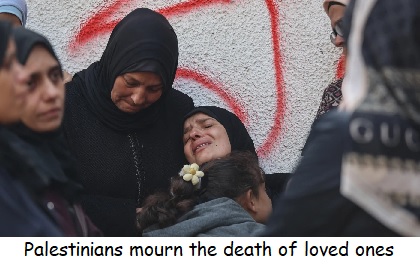
People in Gaza have been released from the fear of death, but what of the life they now face? What of the thousands of orphans, and the wounded or maimed children with no surviving families? It is not just the infrastructure of large parts of Gaza that has been destroyed, it is also the social fabric. Family lineages across two, three, four generations have been wiped out. What of the thousands of parents who have buried their children? And of all those who have collected the body parts of their loved ones? How to even begin to think about addressing such mass trauma when there isn’t even a roof to gather under? When asked about a man from Gaza about his brother, who had lost all his children and his wife in one strike. Where is he now? “Just constantly walking around, circling the rubble” of the site where they died. “Lost.”

The death toll will certainly rise, as bodies that could not previously be retrieved are pulled out of the rubble. At least 10% of Gaza’s population has been either killed or injured, and that is a conservative estimate.

It is important that these facts are not simply totted up and brushed aside as the costs of war. The assault must end, but the terms on which it is ended, and on which the path to peacemaking and reconstruction is based, are crucial. The crimes that have been committed cannot be redressed, or even prevented from recurring, if the conditions that enabled their perpetrators continue.

This is a difficult thing to insist on when you are dealing with a genocide. The scale of the death and violence, the erasure of the conditions for life, make the cessation of that erasure the most urgent, the only focus. But with that comes exculpation, and worse. Already Donald Trump is taking a victory lap for his peacemaking, after enabling what has taken place for months. Jared Kushner praised Israel’s conduct: “Instead of replicating the barbarism of the enemy, you chose to be exceptional.” Starmer lauded Trump for securing the deal, and focused on the importance of letting in humanitarian aid. He will, No 10 has said, pay “particular tribute” to the American president in Sharm el-Sheikh. And so now we have a crime without criminals, a genocide without génocidaires, a wretched population who, we are to believe, have been brought low by Hamas, and must be fed and watered while the world works out what to do with them. An entire history across Palestine of Israeli impunity and dominion, one of repetitive ethnic cleansing, military rule, expansion of settlements – and now explicit rejection of Palestinian self-determination – is erased, again.

This time, that exoneration, that framing of what has happened as tragic and finally over, is even more urgent, because the responsibility of countries that have supported Israel and silenced its critics is clearer than ever. Of course you would rush to Sharm el-Sheikh if you were representing a government that provided arms, restricted protest and refused either to endorse declarations of genocide, or to observe the rulings of the ICC when it issued an arrest warrant for Benjamin Netanyahu. Peace in Gaza represents an opportunity to forget; to erase from the collective consciousness an era in which some western countries took a bludgeon to international norms and institutions, and indeed their own domestic politics, in order to force through the destruction of Gaza.

But many all over the world who have witnessed the massacre, and all that went into sustaining it for two whole years, will not so easily forget. The secure future of those in Gaza, and Palestine in general, is not something that can be delivered by the thieves-turned-protectors. Without the empowerment of the Palestinian people and their self-determination, there can be no faith or trust in Israel or its allies to deliver that constantly invoked “lasting peace”. The killings have mercifully stopped for now in Gaza, but there must now be a refusal to normalise what will follow – a return to a status quo in which we all keep on pretending that Palestinian life is viable under the authority of Israel.

Palestinians will continue to be killed, their homes stolen, their prisoners tortured and detained without due process. What has been learned in the past two years cannot be unlearned, despite all the energy that will be expended to make that happen. The Palestinian cause cannot be returned to the fringes of “complex”, marginal politics, a framing that has enabled two years of devastation. That devastation’s perpetrators disqualified themselves long ago from any mandate over the people they have aided in killing and shattering. What will now be revealed in the body count and wreckage in Gaza should make that impossible to deny.

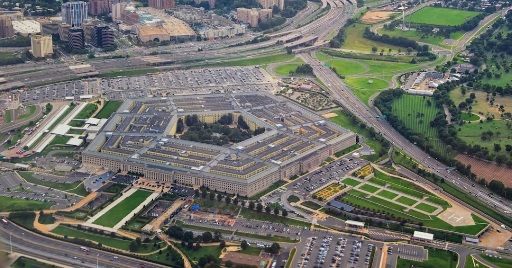
SOME AMERICAN NEWS OUTLETS SAY THEY WILL NOT AGREE TO PENTAGON REPORTING RESTRICTIONS

The New Restrictions Required Reporters To Promise Not To Publish Unauthorised Material To Obtain Press Credentials. The Illusion Of A Free Press Is Clearly Over.

Major media organisations, including conservative outlets, say the Pentagon is placing unlawful restrictions on journalists and their ability to cover the American military under a new set of reporting guidelines.

The guidelines were first announced in a September memo from the Department of Defense, and said that reporters must sign an affidavit pledging they would not publish unauthorised material – including unclassified documents – to keep their Pentagon press credentials.

Following pushback from the media, the wording was modified last week to say that reporters must simply “acknowledge” the new rules, but many organizations remain critical of the latest version of the rules.

Media companies, including public broadcaster NPR, The Washington Post, The Wall Street Journal, The New York Times, CNN, and the Reuters and Associated Press news agencies, have all said they will not sign the rules in recent statements.

They also say the rules violate the American Constitution, which offers broad protections for freedom of speech and freedom of the press under the First Amendment. These rights were reaffirmed in a landmark 1971 Supreme Court case, New York Times Co v United States, that allowed the American media to publish classified military documents during the Vietnam War.

The proposed restrictions undercut First Amendment protections by placing unnecessary constraints on gathering and publishing information. We will continue to vigorously and fairly report on the policies and positions of the Pentagon and officials across the government,” said Matt Murray, executive editor of The Washington Post, in a statement on X.

Conservative news outlets The Washington Times and Newsmax, a cable news channel and competitor to Fox News, also said they would not sign the rules.

Newsmax cited “unnecessary and onerous” rules in a statement.

The Pentagon Press Association, an industry group representing defence reporters, said in a statement on Monday that the Pentagon has the right to make its own reporting rules, but they cannot set “unconstitutional policies as a precondition” to report there.

The association previously said the rules were “designed to stifle a free press”, and could open reporters up to legal prosecution.

The Pentagon reporting rules have been championed by Secretary of Defense Pete Hegseth, a former Fox News presenter who was sworn into his post in January under President Donald Trump.

Pentagon spokesperson Sean Parnell said the department had “good faith negotiations” with the Pentagon Press Association, but that “soliciting [military] service members and civilians to commit crimes is strictly prohibited” in a statement on X.

ONLY ISRAELIS COULD DEMAND SYMPATHY AFTER COMMITTING GENOCIDE FOR YEARS

It’s Just Plain Hilarious That We’re Still Expected To Hate Hamas After Spending Two Years Being Shown Exactly What It Is That Hamas Has Been Fighting.

Only Israelis could spend two years committing genocide and then demand everyone feel very, very sorry for them on the anniversary their genocide started.

The thing about October 7 is that if Israel supporters are going to insist on using it to justify everything that’s being done in Gaza, then the rest of us have no choice but to refuse to care about it.

If someone is using something as a weapon to hurt people, then you need to take their weapon away. If sympathy about October 7th is being weaponized for genocide propaganda, then you have an ethical obligation to withdraw your sympathy.

It isn’t particularly fun raining on the big sympathy parade the satanists threw for the second anniversary as they make a desperate effort to win back some of the global support they’ve been hemorrhaging all year. That’s just what you need to do when people are using something to facilitate crimes against humanity. It would be irresponsible to do otherwise.

CNN’s Van Jones, who in 2021 was given $100 million by Jeff Bezos, recently came under fire for claiming that people oppose the Gaza holocaust because Iran and Qatar are running a massive “disinformation campaign” to show people dead babies in Gaza. He made a joke about how everyone’s seeing “dead Gaza baby, dead Gaza baby” on their phones which cracked up Bill Maher’s studio audience.

This is one of the ugliest, nastiest pieces of western media propaganda about the Gaza holocaust that has ever been seen, and we’re two whole years in. Only someone who thinks “dead Gaza baby” is a hilarious punchline would believe people need to be tricked by foreign influence campaigns into caring about dead babies in Gaza.

Someone who is truly and sincerely worried about a rise in antisemitism will oppose the mass slaughter of children under the Star of David banner by a state which claims to represent all Jews while Jewish billionaires buy up media to silence criticism of that state and Jewish oligarchs openly purchase the president of the world’s most powerful government to ensure the facilitation of that state’s atrocities.

Progressive darling Zohran Mamdani has come out and described Venezuela President Nicolas Maduro and Cuba President Miguel Diaz-Canel as “dictators”, just as the Trump administration ends diplomacy with Venezuela in yet another step toward possible war. So that’s some nice timing.

The Democratic Party is an American empire party. The very best Democratic leaders just want a slightly more polite and humanitarian empire. All of them support war and militarism. All of them support the subjugation of the global south by tyrannical force. Everyone needs to get clear on this.

It’s funny how white supremacists freak out about global birth rates, because it’s just the result of white supremacism getting everything it wanted. Whites spent centuries extracting wealth from the global south, and it turns out fertility rates decline the wealthier a population becomes. They plundered and exploited and enslaved and extracted from the darker-skinned people whom they viewed as inferior, and now those populations are the only ones reproducing at above replacement levels.

They’re freaking out because they understand their civilization will come crashing down without working-age people stepping in to keep the gears of the nation turning as prior generations age out, and now the only way they’re going to get those workers is by inviting them to immigrate from other continents. Those immigrants will have significant collective bargaining power because they are needed; they won’t just remain some permanently subjugated underclass. Eventually they start intermarrying with the white population, and before long humanity consists of lovely shades of tan. White supremacism loses, ultimately because it got everything it has ever asked for.

This is one reason why there’s so much overlap between white supremacism and Christian fundamentalism, by the way. White supremacists understand that they can’t have wealthy, educated women choosing when they do and do not reproduce, because it turns out having and raising children is a massive ordeal and a woman with rights and resources will only sometimes feel safe and supported enough to do it. So they need to find ways to turn them back into a man’s property and force them to churn out white children.

This is also why you see racists like Elon Musk simultaneously freaking out about declining birth rates and pushing AI like their life depends on it. They understand that automating society is the only way to stave off the future wave of immigration that will otherwise be necessary to keep civilization functioning. But it turns out AI is a bust, and that bubble is going to burst before long. Again, white supremacism loses in the end.

There was a good tweet from Rage Against the Machine’s Tom Morello saying “It’s wild how people can effortlessly understand the righteousness of everybody from Robin Hood to Andor and then in real life simp for the Sheriff of Nottingham and the Death Star.”

This happens because in Robin Hood and Star Wars the storyteller is sympathetic to the rebel characters while the pundits, editors and reporters who tell the stories of our time are sympathetic to those in power.

ANSWERS FROM THE TRUMP ADMINISTRATION ON DETAINED FLOTILLA ACTIVISTS ARE DEMANDED BY DEMOCRATIC LAWMAKERS

A group of Democratic Senators is demanding that the State Department provide them with information about its response to Israel’s interception of multiple boats that were attempting to deliver aid to Gaza.

Over the past week, Israel has abducted about 500 people who were part of the Global Sumud Flotilla. Some of those who have been released from detainment have reported physical abuse and inhumane treatment from Israeli soldiers.

In a letter to Secretary of State Marco Rubio, Senators Elizabeth Warren (D-MA), Tammy Duckworth (D-IL), Chris Van Hollen (D-MD), Ed Markey (D-MA), and Jeff Merkley (D-OR) ask why it took the Trump administration four days to visit and assess the care of American citizens on the boats, despite widespread reports of mistreatment. It notes that the governments of other countries with detained citizens, such as Italy and Switzerland, immediately responded to the situation.

We are also disturbed by reports that those detained were pressured to forfeit their due process rights by making their release contingent on admitting guilt for entering Israel illegally,” note the Senators. “What steps will the State Department take to independently evaluate the accusations of mistreatment towards American citizens on the Global Sumud Flotilla?”

In recent days, activists have detailed their time in detention.

David Adler, an American activist and co-general coordinator of the Progressive International, says that Israeli soldiers demanded to know whether he was Jewish, then grabbed him by the ear, forcing him to bend down and stare at the flag of Israel. Adler, and other prisoners, were later berated by far-right Israeli minister Itamar Ben-Gvir, who called them terrorists.

Over the coming hours, we were strip-searched, zip-tied, blindfolded and disappeared into the Negev Desert, into one of the most infamous — Guantánamo Bay of Israel, Ktzi’ot — detention camps, 400,000 square meters, where many hundreds and thousands of political prisoners from Palestine have been held and tortured over the course of the past 30 years, since — and indeed, since it was reopened in 2002, after they had to shut it down for repeated reports of serial human rights violations,” Adler said.

Over the coming days inside that camp, we, as internees, I should say — it wasn’t a prison, it was an internment camp — suffered serial and systematic violations of our most basic rights,” he continued. “We had, on and off, no access to food, water, never a shower. The North Africans, in particular, were targeted for severe abuse and beatings, taken out of their cells with German Shepherds and guns at their heads and cuffed at the hands, cuffed at the ankles, blindfolded and put into isolation. We had to sort of try to rally as a cell block to get them back. And I must say, systematic deprivation of lifesaving medicine, which includes insulin. One of the women in the cell blocks had such a severe kidney infection that she fainted twice, and over two days was denied access to medicine.”

The mother of two Massachusetts residents who were detained told the Boston Globe that her children were safe, but “sustained some injuries.”

Lorenzo D’Agostino, an Italian flotilla participant, said that people from countries allied with Israel experienced better treatment than those from other places.

I was sharing my cell with a Turkish citizen whose arm was broken and he was left without painkillers for two days,” said D’Agostino.

Los Angeles-based journalist Emily Wilder was detained by the Israeli military while covering the flotilla for the website Jewish Currents. In letters to Rubio, Congress member Jimmy Gomez (D-CA) demanded updates on his constituent.

Failure to take immediate and comprehensive action to secure the release of Ms. Wilder and other detainees would implicate your department and the Trump administration in an unconscionable abandonment of basic American principles and a dangerous undermining of our diplomatic standing internationally,” wrote Gomez.

Shortly before this article was published, it was announced that Wilder and several other flotilla members have been deported to Istanbul and are now attempting to return home.

Thus far, the administration has only mentioned the flotilla while mocking the humanitarian efforts.

Responding to a tweet Adler made shortly before Israel intercepted the boats, American ambassador to Israel Mike Huckabee attacked the activist.

This self-absorbed tool of Hamas didn’t say 1 word about hostages held for 2 yrs & being tortured or Oct 7 & the brutal rapes, massacres & torture of civilians,” wrote Huckabee. “This stunt sailed from Spain w/ less “aid” that could be shipped as an Amazon pkg. Wanna help? Tell Hamas END THIS!”

Asked by a reporter about Greta Thunberg, the environmental activist who was detained and allegedly mistreated while participating in the mission, President Trump dismissed her as a “troublemaker.”

She’s no longer into the environment now,” said Trump. “She has an anger management problem. I think she should see a doctor. Have you ever watched her? She’s a young person. She’s so angry, she’s so crazy.”

I hear Donald Trump has once again expressed his flattering opinions on my character, and I appreciate his concern for my mental health,” responded Thunberg in an Instagram post.

I would kindly receive any recommendations you might have to deal with these so-called ‘anger management problems,’ since — judging by your impressive track record — you seem to be suffering from them too,” she added.

Design a site like this with WordPress.com
Get started