TRUMP’S NUCLEAR TESTING PROVOCATION

Trump’s Announcement That The United States Will Resume Nuclear Weapons Testing After A 33-Year Moratorium Represents The Kind Of Reflexive, Muscle-Flexing Response That He Substitutes For Strategy In Foreign Policy.

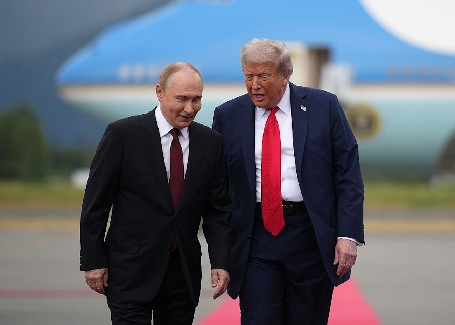
Made just hours before his meeting with Chinese President Xi Jinping, this decision manages to undermine American interests while providing Beijing and Moscow with precisely the diplomatic ammunition they’ve long sought.

The president’s justification—that we must test “on an equal basis” with other countries—rests on a foundation of dubious claims. Russia’s recent test of the Burevestnik nuclear-powered cruise missile involved the delivery system, not a nuclear detonation. China’s last known nuclear weapons test occurred in 1996. North Korea, the only nation conducting actual nuclear tests in recent years, is hardly the standard by which America should calibrate its strategic posture.

What Trump has done, whether intentionally or not, is hand a propaganda victory to Beijing and Moscow while potentially accelerating the very nuclear competition he claims to be responding to. The United States maintains nuclear superiority not through explosive testing but through sophisticated computer modeling and subcritical experiments—technologies in which we possess an overwhelming advantage. By resuming testing, we invite our rivals to close gaps in their capabilities while squandering the moral high ground that comes from restraint.

The timing betrays the hollowness of this decision. Announcing a resumption of nuclear testing mere hours before sitting down with Xi Jinping suggests this was less about genuine strategic necessity and more about theatrical posturing—the kind of cheap signaling that plays well on social media but complicates actual diplomacy. One wonders how the president expects to negotiate seriously on trade, Taiwan, or regional stability while simultaneously escalating nuclear tensions.

Moreover, this move undermines decades of American efforts to strengthen the global non-proliferation regime. While it’s true that the Senate never ratified the Comprehensive Nuclear-Test-Ban Treaty, successive administrations of both parties recognized that America’s voluntary restraint served our interests by discouraging testing by others. That bipartisan consensus, forged through careful consideration of strategic realities, has now been casually discarded.

The broader pattern here is troubling. Trump’s approach to nuclear policy—whether threatening “fire and fury” against North Korea, withdrawing from the Iran nuclear deal, or now resuming weapons testing—consistently prioritizes dramatic gestures over patient strategy. The problem with foreign policy by pyrotechnics is that other nations respond in kind, creating escalatory dynamics that serve no one’s interests.

What makes this particularly frustrating is that the United States faces genuine challenges in managing strategic competition with China and Russia. Beijing’s rapid expansion of its nuclear arsenal deserves serious attention and response. But that response should involve strengthening deterrence through conventional capabilities, shoring up alliances, and maintaining the technological edge that makes our nuclear arsenal credible without explosive testing. Instead, we’re choosing a path that will likely accelerate Chinese nuclear development while providing cover for Russian violations of arms control norms.

The irony is rich: a president who campaigned against endless wars and reckless interventionism has just taken a step that makes nuclear proliferation more likely and strategic stability less certain. This isn’t “peace through strength”—it’s instability through impulsiveness.

If Congress retains any meaningful role in matters of war and peace, it should demand answers about the strategic rationale for this decision, its potential consequences, and whether alternative approaches were seriously considered. The power to resume nuclear testing after three decades of restraint should not rest in a single impulsive Truth Social post.

The question isn’t whether America possesses sufficient nuclear weapons—it does. The question is whether it possess sufficient strategic wisdom to wield that power responsibly. On that measure, this week’s announcement offers a discouraging answer.

WHEN WILL YOU SAY “ENOUGH” AS ISRAELI SETTLERS ATTACK AMERICANS?

This Is Not How America’s “Greatest Ally” Would Behave. It Is How America’s Real Rulers Do Behave. It Is Long Past The Time For Americans To Face This Reality And Do Something About It.

Over the weekend, a group of armed Israeli settlers in the West Bank staged an attack on American journalist and Drop Site News contributor Jasper Nathaniel and a group of Palestinians he was accompanying. Footage recorded by Nathaniel, an American citizen, shows more than a dozen masked men chasing him and his group down a dirt road.

Already horrifying, the story soon became even more egregious. When Nathaniel contacted the American Embassy to report the attack, he was told that his own government could not protect him. As independent journalist Jeremy Loffredo—who was recently detained by the IDF for the “crime” of doing journalism without military permission—observed on X:

If an American tourist was being chased and attacked by masked & armed government-backed terrorists in any country other than Israel, it would immediately become a major diplomatic crisis with wall-to-wall media coverage.”

He’s absolutely right.

The episode Nathaniel documents is not an anomaly but part of what MAGA luminary Tucker Carlson calls America’s “ongoing humiliation ritual”—the decades-long pattern of Americans being detained, harassed, attacked, and even killed by Israeli settlers and soldiers with complete impunity.

Recall how, in 2022, the Palestinian-American journalist Shireen Abu Akleh was shot in the head by an Israeli sniper while wearing a press vest, an execution the Biden administration helped Israel bury. Just a few months ago, 20-year-old Saif Musallet, an American citizen from Florida, was beaten to death by settlers in the West Bank while Israeli soldiers blocked medical aid from reaching him (The IDF says it was deescalating a conflict caused when rocks were thrown at the settlers). His killers remain free. With the unconditional support of a bipartisan majority of lawmakers in Washington, Israeli officials correctly believe that when they target Americans, they have nothing to fear.

The attack on Nathaniel by armed Israeli settlers is therefore not an isolated incident but routine behavior from an increasingly radicalized and fanatical society. For decades, even supposedly progressive foreign policy voices in Congress, like Sen. Bernie Sanders of Vermont, have insisted these settlers are somehow separate from the “real Israel.” But a growing number of Americans recognize that argument for the fraud it has always been. The settlements are sadly not an aberration, but an expression of mainstream Israeli values that are completely incompatible with our own.

As the Israeli human rights group B’Tselem has documented, settler violence is state violence. Settlers burn homes and olive groves, attack farmers with clubs and guns, and terrorize Palestinian villages under the direct protection of Israeli occupation forces—with total confidence that they will never face punishment.

While settler violence is condoned and even facilitated by the Israeli government, it is antithetical to the basic moral tenets codified in all Abrahamic religions, including Judaism. Evidently, the elementary “thou shalt nots” simply do not apply to Israeli settlers, who steal, burn, and kill with state protection.

The moral bankruptcy at the core of Israel’s expansionist national project is why a global propaganda apparatus is necessary to sustain it: Without that apparatus, Americans would quickly see that their own government is funding and providing cover for the kind of violence they deplore. Americans—especially conservative factions—hold sacred private property rights, self-government, the rule of law, and the belief that all are equal under it. Though it is hailed as the “only democracy in the Middle East,” the state of Israel denies those basic God-given liberties to Palestinians in the occupied territories.

As a result of viral videos like Nathaniel’s, an increasing number of Americans now view Israel and its society as violent and extremist—and Israel, along with its foreign lobby, knows it. That is why, as Drop Site News reported, the Israeli Ministry of Foreign Affairs has commissioned polling firms to conduct surveys, focus groups, and message-testing aimed at distorting American perception of Israelis and Palestinians. The “best tactic,” to combatting the catastrophic PR problem created by Israel’s genocide and livestreamed assault on Palestinian life, according to the Mark Penn / Stagwell research, is to foment fear of “radical Islam” and “jihadism,” framing Israel as a Western bulwark against barbarism.

Even Tucker Carlson—who has done more than any major broadcaster to expose the power of the Israel lobby and question the foundations of America’s alliance with it—prefaces his critiques by saying he “likes Israel” or “doesn’t care about Israel.”

But to those who say that they don’t care—that Israel’s wars and expanding settlements have nothing to do with us—the American regime has not merely supported Israel’s repression of the Palestinians but, by gifting it weapons and shielding it with diplomatic cover, has become an active participant and co-signer of the Greater Israel project. Nearly every bomb that kills civilians in Gaza was “Made in the USA,” while American tax dollars fund the rifles that kill journalists in the West Bank. Even Israel’s vaunted Iron Dome air defense system—backed by both parties in Congress, from Republican Ted Cruz to Democrat Alexandria Ocasio-Cortez—grants Israel license to wage wars of aggression, intercepting any retaliation so that it can bomb with impunity, confident that no consequence will ever reach it.

By underwriting this arrangement, the American regime implicitly endorses not only Israel’s aggression abroad but its fanatical social order at home. Across the Middle East, people see Israel—rightly or not—as an extension of American power. Every missile strike, dead Palestinian child, and settler ambush feeds the perception that America is an enemy of Mideast Muslims. As long as that arrangement continues, Israel’s impunity will remain your humiliation—and its moral rot will be your own.

WHY ARE TOP TRUMP OFFICIALS MOVING ONTO MILITARY BASES?

Stephen Miller Joined A Growing List Of Senior Trump-Administration Political Appointees—At Least Six By The Last Count—Living In Washington-Area Military Housing.

The former White House adviser Katie Miller—mother of three young children, and wife of the presidential right-hand man Stephen—walked out of her front door one Thursday morning last month and was confronted by a woman she did not know. When she told this story on Fox News, she described the encounter as a protest that crossed a line. The stranger had told Miller: “I’m watching you,” she said. This was the day after Charlie Kirk’s assassination. It also wasn’t anything new.

For weeks before Kirk’s death, activists had been protesting the Millers’ presence in north Arlington, Virginia. Someone had put up wanted posters in their neighborhood with their home address, denouncing Stephen as a Nazi who had committed “crimes against humanity.” A group called Arlington Neighbors United for Humanity warned in an Instagram post: “Your efforts to dismantle our democracy and destroy our social safety net will not be tolerated here.” The local protest became a backdrop to the Trump administration’s response to Kirk’s killing. When Miller, the architect of that response who is known for his inflammatory political rhetoric, announced a legal crackdown on liberal groups, he singled out the tactics that had victimized his family—what he called “organized campaigns of dehumanization, vilification, posting peoples’ addresses.”

Stephen Miller soon joined a growing list of senior Trump-administration political appointees—at least six by our count—living in Washington-area military housing, where they are shielded not just from potential violence but also from protest. It is an ominous marker of the nation’s polarization, to which the Trump administration has itself contributed, that some of those top public servants have felt a need to separate themselves from the public. These civilian officials can now depend on the American military to augment their personal security. But so many have made the move that they are now straining the availability of housing for the nation’s top uniformed officers.

Kristi Noem, the Homeland Security secretary, moved out of her D.C. apartment building and into the home designated for the Coast Guard commandant on Joint Base Anacostia-Bolling, across the river from the capital, after the Daily Mail described where she lived. Both Secretary of State Marco Rubio and Defense Secretary Pete Hegseth live on “Generals’ Row” at Fort McNair, an Army enclave along the Anacostia River, according to officials from the State and Defense Departments. (Rubio spent one recent evening assembling furniture that had been delivered to the house that day.) Although most Cabinet-level officials live in private houses, there is precedent for senior national-security officials, including the defense secretary, to rent homes on bases for security or convenience. Army Secretary Dan Driscoll, whose family is in Washington only part-time, now shares a home on Joint Base Myer-Henderson Hall, a picturesque site next to Arlington National Cemetery. His roommate is another senior political appointee to the Army. (When Driscoll moved in, his washing machine wasn’t working, so for the first few weeks of his stay on base, he lugged his laundry over to the home of the Army chief of staff, General Randy George.)

Another senior White House official, whom The Atlantic is not naming because of security concerns related to a specific foreign threat, also vacated a private home for a military installation after Kirk’s murder. In that case, security officials urged the official to relocate to military housing, according to people briefed on the move, who like many others who spoke with us for this story were not authorized to do so publicly. So many senior officials have requested housing that some are now encountering a familiar D.C. problem: inadequate supply. When Director of National Intelligence Tulsi Gabbard’s team inquired earlier in Donald Trump’s second term about her moving onto McNair, it didn’t work out for space reasons, a former official said.

There are scattered examples from previous administrations of Cabinet members residing on bases. Both Robert Gates, defense secretary under presidents George W. Bush and Barack Obama, and Jim Mattis, Trump’s first Pentagon chief, lived in Navy housing at the Potomac Hill annex, a secure compound near the State Department. Mike Pompeo, CIA director and secretary of state during Trump’s first term, lived at Joint Base Myer-Henderson Hall. The grand homes they occupied, some of which date back more than a century, offer officials an additional layer of security and ample space for official entertaining.

But there is no record of so many political appointees living on military installations. The shift adds to the blurring of traditional boundaries between the civilian and military worlds. Trump has made the military a far more visible element of domestic politics, deploying National Guard forces to Washington, Los Angeles, and other cities run by Democrats. He has decreed that those cities should be used as “training grounds” in the battle against the “enemy within.”

Adria Lawrence, an associate professor of international studies and political science at John Hopkins University, told us that housing political advisers on bases sends a problematic message. “In a robust democracy, what you want is the military to be for the defense of the country as a whole and not just one party,” Lawrence said.

But the threat assessment has also changed in recent years. Trump has survived two attempted assassinations; Iran has stepped up its efforts to kill federal officials; and political violence—such as the June shooting of two Democratic Minnesota lawmakers, the murder of Kirk in September, and the shooting at a Texas immigration facility two weeks later—is a real danger.

The result is straining the stock of homes typically allotted to senior uniformed officers on Washington-area bases. Some of those homes, designed for three- and four-star generals, lack sufficient bedrooms for families with young children. Many have lead-abatement issues and require significant repair. The Army notified Congress in January that it planned to spend more than $137,000 on repairs and upgrades to Hegseth’s McNair home before he moved in. Both Hegseth’s predecessor, Lloyd Austin, and Austin’s State Department counterpart, Antony Blinken, faced protesters at their northern-Virginia homes, which were not on bases. Gaza protesters who set up camp outside Blinken’s house, where he lived with his young children, spattered fake blood on cars as they passed by.

Robert Pape, a political-science professor at the University of Chicago, said that the threat of political violence is real for figures in both major parties. He noted that Trump has revoked the security details for several of his critics and adversaries, including former Vice President Kamala Harris and John Bolton, the former national security adviser from Trump’s first term who has been the target of an Iranian assassination plot. “The correct balance would be: Trump should stop canceling the security detail of former Biden officials,” said Pape, who is also the director of the university’s Chicago Project on Security and Threats. “The issue is both sides are under heightened threat; therefore the threat to both should be taken seriously.”

LEARN HOW ISRAEL REPEATEDLY VIOLATED GAZA TRUCE BEFORE STRIKES KILLED 100 PALESTINIANS

In Less Than Three Weeks, Israel Has Killed 211, Restricted Aid And Kept The Rafah Crossing Closed In Violation Of The Peace Agreement.

Israel unleashed a deadly wave of air strikes on Wednesday in Gaza, killing over 100 Palestinians, nearly half of them children, in the most significant breach of the ceasefire to date.

To justify the strikes, Israel cited alleged Hamas violations of the agreement’s terms.

Hamas has denied the Israeli accusations, reiterating that it has abided by all terms of the agreement.

Meanwhile, Israel has violated multiple aspects of the agreement, including maintaining restrictions on aid, keeping the Rafah crossing closed and carrying out repeated air strikes.

In just under three weeks, Israeli forces have killed 211 people since the ceasefire began.

Medical supplies, fuel and other essential goods remain severely limited in the Palestinian enclave.

The sequence of Israel’s violations leading up to Wednesday’s deadly bombardment:

DAILY KILLINGS

Almost immediately after the ceasefire came into effect on October 11th, Israel began violating it.

On October 14th, a day after the exchange of living prisoners was completed, Israeli forces killed at least seven Palestinians in drone strikes and artillery shelling. According to local media, the targeted Palestinians were inspecting their damaged homes.

These attacks constituted a breach of the agreement, which explicitly stated that “all military operations, including aerial and artillery bombardment and targeting operations, will be suspended”.

The Israeli military claimed it was targeting people who had crossed the agreed-upon army deployment lines, known as the “Yellow Line”, after issuing warning shots.

Such killings continued in the following days, mostly occurring beyond the so-called Yellow Line. Within a week, Israel had killed at least 35 people, citing similar justifications.

On October 19th, two Israeli soldiers were killed in an attack in Israeli-controlled Rafah. No Palestinian group claimed responsibility.

Israel blamed Hamas, which denied any involvement or knowledge of the attack, saying it has not had active fighters in the area for months.

In response, Israel unleashed a wave of air strikes across the Gaza Strip, killing around 45 people, before resuming the ceasefire later in the day.

However, violations continued, with more people killed in the following days under the pretext of crossing the Yellow Line.

On October 25th, Israel killed a man in central Gaza, which was not beyond the Yellow Line, further expanding its violations. Hamas and other Palestinian groups did not retaliate, instead urging mediators to intervene.

On Tuesday, an Israeli soldier was killed in another attack in Rafah, which Hamas denied being involved in.

Israeli military sources told local media that there was no evidence the attack was connected to the Hamas leadership and happened after troops began collapsing a tunnel fighters were in.

By then, Israeli forces had committed 125 breaches of the ceasefire, according to a tally by the Gaza-based Government Media Office.

These included 52 shootings and 55 incidents of shelling. Israeli forces also made nine incursions into areas beyond the agreed deployment lines and seized at least 21 people.

On Wednesday, Israel unleashed the heaviest wave of air strikes since the start of the ceasefire, killing at least 104 people, including 46 children.

The latest assault brought the death toll since the ceasefire took effect to 211.

Overall, Israeli forces have killed at least 68,643 Palestinians since October 7th 2023, and wounded over 170,000.

Most of those killed are civilians, according to leaked military data.

OTHER ISRAELI VIOLATIONS

Alongside the alleged attacks on troops in Rafah, Israel has also cited the slow return of dead captives as a reason behind the recent escalation.

Israel claims that Hamas violated the terms of the agreement by delaying the return of the deceased captives.

However, the Egypt-brokered agreement sets no specific deadline for returning the bodies, stating only that they would be returned “as soon as possible”.

So far, Hamas has returned all 20 living captives, as well as 15 deceased.

On Tuesday, the group said it had recovered two more bodies, which were initially scheduled for return the same day but were delayed due to Israeli strikes.

The Palestinian movement denies breaching the agreement, asserting that it is doing everything possible to return the deceased captives.

It noted, however, that retrieving the bodies requires heavy equipment that Israel has so far blocked. Additionally, the locations of some bodies remain unknown after contact was lost with their guards, who were killed alongside the captives.

Israel has used the slow return of captives to justify its strikes and impose punitive measures on the population of the Gaza Strip.

Contrary to the terms of the agreement, Israel has not allowed the agreed-upon 600 trucks of humanitarian aid to enter Gaza daily. Instead, an average of 200–300 trucks is permitted daily.

The lack of aid has left medical and food supplies critically low in Gaza, where Israel has all but destroyed the healthcare system, and famine was declared following its siege in August.

On October 18th, Israel announced that it would keep the Rafah crossing with Egypt closed until further notice, another violation of the deal.

The crossing was set to be reopened to allow the movement of Palestinians three days after the ceasefire came into effect.

The crossing has effectively been closed by Israeli forces since May 2024, trapping the Palestinian population inside Gaza. Tens of thousands of critically wounded people are awaiting its reopening to seek treatment abroad.

According to Al-Araby TV, the Palestinian Ministry of Health has reported that 983 patients have died while waiting for permission to travel for medical treatment abroad.

WHAT AMERICANS THINK OF AMERICA IS NOT GREAT – A NEW POLL REVEALS

In A Bitterly Divided Country, Pessimism And Cynicism Reign Supreme: Two-Thirds Of Americans Say It Is At Least Probably True That The Government Often Deliberately Lies To The People.

That distrust cuts across partisan lines: Strong majorities of Donald Trump voters (64 percent) and Kamala Harris voters (70 percent) agree.

Nearly half of Americans, 49 percent, say that the best times of the country are behind them, according to poll. That’s greater than the 41 percent who said the best times lie ahead, underscoring a pervasive sense of unease about both individuals’ own futures and the national direction.

The exclusive new poll, conducted nearly one year after Trump’s reelection, reveals a deep strain of pessimism across the electorate — but especially for Democrats.

People who voted for Harris last year are twice as likely as Trump voters to say the United States’ best times are in the past.

America, as a country, is like “someone who is feeling lost, confused, or beat up … or uncertain of what to do, and looking around and saying this isn’t right, this isn’t the way,” said Maury Giles, the CEO of Braver Angels, a nonprofit that works to bridge partisan divides.

DEMOCRATS ARE MORE PESSIMISTIC THAN REPUBLICANS

Asked about “the best times” in the United States, only a small number of people cited the present moment. Instead, nearly two-thirds of Harris voters said the best times in America. were in the past, double the share of Trump voters who believe that. A 55 percent majority of Trump voters said the best times still lie ahead.

That’s likely at least partly a reflection of a partisan pattern of expressing optimism when one’s party is in the White House, and pessimism when it is not.
“Americans will divide on how they view the country’s doing depending on who is in office and which party they identify with,” said Jennifer McCoy, a political scientist at Georgia State University who focuses on political partisanship.
Americans’ views may flip in the future, when control of the White House and government next change — but for now, Democrats’ negative views are pervasive.

More than half of Harris voters, 51 percent, say that America is not a functioning democracy, while 52 percent of Trump voters take the opposite view and say America is a model.

The view from Democrats is so gloomy that a solid majority of Harris voters — 70 percent — say the quality of life in America is at least somewhat worse than it was five years ago, a period that was marked by the turmoil of the COVID-19 pandemic, widespread racial justice protests and a contentious presidential election. Meanwhile, a 42 percent plurality of Trump voters say the quality of life in America is at least somewhat better than it was five years ago.

That dynamic even extends to views of the world at large: More than three-quarters — 76 percent — of Harris voters say the state of the world is at least somewhat worse than it was five years ago, compared to 44 percent of Trump voters who agree.

MANY PEOPLE DON’T BELIEVE THE AMERICAN DREAM EXISTS

On a personal level, faith in the American Dream has also fallen. The idea — once considered a national ethos about the ability to better one’s life through hard work and discipline — was not specifically defined in the poll, which asked more generally about the statement that “the American Dream no longer exists.”

Overall, almost half — 46 percent — of Americans said that the American Dream no longer exists. That was by far the most common answer, far greater than the 26 percent who disagreed.

A slight majority of Harris voters, 51 percent, agreed that the American Dream no longer exists, while last year’s Trump voters were even split, with 38 percent agreeing and 38 percent disagreeing.

The declining belief in the American Dream, which has been mirrored in other national surveys, reflects a pessimism about today’s economy.

TRINIDAD FISHERMEN FEAR THE SEA BECAUSE OF THE AMERICAN REGIME’S MURDERS AND WARMONGERING

Near Venezuela, In The Eye Of A Political Storm Fueled By An American Naval Deployment, Fishermen From The Archipelago Of Trinidad And Tobago Fear Getting Taken Out.

Between Venezuelan military preparations in response to the muscular American regime’s “provocation” on the one hand, and American strikes on alleged drug boats on the other, people who normally ply their trade in the sea told AFP they are keeping a low profile.

In Cedros, a village in the extreme southwest of the island of Trinidad, a group of them chatted in hammocks on the beach, their boats unusually idle.

The fishers eyed the Venezuelan coast, about a dozen kilometers (seven miles) away, as they discussed their dilemma.

Barefoot and dressed in shorts, Kendrick Moodee said he and his comrades were taking “a little more caution,” with the Venezuelan coast guard “a bit tense” these days.

There has been closer policing, the 58-year-old said, of fishing in Venezuelan territorial waters where boats from Trinidad and Tobago were previously left to operate undisturbed.

Several Cedros fishermen said Venezuelan patrols have been violently repelling Trinidadian vessels, and beatings and extortion have increased.

Their territory curtailed, the fishermen have seen their yields and income dwindle.

American strikes in the Caribbean and Pacific have killed at least 62 people on boats Washington claims were ferrying drugs in recent weeks. Family members and victims’ governments have said some of them were fishermen at sea.

Earlier this month President Trump hailed the success of the operation, saying: “We’re so good at it that there are no boats. In fact, even fishing boats –- nobody wants to go into the water anymore.”

At least two of those killed were Trinidadians, according to mourning loved ones, though the government of the American regime-aligned nation of 1.4 million people has refused to confirm the identities.

“This (fishing) is the only thing we have to… make a dollar,” 42-year-old Rakesh Ramdass said, saying he was afraid of the diplomatic fallout, but without an alternative.

“You have to take a chance,” he said. But at sea, “anything can happen.”

Fishermen said the Trinidadian coast guard was also making life more difficult for them in an area known as a hotspot for the trafficking of drugs, arms and people — including Venezuelans fleeing dire economic problems in their own country.

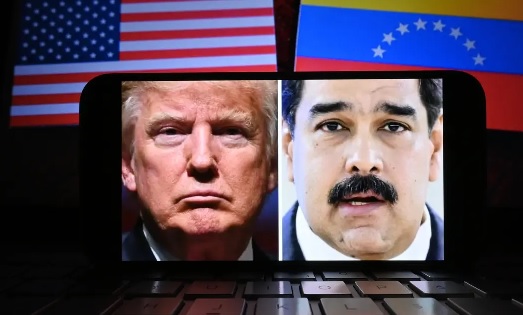
Prime Minister Kamla Persad-Bissessar is a fierce critic of Venezuelan President Nicolas Maduro and a friend of Trump, and has welcomed the American regime’s strikes.

Maduro accused her of turning Trinidad and Tobago into “an aircraft carrier of the American empire” after Washington sent a guided-missile destroyer there for four days for a joint military exercise within striking distance of the Venezuelan mainland.

Caracas fears the American deployment of war vessels is part of a regime change plan under the guise of an anti-drug operation.

The diplomatic standoff has meant that “everyone becomes suspect, even simple fishermen,” a Western diplomat in Trinidad and Tobago said on condition of anonymity.

Those who fish “find themselves caught in the crossfire,” said the diplomat, and “normal economic life is disrupted.”

In Icacos, a village near Cedros, Alexsi Soomai, 63, lamented that fishermen like him were going out to sea less frequently.

“Better safe than sorry,” he said.

Icacos is the arrival point for many undocumented Venezuelans seeking a better life elsewhere.

A few steps from the beach, a hamlet with houses made of salvaged wood shelters several families, including that of Yacelis Garcia, a 35-year-old Indigenous Venezuelan who left that country six years ago.

In Venezuela, she recounted, “sometimes we ate, sometimes we didn’t.”

Her brother-in-law Juan Salazar said he now lives “solely from fishing.”

But he does not dare venture far in the current political climate, fearing he will be caught and sent back.

OVER A QUARTER OF AMERICA’S “DRUG BOAT” SEARCHES FIND NOTHING

A 2024 Coast Guard Report Found 27 Percent Of Drug Boat Searches Came Back Empty-Handed, But What Does This Mean For Venezuelan Boat Strikes? It Means Many Innocents Have Been Murdered.

President Donald Trump says American military strikes on eight vessels in the Caribbean Sea and the Pacific Ocean, mostly targeting boats from Venezuela, were legal because they carried drugs being delivered to the United States.

But Republican Senator Rand Paul, Kentucky, who is also chair of the Senate Homeland Security Committee, said maritime law enforcement statistics show that not all boats suspected of carrying drugs actually have drugs onboard. He said the military’s strikes were not in line with the usual American policy.

When you stop people at sea in international waters, or in your own waters, you announce that you’re going to board the ship and you’re looking for contraband, smuggling or drugs. This happens every day off of Miami,” Paul said on October 19th on NBC’s “Meet the Press” program. “We know from Coast Guard statistics that about 25 percent of the time the Coast Guard boards a ship, there are no drugs. So if our policy now is to blow up every ship we suspect or accuse of drug running, that would be a bizarre world in which 25 percent of the people are probably innocent.”

Paul made a similar statement in an October 12th interview.

More than 30 people have been killed so far in the strikes, and the Trump administration has provided no evidence that the vessels contained drugs. We rated Trump’s recent statement that each strike saved “25,000 American lives” false.

Paul’s office pointed PolitiFact to the American Coast Guard’s 2024 fiscal year report, which said that year the agency intercepted drugs in about 73 percent of cases when they boarded boats, with about 27 percent of vessel interceptions yielding no drugs.

Experts said the data supports Paul’s point, but noted that it’s unclear how the Coast Guard defines the term it uses to describe intercepting drugs – “a drug disruption”.

If the (Coast Guard) boards a vessel and finds a known drug trafficker but no drugs, and that individual gets arrested and convicted, does that count as a ‘drug disruption’?” said Jonathan Caulkins, a Carnegie Mellon University drug policy researcher. “Or suppose they approach the vessel, it jettisons the drugs overboard, and so the Coast Guard seizes the vessel but the drugs have disappeared into the water. Is that a successful disruption?”

Paul’s figure might not translate directly to the recent boat strikes, experts said, since the American regime might have had intelligence about those specific vessels.

The Coast Guard was contacted about its data collection process but did not respond.

BESIDES THE UKRAINIAN NORD STREAM SUSPECT, WHAT IS POLAND HIDING

It Wasn’t That Long Ago That The Mysterious Attack On The Nord Stream Pipelines Was A Massive Outrage Across The Western World. What A Difference A Few Years Makes When Covering Something Up.

With Russia the presumed culprit, European Commission President Ursula Von der Leyen vowed the “strongest possible response,” while a top adviser to Ukrainian President Volodymyr Zelensky declared it “a terrorist attack planned by Russia and an act of aggression towards the EU.”

What a difference a few years makes. Not only is Russia no longer a target in the criminal investigation, but most Western officials have seemingly lost interest in finding out who was really behind the attack and bringing them to justice.

Maybe that’s because the main investigation of the case, conducted by Germany, has led instead to the upper reaches of the Ukrainian government. That is very awkward.

Last week a Polish court put a major wrench into the gears of the case, blocking a Ukrainian suspect’s extradition to Germany and ordering him released from custody, with the judge declaring his alleged crime a lawful military action taken that was “justified, rational and just,” and Polish Prime Minister Donald Tusk deeming it “rightly so. The case is closed.”

It’s an odd response to an attack in Sweden and Denmark economic zones that crippled infrastructure partly owned by Europeans (the pipelines were located in the Baltic Sea and brought Russian natural gas to Germany and were 51% Russian owned, with the rest owned by companies in Germany, France, and the Netherlands), an attack once widely denounced by much of the Western establishment. But this is just the latest instance of Polish officials’ disinterest in, if not outright public celebration of the sabotage.

Probably the best-known instance is former foreign affairs minister and now Deputy Prime Minister Radosław Sikorski’s now-infamous (and since-deleted) “Thank you, USA” tweet, posted mere hours after the attack in September 2022 and accompanied by a photo of the aftermath of the underwater explosion. But you could go back much further.

There are more than half a dozen cables in the WikiLeaks-released tranche of American diplomatic communications that detail the Polish government’s opposition to Nord Stream dating back to the 2000s, including from Sikorski himself, who had served an earlier stint as foreign minister from 2007 to 2014.

In one September 2007 cable, Polish officials laid out their government’s official position that “Poland considers the project as opposing our interest and the general rule of European solidarity.” Another from November that year describes Poland as “among the most vocal opponents of the project,” and that Poles viewed it as the “modern Molotov-Ribbentrop Pact,” referring to the secret deal between Moscow and Berlin in 1939 to carve the country in two.

Poland has been an unwavering opponent of the pipeline ever since, viewing it as a dangerous political project to not just sideline Poland and Ukraine, but make Germany and other Western European powers more dependent on Russian energy.

So it’s not exactly surprising that while much of Europe expressed outrage at the pipeline’s destruction — especially with consensus being for a time that Russia was responsible for destroying its own geopolitical trump card — Polish officials have been somewhere between celebratory and gloating.

The destruction of Nord Stream, as far as I’m concerned, was a very good thing,” Sikorski told The New Statesman a year later. “The problem with North Stream 2 [the English translation of the pipeline’s name] is not that it was blown up,” tweeted Polish Prime Minister Donald Tusk earlier this month. “The problem is that it was built.”

Meanwhile, while Germany has been understandably eager to get to the bottom of who was responsible — the switch-off of Russian gas exports to the country that the attack contributed to has sent its energy market reeling, hastening a process of economically ruinous deindustrialization — Poland has not exactly been helpful. As German investigators followed the trail of evidence to Ukrainians and then Poland, which the saboteurs allegedly used as an operating base from which to plan and resource the operation, they were met with resistance from their counterparts in the fellow NATO state, who dismissed the widespread reports of possible Polish complicity as simply Russian propaganda.

By September last year, angry German investigators were privately accusing the Polish government of having sabotaged their probe and engaged in “obstruction of justice.” One former head of Germany’s foreign intelligence agency, the BND, charged outright that it had done so to “to cover up its own involvement in the attack on the pipelines,” because “operations of such dimensions are inconceivable without the approval of the political leaders of the countries involved.”

In other words, the Polish court’s decision to release the leading suspect is just the capstone to this alleged Polish campaign of obstruction of Germany’s investigation. The judge who ordered the case closed, it should be noted, was not acting in defiance of the official Polish government position, but in deference to it. Polish officials, including Prime Minister Tusk, repeatedly spoke out publicly against the suspect’s extradition in advance of the ruling.

It all adds to mounting tensions between the two NATO allies, tensions that could strain the alliance should evidence ever surface that Germany’s own ally assisted what is essentially a terrorist attack against it. Lucky for everyone involved, the Ukrainian suspect’s release makes it exceedingly unlikely not only that the perpetrators of the attack will face justice, but that the world ever finds out which larger powers, if any, were behind it and for what reason. It’s not farfetched to wonder if that’s by design.

LEARN ABOUT THE AMERICAN REGIME ABUSING THE WORLD

The American Regime Can Make Threats, Impose Sanctions And Amass War Machinery, But You Don’t Truly Know They’re Serious About Attacking A Country Until They Start Churning Out Pentagon Propaganda.

It’s just news story after news story about the American regime and its allies terrorizing the world today.

The Rapid Support Forces (RSF) have been filming themselves committing horrific massacres in Sudan over the last couple of days, reportedly murdering some two thousand civilians. You can see the bloodstains on the ground in satellite images. The RSF and its atrocities are backed by the UAE, a close partner of the United States.

Meanwhile Israel has committed another wave of massacres of its own throughout the Gaza Strip, reportedly killing 104 people in a single day, including 46 children. This is as many Palestinians as would typically be killed on any given day in Gaza prior to the so-called “ceasefire”.

CBS News’ 60 Minutes has released a cartoonishly blatant war propaganda piece on “Nicolas Maduro, Venezuela’s dictator” about how poor and unhappy the people of Venezuela are under their current government. The piece featured an interview with Republican Senator Rick Scott, who said that “If I was Maduro I’d head to Russia or China right now; his days are numbered.”

The American regime can make threats, impose sanctions and amass war machinery, but you don’t truly know they’re serious about attacking a country until they start churning out Pentagon propaganda in the mainstream press.

In the same interview, Scott also said that if Maduro is successfully ousted, “it’ll be the end of Cuba.”

America is gonna take care of the southern hemisphere and make sure there’s freedom and democracy,” he added.

The senator’s statements suggest that the American regime is preparing a push in Latin America similar to what it has been executing with Israel in the middle east, eliminating any powers which refuse to bend the knee. South of the American border the top two disobedient governments are the socialist states of Venezuela and Cuba. In the middle east the American regime and Israel have spent the last two years bombing Iran and Yemen, securing a regime change in Syria, and doing everything they can to eliminate Hamas and Hezbollah in order to rule the region uncontested.

And of course we’ve still got the horrifying American regime’s proxy war in Ukraine, where men continue to be dragged off against their will to fight in a nightmarish conflict that most Ukrainians now oppose, but which Zelensky is saying he intends to keep fighting for years against the will of the public. This whole miserable ordeal could have been avoided with a little diplomacy and a few low-cost concessions, but the western power alliance avoided off-ramp after off-ramp in order to ensure that Russia would get sucked into another costly military quagmire.

All over the world the American regime and its allies are murdering and abusing people in order to dominate the planet and ensure the survival of the capitalist system with which its power is intertwined. It is a giant murder machine feeding on human blood and the life force of our biosphere while providing nothing but obstacles to a healthy world.

The American-centralized empire is a disease that affects our entire species. We had better find a cure, and fast.

GAZA RESIDENTS ARE UNABLE TO REBUILD THEIR LIVES BECAUSE THEY FEAR MORE ISRAELI ATTACKS

Despite The “Ceasefire” Between Israel And Hamas, Israeli Attacks Continue To Kill Palestinians, Causing Them To Lose Faith In The Truce.

While the United States-brokered ceasefire reached between Israel and the Palestinian group Hamas earlier this month has provided a sliver of respite, repeated Israeli violations have left Palestinians constantly fearful of renewed attacks, unable to resume the lives they lived before Israel’s genocidal war on Gaza began in October 2023, let alone begin anew.

On Wednesday alone, more than 100 people, mostly women and children, were killed and 253 others injured in several Israeli air strikes on southern Gaza, the worst violation of the ceasefire.

The Israeli army launched some 10 air strikes on Khan Younis in southern Gaza early on Thursday. This is despite Israel’s assertion on Wednesday of a “resumption” of the ceasefire after a large wave of strikes it claims was carried out in retaliation for Hamas killing one of its soldiers in southern Gaza – an accusation Hamas denies.

According to Gaza’s Health Ministry, at least 211 people have been killed and 597 others injured in Israeli attacks since the ceasefire took effect.

While the ceasefire might technically exist, the sounds of the explosions, the sounds of gunfire coming from the eastern side [of Gaza], the deep mechanical hum of the drones … in the skies of the entire Gaza Strip is a constant reminder of how fragile this ceasefire has been so far,” said Hani Mahmoud, reporting from Gaza City, adding that it is also “a reminder that peace is out of reach in this region.

People always talk about how uncertain they are, how concerned they are of the ability of the ceasefire to hold … and to reduce the level of fear and trauma they have been experiencing.”

Israel’s attacks on Gaza are in violation of the ceasefire agreement that came into effect on October 10th under President Donald Trump’s 20-point plan. Phase one includes the release of Israeli captives in exchange for nearly 2,000 Palestinian prisoners. The plan also envisages the rebuilding of Gaza and the establishment of a new governing mechanism without Hamas.

Where are the international guarantees that were promised?’

The psychological impact of Israel’s war on Gaza, which has killed at least 68,527 people and wounded 170,395, on Palestinians is profound; the relentless suffering is unimaginable.

ISRAELI ATTACK IN GAZA CONTINUES

As Israeli attacks on Gaza continue Mazen Shaheen says:

We’re waiting for a real chance to try and rebuild our lives. We started to pick things up again during the first week or two after the war, but then the truce was breached; thankfully, it ended quickly. We hadn’t even caught our breath when the second breach happened,” Mazen Shaheen, a Gaza said.

Many Palestinians are losing hope due to Israel’s continuous breaches of the ceasefire.

Now, after the truce and the new wave of bombings on Gaza, people who had just begun to feel some sense of safety, peace, and reassurance – who believed the war was finally over – are once again living in fear, especially the children and women,” Gaza City resident Hassan Lubbad said.

In the streets of Gaza City, people talk about “how the ceasefire hasn’t brought any certainty or peace, only more questions of when the next strike will happen, will it enter more easily or will there be an end to this cycle of fear?” said Mahmoud.

Palestinians are determined to send a message to the world about their thoughts on the ceasefire and their expectations of the international community.

The message we want to send is this: where are the international guarantees that were promised? Where are the mediating countries that helped broker the ceasefire and pledged to ensure its continuation?” said Shaheen.

One of Shaheen’s friends was wounded in Wednesday’s attacks. His friend’s condition is now stable, he said.

Suha Awad said as Israeli attacks on Gaza continue:

We want a complete end to the war, a total ceasefire. We just want to live in safety. We want full commitment to the truce, not just for a week or two, only for things to return to aggression and war,” Gaza City resident Suha Awad told Al Jazeera.

Design a site like this with WordPress.com
Get started