Do Not Be Afraid To Learn and Speak The Truth To Others.
That is what makes us human.
— Annani Muss
THE WAR ON IRAN IS NOT JUST – ACCORDING TO THE VATICAN’S SECRETARY OF STATE
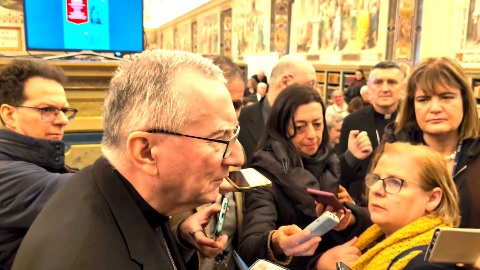
Cardinal Pietro Parolin, The Vatican Secretary Of State, Said On Thursday That The American-Israeli War On Iran Does Not Meet The Catholic Church’s Criteria For A Just War.
“No, it does not seem to meet the conditions,” he told reporters on the sidelines of an academic conference at the Vatican Apostolic Library.
When asked by EWTN News about the decision of the United States to attack Iran, Parolin referred to recent remarks by Cardinal Robert McElroy, archbishop of Washington, D.C.
In an interview with his archdiocesan newspaper, The Catholic Standard, McElroy said the intervention in Iran failed to meet several conditions required by the Church’s teaching on just war, including that the benefits of this war will not “outweigh the harm which will be done.”
“He explained this point very well,” Parolin said, referring to McElroy’s statement.
Parolin’s comments follow those of Pope Leo XIV in a statement given to journalists on Tuesday at Castel Gandolfo, the papal villa south of Rome, when he renewed his call for an unconditional ceasefire, saying that “death and pain caused by these wars is a scandal for the entire human family.”
Parolin was also asked about a letter he sent on behalf of the pope on Wednesday to the bishops of France, in which Leo encouraged them to be more inclusive of communities attached to the Traditional Latin Mass, which the pope said had become a divisive issue in the Church.
The debate over the Traditional Latin Mass has taken on fresh urgency in France in part because of the Society of St. Pius X, founded by French Archbishop Marcel Lefebvre and known for celebrating only the traditional liturgy. The SSPX said in February that it plans to consecrate bishops on July 1st without a pontifical mandate, a step canon law says carries automatic excommunication for both the consecrating bishop and the one ordained.
“The liturgy must not become a source of conflict and division among us,” Parolin said, without pointing to any specific solutions. “It will be necessary to find the formula that can meet legitimate needs. But I believe that, well, this can happen without turning the liturgy into a battlefield.”
TRUMP’S WAR WITH IRAN IS IMMORAL AND THAT MATTERS
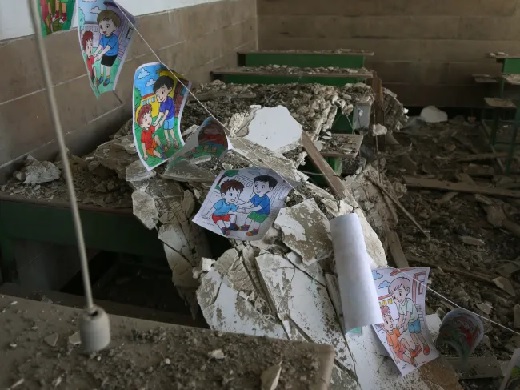
When Trump Ordered The First Wave Of Strikes In This Ongoing War With Iran Last Month, He Did So While His Administration Was Engaged In Active Negotiations With The Iranian Government.
That echoed the situation last June when Israel launched a bombing campaign days after Trump scheduled new talks with Iran—a move Trump later claimed was a deliberate deception to help make the Israeli strikes more effective.
This time around, in that first wave of strikes on February 28, American cruise missiles targeted and destroyed a building that ended up being a girls’ school—killing more than 168 young children who had just started their day of classes.
In the weeks since, the specific toll of the war on the Iranian people has been obscured by a thick fog of war and a nationwide internet blackout. But the initial reports and anecdotes that have managed to slip through suggest that the civilian death toll from the intense bombing campaigns on and around dense residential areas has been extensive.
Then, last Saturday night, Trump announced that if Iran did not “fully open” the Strait of Hormuz within 48 hours, the American regime would begin targeting and destroying Iran’s power grid and energy infrastructure. Trump did announce Monday morning before markets opened that he’d extend his deadline until after markets close this weekend, which suggests it may have been a bluff.
But still, the fact that Trump is officially threatening this at all is a big deal. Because destroying Iran’s power grid would not just turn the lights off for a few days, it would irrevocably destroy Iran’s ability to sustain the current population that lives there. Food production, sanitation services, water purification, healthcare services, and more would be greatly diminished, if not stopped entirely. And the result would be mass civilian death—even more so if Iran carried out the retaliation they promised and hit similar infrastructure in nearby American allied countries.
As all of this has unfolded in the last three weeks—the surprise attack during negotiations, the violent deaths of Iranian civilians as a result of American and Israeli bombs, and the credible threats of escalations that would significantly intensify civilian deaths—anyone who has voiced any concern about the ethics of any of this has been either dismissed by the administration and its supporters as a naïve utopian pacifist or demonized as a serious internal impediment to an operation that will finally bring about the kind of lasting regional peace that virtually everyone claims to desire.
But ethics matter, especially in war. War is no trivial subject. It’s violence on the widest scale. At their best, wars can throw off the worst tyrannies and liberate the oppressed. But they can also bring about the worst atrocities.
That’s why it is so important to have a firm and precise understanding of when violence is justified. History shows that, without this, it is far too easy for our healthy human responses to real atrocities and tyrannies to be funneled into support for further crimes that only trap us in an escalating series of indiscriminate revenge cycles that create a more violent, tyrannical, and lawless world. Truly just wars are only possible when grounded in a precise understanding of what is and is not just.
And the best single articulation of that in the context of war is Murray Rothbard’s 1963 essay “War, Peace, and the State.” In it, Rothbard clarifies that the difference between war and all other questions of crime and punishment is simply a matter of scale. Basic moral truths do not magically change or disappear if more people are involved in either committing or responding to a crime.
In any context, everyone is justified in resisting or repelling any invasion of their person or property, extracting restitution or exacting punishment in response to an invasion, or helping someone else do the same. It doesn’t matter what governments say, that is a basic, universal right. However, as Rothbard lays out, one of the most important concepts that often gets lost or forgotten in the fog of war is that violence may only be used to resist or punish the aggressor. Any violence committed against an uninvolved third party in response to a crime is itself a new crime that can be justly repelled or punished.
Just about all of us seem to have a firm understanding of this nuanced but important ethical truth when we, our families, our communities, or our nations are on the receiving end of an unjustified violent attack. It’s when we are mobilized, or at least taxed, to help attack someone else that we’re propagandized into forgetting or disregarding it.
Virtually all Americans understand that the 9/11 attacks were wrong because, even if the Washington-enabled bombings of Middle Eastern civilians or propping up of brutal dictators in the region that convinced the men on those planes to do what they did were unjust, the civilians in those towers and on those planes were not responsible for it.
In recent weeks, the man who appears to have been so upset about this new war on Iran that he shot and killed people enjoying a night out in Austin, Texas, was wrong because, even if this war is unjustified, the people at that bar that night were not responsible for it.
And the man who drove an explosives-filled car into a Michigan synagogue last Thursday was wrong because, even though his brothers and young niece and nephew were killed in Israeli airstrikes two weeks before, the kids in that synagogue’s on-site school were not responsible for it.
But, by that same basic ethical standard—that is, again, uncontroversial when it’s applied to ourselves—the bombing of that girls’ school that killed all those children was a crime. Not the kind of bureaucratic “government crime” that, at most, results in a drawn-out internal investigation and some dry report about how similar mistakes could probably be avoided, but a real (at best) mass-manslaughter that the individuals responsible need to be held accountable for.
And, on that note, Trump’s plan to destroy the infrastructure that millions of Iranian civilians rely on to survive—because he’s frustrated their government has so far outmaneuvered him in the Straits of Hormuz—would be such an unbelievably egregious crime that every American should be absolutely outraged that the politician who ostensibly “represents us on the world stage” even dared to mutter it out loud.
I’ve already dealt, in recent weeks, with plenty of the talking points trotted out by proponents of this war to convince us—and themselves—that actions that are so clearly immoral are in fact warranted.
But, in short, this war was not launched preemptively to take out an “imminent” threat of Iran starting a nuclear war with Israel. It was an aggressive attack launched during negotiations as part of a broader joint American-Israeli effort to protect and expand Israel’s hegemony in the Middle East.
And then there’s the idea that, while war is always a messy business, collateral damage like this is a risk that is necessary to face in order to liberate the region, and really all future generations from the unique threat posed by the Iranian regime.
That is propaganda, not just pushed by the groups who agitated for this specific war but also sewn by the massive war machine in DC that’s spent decades inflating threats to justify its continued existence.
There’s nothing new about this dynamic. It’s a story the American population has been told dozens of times before. The German “Hun” were a unique obstacle to European peace that needed to be taken out. Then the Nazis and Japanese were the great threat standing between the world and peace. Then the USSR was. Then communists in Korea. And then communists in Vietnam.
Then it was Saddam Hussein. If he could just be removed from power, the Middle East would finally enjoy a level of peace and stability not seen in thousands of years. Then he was, and it turned out that Qaddafi and Assad were the real final obstacles. And now, after all that, it’s Iran.
In every one of these cases, war advocates acted like it was a certainty that, if the American people could just roll up their sleeves, contribute a bit more of their paycheck through taxes or inflation, and temporarily set aside any inconvenient moral considerations just long enough for the American war machine to do what was necessary to knock the current villain off the geopolitical chessboard, we would finally see a genuine lasting peace take hold. And it has never been the case. This time is no different.
But even if this were a different situation and this really was a just war that could not be avoided, it would still be imperative to demand that those running the war effort go to every possible length, not just to prevent the deaths of uninvolved civilians but, more importantly, to hold those who do kill civilians accountable.
Otherwise we risk becoming entirely defined by politicians who are gleeful about doing something as dishonorable as pretending to negotiate to set the stage for an unnecessary surprise attack, by a federal bureaucracy that protects the individuals responsible for actual crimes from accountability, and by citizens who shrug off or even embrace a policy that—if fully carried out—would constitute a moral atrocity on the level of some of the worst regimes of the twentieth century.
Said another way, we should not let our government turn us into the kind of unfeeling, evil-excusing, morally-deformed society that Americans have always, rightfully, despised.
RESPONSIBILITY FOR THE IRAN WAR LIES ON THE ISRAELI LOBBY

Advocates For The American-Israeli Special Relationship Have Played A Special Role. As Americans And Others Experience Yet Another Middle East Debacle, They Want To Know Who Is Responsible.
It is vitally important to place blame where it belongs, but equally important that those who are not responsible not be wrongly accused.
Not surprisingly, some observers think this is a war being fought on Israel’s behalf. As evidence, they point to America’s Secretary of State Marco Rubio’s statement that the administration knew Israel was going to attack, anticipated that Iran might retaliate against American forces in the region, and therefore chose to preempt. Furthermore, Israeli Prime Minister Benjamin Netanyahu had been pushing hard for another war for months, and there are plenty of pro-Israel pundits—like former Jerusalem Post editor in chief and current New York Times columnist Bret Stephens—who have repeatedly called for war on Iran in the past and are defending the current war even now.
This raises an obvious question: To what extent does the “Israel lobby” here in the United States also bear some responsibility for the war? Before we consider that question in detail, however, two notes of caution are in order.
First, it is still early days, and more evidence for how and why this happened is bound to come to light in the months ahead, along with the usual efforts to kick up dust and shift the blame if things go further south. Unlike the 2003 war in Iraq, this conflict was not preceded by a long campaign to sell the war to the American people, so it’s harder to know exactly who was pushing for it and who was raising doubts.
Second, in trying to gauge the impact of any lobbying effort, it is essential to define it properly. As John Mearsheime made clear on this topic, the Israel lobby is not defined by religion or ethnicity, but rather by the political positions its members try to advance. It is a loose coalition of groups and individuals whose common aim is maintaining a “special relationship” between the United States and Israel. In practice, this special relationship means providing Israel with generous military and diplomatic support no matter what it does. The lobby is comprised of both Jews and gentiles, and many American Jews are not part of the Israel lobby and do not support the special relationship. Moreover, some key parts of the lobby (such as Christian Zionists) are not Jewish.
It would therefore be both analytically wrong and dangerously divisive to blame the American Jewish community for the war, just as it was wrong to blame that community for the 2003 war in Iraq. Indeed, back in 2002-03, surveys showed that Jewish Americans were less supportive of going to war against Iraqi President Saddam Hussein than the American population as a whole. Although Israel’s Jewish People Policy Institute (JPPI) recently released a poll purporting to show that a majority of Jewish Americans supports the current war against Iran, these results are from a carefully selected and decidedly unrepresentative group of respondents and are almost certainly bogus. (As a side note, it’s irresponsible for JPPI to release such dubious findings, as it risks fueling precisely the sort of antisemitism that some of us want to prevent.) It is also worth noting that J Street, the largest mainstream liberal pro-Israel group, and progressive groups like New Jewish Narrative and Jewish Voice for Peace have already issued public statements condemning the war.
So who is responsible?
First and most obviously, President Donald Trump, and his collection of feckless and incompetent loyalists. Like George W. Bush in 2003, he made the decision, and he bears the ultimate responsibility for the consequences. And, of course, Netanyahu, who is trying to establish Israeli hegemony over the entire region but has no chance of doing so without active American support, bears direct responsibility as well.
But no president acts entirely alone—whatever Trump wants us to believe—and it is well established that Trump can be swayed by what he hears from those around him. And Trump’s inner circle includes many people who are staunch defenders of Israel, longtime beneficiaries of Israel-related campaign contributions, or both. Trump’s two Middle East envoys—Steve Witkoff and Jared Kushner—are both ardent supporters of Israel, as is American Ambassador to Israel Mike Huckabee. Rubio, who also serves as national security advisor, was a reflexive proponent of the special relationship during his Senate career and one of the biggest recipients of pro-Israel campaign funding. Current White House chief of staff Susie Wiles worked as a consultant for Netanyahu’s 2020 reelection campaign. Except for Director of National Intelligence Tulsi Gabbard, who questioned excessive American support for Israel in her pre-MAGA career, it is hard to think of anyone in the upper reaches of the administration who publicly favors distancing the United States from Israel.
Second, Trump himself has acknowledged his own debt to ardent pro-Israel figures such as the late Sheldon Adelson and his widow, Miriam. As Eli Clifton and Ian Lustick recount in a recent article in the Nation (and a soon-to-be-published book), Trump singled out Miriam Adelson—the largest single contributor in recent American elections—during his address to the Knesset in October 2025, and even speculated that she might love Israel more than the United States. Similar concerns may also explain why some Democratic Party leaders have been reluctant to criticize Israel for starting the war or the Trump administration for joining in and have focused instead on the failure to plan the war more carefully.
Third, this war did not come out of nowhere. To be sure, the United States and Iran have been at odds for decades, and neither Israel nor the lobby is solely responsible for the suspicion with which each country views the other. Nonetheless, lobby groups such as AIPAC, the Foundation for Defense of Democracies, the Zionist Organization of America, and United Against Nuclear Iran have worked to demonize Iran over the years, prevent American companies from doing business there, and derail prior attempts by former Iranian presidents Akbar Hashemi Rafsanjani and Mohammed Khatami to improve relations. Unlike J Street, these groups worked overtime to thwart the 2015 agreement that reduced Iran’s enrichment capacity and nuclear stockpile, and they eventually persuaded Trump to tear up the deal in 2018 even though Iran was in full compliance. Had Trump not done so, of course, there would be much less reason to worry about Iran’s nuclear program today.
Finally, by making it almost impossible for either Democratic or Republican presidents to put meaningful pressure on Israel, the lobby has enabled Netanyahu to engage in “reckless driving” all over the region, whether in Israel’s sustained efforts to oppress its Palestinian subjects or in its repeated attacks on Gaza, Lebanon, Yemen, Syria, Iran, and even Qatar. Although Steven Simon is correct to say that Israel did not “compel” America into this latest war—the Trump administration jumped in voluntarily and enthusiastically—the lobby’s role in defending the special relationship and enabling Israel to keep disturbing the peace helps us understand why Americans keep finding themselves embroiled in costly conflicts far from home.
The bottom line: As this latest disaster unfolds, Americans and others will rightly want to hold those responsible to account. They should focus on the specific groups and individuals—from the president on down—who embraced Israel’s approach to the region and managed to convince themselves that yet another orgy of violence would be in the American interest. Until the lobby’s influence is reduced and the United States establishes a more normal relationship with Israel, such episodes are likely to be repeated, making the United States look like a heartless bully and leaving all of us worse off.
ISRAEL IS CENSORING THE REPORTING ON THEIR WAR -”OUR COVERAGE IS NOT TRUTHFUL”
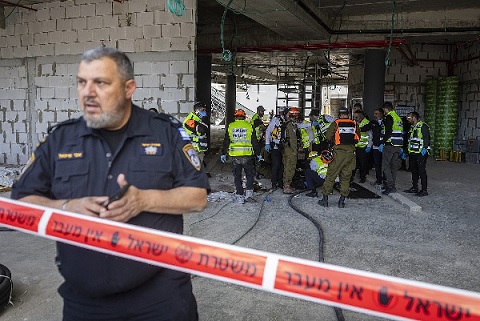
Barred From Publishing Details Of Iranian Missile Impacts Or Interceptions, Local And International Journalists Are Struggling To Tell The Full, True Story.
Since the start of the war with Iran, the Israeli military has imposed strict censorship regulations on local and international media outlets operating inside the country, severely impeding journalists’ ability to cover the situation on the ground.
Reporters and networks are prohibited from publishing the precise location of Iranian missile impacts, or even filming or photographing the extent of the damage in a way that could give away the location — restrictions designed, in the words of the army’s chief censor Col. Netanel Kula, “to prevent assistance to the enemy during wartime.”
Outside of wartime, Israeli law already gives the military censor the authority to prevent certain information from being published, even retroactively. This can include aspects of Israel’s arms deals or intelligence activities, among other security-related topics.
But just as it did during the “12-Day War” last June, the censor has tightened its restrictions amid the current American-Israeli war with Iran. The police have already detained several journalists it deemed to be violating these censorship regulations.
In an unclassified document published on March 5th, Kula instructed journalists to submit anything related to the following topics to the censor for review prior to publication: operational matters, intelligence, defensive preparedness, impact sites in Israel, armament management (including munitions and interceptor stockpiles, aircraft and air defense systems readiness, and the employment and use of unique and classified weaponry), and operational vulnerabilities in defense and offense.
“Consideration must also be given to the publication of visual materials, such as photographs and videos, which must also be submitted for prior review,” Kula added.
These restrictions have created some absurd situations for journalists. In one case known to, an Iranian missile hit its target while fragments struck a nearby educational facility. Yet the media was only allowed to report on the latter, without being able to even mention the former or inspect the damage.
In another case, journalists were documenting damage to a residential building when a man who likely worked for a security agency told police to instruct the journalists there not to film the actual target of the strike, which was behind them. The officer replied that the journalists would not have noticed it if they were not told, since most of the damage was to the civilian building.
Several senior staff members in international media organizations operating in Israel said that the censor’s restrictions have made it difficult to maintain normal reporting routines.
One example concerns live feeds of wide shots from cities like Tel Aviv and Jerusalem that international news agencies provide for use by broadcasters worldwide. During Iranian missile attacks, the agencies are prohibited from showing where Israeli interceptor missiles are launched from, meaning they must either cut the broadcast or tilt the camera downward toward the street so the skyline is not visible.
A senior figure at one news agency said that after cutting the live feed, they sometimes send footage of incoming missiles and interceptions to the censor for approval. The censor has barred several of these clips from publication, including a failed interception and a missile fragment continuing its trajectory.
The censor has also rejected still photographs showing interceptor launches, including long-exposure nighttime images that do not reveal precise locations.
“It’s hard to understand what is actually happening,” a senior manager at a foreign media outlet working in Israel explained. “In a lot of cases, we have official reports that there were no strikes or damage only to discover later that a target was hit. We can’t report or confirm so we don’t know if it happened or not.
“We have a partial understanding of the reality on the ground,” the senior manager admitted. “Our coverage of the war is not truthful.”
‘MASKED SECURITY PERSONNEL TOLD ME WHAT NOT TO FILM’
Criticism of the tightened censorship regulations is not limited to the international media. On the evening of March 11th, Hezbollah launched its most intense volley of rocket fire since the start of the Iran war; Israeli media outlets knew about this in advance, but were barred from publishing the story.
“The censor rejected information I had this evening about the possibility that Hezbollah may try to intensify its fire toward Israel,” Nitzan Shapira wrote that night. “Later in the evening, the same information was published on CNN, and only then were we able to report it.
“This is exactly the problem with this conduct,” he continued. “Instead of residents of the State of Israel receiving real-time information that could help them prepare and get ready in a basic way, the information was censored, and the Israeli public finds itself once again getting updated by American media outlets. An absurd situation.”
The following morning, the IDF Spokesperson apologized, saying it was “wrong not to update the public.”
As in the previous Iran war, journalists have also been detained in the course of their work. Two journalists from CNN Türk were briefly detained while broadcasting live near the Kirya, Israel’s military headquarters in Tel Aviv.
At one missile impact site in Ramat Gan, east of Tel Aviv, members of the local civilian security squad — one of hundreds of armed volunteer groups that the Israeli government has established since the October 7th attacks to expand its policing effort — checking journalists’ credentials, even though police had already cleared them. “Let’s make sure there are no spies here,” the squad commander called out to his colleagues.
The commander acknowledged, however, that they have no control over ordinary citizens filming on their phones and spreading footage on social media.
At another impact site in central Israel last week, a man claiming to be a police volunteer demanded to see journalists’ press credentials. After identifying a Palestinian resident of East Jerusalem who works for a foreign network, he accused him — without evidence — of transmitting the locations of missile strikes.
During the war last summer, the right-wing activist known as “The Shadow” and members of his civilian security squad unlawfully detained foreign and Palestinian journalists at an impact site in Tel Aviv. Authorities later instructed them not to interfere with journalists.
“After two and a half years of war, including the war with Iran in the summer, you already have experience of what you can and can’t document, and what the censor will reject,” another journalist from an international outlet explained.
“Last summer, I published a report from an impact site but the censor called and ordered us to take it down,” the journalist continued. “So now, when I arrive at the scene of a missile impact, almost automatically I document and report only what I know is allowed.”
One morning during this war, the journalist added, “I arrived at one of the impact sites hit overnight in central Israel, and masked security personnel came and told me what not to film.”
As a result of the restrictions, journalists are having to find creative ways to get information out to the public. On the evening of March 10th, Hezbollah fired two rockets into Israel; while media outlets were barred from publishing the locations of the impacts, some, including Ynet, quoted a statement by Hezbollah saying they had targeted a satellite station near Beit Shemesh, and included a video that Hezbollah shared which had been taken from social media.
Some journalists have noted, however, that the censorship seems less strict this time than during the 12-Day War last summer, and that the mood in the street is somewhat different — perhaps because the Iranian strikes have resulted in fewer Israeli casualties.
“Last year, the public mood seemed a little more hostile at one point, with right-wing activists claiming that Al Jazeera and others were broadcasting locations that they shouldn’t be,” a journalist working for an international media outlet said. “I remember police checking journalists’ ID cards after we filmed the aftermath of a strike because they were provoked by a right-wing activist. But I didn’t see anything like that this time.”
LEARN HOW THE AMERICAN DOG’S TAIL IS WAGGED BY ISRAEL

The American Regime’s Attack On Iran Is Surely Less About American Security Than About The Imperialist Priorities Of The Warmongering Israeli Government.
One prominent rational for the Israeli-American attack on Iran was to bomb the country into friendliness to the American regime and Israel. Very few believe this will succeed. Iran, a country as big as Germany, Britain, and France combined, has a population of 93 million, more than triple that of Iraq when the United States tried, even with a massive army, to transform it into an American ally. You all remember how that worked out.
President Trump ran two successful presidential campaigns with a populist foreign policy platform of promising “I’m not going to start a war. I’m going to stop wars” and denouncing the “endless wars” pursued by his predecessors in Iraq and Afghanistan. He now appears to have jettisoned his “America First” foreign policy with no strategic rational. But understanding this war as rational means believing it was launched as a means to achieve some particular end for Americans. Yet, despite President Trump’s claims to the contrary, Iran’s long-range missile program posed no foreseeable threat to America according to American intelligence assessments. This forces our attention to its real origins and beneficiaries, in Israel.
Secretary of State Marco Rubio acknowledged that the primary answer to the question of “Why [attack Iran] now?” was that American war-making decisions were effectively being driven by Israel. “We knew that there was going to be an Israeli action, we knew that that would precipitate an attack against American forces, and we knew that if we didn’t preemptively go after them before they launched those attacks, we would suffer higher casualties and perhaps even higher those killed, and then we would all be here answering questions about why we knew that and didn’t act,” he said on March 2nd.
The first part of Rubio’s answer, that Israel was planning to attack Iran and that Iran would retaliate against American targets, is a statement of a real problem: Israel’s behavior imposes security and economic costs on the United States. Successive American presidents supplied Israel with billions of dollars of military aid, political cover in international forums and tirelessly worked to shield Israel from accountability for its war on Gaza and long-running occupation of the West Bank. Israel has become accustomed to acting with impunity and disregarding American interests, particularly with respect to presidents Obama, Biden, and Trump’s stated priorities of refocusing American foreign policy toward the challenges of a rising China.
But the Trump administration’s solution, as explained by Rubio, was simply to acquiesce to Israel and join a deadly war of choice against Iran that is predictably sowing chaos in the region, killing Iranian civilians, and promising, much like George W. Bush’s ill-fated Iraq War, quick regime change to an American and Israel-friendly democracy.
The real goals of Trump’s war cannot be found in his strategic vision, which is overshadowed, if it even exists, by a pinwheeling embrace of postures that serve his vanity and his short-term political interests. While most combat operations have been undertaken by the American military, at considerable risk to American service members and costs borne by American taxpayers, the war was born, planned, and insisted upon by Israel, and its long-serving Prime Minister Benjamin Netanyahu.
“I have tried to persuade successive American administrations to take firm action [against Iran], and President Trump did,” Netanyahu told Fox News, acknowledging his own efforts to push America into yet another war in the Middle East. Netanyahu famously overpromises what American interventions will achieve. In 2002 he told Congress, “If you take out Saddam, Saddam’s regime, I guarantee you that it will have enormous positive reverberations on the region.”
While commanding one of the most potent nuclear arsenals in the world, he has, for decades, railed against Iran as posing an existential threat against Israel simply by developing the capacity to build a nuclear weapon. The real reason for Netanyahu’s obsession, however, is the role it has played, against so much evidence, to promote himself as “Mr. Security”—as the one leader in Israel willing and able to do what is necessary to defend Jews against the Hitler of the age.
Facing the prospect of criminal conviction and prison if he ever leaves office, Netanyahu has a great deal at stake. Until now it has been the campaign for war that has helped him, but now that he has his war, and has killed the Iranian dictator, what is his plan? The best way to answer this question is to consider what he has sought to do and has done in Gaza.
After the Hamas-led attacks on Israeli settlements near the Gaza Strip on October 7, 2023, Netanyahu launched a war of destruction and punishment whose declared objective, the elimination of the Hamas regime there, was neither its actual objective nor what was achieved. Nearly three years of pulverization and the killing or wounding of more than 10 percent of Gaza, Palestinians have failed to remove the Hamas regime. But that war, prolonged and conducted in a way to preserve Netanyahu’s hold on office and his prospects in upcoming Israeli elections, has created Gaza as a field of suffering and chaos and a kind of free-fire zone for the Israel Defense Forces. That is, more or less, what is in store for Iran and it will, again, serve Netanyahu more than any other plausible American security or geopolitical interests.
To be clear, Israel is dependent on the American for military aid, as well as protection at the UN and the International Criminal Court when these multilateral institutions attempt to hold its leaders accountable for war crimes in Gaza, and could not execute its wars in Gaza, Lebanon, Syria, and Iran without the support of America.
The costs of the war in Iran remain uncertain, but we can already conclude that the human and financial costs will be enormous and entirely avoidable. Beginning to address the policy failures that brought America to this juncture requires an interrogation of how a putative client state gained such overwhelming control over the foreign policy of a superpower.
In 2001, Benjamin Netanyahu made his vision of Israel’s influence over America crystal clear in a hot-mic moment, telling Israeli far-right activists, “I know what America is. America is a thing you can move very easily, move it in the right direction. They won’t get in the way.”
Israel’s lobby—spearheaded by a small bipartisan group of Israeli-American and American billionaires who prioritize the ambitions of Israel’s right-wing government—is once again poised to flood the campaign finance system for the 2026 midterms. Meanwhile, the United States is being drawn into a long-sought Israeli war on Iran with no clear American national security rationale. It’s easy to dismiss Donald Trump as yet another American president manipulated by Netanyahu. But Trump, unlike his predecessors, has a feature that sets him apart: He sometimes says the quiet part aloud.
Speaking before the Israeli Knesset in October 2025, Trump himself appeared to acknowledge the grip Israel’s lobby has on American foreign policy. He singled out Israeli-American billionaire Miriam Adelson, one of the biggest funders of Israel’s lobby and the largest campaign donor in the entire American political system.
“Miriam? Look at Miriam. She’s back there. Stand up now. Stand up,” said Trump. Concluding his friendly riff on the Adelsons, Trump, speculated where the allegiances of his biggest, and most influential, donor lay. “I actually asked her, I’m gonna get her in trouble with this, but I actually asked her once, I said, ‘So, Miriam, I know you love Israel. What do you love more, the United States or Israel?’ She refused to answer. That means, that might mean, Israel, I must say.”
THE AMERICAN REGIME IS SOCIALIZING THE COST OF THE IRAN WAR
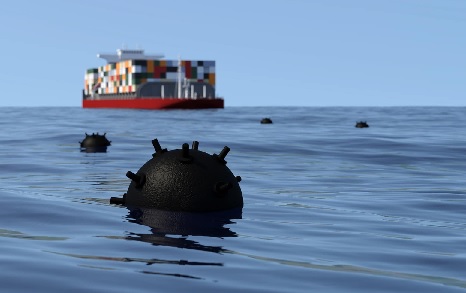
War Is Often Sold To The Public As An Act Of National Will: Decisive, Necessary, And Under Control. The Bill Arrives Later, In A Quieter Form.
It shows up in insurance markets, shipping rates, emergency guarantees, higher fuel prices, and sudden policy reversals designed to keep the economic damage from spreading too far or too fast. That is what is now happening with the American-Israeli war on Iran. The fighting is not only destroying lives and widening instability. It is also revealing something more familiar about the American state: when private actors no longer want to bear the risk of a war Washington helped ignite, Washington moves to spread that risk across everyone else.
The clearest example came when maritime war-risk premiums in the Gulf surged, in some cases by more than 1000%, as ships and cargoes moved through a combat zone centered on one of the world’s most important energy chokepoints. This is what markets do when governments create danger: they start pricing reality honestly. Insurance underwriters do not care about speeches about resolve or credibility. They care about missiles, mines, damaged hulls, and the odds that a vessel will not make it home intact. Once those odds change, the market does what it is supposed to do. It becomes expensive to move goods through a war.
But the American state does not like that kind of honesty, because honest prices expose the real cost of intervention. So instead of letting war become unaffordable to the people escalating it, Washington stepped in. The International Development Finance Corporation announced a maritime reinsurance facility covering losses up to roughly $20 billion on a rolling basis, and later named Chubb as the lead insurance partner. In plain English, the government decided that if the private market was no longer willing to carry the full risk of this war, the state would help carry it instead. That is not a side effect of interventionism. It is one of its operating principles. Risk is privatized on the way up, then socialized when the numbers stop working.
The same pattern is visible in energy policy. As the war tightened shipping and pushed oil prices above $100 a barrel, Washington issued a thirty-day waiver allowing purchases of stranded Russian oil at sea to stabilize markets. That move was not just an emergency adjustment. It was an admission. The administration was effectively saying that one war had already become costly enough to require loosening pressure in another theater. A foreign policy that presents itself as hard and disciplined suddenly becomes very flexible when gasoline, shipping, and inflation begin threatening domestic politics. The slogans remain moralistic. The mechanics turn transactional overnight.
This is what statism looks like in practice. It does not simply bomb another country and call it security. It also rearranges the economic landscape at home and abroad so that the political architects of the war do not face the full consequences of their decisions. The cost is pushed outward onto taxpayers who did not authorize the war, consumers who will pay more for energy and goods, and trading systems that now have to absorb new shocks because Washington and Israel chose escalation over restraint. The state does not merely fight. It conscripts logistics, insurance, credit, and public balance sheets into the campaign.
That is why it is misleading to describe this as only a military conflict. It is also an exercise in political risk transfer. The Strait of Hormuz handles around twenty million barrels per day of crude oil and oil products and roughly a quarter of the world’s seaborne oil trade. Any government that helps turn that corridor into a war zone is not just making a strategic decision abroad. It is imposing a hidden tax on ordinary life. It is raising the cost of transport, trade, fuel, insurance, and eventually everything built on those foundations. And when those costs start climbing too fast, the same government asks the public to cushion the blow in the name of stability.
There is a moral evasion built into this arrangement. The public is told to think about war in the language of necessity and strength, while the real economics are handled behind the scenes through emergency waivers, public guarantees, and market interventions. Washington bypasses the discipline that peace would impose. It subsidizes the consequences of its own escalation, then presents the cleanup operation as responsible governance. That is not prudence. It is the imperial version of sending someone else the invoice.
The libertarian objection to this war is not only that it is reckless, unjust, and likely to widen. It is also that the state is once again doing what it does best: converting elite foreign-policy choices into burdens to be carried by everybody else. When insurers retreat, the government steps in. When sanctions collide with energy reality, the rules bend. When war becomes too expensive, the price is redistributed rather than paid by the people who chose it. That is the deeper scandal here. The state is not just waging this war. It is socializing its cost.
THE UNBELIEVABLE MADNESS OF AMERICA’S WAR WITH IRAN
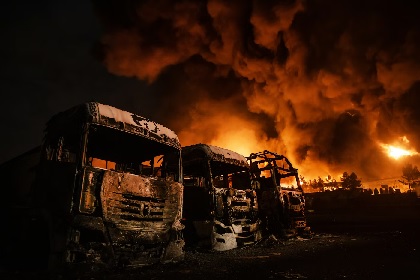
Last Year You Were Warned About The Possibility That Israel Might Drag The United States Into A Regional Conflict. What’s Happening Now Is Worse Than Could Have Ever Been Imagined.
Many have feared that, emboldened by unconditional American support, Israel might launch a full-scale war against Hezbollah in Lebanon that could drag in the United States. Clearly, many failed to comprehend the scope of Netanyahu’s and Trump’s barbaric ambitions.
We were right about one thing: Israel did invade Lebanon on October 1, 2024, only four days after assassinating Hezbollah’s Hassan Nasrallah, and 12 days after triggering the pager explosions that killed 42 and maimed almost 3,000. While the two countries agreed to a ceasefire eight weeks later, Israel routinely violated it and faced no consequences. And yet the Israeli invasion and continued bombardment of Lebanon now seem relatively inconsequential when compared to the regional conflagration Israel and the American regime have ignited by attacking Iran.
Within the first day, the United States and Israel conducted approximately 900 airstrikes, killing hundreds of civilians. The strikes targeted Supreme Leader Ali Khamenei, whose martyrdom sparked riots among Shia communities in Bahrain, Yemen, Iraq, and Pakistan. Iran selected his son, Mojtaba Khamenei, as the country’s new supreme leader. While Khamenei Sr. had issued a fatwa, or religious ruling, in 2003 against the production of nuclear weapons, analysts fear that Mojtaba will impose no such restrictions.
Iran retaliated within hours, launching missiles at Israel and at American military facilities in Bahrain, the UAE, Kuwait, Qatar, and Saudi Arabia. Within the first few days, Iran also hit Oman, the Azerbaijani enclave of Nakhchivan, a British base in Cyprus. Turkey intercepted two Iranian missiles. Although the Houthi movement in Yemen had not yet joined after the first week, Iran-backed militias in Iraq fired missiles and drones at Israel and at American bases in Jordan.
Meanwhile, in addition to launching thousands of airstrikes against Iran, Israel again invaded Lebanon, prompting French President Emmanuel Macron to increase military aid to the Lebanese army, which did nothing to slow Israel’s blitz over Beirut. Israel continued its bombing campaign in Iran, evidently using AI to select such targets as a public park because it was named “Police Park.” No one checked that it had no relation to the police, indicating a lack of human oversight.
The number of countries actively or potentially involved in hostilities is growing, with no sign of concern from Israel or the American regime. Iranian President Masoud Pezeshkian announced that Iran would stop attacking the Gulf Cooperation Council states unless attacks were launched from their territory. Soon after, Israel attacked a desalination facility and struck 30 oil storage tanks, derailing the possible reduction in hostilities with the GCC. Residents of Tehran captured videos of the apocalyptic aftermath: massive black clouds and fires burning uncontrollably, followed by a black rain of oil. Targeting oil and water facilities marked an escalation that the Gulf states in particular wish to avoid; in the GCC, 100 million people depend on desalinated water.
Although air defenses have deflected most Iranian projectiles, the Gulf countries’ image of peaceful luxury—an image purchased with hundreds of billions of dollars of American weapons—has been shattered. Gulf states are furious with Trump for sacrificing their safety and economic viability for a war that will result either in complete chaos in Iran that could destabilize the entire region or the survival of a regime that is even more hostile, paranoid, and determined to go nuclear.
Emirati billionaire Khalaf Al Habtoor channeled the frustration of many in a post on X aimed at South Carolina Senator Lindsey Graham, a close ally of Netanyahu, who has pushed for years for the American regime to attack Iran. Habtoor wrote, “I say to him clearly: We know full well why we are under attack, and we also know who dragged the entire region into this dangerous escalation without consulting those he calls his ‘allies’ in the region.” The post was later removed. Although they previously welcomed Trump’s presidency, the GCC states are learning the wisdom of Henry Kissinger’s observation, “To be an enemy of America is dangerous, but to be a friend is fatal.”
Leaders around the world appear to be struggling to respond to an American administration that is no longer constrained by pretending to care about human lives, the law, or the cost of its hubris. In Europe, only Spain refused to allow the American regime to use its bases to attack Iran, while France, Switzerland, and Slovenia condemned Trump’s attacks as a violation of international law, as did Russia, China, Chile, Venezuela, and Pakistan. And yet as the price of fuel and food begins to climb, the rest of the world will experience the consequences of failing to hold Israel accountable for its flagrant violations of international law. Israeli impunity, combined with America’s campaign to destroy institutions like the International Criminal Court that could hold Israelis or Americans accountable for war crimes in Palestine or Iran, threaten to destroy the system that prevented a third world war for over eight decades.
Those who are suffering most are the thousands of innocent people inside Iran. The savagery of the American attack became almost immediately apparent when its initial wave of airstrikes targeted a girls’ elementary school. Three separate precision munitions hit the school, indicating that it was attacked intentionally. Given that the school had been a separate civilian facility for a decade, the notion that the missiles were actually intended for the nearby IRGC facility strains credibility.
Instead, this appeared to indicate that the American regime had adopted Israel’s Dahiyah doctrine, named for a Beirut suburb that Israel completely flattened during the 2006 war. IDF Commander Gadi Eisenkot articulated the doctrine as follows: “We will wield disproportionate power and cause immense damage and destruction.” What he described is antithetical to international law, where the principle of proportionality is foundational. Israel has long demonstrated its contempt for international law.
Now self-styled Secretary of War Pete Hegseth has eagerly followed suit, declaring that the American military would no longer be governed by “stupid rules of engagement.” Hegseth seems to believe that if America had been willing to kill more civilians in Iraq and Afghanistan, the American regime might have won. Yet it was the civilian toll of the American War in Afghanistan that drove the population to support the return of the Taliban rather than suffer the violence of ongoing American occupation. America’s toll on the civilian population of Afghanistan and Iraq pales in comparison to Israel’s genocidal assault on Gaza, which Hegseth appears impatient to emulate.
Americans are generally insulated from the tragic human toll of their government’s military interventions abroad; instead, the cost will be felt at the gas pump or perhaps the Republicans’ electoral chances in the upcoming midterms. Not in the loss of a child, a grandparent, a newborn baby to indiscriminate and inescapable violence.
And yet some Americans may pay the ultimate price, as speculation swirls about what was once considered unthinkable: an American ground invasion. The majority of Americans already oppose Trump’s war on Iran; no modern American president has started a war with so little public support. If Trump sends American troops into Iran, the results would be catastrophic—for Iranians, for the region, and for American soldiers.
Many veterans of the so-called “war on terror” have viscerally rejected the possibility of yet another unnecessary war in the Middle East, a sentiment embodied in horrifying footage shot of a protest in a Senate committee hearing. Security officers and a senator drag a uniformed Marine out of the room so violently that they break his arm. Just before you hear his bones snap, he shouts, “No one wants to fight for Israel!”
THE AMERICAN REGIME’S ALLEGATION THAT IRAN TRIED TO KILL TRUMP IS VERY DUBIOUS

The Public Deserves To See All The Evidence For The Consequential Claim. Of Course, All Of That Evidence Is Probably Totally Fabrication With Media Cooperation.
Twenty-four years ago, on September 12th, 2002, Benjamin Netanyahu came to Congress to pressure American politicians to authorize the use of military force against Israel’s enemies, namely Iraq and Iran, governments which had been marked for regime change since the neocons’ Clean Break Report authored in the 1990s. Though Israel quickly achieved its first goal of having the American military topple Saddam Hussein, it was not until last weekend that an American president made the military commitment toward fulfilling Israel’s long-held war aims against Iran, with President Donald Trump bombing Iran and announcing via a video posted on Truth Social his intent to topple its government.
“The lives of American heroes may be lost, and we may have casualties,” warned Trump as the Iranian military responded to joint American–Israeli bombing with airstrikes of its own against multiple American bases in the region. Sen. Lindsey Graham (R-SC), who has never seen a new war he did not instantly want to send other people’s children to go fight in (he does not have children of his own to send to war), echoed the president’s grim assessment, telling The Wall Street Journal, “If there are deaths or injuries in this operation, I can say without hesitation that they sacrificed for a noble cause…”
The administration has barely attempted to explain to the American people what that cause is, perhaps because they understand how transparent the true motivation for toppling the Iranian government is to most Americans, who can easily spot the Israeli fingerprints smeared all over this operation. Indeed, Secretary of State Marco Rubio effectively acknowledged as much on Monday when he said,
“The president made the very wise decision—we knew that there was going to be an Israeli action, we knew that that would precipitate an attack against American forces, and we knew that if we didn’t preemptively go after them before they launched those attacks, we would suffer higher casualties.”
With open admissions from senior government officials that the United States is fighting—and Americans are dying and unprotected in the Gulf States—on behalf of Israel, and with the absence of a rational and clear casus belli to affirm to their audiences and voters, a chorus of Trump loyalists have emerged from Congress and corporate media to spread a series of highly propagandistic lies meant to boost morale and provide retroactive justification for an unpopular war that Congress never authorized.
One of the most influential of those lies is that the government of Iran attempted to assassinate Trump, an allegation that seems to be taken seriously and considered legitimate by senior administration officials including the president himself. On Monday, Trump told ABC “I got [Khameinei] before he got me. They tried twice … I got him first.” Two days later, Secretary of Defense Pete Hegseth affirmed that narrative, telling reporters at a press conference that “Iran tried to kill President Trump and President Trump got the last laugh.”
Yet reporting by journalist Ken Silva suggests there is scant credible evidence tying Tehran to an actual assassination plot. The case centers on Asif Merchant, a Pakistani national who was arrested in July 2024 and whom prosecutors accuse of attempting to hire hitmen on Iran’s behalf. But as Silva has documented, the operation was a tightly controlled FBI sting, executed in a manner that is highly dubious.
Department of Justice prosecutors allege that Merchant conceived of the plot himself and was acting at the direction of, or in coordination with, Iranian contacts. In the government’s account, Merchant initiated the plan, disclosed it to a friend, and then attempted to hire what he believed were real hitmen, who were in fact undercover FBI agents.
But pretrial proceedings revealed that Merchant had been under FBI surveillance before he even entered the United States, and that the “friend” he allegedly confided in was already a government informant. That would make the federal government not only the architect of the sting operation, but the sole witness to Merchant’s purported expression of criminal intent.
Merchant also allegedly struggled to assemble even a $5,000 down payment for the supposed hit, obtaining funds from an associate via the FBI informant and transferring the money to other undercover agents. The Deputy Attorney General reported that Merchant had no known associates in the United States, including no known Iranian co-conspirators domestically. Disturbingly, prosecutors have signaled their intent to invoke the state secrets privilege to block the public and defense teams from having access to evidence that is potentially exculpatory.
In other words, there is no evidence publicly available that Merchant formed any plot on his own or that the Iranian government ever sponsored it.
Among the few questioning the narrative that Iran tried to kill Trump is the MAGA luminary Tucker Carlson, who said that the intelligence that supposedly proves the Iranian plot existed “came from Israel.” To his point, it was revealed in a letter from an American attorney assigned to the case that the FBI used Israeli spyware Cellebrite to access the alleged assassin’s phone. Certainly Netanyahu has boosted the narrative of an Iranian plot to kill the American president. And as Carlson helpfully reminded his audience, “this country has certainly been manipulated a lot by Israeli intelligence.”
If the attempted assassination allegation truly is a predicate for war, it is one of the thinnest ones in American history, built on a sting operation the government manufactured and on evidence prosecutors are actively shielding from scrutiny.
WHY IS THE AMERICAN REGIME STILL ADDICTED TO WAR?

Why Does Every American President End Up In A Major Military Campaign? No Matter What They Say, American Presidents Find It Impossible Not To Go To War.
Back in 1992, Bill Clinton won the presidency by saying “it’s the economy, stupid,” and declaring the era of power politics to be over. Once in office, however, he found himself ordering missile strikes in several countries, maintaining no-fly zones over Iraq (and sometimes bombing it), and waging a long aerial campaign against Serbia in 1999.
In 2000, George W. Bush captured the White House by criticizing Clinton’s overactive foreign policy and promising voters a foreign policy that was strong but “humble.” We all know how that turned out. Eight years later, a young senator named Barack Obama became president in good part because he was one of the few Democrats who had opposed the invasion of Iraq in 2003. Within a year of assuming office, he had a Nobel Peace Prize he had done nothing to earn, simply because people believed he’d be a committed peacemaker. Obama did try on several issues and eventually reached an agreement scaling back Iran’s nuclear program, but he also ordered a pointless “surge” in Afghanistan, helped topple the Libyan regime in 2011, and grew increasingly comfortable ordering signature strikes and other targeted killings against an array of targets. As his second term ended, the American regime was still fighting in Afghanistan and no closer to victory.
Then a mediocre businessman and reality TV star named Donald Trump ran for president in 2016, openly condemning the “forever wars,” denouncing the foreign-policy establishment, and vowing to put “America First.” After an unexpected electoral victory, he, too, announced a temporary troop surge in Afghanistan, kept the global war on terror going full-speed, ordered the assassination by missile of a top Iranian official, and presided over steady increases in the military budget. Trump didn’t start any new wars during his first term, but he didn’t end any, either.
Joe Biden did end a war when he pulled the plug on America’s futile American campaign in Afghanistan, and he got pummeled for recognizing the reality his predecessors had ignored. Biden did orchestrate a vigorous Western response to Russia’s invasion of Ukraine in 2022, but most observers ignored how his earlier efforts to bring Ukraine within the Western orbit had made war more likely. Having ignored the Palestinian issue during his first two years as president, Biden provided the billions of dollars’ worth of weapons and diplomatic protection for Israel’s genocidal response to Hamas’s attack on Israel in October 2023.
Biden’s errors (and his stubborn insistence on trying to win a second term) helped Trump to return to the Oval Office, once again pledging to be a peace president and to end the incessant interventionism that has cost Americans trillions of dollars and thousands of lives. But instead of making a sharp break with the past, Trump 2.0 turned out to be even more trigger-happy than the presidents he used to mock. The United States has bombed at least seven countries in his first year back in office, is energetically killing boat crews in the Caribbean and Pacific on the mere suspicion that they might be shipping drugs, has kidnapped the leader of Venezuela in order to take control of the country’s oil (while leaving the country in the hands of a new dictator), and has now launched his second war against Iran in less than a year. Having told the world that Iran’s nuclear infrastructure had been “obliterated” last summer, he now says the American regime had to bomb it to stop “imminent threats.”
What’s going on here? Since 1992, a series of presidents representing both parties have run for office vowing to be peacemakers and to avoid their predecessors’ excesses and mistakes, yet once in office they cannot resist the urge to blow stuff up in faraway lands. Once again, we must ask ourselves the question: Is the United States addicted to war?
Until Trump’s second term, one might explain this pattern by examining the hubristic mindset of the bipartisan foreign-policy “Blob,” which saw military force as a useful tool for advancing a global liberal order. But that explanation has trouble explaining Trump’s actions during his second term. Trump still loathes the establishment (aka, the “deep state”), blames it for the failures of his first term, has gutted the national security bureaucracy, and appointed a lot of loyal lackeys who will do his bidding to key positions. This latest war can’t be blamed on the Blob.
Defenders of these policies might argue that the United States has unique global responsibilities, and although presidents may come into office with a lot of idealistic notions about using force less often, they soon get schooled in the need to use American power all over the world. The problem with this explanation is that blowing things up with such frequency rarely solves the underlying political problems, doesn’t make America safer, and certainly isn’t good for most of the countries it has been pummeling. Even a country as slow to learn as the United States should have learned this by now. So the puzzle remains: Why does Washington keep doing these things, even under a president who would dearly love to win a real peace prize (and not just the phony one he got from FIFA)?
One obvious reason is the long-term consolidation of executive power that has been underway since the early Cold War and expanded even more during the war on terror. Presidents have been granted enormous latitude over decisions for war and peace, the conduct of diplomacy, the activities of a vast intelligence apparatus and covert action capability, and tolerated a degree of secrecy that makes it easier for the executive branch to lie when it needs to. Presidents from both parties have been all too happy to accept this freedom of action and rarely welcomed efforts to trim their powers. The consolidation of executive power has been aided and abetted by Congress, which has become decreasingly willing to exercise any meaningful oversight over decisions to use force. Thus, when the Obama administration actively sought a new authorization to use force (to replace the outdated resolutions that had authorized the war on terror and invasion of Iraq), Congress refused to provide one because its members didn’t want to go on the record. And now they complain that the Trump administration didn’t ask their permission before it decided to start another pointless war on Iran.
Second, as Sarah Kreps and Rosella Zielinski have both shown, American presidents are free to go to war because they have learned not to ask the American people to pay for it in real time. Korea was the last war that we directly raised taxes to pay for; since then, presidents have just borrowed the money, let the deficit grow some more, and stuck future generations with the bill. The result is that most Americans don’t feel the economic consequences of even long and costly campaigns like the wars in Iraq and Afghanistan, which cost at least $5 trillion.
The all-volunteer force also facilitates decisions for war, because the people sent into harm’s way all signed up for this possibility and are less likely to complain than random draftees might be. It also allows elites like Trump (and his children) to evade service entirely, thereby reducing the extent to which the wealthy and politically connected feel personally affected by these decisions and gradually turning the professional military into a separate caste that is less connected to the broader society it is supposed to defend. But don’t blame the military for these recurring decisions to use force; it is the civilians who are driving this train.
You can, however, blame the military-industrial complex. Please note: we are not saying Lockheed Martin or Boeing lobbied for war with anyone, but when you are in the business of selling weapons, you are also in the business of selling insecurity. And that means portraying a world that is brimming with threats, where diplomacy is devalued, and kinetic solutions are oversold. It is no accident that defense firms are prominent supporters of many foreign-policy think tanks, which often work to convince Americans that threats are lurking everywhere, that the United States might have to take military action against them no matter where on the planet they are occurring, and that bigger defense budgets are the obvious remedy. Once you’ve bought all those capabilities, it can be hard to resist the temptation to use them. There will also be special interest groups like AIPAC and the hawkish parts of the Israel lobby that will sometimes succeed in persuading presidents to go along and convince vulnerable congressional leaders not to object.
There’s a final reason American presidents have become addicted to war: The use of force has become too easy and seemingly risk-free. Cruise missiles, stealthy aircraft, precision-guided bombs, and drones have made it possible for the United States (and a few other countries) to wage massive air campaigns without having to put boots on the ground and without worrying very much about direct retaliation (at least initially). Iran may hit back at the United States or its allies in various ways, but it cannot hope to inflict the same level of damage on American soil that Washington can inflict on it. When facing a vexing foreign-policy challenge, therefore, or when looking for a way to distract citizens from domestic problems or scandals (Jeffrey Epstein, anyone?), it can be immensely tempting to reach for the military option. Or as Sen. Richard Russell—who was no dove—put it back in the 1960s, “There is reason to think that if it is easy for us to go anywhere and do anything, we will always be going somewhere and doing something.”
You should think of this as the problem of the “big red button.” It is as if every president has a big red button on his desk, and when foreign-policy troubles arise (or when a distraction is needed), his aides come to the Oval Office and describe the problem. They point out that pushing the button will show resolve and that he’s doing something, and might produce a positive result. If they are honest, they may acknowledge that there’s no absolute necessity to push the button and that doing so might make things worse. But the risks are small, they will remind him, the costs are affordable, and if you don’t push the button, the problem could almost certainly get worse, and you will look indecisive. They close the briefing by intoning solemnly: “It’s your choice, Mr. President.” It would take leaders with better judgment than most recent presidents to resist such blandishments consistently.
To be clear, this latest orgy of violence is the least necessary shedding of blood by the American military since the invasion of Iraq in 2003. But what it says about America’s addiction to war is at least as important as what it tells us about America’s current president.
Wasn’t the bone spurs thing a way to get out of being drafted? Trump himself wouldn’t apply to the all-volunteer force aspect, then, right?
THEY THINK YOU’RE STUPID CONCERNING THEIR WAR ON IRAN

This President And Members Of This Congress Are Openly And Brazenly Insulting The Intelligence Of The American People Concerning The American Regime’s War On Iran.
After he announced in a video that “a short time ago, the United States military began major combat operations in Iran” to “defend the American people” by eliminating “imminent threats” to Americans at home and abroad, the president then listed some of his reasons for taking America to war.
Presumably, he would tell us about this threat and just how imminent it was.
Trump said, “For 47 years, the Iranian regime has chanted ‘Death to America’ and waged an unending campaign of bloodshed and mass murder, targeting the United States, our troops and the innocent people in many, many countries.”
Okay, but 47 years? Pro-Palestinian protesters in America chant things that are perceived as meaning death to Israel, but no one in either country considers that rhetoric an act of war by America.
What was the president talking about, exactly?
Trump went to the 1979 hostage crisis under President Jimmy Carter. He talked about the 1983 bombing by Iranian proxies of a American marine barracks that killed 241 American servicemen. That was a tragedy dealt with by President Ronald Reagan, who chose to bring American soldiers home. Trump said Iran “knew and were probably involved with the attack on the USS Cole” that happened 26 years ago in 2000, when Bill Clinton was president.
Trump went on to other events including Iranian support for the October 7th, 2023 terror attack on Israel by Hamas that took over 1,000 lives and many hostages, including Americans. That happened under President Joe Biden.
But through all his attempted rationalizations at no point did Trump provide a solid, pinpoint—and perhaps most importantly, new—reason for why it was necessary for the American regime to begin a regime change war at this very moment, something other American presidents did not do when dealing with the Iranian attacks he cited.
Trump’s many “reasons” amounted to really no reason at all. Any intellectually honest observer was left fairly clueless.
Enter Congress. More specifically the House Foreign Affairs Committee, which shared a post on X congratulating the president on “ending” Iran’s “forever war” with America.
This has not been made up.
“President Trump is ending the forever war that Iran has waged against America for the last 47 years,” the committee’s X account shared, adding “Thank You POTUS.”
So according to this bipartisan committee, a war has been going on between Iran and America for nearly half a century and Trump’s actions over the weekend were merely a decisive and strong president finally putting an end to it. The guts of these these evil people!
Almost every major poll showed that Americans overwhelmingly did not want America to go to war with Iran prior to the attacks. Americans were not asked, hypothetically, “Do you want Trump to end the current America–Iran war?” because few to no Americans perceived their country as being in a war with that country.
A Reuters/Ipsos poll taken Saturday after the American strikes and published Sunday found that, “Only one in four Americans approves of the American strikes that killed Iran’s leader on Saturday, while about half — including one in four Republicans — believe President Donald Trump is too willing to use military force…”
The survey added, “Some 27% of respondents said they approved of the strikes, while 43% disapproved and 29% were not sure.”
These are not favorable numbers for this administration. Furthermore, if their narrative is that Team Trump and the American regime didn’t start a war, and in fact are simply ending an ongoing 47-year-long one, that’s classic adding insult to injury.
By this metric, realists and restrainers can argue that America began this supposed ongoing war by pursuing Iranian regime change way back in 1953.
No, Trump just started a war with Iran in which there will be life-and-death and political consequences to which little thought seems to have been given.
But make no mistake: This is a new regime-change war of choice, which most Americans didn’t want, was started by Donald Trump, and will end only God knows how.
Americans aren’t as stupid as Washington apparently hopes, and no amount of spin is going to save them from whatever fallout may come.
 Hidden History -- In The Making