The Trump impeachment gives the delusion that voters in the US have a choice between 2 different political parties: the Democrats and Republicans.
The daily impeachment hearings dominate news headlines. Meanwhile, politicians of both parties have unanimously passed the Hong Kong Human Rights And Democracy Act revealing how both wings of the American elite share the same visceral fear of China’s challenge to the American empire.
The Hong Kong Democracy Act threatens China with sanctions if human rights are in Hong Kong are curtailed in any way. How ironic considering the United States stands full square behind the ongoing coup in Bolivia that recently removed the democratically elected President Evo Morales.
A recent report, finds that people are being investigated for their political opinions by the FBI and it is conducting widespread surveillance and infiltration of social movements.
The report is called “Still Spying on Dissent: The enduring problem of FBI First Amendment abuse,” and it focuses on FBI surveillance or monitoring of social movements, protests, and civil society activity since 2010. It’s based on information that was already in the public domain. A number of journalists have filed FOIA [Freedom of Information Act] requests and a number of activists have reported being visited at their homes by the FBI.
A very interesting development was when Walmart was brought before the National Labor Relations Board for unfair labor practices, it was revealed in discovery that they contacted the FBI JTTF, Joint Terrorism Task Force, about Occupy protesters. This is information that’s been in the public domain, but the point of the report was to compile it all in one place. When you put all of the incidents we know about together in one place in detail, a picture starts to emerge of a systemic problem of surveillance in the United States. After covering that, the report steps back and puts it in the context of the FBI’s history since 1908 of spying on dissent.
The Russian Trade Representative in Pakistan, suggested that Russia and Pakistan establish a “reliable and mutually acceptable banking system”.
Business Recorder reported earlier this week that Yuri M. Kozlov, the Russian Trade Representative in Pakistan, suggested that Russia and Pakistan establish a “reliable and mutually acceptable banking system” during a meeting with the President of the Faisalabad Chamber of Commerce & Industry, which comes just weeks after the two countries resolved their Soviet-era trade dispute that now legally enables Moscow to invest in the South Asian state. This proposal strongly hints at Russia’s desire to improve its fledgling commercial ties with Pakistan, which has enormous economic potential by virtue of its geostrategic location as the global pivot state and the fact that it host the flagship project of China’s Belt & Road Initiative (BRI), the China-Pakistan Economic Corridor (CPEC). Russia therefore has a natural economic interest in wanting to tap into this lucrative opportunity, both in purchasing low-cost but high-quality goods from its new partner but also to export its own comparatively high-tech products there and/or use it as a base of operations for Russian companies to sell their wares further abroad along the New Silk Road.
By the end of the Vietnam War, US corporations were no longer competitive in the world economy and were losing the bulk of their domestic market to imports.
This lead to de-industrialization and the large-scale relocation of manufacturing to Asia, primarily China. Since then, the US has experienced large and increasing trade deficits regardless of currency exchange rates or other external conditions. With its military adventures financed entirely on debt, the US also began running increasingly larger budget deficits, with increasingly fewer funds for public programs like social welfare or education, or to maintain or rebuild its already-dilapidated physical infrastructure.
After the US abandoned the gold standard and unilaterally scuttled the Bretton-Woods agreement, debt financing for the Vietnam War resulted in a massive expansion of the money supply, leading to a decade of ruinous inflation. It doesn’t appear widely known or understood that during that single decade the US dollar depreciated by about 95%. As one measure, in 1971 a typical 3-bedroom home in an attractive suburb cost around $25,000 while ten years or so later that same home was priced at around $250,000.
The New York Times has once again exposed itself as an organ of US special interests operating under the guise of journalism – contributing to the ongoing and escalating hybrid war with China.
Its article, “‘Absolutely No Mercy’: Leaked Files Expose How China Organized Mass Detentions of Muslims,” at face value attempts to bolster allegations made primarily by the United States that China is organizing unwarranted and oppressive “mass detentions” of “Muslims” in China’s western region of Xinjiang.
But just by investigating the quote in the headline alone reveals both the truth behind what is really happening in Xinjiang, why Beijing has reacted the way it has, and that the United States, including its mass media – is deliberately lying about it.
Ten paragraphs into the NYT article, the quote “absolutely no mercy” appears again – only this time it is placed within proper context. It was the response Beijing vowed in the aftermath of a coordinated terrorist attack in 2014 that left 31 people dead at China’s Kunming rail station.
The NYT – which has actively and eagerly promoted every US war in living memory – would unlikely flinch at the notion of the US showing “absolutely no mercy” against “terrorism, infiltration, and separatist,” yet it demonstrates a particular aversion to it in regards to Beijing just as the prominent newspaper has done regarding Syria and its now 8 year struggle against foreign-funded terrorism.
To be clear: this is not about Donald Trump. Or at least it shouldn’t be just about Trump.
“When a man unprincipled in private life[,] desperate in his fortune, bold in his temper . . . despotic in his ordinary demeanor — known to have scoffed in private at the principles of liberty — when such a man is seen to mount the hobby horse of popularity — to join in the cry of danger to liberty — to take every opportunity of embarrassing the General Government & bringing it under suspicion — to flatter and fall in with all the non sense of the zealots of the day — It may justly be suspected that his object is to throw things into confusion that he may ‘ride the storm and direct the whirlwind.’”—Alexander Hamilton
By all means, let’s talk about impeachment.
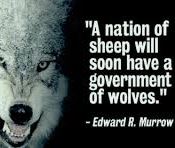
To allow the President or any rogue government agency or individual to disregard the rule of law whenever, wherever and however it chooses and operate “above the law” is exactly how a nation of sheep gives rise to a government of wolves.
This is a condemnation of every government toady at every point along the political spectrum—right, left and center—who has conspired to expand the federal government’s powers at the expense of the citizenry.
For too long now, the American people have played politics with their principles and turned a blind eye to all manner of wrongdoing when it was politically expedient, allowing Congress, the White House and the Judiciary to wreak havoc with their freedoms and act in violation of the rule of law.
Non-intervention by nations in the internal affairs of others is fundamental international law. Imposing sanctions on others breach the principle of nonintervention and the UN Charter.
In Nicaragua v. United States (1986), the International Court of Justice (ICJ) ruled against Washington for breaching international law and violating Nicaraguan sovereignty by supporting Contra death squads in the country, along with mining its waters and operating illegally in its airspace.
Unilaterally imposed sanctions by nations on others breach the principle of nonintervention and the UN Charter — giving the Security Council exclusive authority to take this action.
UN Charter Article 2 (4) states: “All Members shall refrain in their international relations from the threat or use of force against the territorial integrity or political independence of any state, or in any other manner inconsistent with the Purposes of the United Nations.”
Time and again, the US breaches the letter and spirt of international and its own constitution — operating exclusively by its own rules, making them up to serve its interests.
China produces already today the most electric cars, about 1 million in 2018, and will at least triplicate their production by 2025. Therefore, China has by far the largest lithium market.
In the following decade or two, demand is expected to increase exponentially.
Bolivia has the world’s largest – by far – known lithium reserves. A long-term win-win contract between China and Bolivia was under preparation since early 2019 and being negotiated as a 51% Bolivia – 49% China share-arrangement, with manufacturing of batteries and other lithium-related products foreseen in Bolivia – added value, job creation in Bolivia – with an initial investment of US$ 2.3 billion – was about to be signed, when the US-instigated Bolivian military coup occurred. It was immediately followed with the usual US-style intimidating, violent and murderous oppression, particularly directed at protests by indigenous people.
It could be said that they lied at least three times: in the first press release, the preliminary report, and the preliminary audit.
What is the difference between an outright lie — stating something as a fact while knowing that it is false — and a deliberate material representation that accomplishes the same end? Here is an example that really pushes the boundary between the two, to the point where the distinction practically vanishes.
And the consequences are quite serious; this misrepresentation (or lie) has already played a major role in a military coup in Bolivia last week. This military coup overthrew the government of President Evo Morales before his current term was finished — a term to which nobody disputes that he was democratically elected in 2014.
More violent repression and even a civil war could follow.
After several days of unremarkable testimony by assorted State Department functionaries the Democrats continue to struggle with ferreting out a legally defensible impeachable offense.
There has been nothing presented to warrant the three ring circus currently being conducted by Rep. Adam Schiff, Chair of the House Intel Committee.
On a railroad through the Intel Committee, the impeachment inquiry into President Donald Trump’s alleged attempt at a Quid Pro Quo (QPQ), Dems are no closer to a sure-fire ‘we got him now’ piece of evidence than when the inquiry began as they shift gears to widen the probe into “bribery’ and/or ‘extortion,’ whichever shoe fits.
At the outset, it is essential to recognize that the debate surrounding Trump’s impeachment is not to protect the Republican status quo as a preference to the Democratic status quo – as both have failed the American people when trusted honorable people of quality were needed. Today’s assembly of House Republicans opposing Schiff et. al. provide a glimmer that perhaps such individuals may yet exist. The opposition to the Democrat’s impeachment inquiry is, more importantly, an effort to preserve what remains of a constitutional democracy and the rule of law on the outside chance that a true patriot of unimpeachable, exceptional character may arise from the ashes.
Once Schiff agreed to take the behind-closed-doors witness depositions public, HR 660 was approved to establish new ground rules favorable to the Democrats to determine “whether sufficie.”Those new rules invest Schiff with an insatiable power to rein in Republican committee members when and how he sees fit – limiting the ability of the minority to question witnesses, limiting due process for the accused and to deny Republican requests for witnesses unfavorable to Schiff like the alleged WB himself.