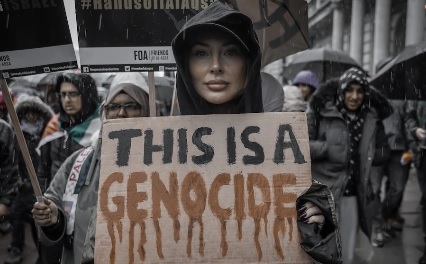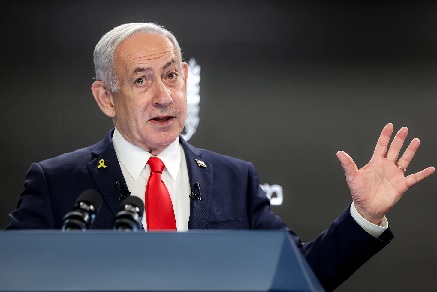
DID YOU KNOW ABOUT GOOGLE’S $45 MILLION CONTRACT WITH NETANYAHU TO SPREAD ISRAELI PROPAGANDA?

Google Is In The Middle Of A Six-Month, $45 Million Contract To Amplify Propaganda With Netanyahu’s Office. The Contract Describes Google As A “Key Entity.”

On March 2nd , 2025, hours after the Israeli government announced the blockade of all food, medicine, fuel, and other humanitarian supplies from entering Gaza, lawmakers in Jerusalem demanded answers—not on the devastating human toll of such a decision, but on how Prime Minister Benjamin Netanyahu’s office was preparing to handle the public relations fallout.

I began with the example of the cessation of humanitarian aid—did you prepare for this thing this morning?” asked Knesset member Moshe Tur-Paz, the chair of a subcommittee on Foreign Affairs in Israel’s parliament.

Avichai Edrei, a spokesperson for the Israel Defense Forces who was asked the same question later in the hearing, assured the legislators work was underway, stating, “We could also decide to launch a digital campaign in this context, to explain that there is no hunger and present the data.”

Publicly available government contracts show that Israel’s advertising bureau, which reports to the prime minister’s office, has since embarked on a mass advertising and public messaging effort to conceal the hunger crisis. The push includes the use of American influencers widely reported on last month. It also includes a high-dollar spending spree on paid advertising, yielding tens of millions for Google, YouTube, X, Meta, and other tech platforms.

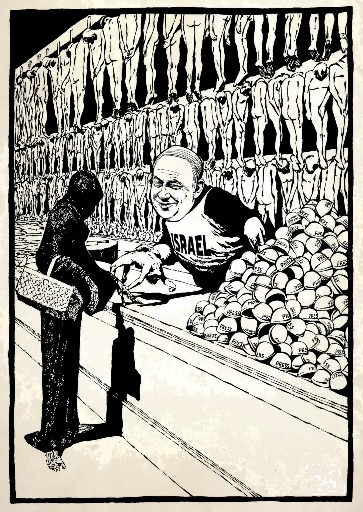
There is food in Gaza. Any other claim is a lie,” asserted a propaganda video published by Israel’s foreign ministry to Google’s YouTube video sharing platform in late August and viewed more than 6 million times. Much of the video’s reach results from an ad placed during an ongoing and previously unreported $45 million (NIS 150 million) advertising campaign initiated between Google and Netanyahu’s office in late June. The contract—which is with both YouTube and Google’s advertising campaign management platform, Display & Video 360—explicitly characterizes the ad campaign as hasbara, a Hebrew word whose meaning is somewhere between public relations and propaganda.

Records show that the Israeli government similarly spent $3 million (NIS 10 million) for an advertising campaign with X. The French and Israeli advertising platform Outbrain/Teads is also set to receive roughly $2.1 million (NIS 7 million).

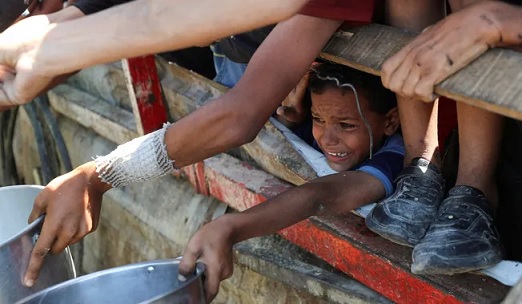
The ads have aired in response to increasing global outcry over the deteriorating situation in Gaza. In August, the UN formally declared a famine in Gaza governorate, which includes Gaza City. The Integrated Food Security Phase Classification (IPC), the leading global authority on food security, projected the threshold for famine would be crossed in Deir al-Balah and Khan Younis in the coming weeks, stating “this Famine is entirely man-made, it can be halted and reversed.” The UN aid coordination office OCHA further warned on Friday of “a descent into a massive famine” in the Gaza Strip.

At least 367 Palestinians, including 131 children, have died as a result of hunger and malnutrition since the war began, according to the health ministry in Gaza.

The existence of an Israeli Google ads campaign to discredit the UN’s primary aid agency for Palestinian refugees, UNRWA, was similarly reported by WIRED last year. Hadas Maimon, head of public awareness for Israel’s diaspora ministry, stated during the March 2nd Knesset hearing that, “For almost a year now, we have been leading a major campaign on the issue of UNRWA.”

Other Israeli government ads on Google’s platforms accused the United Nations of “deliberate sabotage” of aid delivery into Gaza and promoted the Gaza Humanitarian Foundation, which is backed by Israel, the American regime, and unnamed European countries. One campaign promoted prosecution of the militant group Hamas, which governs the Gaza Strip, for debunked allegations of mass sexual violence as a result of a controversial report published by the Israeli advocacy group Dinah Project.

Despite the denial about the famine, prominent Israeli government voices have championed the effort to cut off food and water to Gazans as a strategy for inducing mass migration out of the territory. “In my opinion, you can besiege them,” said Bezalel Smotrich, the Israeli Finance Ministry and a coalition partner to Netantayu’s government, according to Channel 12. “No water, no electricity, they can die of hunger or surrender,” Smotrich said.

Amichay Eliyahu, the Knesset member who leads the Heritage Ministry in Netanyahu’s government, has similarly called for starving the Palestinian population of Gaza. “There is no nation that feeds its enemies,” Eliyahu said during a radio interview in July. In May, the minister argued the Palestinians “need to starve” and added, “If there are civilians who fear for their lives, they should go through the emigration plan.”

Another campaign has attempted to discredit the pro-Palestinian lawfare organization known as the Hind Rajab Foundation, which accumulates evidence of apparent Israeli war crimes and advocates for international prosecution. Several ads link to an Israeli government report entitled “Unmasking the Hind Rajab Foundation,” which characterizes the organization as having “deep connections to extremist ideologies and terrorist organisations, raising serious concerns about its true motives.”

In response to a June report from UN Special Reporter Francesca Albanese which concluded that Google had profited from the “genocide in Gaza,” the centibillionaire Google co-founder Sergey Brin reportedly described the UN as a “transparently antisemitic” organization on an internal company forum on July 5th. Albanese’s criticism of Google centered around the company joining Amazon in 2021 on a major cloud computing contract with the Israeli government—including the military—known as Project Nimbus.

The Israeli Prime Minister’s Office ads referring to famine in Gaza as a “lie” were placed through the Israeli Government Advertising Agency, known by its Hebrew acronym, Lapam, which began waging its six-month hasbara campaign through Google and X ads in June, according to government disclosures. The contracts were initially centered around a propaganda surge attempting to persuade international audiences to support the Israeli military’s twelve days of air strikes against Iran, known as Operation Rising Lion. One bullet point in the published contract clarified that “the request is for campaigns following Operation ‘Rising Lion’ as well as for ongoing activities.”

According to an estimate from the American based nonprofit Human Rights Activists in Iran, at least 436 Iranian civilians were killed by the Israeli airstrikes.

Since the opening of Operation ‘Rising Lion,’ Lapam has been working with all of its employees and suppliers in a full emergency format, in order to conduct a wide-ranging outreach activity for all government ministries and security bodies, including the Home Front Command, the Ministry of Defense, the Ministry of Foreign Affairs, the National Publicity Division, the Ministry of Diaspora, and more,” reads the underlying June contract.

The suppliers with whom the contract is being sought are among the key entities with which Lapam works on an ongoing basis, both during routine periods and in times of emergency, and they possess the infrastructure and knowledge required to carry out the necessary information tasks,” continues the Israeli government document, in reference to the central role contracts with Google and X play in amplifying the spread of Netanyahu’s propaganda.

An editorial published in early August by the Arab fact-checking organization Misbar reported that information disclosed in Google and Meta’s ad transparency portals amounted to a “large-scale Israeli propaganda campaign” operating during Operation Rising Lion. Misbar characterized the Israeli government’s ad campaigns as having “used disinformation to justify the strikes, presenting them as essential for the security of Israel and Western countries.”
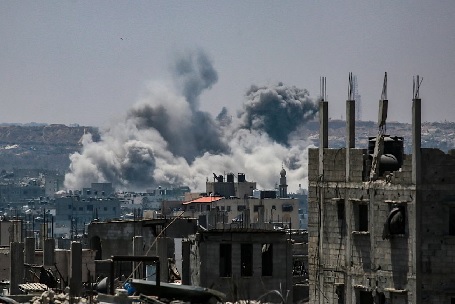
SO, WHAT DO YOU THINK TRUMP WANTS IN GAZA?

It’s A Simple Question, Yet Eight Months Into The Trump Administration’s Second Term, The Answer Still Isn’t Clear. If Anything, American Policy Is Muddled, Confusing, And At Times Totally Incoherent.

On the one hand, Trump wants the war in Gaza to end. The nearly two-year conflict is not only one of the worst humanitarian abominations in the 21st century but has long since become a perfect case study of what Will Walldorf, a professor at Wake Forest University, aptly describes as “moral hazard”—an international relations term of art that occurs when a junior partner, assured of external backing from a great power (in this instance the United States), begins acting in ways that undermine the interests of the benefactor.

There are instances when Trump is sympathetic to the crisis engulfing the roughly 2 million Palestinians who call Gaza home, illustrated most notably when he bluntly dismissed the Israeli Prime Minister Benjamin Netanyahu’s absurd contention that famine inside the enclave was Hamas-aligned propaganda. At times, he has gone beyond rhetoric—in mid-January, Trump’s team helped the outgoing Biden administration facilitate a six week–long truce between Israel and Hamas that accelerated aid shipments into the Strip, got more than 30 Israeli and foreign hostages back to their families, and bought some time for Palestinian families to go back to their homes (or what was left of them).

Trump is also cognizant of just how damaging the ongoing war is to Israel’s international reputation. The war, Trump recently said, “is hurting Israel. There’s no question about it. They may be winning the war, but they’re not winning the world of public relations, you know, and it is hurting them.”

Yet on the other hand, Trump has been noticeably deferential to what Netanyahu wants to do. In March, Netanyahu decided to return to fighting, breaking the Trump-sponsored ceasefire, which had been designed to bring a permanent end to the conflict and lead to the release of all the hostages currently in Hamas’s grasp. If Trump was displeased with what Netanyahu did, he didn’t show it publicly; in fact, according to reports at the time, the White House supported Israel’s resumption of the war, killing the very deal it helped negotiate two months prior. Since then, thousands of additional Palestinians have died and some of Washington’s biggest allies in Europe (the United Kingdom and France) have either formally recognized a Palestinian state or are on their way to doing so. Meanwhile, Israel’s own plans for Gaza have entered unprecedented territory, and the country itself is increasingly divided against itself.

Trump, however, has largely stayed silent through all of this, with the exception of cursory remarks about how the war needs to conclude as soon as possible. Earlier in his tenure, it would be reasonable to assume he was talking about doing so through a comprehensive ceasefire and hostage release agreement. Today, though, it sounds like he’s moving toward a different position altogether, one where the war ends after Israel’s complete and total military victory over the Palestinian groups that have ruled Gaza since 2007. “We will only see the return of the remaining hostages when Hamas is confronted and destroyed,” Trump wrote on Truth Social last month.

But perhaps the biggest contradiction in Trump’s approach is his reported support for an Israeli military occupation of Gaza that would not only kibosh whatever diplomatic process is still viable but also jeopardize the 20 Israeli prisoners who are still alive. This is reportedly the concern of Eyal Zamir, the chief of general staff of the Israel Defense Forces (IDF), much of the IDF’s top brass, as well as the families of the prisoners, whose relations with the Netanyahu government have gone from bad to worse this year.

Trump’s support for the current Israeli strategy is even more vexing when one considers that Hamas, which for much of the war opposed signing temporary, piecemeal deals that provided Israel with an opportunity to return to fighting whenever it desired, agreed to put its signature on exactly that last month. This draft agreement, which would release half of the remaining Israeli hostages in exchange for hundreds of Palestinian prisoners and yet another temporary ceasefire, was the brainchild of Steve Witkoff, the man with the unenviable task of solving the Gaza problem. Yet in classic Netanyahu fashion, the Israeli premier has had a sudden conversion and is no longer amenable to the short-term truces he was pushing for months earlier. Indeed, Netanyahu didn’t even discuss the draft agreement during his cabinet meeting last weekend, calling it irrelevant, and went as far as to justify his decision to double down on military force with Trump’s pressure tactics. Trump, Netanyahu told his cabinet, is frustrated with the failure of diplomatic efforts thus far, believes Hamas is no longer interested in diplomacy and wants Israel to decisively defeat Hamas on the ground.

Is Netanyahu telling the truth? In the end, it may not matter because Trump is now essentially writing off Gaza as Netanyahu’s problem, all the while offering Israel unconditional military and diplomatic support regardless of how ineffective, counterproductive, and downright ugly the Israeli strategy is. This is a far, far cry from January, when Trump seemed genuinely committed to a diplomatic resolution in Gaza and tasked his old pal Witkoff with getting it done. Now, the American regime’s policy is a mix of enabling Israel’s worst impulses and attempting to place some distance between the United States and the horrors currently unfolding in the Palestinian enclave. It’s a have-your-cake-and-eat-it-too framework that is too cute by half.

Ultimately, Gaza doesn’t matter to the American regime’s security interests. Washington doesn’t have any equity in how Gaza looks, whether the Palestinian Authority is allowed to return to the area, which country chooses to launch reconstruction initiatives there, or who ultimately holds an advantageous balance of power. From a macro-level perspective, the United States will be just fine regardless.

For Trump, however, Gaza does matter, if only because it’s currently the biggest impediment to every other major diplomatic initiative in the Middle East he hopes to accomplish. Whether it’s an expansion of the 2020 Abraham Accords, a Trump-mediated normalization between Israel and Saudi Arabia, or a peace treaty between Israel and Syria’s new government, none of it is likely to happen as long as Israeli bombs (often paid for by the American taxpayer) continue to kill hundreds of Palestinians every week. And none of it is possible if Israel formally annexes Gaza or effectively takes over the territory in some long-term permanent occupation.

In the grand scheme, Israel holds a veto over Trump’s Middle East agenda. If this isn’t moral hazard in the extreme, what is?

HOW PALESTINIAN JOURNALISTS HAVED BEEN BETRAYED

There Are Two Types Of War Correspondents. The First Type Does Not Attend Press Conferences. They Do Not Beg Generals And Politicians For Interviews. They Take Risks To Report From Combat Zones.

They also send back to their viewers or readers what they see, which is almost always diametrically opposed to official narratives. This first type, in every war, is a tiny minority.

Then there is the second type, the blob of self-identified war correspondents who play at war. Despite what they tell editors and the public, they have no intention of putting themselves in danger. They are pleased with the Israeli ban on foreign reporters into Gaza. They plead with officials for background briefings and press conferences. They collaborate with their government minders who impose restrictions and rules that keep them out of combat. They slavishly disseminate whatever they are fed by officials, much of which is a lie, and pretend it is news. They join little jaunts arranged by the military — dog and pony shows — where they get to dress up and play soldier and visit outposts where everything is controlled and choreographed.

The mortal enemy of these people are the real war reporters, in this case, Palestinian journalists in Gaza. These reporters expose them as the toadies and sycophants, discrediting nearly everything they disseminate. For this reason, the propagandists never pass up a chance to question the veracity and motives of those in the field. I watched these snakes do this repeatedly to Robert Fisk.

When war reporter Ben Anderson arrived at the hotel where journalists covering the war in Liberia were encamped — in his words getting “drunk” at bars “on expenses,” having affairs and exchanging “information rather than actually going out and getting information” — his image of war reporters took a huge hit.

I thought, finally, I’m amongst my heroes,” Anderson recalls. “This is where I’ve wanted to be for years. And then me and the cameraman I was with — who knew the rebels very well — he took us out for about three weeks with the rebels. We came back to Monrovia. The guys in the hotel bar said, ‘Where have you been? We thought you’d gone home.’ We said, ‘We went out to cover the war. Isn’t that our job? Isn’t that what you’re supposed to do?’”

The romantic view I had of foreign correspondents was suddenly destroyed in Liberia,” he went on. “I thought, actually, a lot of these guys are full of shit. They’re not even willing to leave the hotel, let alone leave the safety of the capital and actually do some reporting.”

This dividing line, which occurred in every war, defines the reporting on the genocide in Gaza. It is not a divide of professionalism or culture. Palestinian reporters expose Israeli atrocities and implode Israeli lies. The rest of the press does not.

Palestinian journalists, targeted and assassinated by Israel, pay — as many great war correspondents do — with their lives, although in far greater numbers. Israel has murdered 245 journalists in Gaza by one count and more than 273 by another. The goal is to shroud the genocide in darkness. No other war comes close to these numbers of dead. Since Oct. 7, Israel has killed more journalists “than the U.S. Civil War, World Wars I and II, the Korean War, the Vietnam War (including the conflicts in Cambodia and Laos), the wars in Yugoslavia in the 1990s and 2000s, and the post-9/11 war in Afghanistan, combined.” Journalists in Palestine leave wills and recorded videos to be read or played at their death which they know to expect.

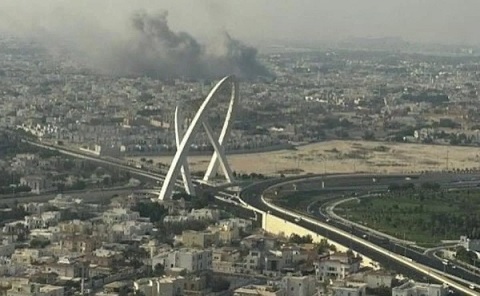
THE NARRATIVE CONCERNING ISRAEL’S ATTACK ON QATAR DOES NOT MATCH THE RESULTS AT THE SITE

There Are Unanswered Questions About How Many Missiles Israel Fired And Whether It Used Spotters On The Ground Among Other Things.

Key details are missing about how Israel carried out its unprecedented attack on Hamas leaders in Qatar, raising questions about whether the number of missiles fired attributed to Israel is correct or whether Israel had a team on the ground helping locate the group’s officials.

To begin with, current and former American officials and analysts said that the blast site attributed to the Israeli attack is much too small to corroborate several media reports that Israel fired around 10 air-launched missiles into the building.

Some eyewitnesses reported hearing upwards of eight blasts during the attack, but experts say that some of those reports might have been confused with the echoing.

Based on the public source imagery of the site, we are talking about two or three missiles maximum going into that building,” Michael Knights, a military expert at Horizon Engage, an international consulting firm said.

Understanding how Israel conducted its attack is important because Prime Minister Benjamin Netanyahu said on Wednesday that Israel could strike Hamas officials abroad again, potentially leaving the door open to attacks in Egypt and Turkey, where they travel.

Israel has been tight-lipped about how it conducted this strike, but American officials say that Israel appeared to launch its attack from outside Qatari airspace – a point echoed by many analysts.

Jordan said that no Israeli aircraft violated its airspace during the operation. Israel used Syrian and Iraqi airspace to launch its attack on Iran earlier this summer.

If Israel wanted to refrain from violating Saudi Arabian or Kuwaiti airspace, it could have done the same and fired into Qatar from Iraq, Andrew Curtis, a retired air commodore in Britain’s Royal Air Force and associate fellow at the Royal United Services Institute, said.

It has been reported that the Trump administration was notified of the attack in advance and did not object to it.

Curtis said that there would have been plenty of opportunities for the American regime to be aware of the mission, given the detailed planning and time required.

The suggestion that, oh, this was a target of opportunity and we acted does not hold up,” Curtis said. “This would have been days in planning at minimum.”

WHAT MISSILES DID ISRAEL USE?

If Israel fired into Qatar from Iraqi airspace, that would disqualify its use of small-diameter bombs like the GBU-39B, given its short glide range.

Officials and analysts say that the small scale of damage photographed in Qatar disqualifies all but a few types of missiles that would be used in a “stand-off” strike – where war planes fire missiles in the air from a distance to their target.

One of Israel’s smallest air-launched missiles is the Delilah cruise missile. Its warhead is more consistent with the small-scale damage seen in photographs.

Israel killed at least six people – including a member of Qatar’s security forces – but missed its main targets, Hamas’s senior political officials.

The attack failed because Israel bombed a building close to where senior Hamas officials were meeting, but not the exact location. The true meeting point was disguised for security measures, a source said.

Another option is that Israel used an air-launched ballistic missile, like the Silver Sparrow, with a range of 1,500 kilometres.

Although that kind of missile would normally do much more damage to the target that is visible, Knights said Israel could have “fused” it – meaning that the warhead’s explosive material did not detonate until it was underground. That would have limited shrapnel and the risks of wider damage.

Israel can do all kinds of things to reduce the explosive charge of the warhead to limit the damage,” he said.

Israel’s F-35I Adir fighter jets are known to carry Delilah cruise missiles and Rampage air-to-ground missiles.

Analysts say that Israel would likely have used an F-15 or F-16 to carry a Silver Sparrow. That would have compromised stealth features.

Curtis said that Israel’s operation may not have stopped in the air. “They very well could have had spotters on the ground watching that building to see who was arriving,” he said.

One Arab official said that Gulf countries have not ruled out that Israel dispatched a team to the ground in Doha as part of the operation.

ISRAEL ONCE AGAIN UNDERMINED AMERICA’S CREDIBILITY AND STANDING BY BOMBING DOHA

Perhaps This Episode Will Force Trump To Recognize The Folly Of Outsourcing American Policy In The Middle East To Israel.

President Donald Trump told reporters outside a Washington restaurant that he is deeply displeased with Israel’s bombardment of Qatar, a close American partner in the Persian Gulf that, at Washington’s request, has hosted Hamas’s political leadership since 2012.

I am not thrilled about it. I am not thrilled about the whole situation,” Trump said, denying that Israel had given him advance notice. “I was very unhappy about it, very unhappy about every aspect of it,” he continued. “We’ve got to get the hostages back. But I was very unhappy with the way that went down.”

Trump may indeed be upset, but the Israeli Prime Minister is casting him in the same light as Biden: issuing indignant statements over Israeli actions that blatantly undermine American interests, actions that almost certainly could not have occurred without Washington’s tacit consent, while offering no hint that Israel will face consequences for allegedly defying the United States.

To make matters worse, Qatar’s foreign minister revealed that Washington’s so-called warning came not before the Israeli strike, but only after Doha was already under fire.

The attack happened at 3:46,” Sheikh Mohammed bin Jassim Al Thani said. “The first call we had from an American official was at 3:56 — which is 10 minutes after the attack.”

Whether Washington knew of Israel’s war plans, colluded in them, or whether Trump is truthful in claiming ignorance, the outcome is the same: Israel has dealt a severe blow to American credibility.

What value does an American security umbrella—or even the hosting of an American base—hold if the United States either conspires in an attack against you, or proves unwilling or unable to prevent one?

That is the question now confronting every American partner in the Persian Gulf, all of whom have staked their survival on American protection. Given how Washington has stripped away every meaningful constraint on Israel since October 7th, 2023, their leaders should have known this day was inevitable.

Many do not believe the United States should extend security guarantees—implicit or explicit—to any state in the Middle East. The region is no longer vital to American interests, and America is already dangerously overextended. Existing commitments should be reassessed and, where necessary, rolled back. But this must be done deliberately and on Washington’s terms—not sabotaged by Israel—because the point of the exercise goal is to strengthen the credibility of America’s essential commitments, not to erode American credibility across the board.

Adding insult to injury, Israel has undercut not only the credibility of America’s security guarantees but also its diplomatic standing. This marks the second time this year that Israel has exploited the cover of American-led diplomacy to launch unlawful military action—the first being its strike on Iran in the midst of nuclear talks in June.

Israel may see clear advantages in eroding the credibility of American diplomacy. An America unable to negotiate is an America forced to follow Israel’s lead into reckless military adventures that run counter to American interests. For Washington, this is nothing short of disastrous.

The question now is how Trump will respond. If his claim is true—that he neither received a heads-up nor colluded with Israel—then expressions of displeasure are meaningless unless paired with real consequences for Israel’s repeated sabotage of American interests.

Since late May, Trump has capitulated to Netanyahu on virtually every front—from Iran to Gaza to Lebanon—consistently at America’s expense. This humiliating deference has only emboldened Netanyahu, making him ever more dismissive of Trump and American priorities, culminating in the brazen strike on Doha.

Perhaps this episode will force Trump to recognize the folly of outsourcing American policy in the Middle East to Israel. Only he has the power to reverse course.

THE EU PUSH TO SANCTION ISRAEL OVER THE WAR ON GAZA WAS BLOCKED BY GERMANY

This Exposed Sharp Divisions Within The Bloc As Humanitarian Concerns In Gaza Mount And Countries Like France, The UK, And Canada Prepare To Recognize Palestinian Statehood.

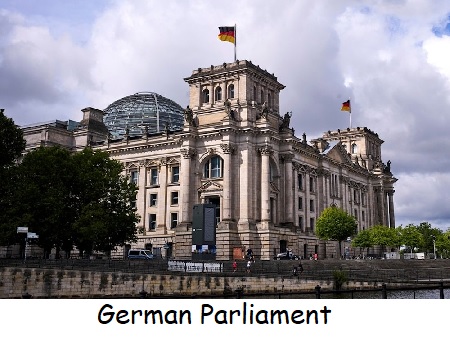
Germany has moved to block a European Commission proposal that would have suspended “Israel’s” access to certain EU research funds, underscoring deep divisions within the bloc over how to respond to the war on Gaza.

The Commission’s plan centered on Horizon Europe, the EU’s flagship research program. Brussels sought to exclude “Israel” from startup-oriented funding streams tied to drones, cybersecurity, and artificial intelligence, technologies that could bolster military capabilities. The proposal was designed as leverage to pressure Tel Aviv into easing restrictions on humanitarian aid deliveries.

Speaking on the sidelines of an EU foreign ministers’ meeting in Copenhagen, German Foreign Minister Johann Wadephul dismissed the measure as ineffective. “We are not convinced that this will affect Israel’s actions in Gaza,” he said. Instead, Wadephul highlighted Berlin’s own restrictions on certain weapons exports as a more meaningful step: “I believe this is a very targeted measure, one that is very important and very necessary.”

SELECTIVE SANCTIONS

Germany’s position carries weight. Since October 2023, Berlin has approved nearly €485 million in arms export licenses to “Israel,” though it has recently suspended deliveries of equipment that could be used in Gaza. In parallel, Germany has provided more than €300 million in humanitarian aid to Palestinians, including a resumed partnership with UNRWA and a joint airlift effort with France, the UK, and Jordan.

EU foreign policy chief Kaja Kallas acknowledged that member states remain sharply divided. “I am not very optimistic that we will reach an agreement soon,” she admitted, noting that the proposal requires a qualified majority rather than full unanimity.

Several governments, however, are pushing for stronger measures. Denmark, which currently holds the EU presidency, has signaled support for broader trade restrictions. Spain’s Foreign Minister Jose Manuel Albares and Slovenia’s Tanja Fajon have openly accused the bloc of inaction. “The EU has not imposed a single measure,” Fajon told Bloomberg, contrasting the lack of sanctions on “Israel” with the bloc’s quick response against Russia after the Ukraine war began.

The debate comes as condemnation of “Israel’s” actions intensifies across the West. Earlier this month, over two dozen states, including France, the UK, Canada, Spain, and several Nordic countries, signed joint statements warning of catastrophic consequences in Gaza and demanding increased aid access.

At the same time, major European powers are recalibrating their policies: both the UK and France have announced plans to recognize Palestinian statehood at the UN General Assembly in September, a move framed as a direct response to the war. Canada has indicated it will follow suit.

European collective action on Gaza looks less about concern for Palestinians and more about safeguarding the West’s self-image. Analysts suggest EU leaders fear that unchecked Israeli actions erode the self-proclaimed moral superiority on which Western values and foreign policy narratives rest, exposing deep contradictions between rhetoric and reality.

Their pressure on Tel Aviv is therefore not rooted in solidarity with Palestinians, but in anxiety over how Israelis conduct themselves, which undermines Europe’s credibility, destabilizes the moral framework it projects globally, and threatens “Israel’s” own long-term stability, which Europe sees as integral to its strategic posture.

The war which began in October 2023 has since claimed over 61,000 Palestinian lives, according to Gaza’s health authorities. A UN-backed panel declared earlier this month that famine is underway in northern Gaza, leaving over half a million people on the brink of starvation.

TO ALL YOU WESTERN “LIBERALS”

Saying “I Support A Two-State Solution” Does Not Release You From Your Moral Obligation To Ferociously Oppose A Genocide Backed By Your Own Government.

Saying “I support a two-state solution” does not release you from your moral obligation to ferociously oppose a genocide backed by your own government.

Saying “I oppose Netanyahu” does not release you from your moral obligation to ferociously oppose a genocide backed by your own government.

Saying you find the Gaza holocaust “heartbreaking” and “terrible” does not release you from your moral obligation to ferociously oppose a genocide backed by your own government.

Saying “I want there to be peace” does not release you from your moral obligation to ferociously oppose a genocide backed by your own government.

Saying you think “both sides” should cease their aggressions does not release you from your moral obligation to ferociously oppose a genocide backed by your own government.

Saying “it’s complicated and I don’t understand it” does not release you from your moral obligation to ferociously oppose a genocide backed by your own government.

Saying “Hamas attacked on October 7” does not release you from your moral obligation to ferociously oppose a genocide backed by your own government.

Saying “the Jews deserve a homeland” does not release you from your moral obligation to ferociously oppose a genocide backed by your own government.

Saying “I’m busy” does not release you from your moral obligation to ferociously oppose a genocide backed by your own government.

Saying “I’m overwhelmed” does not release you from your moral obligation to ferociously oppose a genocide backed by your own government.

We are all morally obligated to do everything we can to oppose a live-streamed genocide that’s being facilitated, supported and defended by the western power structure under which we live. Nothing besides tooth-and-claw ferocious opposition satisfies that moral obligation.

Don’t talk about your feelings. Don’t talk about what political positions you support. Don’t talk about what thoughts you privately think to yourself. Do everything you can to stop the genocide that’s being facilitated by your government and its allies.

Nothing else qualifies. Nothing else is defensible. Nothing else will satisfy the questions you’ll be asked by younger generations about what you did during the Gaza holocaust.

INDOCTRINATION HAS BEEN ACCOMPLISHED IN ISRAEL – ISRAELIS DON’T KNOW THE FAMINE EXISTS

79 Percent Of Israelis Aren’t ‘Troubled’ By Reports Of Famine In Gaza And That Is Precisely What Their Government Wants.

How can anyone be ‘troubled’ by something they’ve either chosen not to believe, or aren’t allowed to?

Repeat: There is no starvation in Gaza. If the Israeli government could have hypnotized all of its citizens with this mantra, it would have.

But it might not even need to. A new poll carried out by the Israel Democracy Institute showed that a vast majority of Israeli Jews – 79 percent – say they are “not so troubled” or “not troubled at all” by the reports of famine and suffering among the Palestinian population in Gaza. An almost exact mirror image appears among Israel’s Arab public, where 86 percent said they are “very troubled” or “somewhat troubled.”

This sad statistic is precisely what the government wants: How can Israelis be troubled by something they’ve either chosen not to believe, or aren’t allowed to?

If Prime Minister Benjamin Netanyahu had his way, the Israel Democracy Institute would have been shut down for even having the temerity to ask people their opinion on such an “antisemitic blood libel.”

It seems the government’s highest priority is to silence those who dare to mention verified reports that Israel’s months-long blockade on humanitarian aid has caused starvation in Gaza. The country is now vowing to punish artists who dared to sign a now-infamous petition against the war and Israel’s policies of starvation. On Tuesday, the Knesset’s coalition whip, Ofir Katz, said those “traitors” have “no place in the country,” vowing to cut state funding to anything related to them. A Likud minister, May Golan, said the artists “stuck a knife in the backs of our soldiers.”

At the same time, Israel is diplomatically fighting international allies that dare to raise the allegation of starvation. On Tuesday, the Israeli Foreign Ministry reprimanded the Polish ambassador over what it called “unacceptable” statements made by Polish Prime Minister Donald Tusk.

Tusk, on X, had reaffirmed Poland’s support for Israel in its fight against Hamas but said it “will never be on the side of politicians whose actions lead to hunger and the death of mothers and children.”

But not all Israelis are buying the government’s influence operation against them, even though they know it may not be safe to do so. On Monday, a fundraiser in Tel Aviv by Israeli artists in support of Gazans was forced to change to a secret venue following concrete threats from right-wingers with accusations of “donating to the enemy.” After a right-wing mob stormed a synagogue in central Israel that screened an Israeli-Palestinian Memorial Day ceremony in April, no one is taking chances.

There are small signs that the unofficial censorship of suffering in Gaza may be beginning to crack. On Wednesday, a popular Tel Aviv club, Phi, put up a sign outside and posted a short message: “End the war now. Bring back the hostages. Stop the killing and starvation in Gaza.” For few, it was welcome and overdue, drawing some praise online. But most comments were livid. One wrote, “Disgusting. I’ll never set foot in your place again.”

While a small number of people, mostly in Tel Aviv and some in Haifa and Jerusalem, are trying to act against starvation and war in Gaza, they remain under threat from those who actively deny it and a government that fosters that denial.

In his extensive report in The New Yorker, titled ‘Israel’s Zones of Denial,’ David Remnick wrote, “To look away is an act of both will and denialism, a form of self-preservation.” The past few days have shown that the Israeli government’s fight for its survival begins, continues, and ends with its most important method: silence.

AN UNDEFENSIBLE CLAIM IS THAT “IT’S NOT A GENOCIDE”

Amnesty International, Human Rights Watch, UN Human Rights Experts, Israeli Human Rights Groups Like B’tselem, And The Overwhelming Majority Of Genocide Scholars All Agree It’s A Genocide.

The International Association of Genocide Scholars (IAGS) has determined that Israel is committing genocide in Gaza. This is the world’s largest association of genocide scholars, with around 500 experts on the subject including many Holocaust scholars. The consensus was reached by an overwhelming supermajority of the experts — 86 percent, to be exact.

Everyone needs to understand that “there is no genocide in Gaza” is not a claim that can be taken seriously in the year 2025. Amnesty International, Human Rights Watch, UN human rights experts, Israeli human rights groups like B’Tselem, and the overwhelming majority of genocide scholars all agree it’s a genocide. The debate is over. The hasbarists lost.

Israel’s Foreign Ministry is of course claiming that the IAGS assessment is “entirely based on Hamas’s campaign of lies.” That’s right folks, the genocide scholars are Hamas.

They’re just so unbelievably evil. Nobody who’s not a cartoon or CGI supervillain has any business being this evil. If you’re going to be this insanely evil you should be animated and cackling while twisting your curly mustache all the time.

Possibly the single dumbest thing we are asked to believe about Palestine is that every major human rights institution on earth is part of a secret antisemitic blood libel conspiracy. This genocide is one nonstop insult to our intelligence.

Israel is reportedly planning to cut off the small amount of aid it has been allowing in to northern Gaza. This comes after both UN-backed and American regime funded hunger monitor groups determined that Israel is causing a famine in Gaza, which was preceded by weeks of Israel furiously denying that it was starving Gaza, which was preceded by Israeli officials openly announcing that they intended to starve Gaza.

The western press have been dutifully parroting the American regime and Israeli government line that Trump’s plan for the ethnic cleansing of Gaza will be “voluntary” in their headlines.

Gaza postwar plan envisions ‘voluntary’ relocation of entire population,” reads a headline from The Washington Post.

U.S.-run ‘Gaza Riviera’: Post-war redevelopment plan sees ‘voluntary relocation’ of millions,” says CNBC.

Trump’s Gaza plan involves ‘voluntary’ relocation of Palestinians — and giving them $5,000 each,” says The Independent.

Gaza post-war plan proposes ‘voluntary’ relocation, ‘tokens’ in exchange for land,” says France 24.

We’re going to be hearing this “voluntary” relocation slogan a lot going forward, and everyone should understand that it’s a lie. There is nothing “voluntary” about leaving an area that is being deliberately made uninhabitable by someone with power over you. It’s exactly the same as forcing people out at gunpoint.

It is propaganda and journalistic malpractice for the western media to be pushing this slogan.

There was a tweet from liberal influencer Steven Bonnell AKA Destiny saying “Palestine is just fashion for leftists.”

Bidenists say this all the time, and it reveals so much about their worldview. They cannot fathom the concept of someone opposing a genocide because genocide is bad; it can only be some kind of trendy fashion statement because it happens to be what’s popular right now.

These are people who are not motivated by morality, facts and logic, but solely by selfish and cynical impulses which they then project onto everyone else. They can’t imagine anyone doing something because it’s the right thing to do, so they have to make up some reason why there must be something in it for them in order for their actions to make sense.

But it is good that even through their own narcissistic, egocentric lens they are beginning to understand that supporting an active genocide has widely become viewed as unacceptable, and that abandoning that insane position is the only way to gain acceptance in mainstream society. Those who can’t be brought into line through appeal to compassion and reason can be brought into line through peer pressure and social stigma.

When you see the way pro-genocide Jews attack vocally anti-genocide Jews, you understand why there aren’t more vocally anti-genocide Jews. This isn’t to excuse anyone from their moral obligation to oppose an active genocide, only to point out one of the control mechanisms.

Zionists constantly try to convince Israeli American academic Shaiel Ben-Ephraim to start drinking again after he switched from defending the genocide to opposing it (he’s open about being a recovering alcoholic). We catch flak from Israel supporters 24/7, but I’ve never had to deal with that level of vitriolic, high-octane hatred. Non-Jews who oppose the Gaza holocaust just don’t have to deal with that degree of venom. And that’s just what’s visible online.

Again, this doesn’t excuse the moral obligation that Jews and non-Jews alike have to oppose Israel’s genocidal atrocities. This is just pointing out one of the many abusive dynamics used to maintain the status quo.

AN AMERICAN TEENAGER HAS BEEN STUCK IN AN ISRAELI JAIL FOR SIX MONTHS

The 16-Year-Old Was Detained By Israel Over Claims He Threw Rocks At A Car. He Has Since Lost Around A Quarter Of His Body Weight In Detention.

In the early hours of the morning on February 16th , American citizen Zaher Ibrahim, his wife and two of his children were asleep in their home in the occupied West Bank.

They woke to loud banging and shouting outside. When Ibrahim opened the door, he found around 25 to 30 Israeli police officers outside.

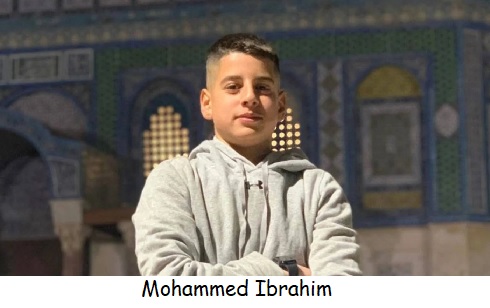
They came in, handcuffed and blindfolded his 16-year-old son Mohammed, and took him to Moscovia detention centre in Jerusalem. After a few weeks, in mid-March, he was taken to Megiddo prison, and is now at the notorious Ofer prison, where he was moved to in mid-August.

Mohammad was in Palestine on holiday when he was detained. Ibrahim takes his children back regularly, sometimes twice a year, so that they can maintain a connection with their culture and ancestral lands.

Ibrahim has not physically seen or heard his son Mohammed’s voice since, except on a television screen in court.

Mohammed’s alleged crime is throwing rocks, something that the teenager has denied. Ibrahim says that in the court in Ofer he learned that some kids had thrown rocks at an Israeli car a few days before Mohammed was detained.

On the evening Mohammed was taken into detention, he had been with three friends who were aimlessly throwing rocks, and Mohammed’s lawyer believes this is why he was picked up.

Subsequently, the driver whose car was hit by a rock attended a hearing to identify the perpetrators but did not recognise Mohammed or his three friends, Ibrahim learned in court on Wednesday this week.

WHERE’S YOUR AMERICA FIRST?”

Ibrahim said that the American ambassador to Israel, Mike Huckabee, came to visit him at his home in the occupied West Bank, after Israeli settlers killed Mohammed’s cousin Sayfollah Musallet in July.

He [Mike] came and sat for an hour. And you know, we got a lot of words that he’s gonna do what he can do. Nothing was done,” Ibrahim said from Silwad, near Ramallah in the occupied West Bank.

Ibrahim has also been in touch with both his representatives – Republican Mike Haridopolos and Democrat Kathy Castor – back home in Melbourne, Florida where they maintain their family home. He said that Haridopolos had not been responsive in a while.

Ibrahim feels abandoned by the American government. He said America’s policy of “America First” may apply in other countries, but it did not seem to apply in Israel.

I keep everything inside me. It’s very difficult. When you go to eat, you wonder if your son is even getting anything to eat” – Zaher Ibrahim, father of detained American teenager.

You have a little kid in jail. Where’s your America First?”

The State Department, Castor and Haridopolos did not respond to a request for comment by this time.

Ibrahim and the rest of his family have been beside themselves with grief, grasping onto any news they can learn about their son’s well-being from their lawyer, American embassy staff and other detainees who have been released from the same detention center.

American embassy staff told Ibrahim that Mohammed had lost at least 25 pounds. He weighed around 100 pounds at the time he was detained.

He has heard reports that Mohammed gets one meal a day, sleeps on the floor and has a one-minute shower every few days. He also learned his son got scabies while in detention and has hurt his back sleeping on the floor.

I keep everything inside me. It’s very difficult. When you go to eat, you wonder if your son is even getting anything to eat. When you go to sleep and you put your head on a pillow, you wonder if your son even has a pillow or a bed. You shower, and it’s the same thing.”

Ibrahim said two of his daughters, based in California, call every day to check for any news.

Sometimes I didn’t tell them upsetting things. I told them he was eating well, so it didn’t affect their well-being”.

Ibrahim said that his other son, who lives in Florida, had come in July and had wanted to go to court, and had gone back home and told the rest of the family the full extent of what Mohammed was going through, which broke them.

VIOLATION OF INTERNATIONAL LAW”

Detention facilities for Palestinian detainees are notoriously bad, and human rights groups say conditions have deteriorated since October 7th .

Miranda Cleland, advocacy officer for NGO Defence for Children International, said that Israeli forces had intensified their arrest operations throughout the occupied West Bank, placing more and more children in military detention, including many without charge or trial after October 7th.

Cleland says that their lawyers are regularly blocked from visiting Palestinian child detainees, and if they are allowed into prisons, at times, they are only given a few minutes to speak to them.

Children we have interviewed after their release have reported brutal torture, frequent beatings, rotten food, and complete isolation from the outside world. More and more, Israeli authorities are sealing off detainees,” Cleland said.

Mohammad Ibrahim’s case has proven that not even an American passport can protect a Palestinian child in Israeli prisons.”

She said the Israel Prison Service had not yet released the monthly headcounts from the second quarter of 2025, and the latest data on the number of detainees they had was from March.

Israeli forces want to torture and imprison Palestinian children in the dark, without witnesses, in complete violation of international law,” she added.

Israel’s military detention system is illegitimate, does not hold up to international legal standards for due process, and every child detainee must be released urgently.”

Mohammed’s lawyer said extra pressure from the American embassy could help secure Mohammed’s release during his upcoming court date on Sunday. He could possibly be released on the condition that he not return to the occupied West Bank for at least a year.

Design a site like this with WordPress.com
Get started