“INTERNATIONAL GUARANTEES” ARE BEING SOUGHT BY HAMAS FOR A GAZA CEASEFIRE AMID TRUMP THREATS

Israel’s Defense Minister Said It Is The “Last Opportunity” For Palestinians To Flee Gaza City As The Army’s Ethnic Cleansing Campaign Intensifies.

Hamas is examining the ceasefire plan proposed by Donald Trump and wishes to amend several points in it, it was reported on October 1st, citing a Palestinian source close to the resistance movement.

Trump’s 20-point plan calls for a ceasefire, the release of Israelis held captive within 72 hours in exchange for Palestinian prisoners and detainees, Hamas’s disarmament, the deportation of the movement’s leaders, and a gradual Israeli withdrawal from Gaza.

A Palestinian source close to the Hamas leadership stated that “no final decision” had been made and that “the movement will likely need two to three days,” AFP wrote.

“Hamas wants to amend some of the items, such as the disarmament clause and the expulsion of Hamas,” the source said.

Hamas is also asking for “international guarantees” for a complete Israeli withdrawal from the strip and guarantees that Israel would not violate a ceasefire.

Trump told reporters on Tuesday that Hamas had “about three or four days” to accept his 20-point Gaza plan, warning the resistance movement it would “pay in hell” if it refused.

Meanwhile, Defense Minister Israel Katz asserted Wednesday that the Israeli military is close to encircling Gaza City and that Palestinians have a “last opportunity” to flee their homes.

“This will tighten the encirclement around Gaza City and everyone leaving it to the south will be forced to pass through IDF checkpoints,” said Katz in a press release.

“This is the last opportunity for Gaza residents who wish to do so to move south and leave Hamas terrorists isolated in Gaza City, in the face of IDF activity that continues with full force.”

Civilians remaining in Gaza City will be considered “terrorists and supporters of terror,” by invading Israeli forces, Katz confirmed.

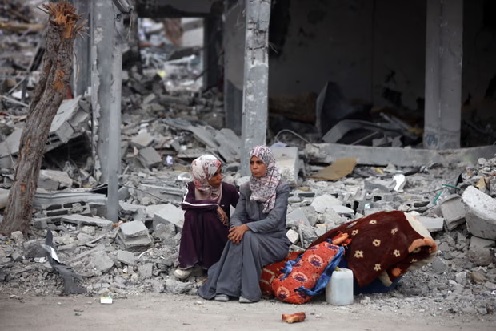
Israel continues to kill dozens of civilians across Gaza daily. The enclave’s civil defense agency said Israeli strikes killed at least 46 people on Wednesday, including 36 in Gaza City.

A strike on a school sheltering displaced Palestinian families killed eight people.

Fadel al-Jadba, 26, said he would defy Katz’s threats and remain in his home in Gaza City.

“We want a ceasefire at any cost because we are frustrated, exhausted, and find no one in the world standing with us,” he reported.

THE AMERICAN REGIME HAS MOVED TO THE CARIBBEAN A ELUSIVE SHIP DESIGNED TO CARRY SPECIAL FORCES

The MV Ocean Trader, A Floating Barracks, Helicopter Base And Command Center For Special Ops Forces, Is In The Caribbean. Is It Going To Terrorize Venezuela?

A vessel that has been described as a special operations mothership is currently deployed to the Caribbean, it has been confirmed.

A Military Sealift Command spokesperson confirmed that the MV Ocean Trader is currently operating in the Caribbean. The official deferred questions about its mission to America’s Special Operations Command, which declined to comment.

Naval experts have said that the American regime has a history of using commercial ships like the MV Ocean Trader as part of special operations missions. American military officials have not said publicly exactly what the ship’s current mission in the Caribbean is.

Formerly named the MV Cragside, the transformation of the MV Ocean Trader from a commercial roll-on/roll-off cargo ship to a vessel fit for special operations missions has been tracked through rigorous reporting. Over the years, the ship’s movements have gone from port calls in Seychelles and a dry dock in Oman.

The ship is intended to blend in with merchant traffic, whereas obviously a destroyer shows someplace or an [amphibious ship], something like this might not attract as much attention,” said retired Navy Capt. Bradley Martin, a senior policy researcher at the RAND Corporation and a retired surface warfare captain of 30 years with four command tours.

The ship is built to carry up to 159 special operations forces plus its crew of 50 for up to 45 days at sea before having to refuel and be resupplied at sea or return to port, said retired Navy Capt. Brent Sadler, of the Heritage Foundation think tank in Washington, D.C.

If the ship is in the Caribbean and hosting special forces, it is clearly supporting the operation to interdict the Cartel drug boats,” Sadler told Task & Purpose on Thursday. “The limited endurance of the ship, however, would mean there are likely other vessels rotating to replace it in time.”

It could also be used to conduct terrorist operations on Venezuela in order to overthrow the government and put a puppet regime in place in order to steal their massive oil reserves.

The MV Ocean Trader has also been on contract with the military before it was converted from commercial use for its current role, Sadler said.

The MV Ocean Trader’s main role is to serve as both barracks and command center for special operations forces, said Michael Fabey, a naval analyst with Janes, an open-source defense intelligence provider.

THERE HAVE BEEN MORE ATTACKS ON THE GAZA AID FLOTILLA THAT YOU HAVEN’T HEARD ABOUT

The Global Sumud Flotilla Which Is Bringing Aid To Break The Israeli Siege On Gaza Has Once Again Come Under Attack. The Nature Of The Israeli Regime Should Be Clear.

Activists say drones are dropping explosive objects which have reportedly burned the arm of one crew member and destroyed the main mast of one of the boats.

It was recently noted, America’s Ambassador to Turkey and Special Envoy to Syria Tom Barrack has admitted that Israel was behind the attacks on flotilla boats in Tunisia which was discussed earlier this month, stating offhand during an interview that “Israel is attacking Tunisia.”

This happens as the Israeli government repeatedly issues statements branding the boats a “Hamas Flotilla” and claiming the activists are “pursuing a violent course of action,” something Israel tends to do when preparing to launch attacks on civilians in hospitals or press uniforms.

The Israelis will literally launch drone strikes on activist boats for trying to bring formula to starving babies and then turn around and say the world hates them because of their religion.

On Tuesday Secretary of State Marco Rubio denounced the move by France, the UK, Canada and Australia to formally recognize the state of Palestine, telling CBS Mornings that “There is no Palestinian state no matter how many papers they put out, and the only time there’ll ever be one is if there is a negotiation with Israel.”

It’s so surreal how Israel can come right out and explicitly say there will never, ever be a Palestinian state, and western officials will just keep babbling on about the possibility of Israel and Palestine negotiating a two-state solution as though it never happened.

Sure is a crazy coincidence how all of Israel’s offensive actions in Gaza, Syria, Lebanon, Iran, Yemen and the West Bank just so happen to look exactly the same as what it would look like if Israel was trying to massively expand its territory and take control of the middle east.

Kamala Harris’ new book reportedly contains an admission that polls found her refusal to oppose the genocide in Gaza likely cost her the election.

All the Democrats had to do was run an anti-genocide candidate. That’s all they needed to do to keep Trump out. It’s the most reasonable request voters could possibly have made of a candidate for the world’s most powerful elected office, and they adamantly refused to do it.

In a recent interview with Rachel Maddow, Harris referred to Trump as a “communist dictator”. Democrats and Republicans are always calling each other communists while in real life neither of them will even give Americans a normal healthcare system because that would make the corporations sad.

America’s Ambassador to Israel Mike Huckabee likened Israel to the “wife” of the United States during a speech at an event called “50 States, One Israel”.

It may sound a little bit this afternoon as if I’m almost speaking on behalf of Israel rather than the U.S.,” said Huckabee, who went on to explain that “If you came to my house tonight for dinner and you came in and you said, ‘Oh, Mike, we like you. We really think the world of you. We just enjoy being with you. So excited to be here with you and have dinner with you. But your wife, we can’t stand her. We don’t like her a bit. I hope she’s not going to be at the table.’ We would say, ‘Well, she will be. You won’t be. Get out.’ Because if you were to insult my partner, you have insulted me.”

Christian Zionists are some of the craziest, weirdest, creepiest, most dangerous fanatics on our planet.

Judeo-Christian” just means Zionist. Anyone who uses it these days is generally just referring broadly to white people who love Israel and hate Muslims. It’s a term used to distinguish the people we kill in our wars from the people who do the killing.

There’s nothing wrong with the word “Abrahamic”; it’s a perfectly good term for the major monotheistic religions which trace their roots back to Judaism. The only reason “Judeo-Christian” gets used instead is because Abrahamic religions include Islam.

Judaism and Christianity expanded westward, while Islam has remained most popular among the darker-skinned people of the global south. So they needed to popularize a special term to separate the religions of the white western imperialists from the religion of the brown people those imperialists like to kill.

A New York Times investigation has found that Elon Musk’s father Errol Musk has been repeatedly accused of molesting small children in his family, including his four year-old stepdaughter whom he later impregnated as an adult.

The world is ruled by traumatized, emotionally stunted men who compensate for their inner woundedness by obtaining as much power and control as possible, which they then inevitably use to inflict trauma upon all of society.

A WESTERN LIBERAL FAIRY TALE IS A TWO-STATE SOLUTION

The Israelis Are Telling Us This Is The Case Themselves, Right To Our Faces. It’s Time To Wake Up. Calling The Nightmare In Palestine As A Netanyahu Problem Is A Fairy Tale.

The only real benefit to this latest western “recognition” of Palestine is that it drew out high-profile Israeli politicians to explain to western liberals in plain English that the entire state of Israel stands opposed to their vision of a two-state solution.

Former Israeli defense minister Benny Gantz has a new op-ed in The New York Times where he explicitly states that opposition to the creation of a Palestinian state is “the heart” of a national consensus among Israelis across the mainstream political spectrum, and that this isn’t an obstacle that will go away once Netanyahu is out of power.

Too often, Western leaders view our policies in this war not through the lens of national security, but through the prism of individuals — and, in particular, Israel’s prime minister, Benjamin Netanyahu,” Gantz writes. “The conversation is often framed as a question of what serves the prime minister, as if Israel’s national security begins and ends with one man. This view is mistaken and counterproductive to global stability, regional normalization and Israel’s own security.”

I myself have been a vocal critic of Mr. Netanyahu,” says Gantz. “But the nation’s core security interests are not partisan property. Today more than ever, they are anchored by a national consensus that is rooted in the hard realities of our region. Opposition to the recognition of Palestinian statehood stands at the heart of that consensus.”

He’s spelling it out in black and white. The Bernie Sanders-style framing of the nightmare in Palestine as a Netanyahu problem which can be remedied in short order by a two-state solution is a fairy tale that western liberals tell each other so they don’t have to face the cold hard reality that the problem is the state of Israel itself.

This comes after Netanyahu publicly stated that “There will be no Palestinian state to the west of the Jordan River,” and after former Israeli defense minister Yoav Gallant proclaimed that “There will never be a Palestinian state.”

Israel is the problem. Not Netanyahu. Not Hamas. Not that both sides have tragically failed to sit down and find common ground in good-faith negotiations. The problem is that the west established a state in the middle east which holds as its foundational ideology that the people who were living there before that state was created are less than human, and must never have access to the full spectrum of human rights.

The problem is Israel. A state which has always been a racist endeavor from its very inception. A state whose Jewish citizenry are indoctrinated from birth into accepting the hateful, supremacist worldview that is necessary for apartheid and abuse to be accepted as the status quo.

No solutions are going to emerge until the west gets real about this. As long as western liberals are still buying into the fuzzbrained escapist fantasy that Israel is just an election away from a two-state solution if the American regime simply keeps funding the Iron Dome and making nice with Tel Aviv, we’re going to continue seeing Israel inflicting the nonstop violence and abuse that is necessary for it to exist in its present iteration as a state.

Any actual, reality-based solutions are not going to make liberal Zionists happy like their daydream about a two-state solution does. Israel simply cannot continue to exist as a Zionist entity. It needs to be disarmed, dramatically restructured, and comprehensively denazified as a society. This isn’t going to happen without force, and that necessary force isn’t going to be forthcoming from the western world as long as we are deluding ourselves with infantile fantasies.

The Israelis are telling us this is the case themselves, right to our faces. It’s time to wake up.

THE GULF HAS BEEN RATTLED BY ISRAEL’S ATTACK ON QATAR

Like Its Gulf Neighbors, Qatar Invested In A Security System Premised On The American Regime’s Reliability And Israeli Restraint. Both Pillars Have Now Collapsed.

The Israeli attack on Qatar on Sept. 9th has undermined the very foundations of the security arrangement between the United States and the Gulf monarchies.

Since the 1980’s Iran-Iraq war, Washington conditioned its military commitment to the region on Gulf rulers granting the American regime greater access to their territories — even if that meant compromising sovereignty.

In return, the Gulf countries expected American protection against external threats. Rulers poured billions into constructing American military bases, often at their own expense, and tolerated the political risks of inviting foreign troops into their lands.

Initially, Gulf regimes were reluctant to display such ties openly, fearing popular opposition, especially during the heyday of Arab nationalism. But with Egypt’s Gamal Abdel Nasser gone and Arab nationalist fervor subdued, rulers felt freer to offend domestic sensibilities in exchange for protection from the American regime.

In 1995, Sheikh Hamad bin Khalifa Al Thani’s coup against his father marked a turning point for Qatar. The Saudis, alarmed at the precedent of a son ousting his father, plotted repeatedly to undermine him — sometimes through relatives, including a cousin and former chief of police.

Hamad said in a meetings with him that the Saudi regime never ceased its intrigues and that he needed the American regime for his protection. His solution was to secure his throne through foreign policy:

  • Entrench American military protection by financing military massive bases and welcoming American troops.

  • Appease Washington by cultivating Congress, courting AIPAC, and opening limited ties with Israel.

    This strategy came at enormous cost. Qatar spent lavishly on airbases when it did not yet possess fighter jets.

At the same time, Hamad, relatively speaking, liberalized media space by launching Al Jazeera. In its early years, the station electrified the Arab world, attracting tens of millions of nightly viewers when satellite competition was still scarce.

Of course, the station was never allowed to cover matters of oil revenues or of domestic dissent in Qatar. Later, when Qatar normalized relations with the Saudi regime, the station ended its coverage of Arab opposition, except in countries that are not favored by the American regime or Saudi Arabia (Al Jazeera actually agitated against Egypt’s Mubarak regime, Libya’s Qaddafi regime, and Syria’s Assad regime. However, it supported repression in Bahrain).

Al Jazeera projected Arab nationalist rhetoric while breaking a major taboo: hosting Israeli officials on Arab screens. Many Arabs distrusted the channel for precisely that reason — it gave Israeli propagandists access to Arab living rooms and bedrooms.

Doha also opened a trade office in Israel while allowing Israel to operate one in Qatar. Though that office closed in 2009 after Arab backlash, Israeli officials and Mossad chiefs continued visiting Doha regularly.

Thus, Qatar cultivated a contradictory image: a verbal champion of the Palestinians while privately prioritizing ties with Washington and the Israeli lobby.

The Emir even admitted that he entered negotiations with Israeli-American donor Haim Saban when pressures against Qatar mounted during the George W. Bush administration to censor its coverage of the American regime’s invasion of Iraq. Relations with Saudi Arabia soured, culminating in the 2017 Saudi-Emirati blockade of Qatar.

Only the heavy American military presence deterred a Saudi invasion. The Saudi regime had invaded Bahrain back in 2011 to protect the unpopular regime from a popular uprising during the so-called “Arab spring.”

For decades, Gulf regimes believed their American regime’s security guarantees would shield them from all threats. They never imagined Israel might strike them directly. American protection, supplemented by rapprochement with the Israeli lobby in Washington, seemed sufficient deterrence.

But Israel’s strike on Qatar shattered that assumption — at least for now.

At the very moment Qatar was mediating between Hamas and Israel at Washington’s request, Israel publicly threatened to assassinate Hamas leaders in Doha. This mediation role was unpopular in the Arab world, where many saw it as false “equidistance” between the oppressed Palestinians and their occupiers.

How could Qatar claim to care about Gaza while receiving Israel killers in Doha?

THE IDF’S TOP LAWYER WAS IGNORED WHEN THE IDF CHIEF ORDERED THE FULL GAZA CITY EVACUATION

The Lawyer Warned The Population Transfer Was Legally Indefensible Without A Full Analysis Of The Humanitarian Conditions For One Million People In Southern Gaza.

However, the army chief ignored her and issued the order. Army sources said military leaders “created a scenario that doesn’t exist, while everyone knew the evacuation could not proceed.”

Last week, Tomer-Yerushalmi warned Zamir that it could not be determined that the planned evacuation operations to southern Gaza would be legal and demanded that evacuation notices be postponed until the necessary conditions for receiving the population were in place, but he ignored her position.

A few days later, he convened a meeting with IDF Southern Command Chief Yaniv Asor and Coordinator of Government Activities in the Territories (COGAT) Ghassan Alian, excluding the Military Advocate General, and the three decided to order all residents of Gaza City to move south without informing Tomer-Yerushalmi of the decision.

The Military Advocate General is the IDF authority responsible for interpreting international law, and senior military officials said they could not recall a case in which a Chief of Staff ignored the top lawyer’s position on such a significant issue.

Zamir frequently emphasizes that he is committed to acting in accordance with international law, both publicly and in conversations with reservists concerned about violations of the laws of war. “The IDF always acts in accordance with domestic and international law,” the army chief said in May. “Any claim questioning the integrity of our actions or the morality of our soldiers is baseless.”

Last week, Zamir held several meetings with senior legal officials and top military leaders regarding the evacuation of Gaza City residents and their transfer to southern Gaza. During these discussions, the army chief, the Southern Command chief, and the COGAT commander were asked to provide the Military Advocate General with a comprehensive report detailing the humanitarian situation in southern Gaza and the status of infrastructure required under international law in the areas designated to receive the city’s population.

Estimates indicate that around 1.2 million people in Gaza City would need to move south, comprising 700,000 pre-war residents and roughly 500,000 internally displaced people who had sought shelter there.

Israeli military sources familiar with last week’s discussions, which included the IDF chief, senior military officials, and the Military Advocate General, said that military leaders presented an unrealistic picture of the humanitarian conditions in southern Gaza. “They created a scenario that doesn’t exist, without any serious groundwork, while everyone knew this was not the reality and that the evacuation could not proceed,” said one security official with knowledge of the matter.

According to military sources, the partial and superficial information presented during the discussions was shown on unclear maps in which areas already fully occupied were marked as available for new residents. Calculations by Southern Command and COGAT showed that in the areas designated as safe and intended to house residents, just seven square meters per person were allocated, far below international law standards.

The IDF announced plans to bring 100,000 tents into the territory to accommodate residents during the winter, but army sources stated that, in practice, only simple tarpaulins, not enclosed tents, were being provided.

The Israeli military sources also noted that, contrary to the army’s claims, hospitals in southern Gaza are on the verge of collapse and cannot accommodate additional casualties due to severe overcrowding. Moving a million people to areas without adequate medical services could trigger a humanitarian disaster, draw international criticism, and potentially lead to sanctions from countries that support Israel.

THE PENTAGON WAS TURNED INTO THE DEPARTMENT OF WAR ON THE FIRST AMENDMENT BY TRUMP

The Reporters At The Pentagon Can No Longer Gather Or Report Information, Even If It Is Unclassified, Unless It’s Been Authorized For Release By The Government.

The Trump administration has said it will require Pentagon reporters to “pledge they won’t gather any information—even unclassified—that hasn’t been expressly authorized for release, and will revoke the press credentials of those who do not obey,” it was reported. It added that even being in possession of “confidential or unauthorized information, under the new rules, would be grounds for a journalist’s press pass to be revoked.”

The National Press Club called the rules “a direct assault on independent journalism at the very place where independent scrutiny matters most: the US military.’” Even right-wing provocateur James O’Keefe came out against the restrictions, saying the American government “should not be asking us to obey.”

Other Trump loyalists stood with the government decision. “For too long, the halls of the Pentagon have been treated like a playground for journalists hungry for gossip, leaks and half-truths,” long-time Republican activist Ken Blackwell said on Facebook. He added that “reporters have strutted around the building like they owned it.”

THE AUTHORITARIAN IMPULSE

The American regime has always been aggressive when it comes to undermining the press’s ability to obtain government information, especially when it pertains to national security. The pooling system for frontline correspondents in the first American war against Iraq in 1990–91 has long been considered one of the most draconian acts of wartime censorship in recent the American imperial memory. The American regime under the elder President George Bush regularly detained press who dared to report on the war independently and without the restraint of government minders.

This authoritarian impulse only accelerated in the post-9/11 age. The Justice Department under then-President Barack Obama obtained “two months of telephone records of reporters and editors for the Associated Press,” AP reported, in an apparent “investigation into who may have leaked information contained in a May 7, 2012, AP story about a foiled terror plot.”

Former New York Times journalist James Risen documented his ordeal with the Obama and George W. Bush administrations, which took legal action against him to force him to release sources:

My case was part of a broader crackdown on reporters and whistleblowers that had begun during the presidency of George W. Bush and continued far more aggressively under the Obama administration, which had already prosecuted more leak cases than all previous administrations combined. Obama officials seemed determined to use criminal leak investigations to limit reporting on national security. But the crackdown on leaks only applied to low-level dissenters; top officials caught up in leak investigations, like former CIA Director David Petraeus, were still treated with kid gloves.”

FULL-THROTTLE ATTACK

Donald Trump: “They give me only bad publicity or press…. I would think maybe their license should be taken away.”

The new Trump directive transcends this already anti-democratic tradition of suppressing national security and military information, and takes the nation into new authoritarian and absurd territory.

For one thing, telling Pentagon reporters to avoid unreleased information is like telling a fish to avoid water. Recall that top Trump administration officials accidentally included Atlantic editor-in-chief Jeffrey Goldberg in a Signal chat about an attack on Yemen. To quote Mark Wahlberg from The Departed, “Unfortunately, this shithole has more fuckin’ leaks than the Iraqi navy.”

Now the Pentagon is saying it will only credential reporters if they promise to be stenographers for the department’s press team, regurgitating press releases and spokesperson talking points, and avoid independent interviews and investigations. This is happening as the White House has iced out reporters from the AP for not relabeling an international body of water at the president’s directive, while bringing administration sycophants like Brian Glenn and Tim Pool into the presidential press herd.

Journalist access is only one piece of the Trump administration’s full-throttle attack on the free press. The president “said overwhelming negative coverage of him by television networks should be grounds for the Federal Communications Commission to revoke broadcast licenses”. He threatened ABC’s Jon Karl, saying the attorney general will “probably go after people like you, because you treat me so unfairly”. More television and online new outlets are coming under the ownership umbrella of Trump allies.

IMPERIAL BELLICOSITY

It is especially chilling that this directive came from the Pentagon. The American regime has the most powerful military in the world, and it is the taxpayer’s largest expense after Social Security. Despite assurances from right-wing media that Trump would be a peace president, he is in fact delivering a ferocious brand of imperial bellicosity.

Trump carried out nearly as many airstrikes in the first six months of his second term as the hawkish Joe Biden did in four years. Almost as many civilians were killed in his attacks on Yemen as were previously killed in two decades of strikes against that nation.

Trump dropped 14 of the world’s biggest non-nuclear bombs on Iran, weapons that had never been used against an enemy before. He boasted of using the military to murder supposed Venezuelan drug smugglers, hundreds of miles from American shores. He resumed shipments of 2,000-pound bombs to Israel, even as he encouraged Tel Aviv to ethnically cleanse Palestinians from Gaza.

Meanwhile, he’s deployed the military domestically, vowing to use it to carry out mass deportations , renaming the Department of Defense to the Department of War, firing top officers who disagree with him.

If there’s ever been a time when we need an independent press keeping a close eye on the military, and listening to dissenting voices, it’s now.

RESISTING PENTAGON DICTATES

Thankfully, some news organizations are speaking out against the Pentagon’s new edict. The New York Times called it an “attempt to throttle the public’s right to understand what their government is doing”; the Washington Post said that “any attempt to control messaging and curb access by the government is counter to the First Amendment and against the public interest.”

All major news organizations can and should fight this, in the public and in court; a ban on reporting any unauthorized information clearly violates the First Amendment, and any prior restraint is regarded as constitutionally suspicious.

News outlets should also bear in mind that reporting on the military does not necessarily require being physically present in the Pentagon. As the brave correspondents showed who defied the American military’s patronizing pooling system in the Gulf War, some of the best reporting is done outside official channels. An independent press corps with no physical access to the Pentagon is infinitely more valuable to democracy than a press corps that has pledged to only report officially sanctioned news.

THERE IS “NO WAY” THE AMERICAN REGIME CAN INVADE VENEZUELA PER MADURO AS TRUMP DEPLOYS NAVAL FORCE

Venezuelan President Maduro Says He Is Ready To Defend Their “Sovereignty” As The American Military Deploys Warships Near The Country’s Territorial Waters.

Venezuelan President Nicolas Maduro said there was “no way” United States troops could invade his country as tension rises with Washington and an American naval force builds up in the Southern Caribbean near Venezuela’s territorial waters.

There’s no way they can enter Venezuela,” Maduro said on Thursday, stating that his country was well prepared to defend its sovereignty as American warships arrive in the region in a so-called operation against Latin American drug cartels.

Today, we are stronger than yesterday. Today, we are more prepared to defend peace, sovereignty and territorial integrity,” Maduro said in a speech to troops, according to the state-run Venezuela News Agency.

Maduro made his comment as Venezuela’s ambassador to the United Nations, Samuel Moncada, met with UN Secretary-General Antonio Guterres to protest the American regime’s military build-up.

It’s a massive propaganda operation to justify what the experts call kinetic action – meaning military intervention in a country which is a sovereign and independent country and is no threat to anyone,” Moncada told reporters after meeting with Guterres.

They are saying that they are sending a nuclear submarine … I mean, it’s ridiculous to think that they’re fighting drug trafficking with nuclear submarines,” the ambassador said.

Earlier on Thursday, Admiral Daryl Claude, the American Navy’s chief of naval operations, confirmed that American warships were deployed to waters off South America, citing concerns that some Venezuelans were participating in large-scale drug operations.

Seven American warships, along with one nuclear-powered fast attack submarine, were either in the region or were expected to be there in the coming week, an American official, speaking on condition of anonymity, told a news agency.

More than 4,500 American service members, including some 2,200 Marines, were also reported to be on board the ships in an operation that was launched after the Trump administration accused Maduro and other members of his government of links to cocaine trafficking.

Venezuela has responded to the American regime’s threats by sending warships and drones to patrol its coastline and launching a drive to recruit thousands of militia members to bolster domestic defences.

Caracas has also deployed 15,000 troops to its borders with Colombia to crack down on drug trafficking and other criminal gangs.

On Thursday, Maduro thanked Colombia for sending an additional 25,000 military personnel to the Colombia-Venezuela frontier to tackle “narco-terrorist gangs”, the Venezuela News Agency reported.

While the American regime has made no public threats to invade Venezuela, Trump’s threats against the country have focused chiefly on its powerful criminal gangs, particularly the cocaine trafficking Cartel de los Soles, which the Trump administration has designated a terrorist organization and accused Maduro of leading.

Maduro has, in turn, accused Washington, which is offering a $50m reward for his capture over alleged drug offences, of seeking to implement regime change in Venezuela.

A GOOD FIRST STEP IS RENAMING THE “DEFENSE DEPARTMENT” THE “DEPARTMENT OF WAR”

The Pentagon Has Little To Do With America’s Defense. President Donald Trump Often Functions Like A Broken Clock. Twice A Day He Gets An Issue Right.

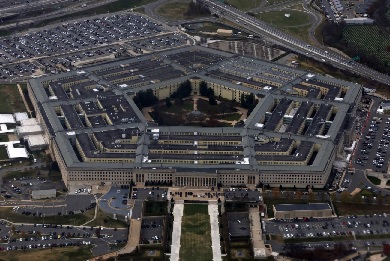
In a recent case, he struck true gold with his decision to rename the Department of Defense the Department of War, the original name for what we now often simply call the Pentagon, the massive building that houses much of the military’s vast bureaucracy.

America’s war-making cabinet post was originally created as the Department of War in 1789 and operated with that name until 1949. The latter change was clumsy propaganda. Explained historian Richard H. Kohn: “It was to communicate to America’s adversaries and the rest of the world that America was not about making war but defending the United States.” During the Cold War there was at least a pretense that the armed forces were deployed for America’s “defense,” though the country’s military interventions grew increasingly dubious, culminating in the Vietnam debacle.

However, Trump’s decision had little to do with reality and everything to do with illusion. He called “Department of Defense” politically correct and opined that the new name “just sounded better.” He got the politically correct charge right, but otherwise his rationale, expressed in his executive order, was almost entirely wrong. He contended: “The name ‘Department of War,’ more than the current “Department of Defense,” ensures peace through strength, as it demonstrates our ability and willingness to fight and win wars on behalf of our Nation at a moment’s notice, not just to defend. This name sharpens the Department’s focus on our own national interest and our adversaries’ focus on our willingness and availability to wage war to secure what is ours.”

In fact, the problem with the previous name is simply that it had proved to be increasingly false, essentially disguising activities almost completely disconnected from protecting America and Americans. Even when the military’s activities can be characterized as “defense,” it usually involves a response to threats created by earlier misbegotten, counterproductive, and aggressive interventions that often are not only practically foolish but morally monstrous. The true “national interest” that the president spoke of would be to avoid such conflicts entirely.

In America’s early years, “Department of War” was an accurate description. Although the War of 1812 began as defense against British naval depredations, Americans avidly pursued the conflict in a frankly imperialistic effort to conquer London’s Canadian possessions. The American regime barely escaped with a draw after its invasion attempts were disastrously repulsed.

President James K. Polk triggered the Mexican–American War by stationing American military forces in disputed territory to back a highly dubious claim made by Texans seceding from Mexico. In truth, his ambitions were much greater, to seize the vast territories that today make up much of the western United States. In victory Washington annexed half of Mexico, and some imperialists wanted to grab it all. Declared the New York Herald: “Like the Sabine virgins, she will soon learn to love her ravisher.”

The War Department’s biggest battle was against its own people. Known as the Civil War, it wasn’t actually one, since the southern states fought to secede, not to control the entire union. Some 750,000 Americans died, equivalent to about eight million or so if a similar proportion of the population died today. Slavery was a terrible crime, but few joined Washington’s military to liberate those in bondage. While that would have offered a moral cause, forcing people at gunpoint to remain in the union—and killing them if they resisted—was not. The War Department saved Washington’s authority, not the country, which was ravaged by the conflict.

The Spanish–American War was openly imperialistic. The American regime had conquered North America’s heartland and west, suppressing native Americans with great force, yet pretended moral outrage at Spain’s brutal war against Cuban insurgents. While Washington could at least plausibly, though not convincingly, claim its intervention in Cuba to be motivated by high-minded humanitarianism, the conquest of the Philippines and ruthless suppression of the preexisting Filipino independence movement was the worst form of callous and cruel imperialism. The American behaved with greater barbarity than the Spanish, causing the deaths of hundreds of thousands of Filipino civilians. Even Republican politicians were appalled by the military’s ostentatious criminality.

For decades, the American regime was openly imperialistic in Latin America. The Monroe Doctrine did not affirm neighborly independence. Rather, it ordered the Europeans to stay out, allowing Washington to replace them as de facto colonial masters. President Woodrow Wilson, ever prone to misuse his authority and the American military, was among the worst abusers. He ordered a brief war and the occupation of Veracruz to force Mexico to, ludicrously, salute the American flag after a convoluted dispute involving American merchant sailors. So much for his grand and much-inflated reputation as a liberal statesman.

Even more disconnected from America’s defense was World War I, with American involvement initiated by the same obnoxiously pompous, vainglorious, and sanctimonious Wilson. He ran for reelection, citing his refusal to enter the idiotic imperial slugfest—in which no combatant looks good in retrospect—that prodigiously consumed European lives. He then abandoned those he was supposed to serve and took the country into the war on the preposterous argument that Americans were entitled to immunity when booking passage on British liners, even if armed, designated as reserve cruisers, and carrying munitions through a war zone. For this, along with a contemptibly haughty desire to reorder the globe, he callously sacrificed 100,000 American lives and ruthlessly suppressed civil liberties. Then he bungled the peace, putting his name on the Versailles Treaty, which prepared the ground for another, far worse war a generation later. America’s “defense” was the last issue on his mind.

After fighting all these dubious conflicts, only in World War II did the Department of War finally act to protect America, and even then, only after the Roosevelt administration recklessly provoked a Japanese strike by cutting off Tokyo’s supplies of steel and oil and waged an undeclared, unprovoked naval war against Germany. At least in this case the adversaries were truly evil and America’s victory left the world in a better, though badly divided, state.

Four years after the end of that struggle, Congress changed the bureaucracy’s name to the Department of Defense. Since then, most of America’s wars also had nothing to do with defense. In the Korean War America obviously was not threatened. Until then no one considered the Korean peninsula to be a strategic American interest. Even Gen. Douglas MacArthur had previously dismissed the security importance of what had been a Japanese colony. The best argument for the American regime’s intervention was that Washington helped set up the conflict—dividing the peninsula, creating a semi-puppet regime, accepting rule by an aggressive nationalist—but failed to then prepare its Korean state for the war to come.

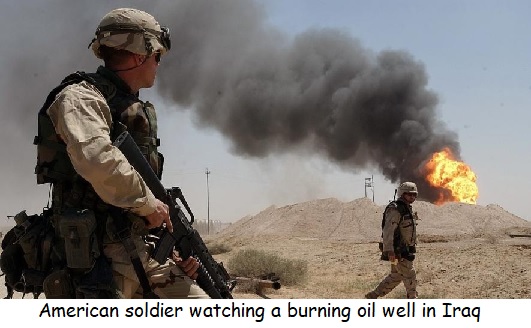
Vietnam, the nation’s costliest post-World War II conflict, was a bizarre attempt to salvage what had been France’s Southeast Asian empire. The extended conflict offered no serious defense rational. Most of the potpourri of later, smaller interventions—Grenada, Panama, Somalia, Haiti—appeared to reflect Washington’s continuing imperial pretensions, especially in the post-Cold War era. The initial assault on Afghanistan’s Taliban regime might be justified as a response to Al Qaeda’s attack on 9/11, but 20 years of conflict and the dishonest and disastrous invasion of Iraq could not be. Nor could subsequent support for Saudi and Israeli aggression against their neighbors, or the Trump administration’s attack on Iran and threats against Venezuela. In all of these, the Pentagon acted as the Department of War, not the Department of Defense.

Still, the president’s task is not complete. First is the admittedly superficial name issue. He can direct his own officials to use DoW rather than DoD. However, despite his exalted opinion of presidential authority, he cannot overrule Congress and formally change the Pentagon’s official name. For that, he needs to win Capitol Hill’s approval.

Second is the substantive issue of going to war. The president presents himself as something of a peacenik, but he has shown no reluctance to use the American military, usually for purposes distressingly far from defense or otherwise putting America first. Even as he calls the Pentagon the Department of War, he should reject war except in America’s defense. War is sometimes necessary, but virtually never in the case of America, which is the most secure great power ever. It is time to make war rarer still as a policy tool of Washington.

Changing the Pentagon’s formal name to the Department of War would be a great step forward in truth in advertising. Better still would be to stop going to war absent the most compelling justification. If Donald Trump makes that his legacy he might be a worthy recipient of the Nobel Peace Prize.

WHAT DOES IRAN REALLY NEED TO DO?

Sanctions Snapback Is The Latest Paradox In The West’s Relations With Iran. Though Sanctions May Succeed In What May Be Their True Purpose, Punishing Iran For Not Abandoning Russia After Its Invasion Of Ukraine.

As early as this upcoming Sunday, the E3—the UK, France and Germany—will probably trigger the snapback clause of the shattered 2015 Joint Comprehensive Plan of Action (JCPOA) nuclear agreement with Iran. That means the economy and people of Iran will face the full weight of the sanctions the JCPOA promised to end.

Though the snapback sanctions may succeed in what may be their true purpose, punishing Iran for not abandoning Russia after its invasion of Ukraine, they will fail in their aim of accomplishing a new nuclear deal with Iran.

Typical of the waning American regime led world order in which economic and military threats have replaced diplomacy, the move carries no benefit, but is fraught with risk. Sanctions have had no effect on Iran’s commitment to its civilian nuclear program, and there is no reason to believe that trying the same thing again will have any different effect. And in punishing Iran for not abandoning Russia, the E3 will only push Iran closer to Russia and China.

For many years now, Iran has sat in a number of frustratingly paradoxical positions. The most painful has been the attempt to convince the American regime led world that it is sincere about ending a nuclear weapons program that it never possessed.

In 2015, the Obama administration, together with E3, Russia and China, successfully negotiated the JCPOA nuclear agreement with Iran. For all its technical complexity, the deal’s basic provision was simple: If Iran keeps its promise to limit its civilian nuclear program, the American regime would keep its promise to lift sanctions. A consistent series of reports by the International Atomic Energy Agency (IAEA) verified that Iran was completely and consistently in compliance with its commitments under the JCPOA. Nonetheless, in May 2018, the first Trump administration unilaterally pulled out of the agreement.

The Biden administration had four years to blame Trump, but they never committed to the simple solution of reentering the agreement. Iran had kept its promise to limit a nuclear program that was in no need of being limited, but was punished anyway.

At the beginning of the second Trump administration, though wary of reentering negotiations on a nuclear deal with the same leader who had broken the previous nuclear deal, Iran did return to the bargaining table. And those negotiations came very close to completion.

Iran’s foreign minister, Abbas Araghchi, said that Iran and the American regime “were on the cusp of a historic breakthrough.” Iran was prepared to discuss two paths of compromise on its civilian nuclear program. One would see Iran export or convert its highly enriched uranium and limit future enrichment to 3.67 percent while agreeing to maximum transparency and inspections in cooperation with the IAEA. The other would see Iran fold its nuclear program into an international consortium that would allow Iran to enrich uranium but deny it access to the full enrichment process by distributing various roles in the process across different member states, probably including Saudi Arabia and the United Arab Emirates. The various member states could assist the IAEA by keeping a watchful eye on each other.

But despite the real progress and the real possibility that a deal was within reach, the diplomatic path was abandoned in favor of the military one, and instead of a diplomatic compromise, Iran’s nuclear facilities were bombed.

And that was the second paradoxical position included in the deal. Iran was meant to fulfill all of its obligations as a signatory to the Nuclear Non-Proliferation Treaty (NPT) without the benefit of any of its rights or protections.

Despite the failure of the non-proliferation regime to protect Iran, Tehran tried to maintain that paradoxical position and its relationship with the IAEA. After initially suspending its cooperation with the IAEA, Iran recently signed a new agreement with the IAEA.

But that led only to the third paradox. The E3 had promised Iran that if they resume cooperation with the IAEA, including transparency on its stockpile of enriched uranium, and resume talks with the United States, they would delay the snapback sanctions for six months.

Iran did both, and the E3 triggered the snapback sanctions nonetheless. Iran not only genuinely reengaged with the IAEA, they genuinely reengaged with the United States.

Under the media radar, Araghchi and Trump’s special envoy Steve Witkoff have been in direct contact. On September 16th, Araghchi presented Witkoff with a proposal on an interim deal that would lead to a final deal. The outlines of the deal were also shared with the foreign ministers of the E3.

In the first stage, Iran would retrieve its 60 percent enriched uranium and dilute it to 20 percent. Though this is not yet the 3.67 percent of the JCPOA, the purity required for electricity, it is the magic number for civilian purposes, as it is insufficient for a weapons program while still being sufficient for radioisotopes for medical imaging. In return, the American regime would guarantee that there will be no further aggression against Iran, and the E3 will put off snapback sanctions for a number of months.

After these steps are completed, the American regime would lift the sanction that had been agreed upon in the interim deal, and negotiations on a final deal would begin.

Iran and the IAEA, with Egypt’s help, have agreed on steps for Iran to provide the IAEA with a report on its 60 percent enriched uranium within a month. Iran and the IAEA would then begin negotiations on how the IAEA can verify the report and carry out inspections.

But despite Iran re-engaging with the IAEA, negotiating transparency of their stockpile of enriched uranium and re-engaging in direct talks with the United States, the E3 is going ahead with snapback sanctions.

This move by the E3 is not likely to speed up or encourage diplomacy. Instead, it seems to close the last off ramp for diplomacy. Araghchi says that “if the snapback is ultimately implemented, the agreement [with the IAEA] will also lose its validity.” Implementation of the deal clearly depended on the E3 delaying snapback sanctions. At the time the agreement was approved, Iran’s Supreme National Security Council stated that “the new agreement would be considered void if new ‘snapback’ UN sanctions were imposed or if its nuclear sites were attacked again.”

It is time,” Araghchi said, “for them to choose between cooperation and confrontation” before adding that “[w]e hope for a diplomatic solution, but rest assured, if that fails, Iran is prepared to take necessary measures.”

Those measures appear to include suspending cooperation with the IAEA. “Despite the cooperation of the Ministry of Foreign Affairs of the Islamic Republic of Iran with the [IAEA] and the proposals presented to resolve the [nuclear] issue, the actions of European countries will effectively suspend the path of cooperation with the Agency,” Iran’s Supreme National Security Council, which is chaired by the president, said.

It is not clear at this time what Iran is supposed to do. They honored the terms of the JCPOA until it was broken by the United States, and they seem to have satisfied the terms of the E3 to delay snapback sanctions. Nonetheless, Iran finds itself, once again, with no clear path to a diplomatic solution to a problem that doesn’t even exist.

Design a site like this with WordPress.com
Get started