TRUMP HAS BEEN INVITED TO A COCAINE LAB DEMOLITION AMID TRUMP’S ATTACK THREAT BY COLOMBIA’S PETRO

Colombian President Chides Trump, Saying 18,400 Cocaine Laboratories Have Been Destroyed ‘Without Missiles’ Fired.

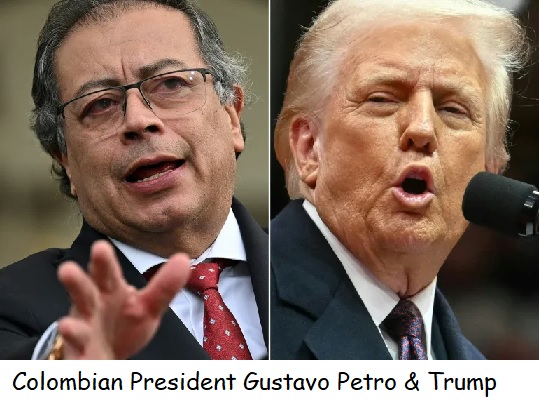
Colombian President Gustavo Petro has invited President Donald Trump to visit his country and participate in the destruction of cocaine laboratories after Trump said any country trafficking drugs into the United States could be attacked, “not just Venezuela”.

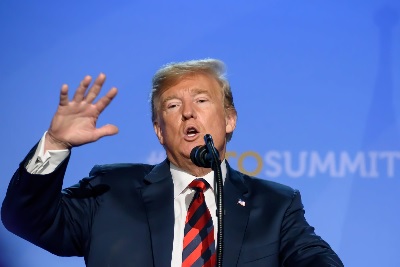
Trump issued his warning during a Cabinet meeting on Tuesday at the White House, where he singled out Colombia for producing cocaine and selling it into America.

I hear Colombia, the country of Colombia, is making cocaine. They have cocaine manufacturing plants, oK, and then they sell us their cocaine,” Trump said.

Anybody that’s doing that and selling it into our country is subject to attack,” he said.

Petro responded swiftly to Trump in a post on social media, pointing out that his government had destroyed 18,400 cocaine laboratories “without missiles”.

Come to Colombia, Mr. Trump,” Petro said.

Come with me, and I’ll show you how they are destroyed, one laboratory every 40 minutes,” Petro said, “to prevent cocaine from reaching the US”.

Petro also warned against threatening Colombia’s sovereignty, which he said was a declaration of war that “will awaken a Jaguar”.

Do not damage two centuries of diplomatic relations. You have already slandered me; do not continue down that path,” Petro said, apparently referring to Trump’s previous public assertions that the Colombian leader was involved in the drug trade.

If there is a country that has helped stop thousands of tonnes of cocaine so that North Americans do not consume it, it is Colombia,” Petro added.

Still, Colombia remains the dominant source of cocaine entering America: According to the American Drug Enforcement Agency, 84 percent of the drug seized in the country in 2024 originated in Colombia.

Trump’s administration has deployed a huge military force to the Latin American region under the pretext of stemming the flow of drugs to America from Venezuela, and has carried out missile attacks on vessels in the Pacific Ocean and Caribbean Sea, killing at least 83 people in the process.

Trump made his remarks on expanding attacks against narcotics-exporting countries while seated next to Defense Secretary Pete Hegseth, who is under scrutiny for a so-called “double-tap” strike in September that killed two survivors from an earlier American attack on a vessel in the Caribbean Sea, which had already killed nine people.

Legal experts said the second attack on the two survivors as they clung to the wreckage of the destroyed vessel was potentially a war crime, and both Democrat and Republican lawmakers have promised to investigate the circumstances of the killings.

Hegseth defended the secondary strike but said on Tuesday that while he had watched the first attack on the suspected drug smuggling vessel in real time, he had not seen survivors or the second deadly American attack.

The Pentagon chief maintained that he only discovered, some hours later, that Admiral Frank Bradley, head of special operations command, had ordered the second strike on survivors.

Washington has provided no evidence of wrongdoing on the part of the victims, and Venezuelan President Nicolas Maduro has accused the American regime of planning to remove him from government under the guise of its anti-drug operation.

BODIES RETURNED BY ISRAEL SHOCK GAZA FAMILIES WITH THEIR SEVERED FINGERS AND INCISIONS

Hopes Of Closure For Grieving Families Give Way To New Anguish As They Confront The Unrecognisable Condition Of Their Loved Ones’ Remains.

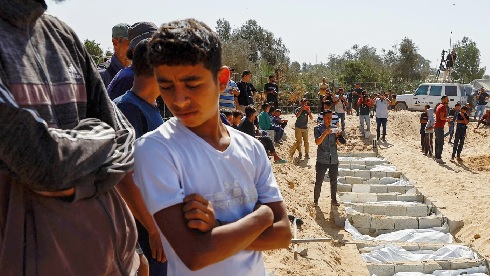
The bodies handed over by Israel arrived in Gaza frozen, numbered and silent.

Palestinian families hoped their arrival would finally answer their two-year-long questions about the fate of their missing relatives.

But with these answers came new questions, leaving many families in limbo even after they were finally able to bury their loved ones: what had happened to their bodies?

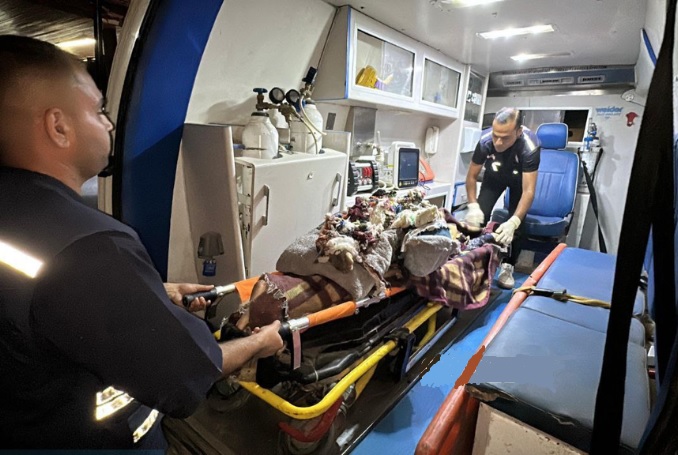
Many of the remains delivered to Nasser Hospital in Khan Younis were difficult to identify – some with severed parts, others bearing long-stitched incisions.

This has led families to suspect that vital organs or body parts were taken while their relatives were in Israeli custody.

Yet forensic doctors in Gaza say they cannot confirm or refute these claims, as the Ministry of Health lacks the equipment needed for full examinations.

My brother Ahmed went missing on the first day of the war,” Muhammed Ayesh Ramadan, a resident of Deir al-Balah in the central Gaza Strip, said.

We did not know anything about him, or how he disappeared, but I kept saying he was missing and kept searching for him, hoping to find him.”

When bodies were returned from Israel as part of the ceasefire signed with Hamas in October, the Palestinian Ministry of Health displayed photos of them at Nasser Hospital for families to inspect.

Ramadan searched for three days without success. On the fourth day, he finally spotted the clues he had been looking for.

I identified him with around 70 percent certainty from his face,” he recalled.

‘There was a stitched incision running vertically from his chest downward; it looked like they had opened his body’

– Muhammed Ayesh Ramadan, Gaza resident

When Ramadan further inspected the body, he also found distinctive marks he recognised on the torso, and ultimately confirmed his 37-year-old brother’s identity.

The body was burned, and there were around six to seven bullets in his body. It was extremely stiff and completely frozen,” he explained.

Ramadan noticed that one of his brother’s toes had been cut off. Forensic doctors, however, say this was the case with almost all the bodies they received, apparently due to DNA examinations conducted in Israeli custody.

There was also a stitched incision running vertically from his chest downward; it looked like they had opened his body,” he added.

My brother had never undergone any surgery, and he had never had stitches before the war. I even asked his wife, and she confirmed that he had never had any stitches and his abdomen had never been opened.”

MANY REMAIN UNIDENTIFIABLE”

Doctors and forensic teams in Gaza are often unable to determine whether organs are missing due to a lack of equipment and essential materials.

Khalil Hamada, director general of forensic medicine in Gaza, said that bodies handed over by Israeli authorities can only be examined externally, with no possibility for internal inspection.

The bodies arrive in such extreme freezing conditions that we sometimes leave them for a day or two until the ice melts and their details become visible. Some bodies even arrive partially decomposed,” he said.

Handling the bodies is extremely difficult. What we do is not a full forensic examination, as we lack the necessary capabilities. The process is limited to documenting individual distinguishing features so families can identify their loved ones.”

Hamada added that proper examinations would require DNA testing and 4D CT scans, which are not available in Gaza.

This severely limits our ability to conduct precise forensic examinations and fully identify bodies. Many remain unidentifiable, and we are forced to bury them without names,” he said.

Israel has returned the bodies of 345 Palestinians to Gaza. Only 99 have been identified so far.

The rest were mostly buried in mass graves without identification.

Hamada also confirmed that Israeli authorities amputate certain body parts, such as thumbs on hands as well as feet, before returning the bodies.

They may take just the tip of a finger or the first phalanx, but they often remove the entire thumb. In most cases, these fingers are amputated for DNA purposes before the body is handed over to us,” Hamada said.

HANDS AND FEET BOUND

In the handover process, Israel does not provide names, forensic reports, condition reports or cause-of-death information to Palestinian authorities or families.

After each batch of bodies arrives, the Ministry of Health invites families to Nasser Hospital, where photos of the remains are displayed on a large screen, each marked with a number.

Families who recognise a relative report the number before viewing the body in the morgue and arranging burial.

Because some relatives cannot attend and the viewing period is short, the ministry also maintains an online page showing images of unidentified bodies, with details such as date received, gender, and body number.

The photos include close-ups of body parts, such as the jaw, skull, fingers and toes, as well as distinctive marks that relatives may recognise, in addition to the clothing worn by the missing person.

Zeinab Ismail Shabat, from Beit Hanoun in the northern Gaza Strip, was browsing the page when she identified her 34-year-old missing brother, Mahmoud Shabat.

As soon as we saw his hair and eyes, his upper features, we recognised him,” Shabbat said.

The next day, my mother, father, my brother’s wife, and my uncle went [to Nasser Hospital], and they recognised him.”

Mahmoud’s family confirmed his identity to the hospital by recognising a head injury he had sustained during the 2018 Great March of Return protests against the Israeli blockade of Gaza.

One of his index fingers was severed. His hands were tied behind his back. His legs were also bound, and the marks of the metal restraints had left dents in his feet,” Shabat said.

It was clear that he was martyred while restrained. He was completely stripped of clothing. There was a gunshot in his thigh, and there were small pieces of wood on his chest.”

According to Mahmoud’s mother, his face appeared to have been struck so violently that his skull was fractured, and his neck bore marks suggesting he had been hung.

Independent medical personnel in Gaza report that many of the bodies received bore clear signs of torture, fractured bones, and, in some cases, were bound at the hands and feet with their eyes blindfolded.

Nagah Ismail al-Jabari, a sister and mother of two missing Palestinians whose bodies were handed over by Israel recently, said she could mainly identify them by their clothes.

My brother, Fahd, was 35, and was martyred at the beginning of the war. He was among those who went out to watch [on the aftermath of October 7th attack], and he was killed,” she said.

I recognised him by his sandals and clothes. Some of his features and teeth were not heavily decomposed. I recognised him from the photos, then went with my brother, and they brought the body out of the freezer so we could identify him further.”

As with nearly all the bodies received, Jabari said that her brother’s left index finger and big toe were amputated.

There was also a tooth that was missing. But there were no incisions or stitches on his body. This is mainly because my brother was killed immediately, so I don’t think they would attempt to take organs from someone already dead.” she added.

As for my son, he was 20 years old. I identified him by his clothes and underwear,” she recalled.

Two of his teeth were missing and he had a wound in his left thigh. There were also shrapnel fragments in his back.”
DON’T LET THE EMPIRE DELUDE YOU INTO BELIEVING THAT YOU ARE POWERLESS

There Are Always Things You Can Do To Fight The Sadistic, Evil, Greedy Monsters, And There Are Always Things You Can Do To Improve Your Own Life.

It’s so easy to fall into the trap of believing there’s nothing we can do. Nothing we can do to fight the machine because it’s too large and entrenched, and nothing we can do to change our own personal circumstances because the deck is stacked so unfairly against ordinary people.

It’s a strong illusion because at a surface glance it appears to be true. Our political systems are locked down by the rich and powerful to ensure that our votes don’t inconvenience them in any way, and any new political movement which challenges establishment power structures will find itself facing sabotage from the outside and from within. Our voices are kept marginalized and our countrymen have been turned into mindless empire automatons by a lifetime of propaganda indoctrination.

And at first glance we appear to be just as powerless in our personal lives as well. Unless you’re lucky enough to have obtained some capital which you can use to extract labor from the working class or to possess some special aptitude that our system happens to value, you can spend your whole life struggling in poverty. The life of a worker is getting harder and harder, and it’s easy to feel like there’s nothing you can do about your own unhappiness and psychological dysfunction because you’re laboring under a system that’s so abusive and unfair.

So while it is true that there are many doors that are closed to a denizen of our dystopia, that doesn’t mean you are powerless to change things. Believing that you are powerless serves no one but the powerful.

We are never truly powerless because we always have the ability to help foment a revolutionary zeitgeist, and because we always have the ability to heal ourselves. As a collective we have the power to inform and educate the public to help them understand that they’ve been deceived their whole lives about our society, and that a better world is both needed and possible. As individuals we have the ability to do inner work to heal our trauma and liberate ourselves from the delusion of ego, which will have radically transformative effects on our quality of life in a whole host of ways.

There is nothing our rulers can do to take these abilities away from us. We will always have the ability to do something to help awaken the people to the need for revolution, and we will always have the ability to heal our inner wounds. Every single day there are concrete actions we can take toward both of these ends.

It serves nobody but the powerful to believe there’s nothing we can do to change things. Too many socialists are content to just sit around smugly knowing better than everyone else and having all the correct opinions about things while expressing distain for everyone who tries to expand awareness or make the world a better place. Get active in your community. Produce dissident media. Make revolutionary art. Have conversations. Change minds. Open some eyes. Wake people up so that one day there will be enough of us to force real change.

It serves nobody but the powerful to believe you are doomed to a life of misery. Too many people are content to blame all their internal dysfunction on the abuses of capitalism and just spend their days masturbating their inner wounds in meetings and online without doing the rigorous inner work necessary to come to inner peace. Get curious about your internal processes. Research the many modalities for inner healing that are available online. Listen to the brilliant minds who’ve been sharing groundbreaking new insights about trauma and inner work lately. Investigate the possibility that spiritual enlightenment is a real phenomenon that is entirely achievable in this life. Take responsibility for your own inner wellbeing, and start doing something about it.

We don’t need to sit around paralyzed by power-serving learned helplessness. We don’t need to sit idly by waiting for some resolution to our plight. We don’t need to resign ourselves to a life of suffering and making the same mistakes over and over again because we’re being whipped about by unconscious forces within us that we’ve never taken the time to investigate.

There is always something we can do. We can never do everything, but we can always do something. There’s no good reason not to do that something we can do, every single day of our lives.

TRUMP’S ANTI-DRUG EFFORT IS BASED UPON LIES AND HYPOCRISY

Trump’s Pardon Of Honduras’s Ex-President Makes That Perfectly Clear. Why Would Trump Blow Up “Narco Boats” In The Caribbean And At The Same Time Decided To Let A Big Time Trafficker Off The Hook?

He was a Latin American president accused of colluding with some of the region’s most ruthless narco bosses to flood the United States with cocaine.

[Let’s] stuff the drugs right up the noses of the gringos,” the double-dealing politician once allegedly bragged as he lined his pockets with millions of dollars in bribes and turned his country into what many called a narco-state.

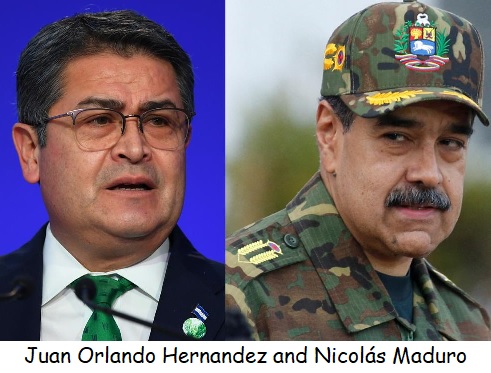
The description might sound like a sketch of Venezuela’s authoritarian president, Nicolás Maduro, who Donald Trump’s administration has accused of being a “narco-terrorist” kingpin and is trying to topple with a $50m bounty and a huge display of military might off the South American country’s Caribbean coast.

But it is actually a portrait – painted by American prosecutors, no less – of the former Honduran president, Juan Orlando Hernández, who Trump last week pledged to pardon, despite the fact that Hernández was sentenced last year to 45 years in prison for allegedly creating “a cocaine superhighway to the United States”.

The people of Honduras really thought he was set up and it was a terrible thing,” Trump told reporters on Sunday. “He was the president of the country and they basically said he was a drug dealer because he was the president of the country … and I looked at the facts and I agreed with them.”

Trump’s astonishing intervention in favour of Hernández, who is known by his initials JOH, has baffled many observers, with one Drug Enforcement Agency (DEA) agent calling the move “lunacy”.

Why would the president use his “war on drugs” as a justification for overthrowing Maduro – despite what many see as flimsy evidence that the Venezuelan leader really is a narco boss – while simultaneously offering a Get Out of Jail Free card to a man already found guilty of such crimes in a Manhattan federal court?

Why had Trump spent recent weeks blowing up alleged narco boats in the Caribbean – with negligible impact on flow of drugs to America – and at the same time decided to let a big time trafficker convicted of smuggling far larger quantities of drugs off the hook?

It just shows that the entire counter-drug effort of Donald Trump is a charade – it’s based on lies, it’s based on hypocrisy,” said Mike Vigil, the former DEA chief for international operations. “He is giving a pardon to Juan Orlando Hernández and then going after Nicolás Maduro … It’s all hypocritical.”

Contrary to Trump’s claim that Hernández, 57, had been the victim of a “Biden set up”, Vigil said there was overwhelming evidence that the Central American politician was “a big fish in the narco world”. Not only had Hernández helped turn Honduras into a major transit point for South American cocaine heading to America, but Vigil said he had also transformed it into a cocaine producing hub which was now home to coca plantations and makeshift labs for processing coca leaves.

When you take a look at Pablo Escobar and [Joaquín] ‘El Chapo’ Guzmán, they were big drug traffickers – but they were never presidents of a country,” Vigil added.

So if Donald Trump is giving this guy a pardon, why is he not giving [the also incarcerated Mexican cartel boss] Chapo Guzmán a pardon? El Chapo Guzmán is less of a figure in the drug world than Juan Orlando Hernández was.”

Loan Grillo, the author of a trio of books on Latin America’s narco underworld, was also puzzled by Trump’s “jaw-dropping” offer. “It’s crazy … it really undermines his hard-line ‘war on drugs’ position,” Grillo said, wondering if Trump might rethink his move given the outcry.

American prosecutors alleged that even before taking power Hernández had started conspiring with Latin American narco bosses who have long used the Central American country as a trampoline to smuggle drugs into America. Jurors agreed and, in July 2024, Hernández was sentenced to more than four decades in prison “for cocaine importation and related weapons offenses”. His younger brother, Juan Antonio “Tony” Hernández, was sentenced to life in prison in 2021. Among his crimes was accepting $1m from El Chapo “to support Juan Orlando Hernández’s presidential campaign”.

Vigil believed Hernández was responsible for helping move billions of dollars worth of cocaine into America – far more than the fast boats Trump’s “kinetic strikes” have destroyed in the Caribbean and Pacific since September.

He’s killed approximately 80 people, destroyed approximately 20 boats, and he has not provided any concrete evidence that they were carrying drugs,” said Vigil, who believed many of those killed on the fast boats were impoverished fishers who, in some cases, might have earned $200-a-month for transporting drugs.

Meanwhile, despite Trump’s claims that Maduro is the leader of a narco organization called the “Cartel of the Suns”, many experts doubt such a group even exists.

Orlando Pérez, a Latin America expert from the University of North Texas at Dallas, said Trump’s double standards on which drug smuggling presidents to pursue revealed there was no consistent strategy to fight the region’s drug traffickers. “It’s all ad hoc and based on political considerations,” he said.

One [Hernández] is a right-wing supporter of the US – and the other [Maduro] is not,” Pérez added. “It is ideological. It is political. It is self-interested in terms of advancing an ideological agenda – and it has nothing to do with effective anti-drug policies.”

DID YOU KNOW THAT ISRAELI SETTLERS WENT UNPUNISHED FOR KILLING 21 PEOPLE DURING “ETHNIC CLEANSING” THE WEST BANK?

With West Bank Death Toll Since October 2023 Topping 1,000, Palestinians Say ‘Death Is Inevitable’. That Is Probably True.

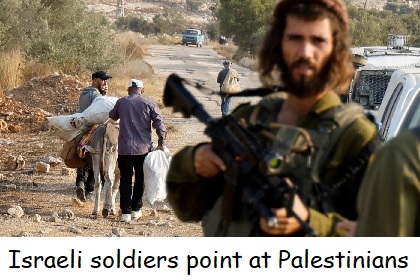
Israeli settlers have gone unpunished in 21 cases where they killed Palestinians over the past two years amid what has been described as a campaign of “ethnic cleansing” in the occupied West Bank.

A human rights group noted that the military has been enforcing “an increasingly permissive and reckless open-fire policy” in the Palestinian territory, including the use of air strikes, since October 7th 2023.

The military has also armed “thousands of settlers” while turning a blind eye to their near-daily bloody attacks on Palestinian civilians.

In a social media post on Monday, it was said that there have been 21 cases of settlers killing Palestinians since October 2023, but “not a single perpetrator has been convicted”.

Overall, Israeli forces and settlers have killed more than 1,004 Palestinians in the West Bank since then, including 217 minors, according to a tally.

In the Gaza Strip, Israeli forces have killed around 70,000 Palestinians, including at least 20,000 children, while another 10,000 people are missing and presumed dead.

We are witnessing the total abandonment of Palestinian lives,” said Yuli Novak,.

The situation in the West Bank is deteriorating by the day and will only worsen, because there is no internal or external mechanism to restrain Israel or stop its ongoing policy of ethnic cleansing.”

She urged the international community to put an end to Israel’s “impunity”.

On Monday, Israeli forces shot and killed Abdul Raouf Ishtayeh during a raid near Nablus. A day earlier, Israeli settlers and soldiers stormed the village of Deir Jarir, east of Ramallah, and opened fire on Palestinians, killing 20-year-old Bara Khairy Ali Maali.

Under this blanket impunity, armed settlers attack Palestinians on a daily basis, burning homes, farmland and crops, looting property and killing residents,” said B’Tselem.

Although dozens of such attacks occur every day, and many are captured on video and well documented, Israeli law-enforcement authorities rarely open investigations.”

STAY OR STAY”

A resident of Tulkarm, who wished to remain anonymous for security reasons, told said that the situation in the West Bank is becoming increasingly difficult for Palestinians, leaving many to live in fear and anxiety.

Her area has recently been hit by a wave of Israeli restrictions, arrests and violent raids.

Over the past two years, the number of checkpoints has risen to 707 since October 7th, severely hindering citizens’ movement,” she said, adding that iron gates controlled by Israeli forces have been placed at the entrances and exits of various Palestinian cities.

Amid the ongoing violence, Israeli troops have also seized several refugee camps, displacing their residents.

Our feeling is that death is inevitable”

– Palestinian resident of Tulkarm

The displacement has been compounded by what the Tulkarm resident described as a “dire financial situation” resulting from delays in transferring tax revenues to the Palestinian Authority.

This has led to the non-payment of salaries to Palestinian employees in the West Bank, who are struggling to survive on the bare minimum of basic necessities,” she said. “They have no security and no stable income.”

On how locals prepare for imminent attacks, the resident said there are “no options” but to remain “unwavering and steadfast” on their land.

In Palestinian terms, our feeling is that death is inevitable, and may God accept the martyrs and grant them peace,” she said. “For Palestinians, there are no options: to stay or to stay.”

She added that families “don’t have the luxury of sadness or of considering options” when mourning killed relatives or enduring daily hardship under Israeli occupation.

FREQUENT, ORGANISED” SETTLER VIOLENCE

Ameer Dawood, described the escalation of settler violence over the past two years as “both alarming and unprecedented in scale and intensity”.

Among the attacks documented by CWRC teams in recent times are arson, physical assaults on Palestinians, beatings of international volunteers and the destruction of groves and agricultural structures.

They are part of a steady pattern of escalating violence that has intensified over the past year,” Dawood said.

He added that settler targeting of farmers is “economically damaging and psychologically devastating”.

The settlers responsible for these attacks increasingly operate with an expanded sense of impunity, often under the protection or in the presence of Israeli security forces,” he explained.

At the same time, he added, recent policy changes have effectively given settler-led groups more power over security and land management, empowering extremist factions and allowing violent acts to take place with little accountability.

Dawood warned that without immediate intervention to enforce the rule of law or curb the authority granted to extremist settler groups, the “pattern of violence” is likely to continue.

Without accountability, attacks will probably become more frequent, more organized, and more dangerous, further destabilising rural communities and deepening the humanitarian and political crisis across the West Bank.”

He stressed that the escalation must be recognised as “not spontaneous”, but rather the “outcome of structural decisions that have enabled and normalised settler violence”.

IN HIS FIRST OVERSEAS TRIP POPE LEO WARNS OF THE RISK OF A “PIECEMEAL” WORLD WAR

A New World War Is Being Fought “Piecemeal” And Is Endangering The Future Of Humanity, Pope Leo Has Warned, As He Arrived In Turkey For His First Foreign Trip As Pope.

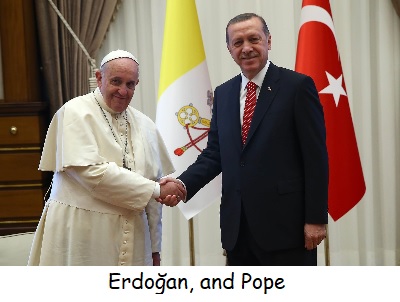
Speaking in Ankara, where he was welcomed on Thursday by the Turkish president, Recep Tayyip Erdoğan, Leo said the world was experiencing “a heightened level of conflict on the global level, fuelled by prevailing strategies of economic and military power”.

Recalling a description of the world’s conflicts by his predecessor, the late Pope Francis, Leo said “a third world war is being fought piecemeal”.

We must not give in to this,” he added. “The future of humanity is at stake.”

After Leo’s visit to Turkey – a country with a Muslim majority and home to an estimated 36,000 Catholics – he is due to travel to Lebanon on Sunday.

His arrival in Beirut is especially anticipated amid fears of a deepening conflict between Israel and Hezbollah after an Israeli strike earlier this week on a neighbourhood in southern Beirut that killed four Hezbollah operatives and one of the group’s most senior military commanders.

Leo urged Turkish leaders to “embrace” the country’s role of being “a source of stability and rapprochement between peoples, in service of a just and lasting peace”, in reference to its growing role in conflict resolution efforts in Gaza, Ukraine and elsewhere.

Leo will meet Patriarch Bartholomew, the spiritual leader of the world’s 260 million Orthodox Christians, for celebrations of the 1,700th anniversary of a major early church council in Nicaea, now İznik, which settled ideological disputes. His packed schedule also includes a visit to the Blue Mosque in Istanbul and the celebration of a Catholic mass at the city’s Volkswagen Arena.

Francis, who died in April, had planned to visit both countries but was unable to because of ill health.

Leo is considered more of a moderate, low-key operator than the charismatic but often divisive Francis, and the choice of Turkey and Lebanon for his first overseas trip is highly strategic, while also presenting an opportunity for the pope to show the world his style and personality.

In recent weeks, Turkish media has buzzed with images of Vatican delegations touring the country, while in Beirut banners showing Pope Leo’s smiling face have lined the stone outer walls of churches in the Lebanese capital’s central Christian neighbourhoods.

This is a trip where Leo will get to promote one of the central themes of his papacy, peace – and he’ll have two different audiences in mind,” said Christopher White, a Vatican expert and author of Pope Leo XIV: Inside the Conclave and the Dawn of a New Papacy.

One will be world leaders: Turkey and Lebanon are strategic locations for him to double down on his efforts for peace in Ukraine and in the Middle East and with this being his first foreign outing, he’ll have the attention of world leaders closely following the trip.”

The second audience will be Christian leaders, as Leo attempts to unite the region’s long-divided churches. He would especially use the anniversary celebrations in Turkey “to remind believers what they share in common is far greater than their divisions”, White said.

Leo’s arrival in Lebanon on Sunday afternoon comes during a period in which many fear a potential return to the two-month Israeli bombing campaign that blanketed southern Lebanon and Beirut last year.

Karim Émile Bitar, a professor of international relations at the Saint Joseph University of Beirut, said Lebanon’s Christian community would be looking to the pope for a message of unity at a time when the country remained deeply polarised.

This visit matters because the Vatican has historically been the main protector of Lebanese national unity and of Lebanese territorial integrity,” he said. “Most states have political or economic interests. The Vatican is one of the last moral authorities in the world that genuinely tries to promote peace and justice without any hidden agenda.”

Bitar said he believed Leo would “find the right words” during a visit that had “the potential to demonstrate that global powers like the Vatican can attempt to heal divisions in Lebanese society without pursuing their own political interests”.

He added: “Even though this visit is symbolic, and even though the Vatican has no army and no military influence, the simple fact that this is a man who speaks to people with genuine goodwill may matter more than the representatives of heavily militarised regional powers who are pushing Lebanon toward fragmentation.”

Leo will lead prayers in Beirut’s port, where a deadly blast destroyed swaths of the capital in 2020, and visit a psychiatric hospital run by the Catholic church.

The Turkey trip had been on the agenda for some time before Leo received the official invitation to Lebanon, where leaders hope the papal visit will bring world attention to a country also in deep economic strife.

He immediately embraced it,” said Andrea Vreede, the Vatican correspondent for NOS, the Dutch public radio and TV network. “Going to Lebanon means being able to talk about peace in the Middle East, in a really war-torn country, and very near to Israel. I’m not sure if he’ll speak directly about Gaza but he will obviously use Lebanon as a platform for peace.”

The Lebanese, meanwhile, “want some hope from him”, added Vreede. “It’s a country that is also in huge economic crisis … they see this visit as basically the only miraculous thing that can help them.”

After Francis in 2021 made the high-risk trip to Iraq, where he visited Mosul, the northern city devastated by Islamic State militants, Leo has faced some criticism for not visiting Christian communities in southern Lebanon. “He won’t go there – it’s too unsafe,” said Vreede.

Meanwhile, Christians in other countries are hoping he will visit them, too. Inside the Maronite church in Bab Touma, a historically Christian neighbourhood in the Syrian capital of Damascus, Fahed Dahta said he was overjoyed at the visit to the region. “This visit is enormously important to people. We need peace in the Middle East. I want peace for the entire region, and an end to all of these wars: Israel-Lebanon, Israel-Palestine, Israel and Syria,” he said. “He represents peace: he’s the pope!”

THE SAME PEOPLE WHO LIED TO START THE WAR IN IRAQ ARE STARTING THE ONE IN VENEZUELA

Washington Is Making Big False Claims To Make The Case For American Intervention. You Should Have Heard All These Arguments Before If You Listened To The Real News.

The American regime is amassing power off Venezuela’s coast. Warships, Marine detachments, and surveillance aircraft are flowing into the Caribbean under the banner of “counter-narcotics operations.” Military officials have presented Donald Trump with various game plans for potential operations. The president is openly tying Nicolás Maduro to narco-terror networks and cartel structures, while dangling both “talks” and threatening the use of military force in the same breath. It’s all pushing toward the culmination of crowning Maduro and his government America’s next top “terrorists” — the magic movie-script label that means the bombs can start heating up.

Then comes the media warm-up act: a New York Times op-ed by Bret Stephens, published on Monday, assuring readers in “The Case for Overthrowing Maduro” that this is all modest, calibrated, even reasonable.

The serious question is whether American intervention would make things even worse,” Stephens writes. “Intervention means war, and war means death. … The law of unintended consequences is unrepealable.”

The column’s argument is simple: Relax. This isn’t Iraq, a conflict Stephens helped cheerlead America’s way into and proudly declared in 2023 that two decades later, he doesn’t regret supporting the war.

There are also important differences between Venezuela and Iraq or Libya,” he continues. “They include Trump’s clear reluctance to put U.S. boots on the ground for any extended period. And they include the fact that we can learn from our past mistakes.”

Venezuela, Stephens argues, provides grounds for intervention against criminals in a failing state. He says Maduro is corrupt, the threat is real, and Trump’s moves are not the opening shots of a war but the necessary application of restrained power. It’s an argument Americans have heard before. And it’s as familiar as the hardware now cruising toward Caracas.

The echoes of Iraq are everywhere: the moral certainty, the insistence on a narrow mission, laws stretched to accommodate force, the journalist class nudging readers toward the idea of escalation. The Times leans on that posture — the intellectual confidence that if a dictator is cruel enough, if his country is chaotic enough, then American firepower is not only justified but prudent and even moral.

But step back. There’s nothing limited about an aircraft carrier strike group, including the world’s largest warship, moving into position near a country the United States has spent years sanctioning, isolating, and trying to politically dislodge. There’s nothing modest about weaving “narco-terrorism” into the policy narrative, a label that conveniently sidesteps congressional authorization. And there’s nothing reassuring about the president telling reporters he’s open to “talks,” while simultaneously telegraphing retaliatory force if Maduro doesn’t yield.

This is not law enforcement. It is coercive statecraft backed by military power. And when the press uncritically repeats the administration’s framing, the escalation becomes easier to swallow.

WE’VE SEEN THIS CRAP BEFORE

Iraq should have been the end of innocence in American foreign-policy thinking. The American regime toppled Saddam Hussein; what followed was not liberation but vacuum. Power didn’t flow to democratic institutions — it scattered, producing insurgency, sectarian collapse, and a national debt Americans will never pay off.

You have watched this choreography before too. In 2002, the Washington Post assured readers that toppling Saddam and invading Iraq would be — we kid you not — a “cakewalk.” But the New York Times once again led the way: A 2001 piece titled “The U.S. Must Strike at Saddam Hussein” framed Saddam as driven by “hatred intensified by a tribal culture of the blood feud”, and that preemptive war was America’s moral duty. By 2003, the Times was profiling “Liberals for War,” laundering the idea that even longtime doves were ready to get on board.

And then there was the big one: In September 2002, the front-page report insisting Iraq’s access to “aluminum tubes” was “intensifying its quest for bomb parts,” a claim that became one of the Bush administration’s most potent talking points despite falling apart under scrutiny. Less than two years later, the Times quietly admitted what the country already knew: Its coverage “wasn’t as rigorous as it should have been” — an apology that did nothing for the dead, the displaced, or the war that never ended.

The argument that a conflict with Venezuela is any different hinges on the fantasy that American firepower can topple a foreign regime without creating irreversible instability. But Venezuela is already in economic freefall. Its state infrastructure is brittle. A miscalculation — a strike, a naval confrontation, a retaliatory move from Maduro — could fracture what remains of the country’s governance.

Even in articles and political rhetoric selling the safe insistence this isn’t anything like Iraq, it’s hitting the familiar beats: Redefine the battlefield as a courtroom, call the targets “terrorists,” and pretend the spectators won’t notice. It’s the old Washington parlor trick — war recast as paperwork, missiles disguised as “measured responses.” But beneath the soothing language is the real hazard: This posture locks the United States into a glide path toward escalation. It casts Maduro as a stationary object America can strike without consequence, right up until he isn’t. Because the moment an American service member dies in some hillside village most Americans couldn’t find on a map last week, or a destroyer gets hit by something unseen in the dark, the mission will shed every polite euphemism. It won’t be “limited.” It won’t be “precision interdictions.” It will become the only war frame Washington and the political media never hesitates to embrace: American vengeance, expansive and unbounded.

THE MYTH OF “LIMITED” WAR

The press should be asking harder questions, not just about the Pentagon’s talking points, but about what kind of wars we’re willing to inherit. What do we expect these campaigns to become once they outlast the news cycle and the political administration that started them? What do they cost us in dollars, in decades, in the quiet bleed of national attention? Americans are already living through a squeezed economy; we can’t afford another open-ended conflict with the only measure of success being the upkeep of a strained momentum to throw bodies and dollars at finishing what we ultimately started.

But that’s easy to forget from a corner suite in Washington or a standing desk in Manhattan. From that distance, war looks like a policy instrument, a rhetorical jousting match, an intellectualized game played on someone else’s terrain. But the last two decades of living through America’s post-Iraq unraveling should have taught us otherwise. A sharper press, the right questions, and a robust, skeptical stance toward American intervention abroad could have spared lives: service members lost to missions with no endpoint, civilians flattened as “collateral damage,” entire regions left to absorb the shockwaves long after Washington moved on.

That’s the distance the press should be interrogating — between the people who greenlight these missions and the people who have to live inside them. Because if we don’t ask these questions now, we’ll end up asking them years later, after the bills come due and the country pretends it never saw this coming.

IS THERE A “LEGITIMATE AUTHORITY TO KILL?”

I Don’t Think We’re Gonna Necessarily Ask For A Declaration Of War. I Think We’re Just Gonna Kill People That Are Bringing Drugs Into Our Country. Okay? We’re Gonna Kill Them. You Know? …” – Trump

As of now, the Trump administration has launched missile strikes on at least nineteen boats in the Caribbean Sea and the Pacific Ocean, terminating the lives of more than seventy unnamed persons identified at the time of their deaths only as “narcoterrorists.” The administration has claimed that the homicides are legal because they are battling a DTO or “Designated Terrorist Organization” in a “non-international armed conflict,” labels which appear to have been applied for the sole purpose of rationalizing the use of deadly force beyond any declared war zone.

An increasing number of critics have expressed concern over what President Trump’s effective assertion of the right to kill anyone anywhere whom analysts in the twenty-first-century techno-death industry deem worthy of death. Truth be told, as unsavory as it may be, Trump is following a precedent set and solidified by his recent predecessors, one which has consistently been met with both popular and congressional assent.

The idea that leaders may summarily execute anyone anywhere whom they have been told by their advisers poses a threat to the state over which they govern was consciously and overtly embraced by Americans in the immediate aftermath of the attacks of September 11th, 2001. Unfortunately, all presidents since then have assumed and expanded upon what has come to be the executive’s de facto license to kill with impunity. Neither the populace nor the congress has put up much resistance to the transformation of the “Commander in Chief” to “Executioner in Chief.” Fear and anger were factors in what transpired, but the politicians during this period were also opportunists concerned to retain their elected offices.

Recall that President George W. Bush referred to himself as “The Decider,” able to wield deadly force against the people of Iraq, and the Middle East more generally, “at a time of his choosing.” This came about, regrettably, because the congress had relinquished its right and responsibility to assess the need for war and rein in the reigning executive. That body politic declined to have a say in what Bush would do, most plausibly under the assumption that they would be able to take credit for the victory, if the mission went well, and shirk responsibility, if it did not.

Following the precedent set by President Bush, President Barack Obama acted on his alleged right to kill anyone anywhere deemed by his targeted-killing czar, John Brennan, to be a danger to the United States. The Obama administration commenced from the premise that the Authorizations for Use of Military Force (AUMFs) granted to Bush made Obama, too, through executive inheritance, “The Decider.” Obama authorized the killing of thousands of human beings through the use of missiles launched by remote control from drones in several different countries. To the dismay of a few staunch defenders of the United States Constitution, some among the targeted victims were even American citizens, denied the most fundamental of rights articulated in that document, above all, the right to stand trial and be convicted of a capital offense in a court of law, by a jury of their peers, before being executed by the state.

As the Trump administration prepares the populace for its obviously coveted and apparently imminent war on Venezuela, mainstream media outlets have reported a surprisingly high level of support among Americans for the recent missile strikes. According to one recent poll, 70% of the persons queried approve of the blowing up of boats involved in drug trafficking. If true, this may only demonstrate how effective the Smith-Mundt Modernization act has been since 2013, permitting the government to propagandize citizens to believe whatever the powers that be wish for them to believe. Given the government’s legalization of its own use of propaganda against citizens, we will probably never know how many of the social media users apparently expressing their exuberant support for the targeting of small boats on the assumption that they contain drugs headed for American shores are in fact bots rather than persons. None of this bodes well for the future of freedom.

ISRAELI BOMBARDMENTS CONTINUE IN GAZA WITH NEARLY 400 VIOLATIONS AND RISING

Israel Has Carried Out Nearly 400 Violations Of The Ceasefire Agreement, With New Strikes, Rising Displacement, Blocked Aid, And Worsening Health Conditions Across The Gaza Strip.

Israeli forces continued bombing eastern areas of the Gaza Strip late Tuesday night and into Wednesday morning, wounding a woman and her child in Khan Yunis, in yet another violation of the ceasefire agreement.

Airstrikes targeted eastern parts of Rafah and Khan Yunis, including the town of Bani Suheila in southern Gaza. Additional attacks hit the eastern areas of Gaza City and the Jabalia refugee camp, where residents reported heavy explosions, intense gunfire, and ongoing demolition operations by the Israeli army.

According to Gaza’s Media Office, Israel has committed 393 violations of the ceasefire resolution since it took effect, resulting in the killing of 279 Palestinians.

The Director General of the Health Ministry in Gaza, Munir Al-Bursh, warned of a severe and escalating health catastrophe, reporting an unprecedented surge in anemia among children.

He said 82 percent of children under one year old are now affected, a level he described as life-threatening and damaging to growth and development. Al-Bursh added that Israel continues to block the entry of essential pediatric medicines, calling the situation “an engineered extermination aimed at erasing Palestinian lineage.”

Meanwhile, UN Under-Secretary-General for Humanitarian Affairs and Emergency Relief Coordinator Tom Fletcher called for the immediate removal of remaining Israeli restrictions on humanitarian access.

He said Palestinians are now facing cold, flooding, and worsening displacement following recent rains: “People in Gaza are wet, freezing, and losing what little they have left. Frustration is growing as floodwaters destroy the last of their belongings.”

The Government Media Office estimates that 1.5 million Palestinians are now displaced, living in dire conditions with limited access to food, medicine, shelter, and basic services under the continued blockade. Despite obligations under the ceasefire agreement, Israel continues to prevent the establishment of alternative housing for displaced families.

THE INSTINCT OF A MAJORITY CONCERNING IRAN IS RESTRAINT

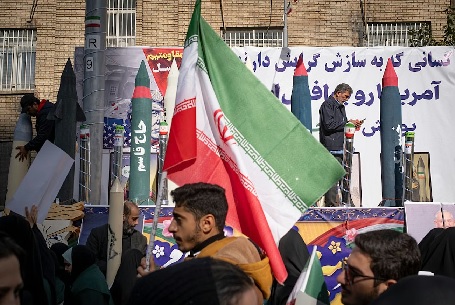
A Report On Public Attitudes Toward The June 2025 American Strikes On Iran Shows That Most Americans Still Prefer Diplomacy In Dealing With The Islamic Republic When Possible.

Restraint remains a majoritarian instinct.”

Although the “Iran strikes produced a short-lived rally effect,” the data demonstrate that “Americans entered the crisis favoring diplomacy and ended it divided, with increasing doubts about the strikes’ effectiveness.”

An poll before the strikes revealed that a majority of Americans — 61 percent — favored negotiations with Iran, while only 19 percent opposed them. While the Foundation for the Defense of Democracies and other proponents of the military action view the strikes as a successful deterrent to Iran’s supposed nuclear weapons ambitions, large numbers of Americans remain unconvinced; in a poll conducted after the American bombing of Iran, only 30 percent said the strikes made Iran less likely to develop nuclear weapons, while 30 percent said the strikes made it more likely.

The report, which aggregated data from multiple polling firms, also recognizes that, while “Republican and older male audiences” are “more likely to favor deterrence or strength-based” approaches to Iran, “younger Americans were consistently less supportive of military action and more likely to express fear of escalation.” In one poll conducted immediately after the strikes, a mere 32 percent of American adults under 30 signaled their approval, compared with 54 percent of Americans age 65 and up.

If most Americans were skeptical of bombing Iran, why did so many Republicans initially embrace the strikes? A report attributes the spike largely to “partisan reflexes.” When asked whether respondents “approve or disapprove of President Trump’s decision to take military action against Iran’s nuclear facilities,” 78 percent of Republicans approved. Yet when asked during the same period whether the United States “should bomb Iran’s nuclear facilities” — without naming Trump — Republican support dropped to 57 percent, indicating that some Republican responses were driven less by enthusiasm for a new war than by loyalty to Trump.

Another factor, unmentioned by the analysis team yet undoubtedly influential, was the Israel lobby’s long media campaign to convince Americans that Iran and its nuclear program, which is perpetually “weeks” or “months away” from producing a bomb, pose a threat to the United States. Their claims ignored a March 2025 report released by Tulsi Gabbard’s Department of National Intelligence, which determined that “Iran is not building a nuclear weapon and that Khamenei has not reauthorized the nuclear weapons program he suspended in 2003.”

Independents did not have the same partisan reflex as Republicans and Democrats; their views fluctuated, about 20 points depending on whether the strikes were framed as “bombing” or as “launching airstrikes on nuclear facilities,” demonstrating more than anything else the confusion of an American public that was never told why the United States was bombing Iran or what the objective was in the first place.

Their uncertainty grew instantly, and spread beyond independents; within days, more Americans believed Israel benefited from the strikes than believed the United States did. According to a poll cited in the study, only 21 percent of Americans thought the attacks advanced American interests at all, while 30 percent said they mainly helped Israel. Even among Republicans, a relatively narrow majority, 55 percent, believed the strikes reduced the risk of Iran getting a bomb.

The propaganda campaign that preceded the Iran strikes, the temporary spike in public support they produced, and the rapid ebb in enthusiasm echoed the Iraq War. In the run-up to the 2003 invasion, majorities of Americans said they believed Saddam Hussein possessed weapons of mass destruction, was tied to terrorism, and had even helped orchestrate 9/11. That war’s popularity reached a peak of 74 percent support at the time of Bush’s “Missions Accomplished” speech, before plummeting on a consistent trajectory every year since, as Americans realized they had been deceived and bankrupted. By 2019, most Americans, including 64 percent of American veterans, concluded the war had not been worth fighting.

If Trump truly believes the Iraq War was one of the greatest American regime’s foreign policy disasters, he should rediscover the instinct for negotiation that set him apart from the neoconservatives he defeated.

Design a site like this with WordPress.com
Get started