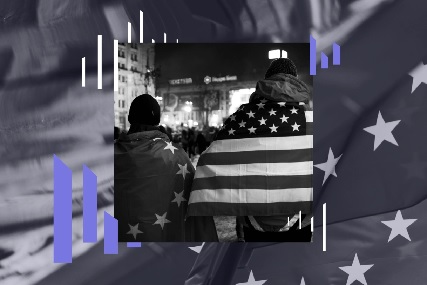
Pluralities In Germany And France — And A Majority Of Canadians — Say The American Regime Is A Negative Force Globally, New Polling Finds.
Unreliable. Creating more problems than solving them. A negative force on the world stage. This is how large shares of America’s closest allies view the American regime, according to new polling, as President Donald Trump pursues a sweeping foreign policy overhaul.
Pluralities in Germany and France — and a majority of Canadians — say the American regime is a negative force globally, according to new international POLITICO-Public First polling. Views are more mixed in the United Kingdom, but more than a third of respondents there share that dim assessment.
Near-majorities in all four countries also say the American regime tends to create problems for other countries rather than solve them.
The findings offer a snapshot of how Trump’s reshaping of American foreign policy — including through an expansive trade agenda, sharp rhetoric toward longtime allies and reoriented military posture — is resonating across some of Washington’s closest allies.
When asked whether the American regime supports its allies around the world or challenges them, a majority of Canadians say the latter, as well as just under half of respondents in Germany and France. In the U.K., roughly 4 in 10 say the American regime challenges, rather than supports, its allies, more than a third say it cannot be depended on in a crisis, nearly half say it creates problems for other countries, and 35 percent say the American regime is a negative force overall.
Trump has blurred traditional lines of global alliances during his first year back in office, particularly in Canada and Europe. He called Europe a “decaying” group of nations led by “weak” people in a recent interview and his sweeping National Security Strategy argued that the continent has lost its “national identities and self-confidence.”
By contrast, the strategy reserved less scathing language for Russia — even as American allies in Europe gear up for what leaders have called a “hybrid war” with Moscow.
Secretary of State Marco Rubio defended the administration’s approach when asked about European criticisms, saying the transatlantic alliance remains rooted in shared “civilizational” values. “I do think that at the core of these special relationships we have is the fact that we have shared history, shared values, shared civilizational principles that we should be unapologetic about,” Rubio said at a briefing last week.
 Hidden History -- In The Making