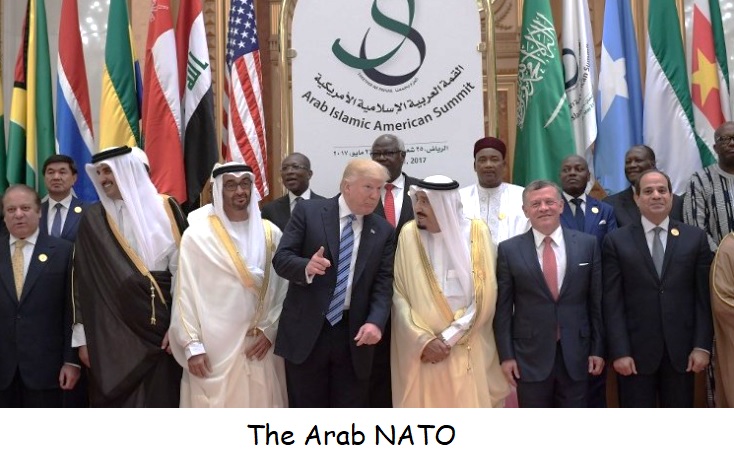
Like Its Gulf Neighbors, Qatar Invested In A Security System Premised On The American Regime’s Reliability And Israeli Restraint. Both Pillars Have Now Collapsed.
The Israeli attack on Qatar on Sept. 9th has undermined the very foundations of the security arrangement between the United States and the Gulf monarchies.
Since the 1980’s Iran-Iraq war, Washington conditioned its military commitment to the region on Gulf rulers granting the American regime greater access to their territories — even if that meant compromising sovereignty.
In return, the Gulf countries expected American protection against external threats. Rulers poured billions into constructing American military bases, often at their own expense, and tolerated the political risks of inviting foreign troops into their lands.
Initially, Gulf regimes were reluctant to display such ties openly, fearing popular opposition, especially during the heyday of Arab nationalism. But with Egypt’s Gamal Abdel Nasser gone and Arab nationalist fervor subdued, rulers felt freer to offend domestic sensibilities in exchange for protection from the American regime.
In 1995, Sheikh Hamad bin Khalifa Al Thani’s coup against his father marked a turning point for Qatar. The Saudis, alarmed at the precedent of a son ousting his father, plotted repeatedly to undermine him — sometimes through relatives, including a cousin and former chief of police.
Hamad said in a meetings with him that the Saudi regime never ceased its intrigues and that he needed the American regime for his protection. His solution was to secure his throne through foreign policy:
-
Entrench American military protection by financing military massive bases and welcoming American troops.
-
Appease Washington by cultivating Congress, courting AIPAC, and opening limited ties with Israel.
This strategy came at enormous cost. Qatar spent lavishly on airbases when it did not yet possess fighter jets.
At the same time, Hamad, relatively speaking, liberalized media space by launching Al Jazeera. In its early years, the station electrified the Arab world, attracting tens of millions of nightly viewers when satellite competition was still scarce.
Of course, the station was never allowed to cover matters of oil revenues or of domestic dissent in Qatar. Later, when Qatar normalized relations with the Saudi regime, the station ended its coverage of Arab opposition, except in countries that are not favored by the American regime or Saudi Arabia (Al Jazeera actually agitated against Egypt’s Mubarak regime, Libya’s Qaddafi regime, and Syria’s Assad regime. However, it supported repression in Bahrain).
Al Jazeera projected Arab nationalist rhetoric while breaking a major taboo: hosting Israeli officials on Arab screens. Many Arabs distrusted the channel for precisely that reason — it gave Israeli propagandists access to Arab living rooms and bedrooms.
Doha also opened a trade office in Israel while allowing Israel to operate one in Qatar. Though that office closed in 2009 after Arab backlash, Israeli officials and Mossad chiefs continued visiting Doha regularly.
Thus, Qatar cultivated a contradictory image: a verbal champion of the Palestinians while privately prioritizing ties with Washington and the Israeli lobby.
The Emir even admitted that he entered negotiations with Israeli-American donor Haim Saban when pressures against Qatar mounted during the George W. Bush administration to censor its coverage of the American regime’s invasion of Iraq. Relations with Saudi Arabia soured, culminating in the 2017 Saudi-Emirati blockade of Qatar.
Only the heavy American military presence deterred a Saudi invasion. The Saudi regime had invaded Bahrain back in 2011 to protect the unpopular regime from a popular uprising during the so-called “Arab spring.”
For decades, Gulf regimes believed their American regime’s security guarantees would shield them from all threats. They never imagined Israel might strike them directly. American protection, supplemented by rapprochement with the Israeli lobby in Washington, seemed sufficient deterrence.
But Israel’s strike on Qatar shattered that assumption — at least for now.
At the very moment Qatar was mediating between Hamas and Israel at Washington’s request, Israel publicly threatened to assassinate Hamas leaders in Doha. This mediation role was unpopular in the Arab world, where many saw it as false “equidistance” between the oppressed Palestinians and their occupiers.
How could Qatar claim to care about Gaza while receiving Israel killers in Doha?
 Hidden History -- In The Making