The Trump Administration Has Intensified Its Purge Of Military Leadership, Removing Officials Whose Intelligence Assessments Challenge The Official Narrative On Iran.
America’s Defense Secretary Pete Hegseth has dismissed a senior general following an intelligence assessment on Iran’s nuclear program that reportedly angered President Donald Trump, according to two individuals familiar with the matter and a White House official.
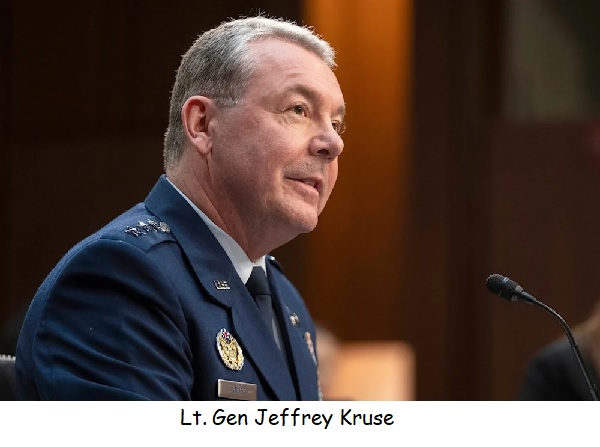
Lt. Gen Jeffrey Kruse will no longer serve as director of the Defense Intelligence Agency (DIA), sources confirmed. They spoke on condition of anonymity as they were not authorized to discuss the decision publicly.
The dismissal follows the leak of a preliminary report that concluded American strikes had delayed Iran’s nuclear program by only a few months, undercutting claims by Trump and Israeli Prime Minister Benjamin Netanyahu that the facilities had been decimated.
Trump had declared the program “completely and fully obliterated,” rejecting the assessment outright.
HEGSETH DEFENDS STRIKE’S SUCCESS
At a June press conference after the strikes, Hegseth criticised media coverage of the leaked findings but did not provide concrete evidence of the facilities’ destruction.
“You want to call it destroyed, you want to call it defeated, you want to call it obliterated – choose your word. This was an historically successful attack,” Hegseth asserted.
Kruse’s departure was first reported by the Washington Post. It reflects a broader trend of Trump dismissing officials whose analyses contradict his stance. Earlier in August, he dismissed the head of a federal agency after an underwhelming jobs report. His administration has also halted publication of climate change studies, vaccine access research, and gender identity data.
BACKGROUND ON THE AMERICAN AIRSTRIKES
In a post on Truth Social, President Donald Trump announced on June 22nd that the United States carried out what he described as a “very successful attack” on three Iranian nuclear facilities: Fordow, Natanz, and Isfahan.
Trump stated that a “full payload of bombs” was dropped on Fordow, the primary target, and confirmed that all Ameican aircraft involved in the operation have exited Iranian airspace and are “safely on their way home.”
“Congratulations to our great American Warriors,” Trump wrote, adding, “There is not another military in the world that could have done this. NOW IS THE TIME FOR PEACE!”
Shortly after, satellite imagery analyzed by the Institute for Science and International Security suggested Iran reinforced critical sections of its nuclear infrastructure ahead of recent American airstrikes. Images showed trucks dumping soil into tunnels at the Isfahan facility two days before the attacks, a measure likely aimed at limiting potential damage. Similar activity was noted at Fordow.
At the time, President Donald Trump claimed the strikes “obliterated” nuclear sites and caused “the biggest damage far below ground.” The International Atomic Energy Agency (IAEA) stated there were no signs of radioactive contamination at Fordow, Natanz, or Isfahan.
WIDER SHAKE-UP ACROSS MILITARY AND INTELLIGENCE RANKS
The firing of the DIA chief comes amid sweeping changes to the intelligence community and senior military leadership. The Office of the Director of National Intelligence announced cuts to its workforce and budget this week, while the Pentagon confirmed Air Force Chief Gen David Allvin would retire two years ahead of schedule.
Hegseth and Trump have recently opted to remove senior officers without offering detailed explanations.
Among those dismissed are Air Force General CQ Brown Jr., the former chairman of the Joint Chiefs of Staff; the Navy’s top commander; the Air Force’s second-ranking officer; and senior legal officials from three service branches.
In April, Hegseth dismissed General Tim Haugh, then head of the National Security Agency, along with Vice Admiral Shoshana Chatfield, a senior NATO official.
 Hidden History -- In The Making