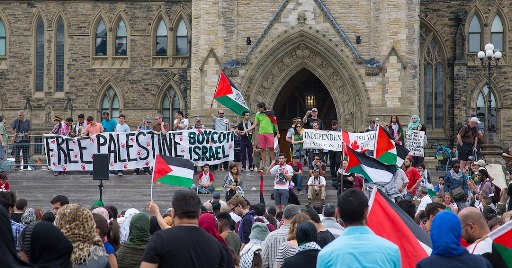
Palestine Is The Moral Issue Of Our Time For The Just Like If You Saw Someone In Your Family Torturing Another Member Of Your Family To Death, Would Be The Same Thing To You.
Palestine is the moral question of our time because the abuse of the Palestinians is the most glaring, in-your-face symptom of the imperial disease. You can see the effects of so many of the empire’s abusive dynamics in how this thing is playing out, from racism to colonialism to militarism to war profiteering to mass media propaganda to empire-building to government corruption to suppression of free speech to ecocide to the heartless, mindless, soul-eating nature of the capitalist system under which we all live.
But there’s more to it than that. The primary reason to place Palestine front and center as the moral issue of our time is because if we can’t sort out the morality of an active genocide backed by our own western governments, we’re not going to be able to sort out anything else. Stopping the Gaza holocaust and bringing justice to the Palestinians is the very first step toward a healthy civilization.
Palestine is the moral issue of our time for the same reason if you saw someone in your family torturing another member of your family to death, it would be the most urgent matter happening in your life at that moment. You’d have other problems in your life, but that would come first.
If we’re the sort of society that would allow a live-streamed genocide to take place with the support of our own government and its allies, then we’re not the sort of society that can steer away from its trajectory toward dystopia and armageddon. If you’re the sort of individual who would allow a live-streamed genocide to take place with the support of your own government and its allies, then you’re not the sort of individual who can help steer our species away from disaster.
Gaza is not the only thing that matters in the world. But if you’re not forcefully opposing the Gaza holocaust, you definitely don’t have a healthy enough conscience to address any of the world’s other problems.
Some see Israel supporters refer to pro-Palestine sentiment as “virtue signaling”, which is funny because it means they view themselves as holding the unpopular, unvirtuous position. But really there’s nothing particularly virtuous about supporting Gaza, and it’s not some cool, special thing you’d want to signal about yourself. It’s just what you do when you’re not an extremely crappy person. It’s the basic, bare-minimum expectation of normal human morality.
You don’t want to follow any commentators or analysts who don’t speak out against the Gaza holocaust. At this point you shouldn’t even want to listen to any music or read any poetry from people who don’t take a stand against the Gaza holocaust.
The other day some Australian influencer forcefully tried to assert that it’s okay not to take a position on Gaza, and nobody in her replies was buying it. Supporting Israel and aligning with American foreign policy comes with a lot of career benefits for high-profile individuals, and you don’t get to both enjoy those perks and also keep ethical people interested in what you have to say. You can’t have it both ways. You have to choose between the perks and the people. You actually do.
Opposition to the Gaza holocaust is the very first step in assessing if someone is worth our time. If you can’t even get this basic, kindergarten-level moral question right, then your mind is too shallow and your heart too hardened for us to be interested in your analysis, your ideas, your politics, or your art.
There are so many terrible things in our world, and there is so much work that needs to be done to address them. We don’t know exactly what ideas, strategies and movements will get us out of this mess, but we do know that if any are going to emerge they’re going to come from the people who’ve been taking a strong stand against Israel and its western allies these last two years. Those are the individuals, movements, and political factions to pay attention to going forward. Nobody else is equipped to help.
 Hidden History -- In The Making