According To Newly Declassified Documents, American Intelligence Leaders Concealed High-Level Doubts About One Of Russiagate’s Foundational Allegations.
The claim was that Russia stole and leaked Democratic Party material to help Trump defeat Hillary Clinton.
Although Robert Mueller failed to find an election conspiracy between Donald Trump and Moscow, the former Special Counsel threw a lifeline to the Russiagate narrative by alleging that the Kremlin had engaged in a “sweeping and systematic” effort to get Trump elected and “sow discord” among Americans.
Six years later, that questionable but enduring claim continues to unravel.
According to newly declassified documents, American intelligence leaders concealed high-level doubts about one of Russiagate’s foundational allegations: that Russia stole and leaked Democratic Party material to help Trump defeat Hillary Clinton. In a September 2016 report that was never made public until now, the NSA and the FBI broke with their intelligence counterparts and expressed “low confidence” in the attribution to Russia.
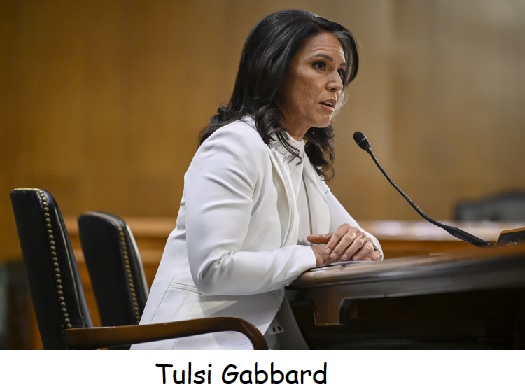
The previously undisclosed dissent about Russia’s alleged hacking activities in the 2016 election is among several revelations released last week by Tulsi Gabbard, Trump’s Director of National Intelligence. According to Gabbard, President Obama and senior members of his cabinet “manufactured and politicized intelligence” in its waning months to wage “a years-long coup against President Trump.”
Gabbard’s material adds to a body of evidence previously reported by RealClearInvestigations that challenges the widely parroted claim about the quality of evidence and the extent of Russian “interference operations” in the 2016 election. These conclusions – based on questionable assertions presented as hard facts – have been falsely portrayed as an intelligence consensus. When Trump, the nation’s commander-in-chief, cast doubt on the Russian interference allegations in a July 2018 news conference, former CIA chief John Brennan denounced him as “nothing short of treasonous.”
It turns out that Trump was not out of sync with the American intelligence community he was accused of betraying.
“LOW CONFIDENCE” IN CORE ALLEGATION
Until now, the purported American intelligence consensus on Russian meddling has been conveyed to the public in three seminal reports.
The first was a January 2017 intelligence community assessment (ICA) released in the final days of the Obama administration under the direction of Brennan and then-Director of National Intelligence James Clapper. The ICA accused Russian President Vladimir Putin of ordering an “influence campaign” to “denigrate” Democratic candidate Clinton and “help” Trump win the 2016 election. Some of this effort involved propaganda on Russian media outlets and messaging on social media.
The larger component hinged on the allegation that the GRU, Russia’s main intelligence agency, stole emails and documents from the Democratic Party and released that material principally via two online entities, DCLeaks and Guccifer 2.0, as well as the whistleblower organization WikiLeaks. Julian Assange, the founder of WikiLeaks, has long denied that Russia or any other state actor was his source. Nevertheless, the January 2017 ICA stated that American intelligence had “high confidence” that Russia engineered the hack.
The Mueller report, issued more than two years later, advanced the ICA’s claims with even more confidence and specificity. A bipartisan Senate intelligence review, released in August 2020, endorsed the ICA and Mueller reports and was widely treated as a vindication of the conduct of the intelligence officials behind them.
The documents newly declassified by Gabbard show that the ICA, Mueller, and Senate reports all excluded the intelligence community’s own secretly identified doubts and evidentiary gaps on the core allegation of Russian meddling.
In a previously unpublished Intelligence Community Assessment circulated within the government on Sept. 12th, 2016 (hereafter “September ICA”), the FBI and NSA expressed “low confidence” that Russia was behind the hack and release of Democratic Party emails. American intelligence agencies, the report explained, “lack sufficient technical details” to link the stolen Democratic Party material released by WikiLeaks and other sources “to Russian state-sponsored actors.”
The joint FBI-NSA dissent was especially significant given their central role in investigating Russia’s alleged cyber meddling. With its sweeping foreign surveillance capability, the NSA is the agency best positioned to assess the source of the alleged hacking of the Democratic National Committee (DNC) and Democratic Congressional Campaign Committee (DCCC). Meanwhile, the FBI had taken the lead in probing the cyber-theft and release of stolen material from the Democratic Party networks. The private acknowledgment that these two agencies did not have the “technical” data to link the hacking to Russia bolsters longstanding criticism, overlooked by legacy media, that the “Russian interference” allegations lacked supporting evidence.
Contrary to subsequent assertions, the September ICA shows that the American intelligence community had no hard evidence that Putin ordered the theft of Democratic Party material as part of an influence campaign to help Trump.
“If the disclosures of the DNC and DCCC documents were indeed orchestrated by the Russian intelligence services,” the report stated, “those services would very likely have sought Putin’s approval for the operation.” This passage indicates that American intelligence had declined to endorse assertions promoted by Brennan and leaked to the media during Trump’s first term, that a highly placed Kremlin mole had captured Putin’s orders to meddle in the 2016 election in support of Trump. The alleged mole was later identified as a mid-level Kremlin official named Oleg Smolenkov, who left Russia to live in the Virginia suburbs under his own name.
 Hidden History -- In The Making